G10 sensor for 20 to 950 mm background-suppressed detection
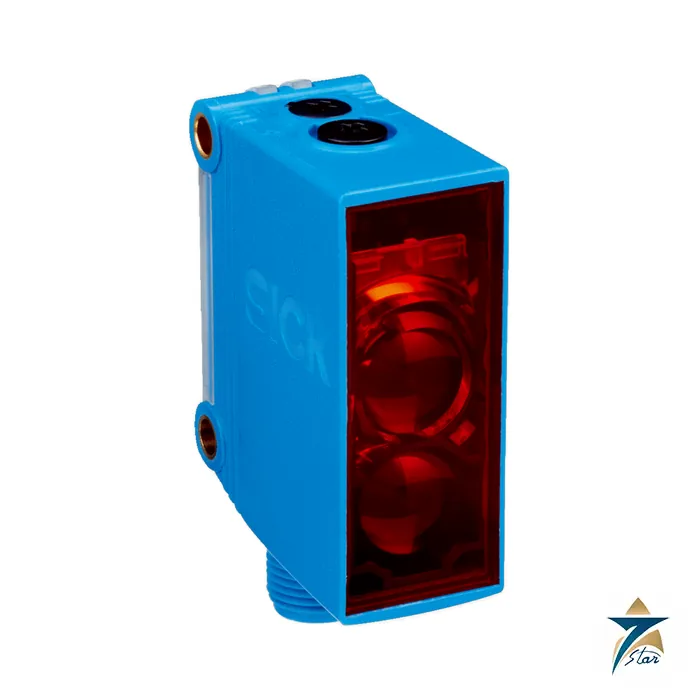
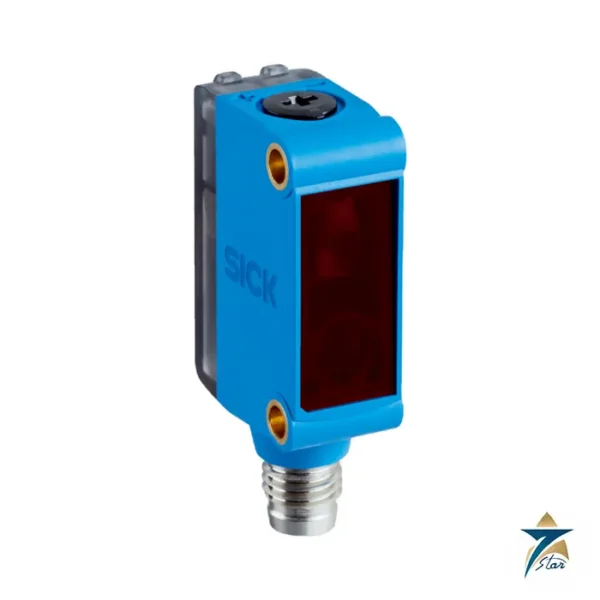
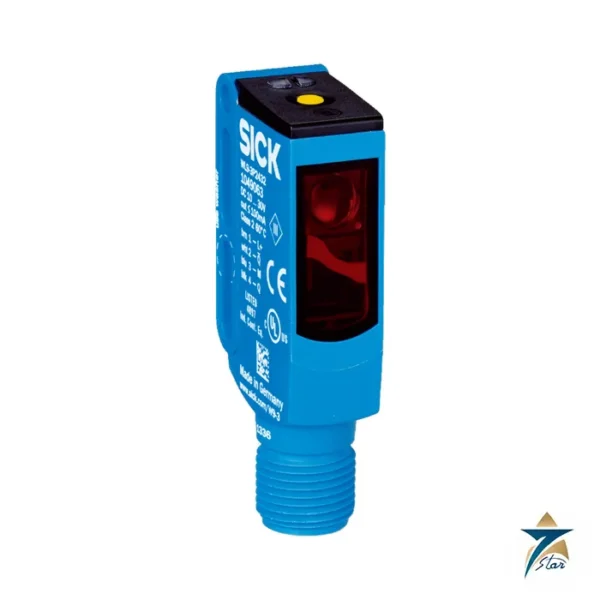
The SICK GTB10-P4211 (part no. 1064694) is a G10 small photoelectric sensor with background suppression and a maximum range of 950 mm. A PinPoint LED produces a sharp 8 mm spot at 700 mm, which allows reliable detection of small or thin parts. The ABS/PMMA housing is 20 mm by 50 mm by 39 mm, carries an M12 4-pin connector and is rated IP67.
The data sheet lists the UL325 standard for use with the sturdy protection hood BEF-G10WSG, relevant for garage-door and gate installations.
Technical specifications
| Parameter |
Specification |
| Manufacturer |
SICK |
| Type / family |
GTB10-P4211 / G10 |
| Part no. |
1064694 |
| Functional principle |
Photoelectric proximity sensor, background suppression |
| Sensing range max. |
20 mm … 950 mm (90 % remission) |
| Light source / type |
PinPoint LED, visible red light, 625 nm |
| Light spot size |
8 mm diameter at 700 mm |
| Adjustment |
Potentiometer, 5 turns |
| Supply voltage UB |
10 V DC … 30 V DC |
| Ripple |
below 5 Vpp |
| Current consumption |
20 mA |
| Output |
PNP, light/dark switching (selector) |
| Output current Imax. |
100 mA |
| Response time / switching frequency |
500 microseconds max. / 1,000 Hz |
| Protection class |
III |
| Dimensions (W x H x D) |
20 mm x 50 mm x 39 mm |
| Housing material |
Plastic ABS/PMMA |
| Connection |
Male connector M12, 4-pin |
| Weight |
35 g |
| Enclosure rating |
IP67 |
| EMC / standards |
EN 60947-5-2; UL325 with protection hood BEF-G10WSG (2071960) |
| Ambient temperature |
-30 °C … +60 °C operation; -40 °C … +70 °C storage |
| MTTFD |
1,885 years (DCavg 0 %) |
| UL file no. |
NRKH.E348498 and NRKH7.E348498 |
Use in gates, doors and packaging lines
The G10 housing is a compact rectangular body of 20 mm by 50 mm by 39 mm. With 1,000 Hz switching and 500 microseconds response time, it can follow fast conveyors, and the PinPoint spot picks up narrow parts without triggering on the surface behind them. Set the spindle for the required switching distance, verify the background, then select light or dark switching with the selector.
For UL325-related applications such as automatic gates, the data sheet states that the sensor complies when used with the sturdy hood BEF-G10WSG. The hood is a separate accessory and is not included, so add it to the enquiry if the project needs it.
Ordering reference and variants
Use GTB10-P4211 with part no. 1064694 on purchase requests. SICK lists related G10 types such as the GL10-F4551 retro-reflective sensor, also in this order list, but they are different articles with different ranges and output functions. The photoelectric family page on sick.com shows connector, cable and PNP/NPN alternatives.
Key features of the GTB10-P4211
- Background suppression: the sensor evaluates the distance of the reflecting object, so it switches on the target and ignores a conveyor frame, wall or machine part placed behind the set sensing distance.
- PinPoint LED: the small, bright red spot makes alignment quick by eye and helps detect thin edges and small components.
- Five-turn potentiometer: the sensing distance is set mechanically on the housing, with fine resolution and no teach procedure.
- Light/dark selector: one part number covers both switching logics, which simplifies spare-part stock.
- Fast output: 500 µs response and 1,000 Hz switching frequency for high-speed product counting.
- Robust sealing: IP67 with an M12 plug for quick replacement without rewiring.
How background suppression helps in practice
A simple energetic proximity sensor reacts to the amount of light returned, so a shiny background can switch it while a dark object can be missed. A background-suppressed sensor such as the GTB10 relies on triangulation instead, which makes the switching point far less dependent on the colour and surface of the object. The range of 20 to 950 mm is specified at 90% remission; dark, matt or angled targets reflect less light, so in practice the usable distance on such materials is shorter, and it is good practice to set the switching point with the real product in place.
Setting up the sensor
Place the actual target at the required distance, turn the potentiometer until the output switches, then remove the target and confirm the background is not detected. Leave a margin between the object and the background where possible. Choose light or dark switching on the selector according to whether the PLC input should be active when an object is present or absent.
Wiring and electrical integration
The PNP output suits the sourcing inputs used on most European and many Asian PLCs. Supply is 10 to 30 V DC, so a standard 24 V DC control supply is the normal choice, and current draw is only 20 mA. The output can deliver up to 100 mA, enough for a PLC input or a small interface relay. Use a matching M12 4-pin female cable; pre-moulded cables in PUR or PVC are a common choice depending on the oil and flexing exposure on the machine.
Variant selection
Within the G10 family, sensors differ by principle (background suppression, reflex or through-beam), output type and connection. If your control system uses sinking inputs, an NPN version is needed rather than the P4211. For gate and door applications covered by UL325, the BEF-G10WSG protection hood listed on the data sheet should be ordered as well, since the standard reference applies with that hood.
Use in Oman and GCC facilities
The operating range of -30 to +60 °C covers most indoor production halls and shaded outdoor positions in the region. On automatic gates and barriers exposed to direct sun, the housing can heat up above air temperature, so a shaded mounting position or the protection hood is advisable. Fine dust settling on the front window reduces the returned light; a periodic wipe with a soft cloth is part of normal maintenance, especially on cement, packaging and logistics lines.
RFQ checklist
- Type and part number: GTB10-P4211 / 1064694.
- Quantity and whether spare units are needed for critical lines.
- Connection cables (length, material) and mounting brackets if required.
- BEF-G10WSG protection hood for gate or door applications.
- A short description of the target and background if you want the choice of sensor checked.
Documents and quotation
Download the manufacturer data sheet for GTB10-P4211 (part no. 1064694) from this page; it is the source of every specification listed here. To request a price, send the type code and part number to Seven Star LLC, an independent supplier based in Muscat, together with the quantity and the site where the goods are needed. Please confirm before ordering that the version, connector and accessories (clamps, reflector or a cable with connector) match your drawings, because published data may change without notice. Related items can be found in sensors and transmitters and in the SICK WTB4-3 miniature photoelectric sensor.






Reviews
There are no reviews yet.