Marine protection and power management in one modular controller
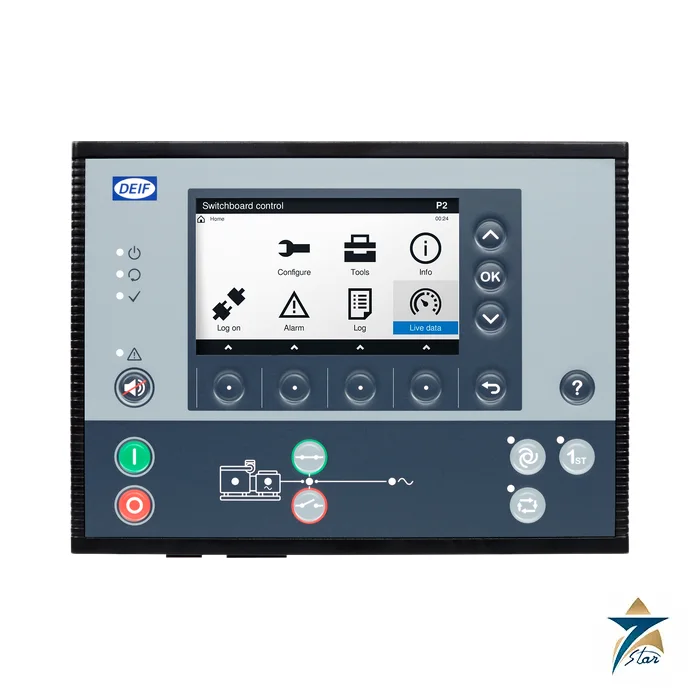
The DEIF PPM 300 Protection and Power Management controller is a highly configurable controller designed for marine use. Each controller holds the functions needed to protect and control a diesel generator, an inverter with power source, an emergency diesel generator, a shaft generator, a shore connection or a bus tie breaker. Up to 32 controllers can be connected into one integrated system, and the power management system can handle up to 64 heavy consumers.
Technical specifications
| Parameter |
Specification |
| Manufacturer / series |
DEIF A/S, Multi-line 300, PPM 300 (controller application 1.0.24.x) |
| Controller types |
Genset, emergency genset, hybrid, bus tie breaker, shaft generator, shore connection |
| System size |
Up to 32 controllers; up to 64 heavy consumers; multi-master with redundant communication possible |
| Hardware |
Modular rack R4.1 (4 slots) or R7.1 (7 slots) with PSM3.1, ACM3.1 and PCM3.1; optional extension racks |
| Modules |
ACM3.1/3.2, EIM3.1, GAM3.1/3.2, IOM3.1 to 3.4, PCM3.1 and blind modules |
| Display unit |
DU 300 with 5-inch colour graphic display; up to two display units per controller |
| PC software |
PICUS, free; application diagram, emulation, trending and firmware updates |
| Operating temperature |
Rack and modules -40 to 70 °C; display unit -20 to 70 °C; altitude to 4000 m |
| Humidity |
97 percent relative humidity, condensing, to IEC 60068-2-30 |
| Rack R4.1 |
146.1 x 199.9 x 157.5 mm; 994 g without modules; IP20 |
| Approvals |
CE; UL/cUL Listed to UL508; UL/cUL Recognised to UL6200; marine approvals on deif.com |
| Document |
Data sheet 4921240647-B (EN), 64 pages |
Functions and operator interface
The controllers work together as a true multi-master system: each one performs its own calculations, and if one fails the others continue. The power management system starts and stops generators to match demand and takes preventive actions to keep the supply reliable. The 5-inch colour display shows status, live data, alarm management and a visual synchronisation screen, with one-touch operator sequences, and supports seven languages.
Engine communication over CAN bus J1939 can be configured to talk to an ECU, and CustomLogic, a ladder logic and function-block tool, allows up to 20 input events and 20 output commands per controller. PICUS includes system emulation so an application can be tested and approved before site work. DEIF notes that measurement averaging is not enabled by default and may not be allowed by some marine classification societies.
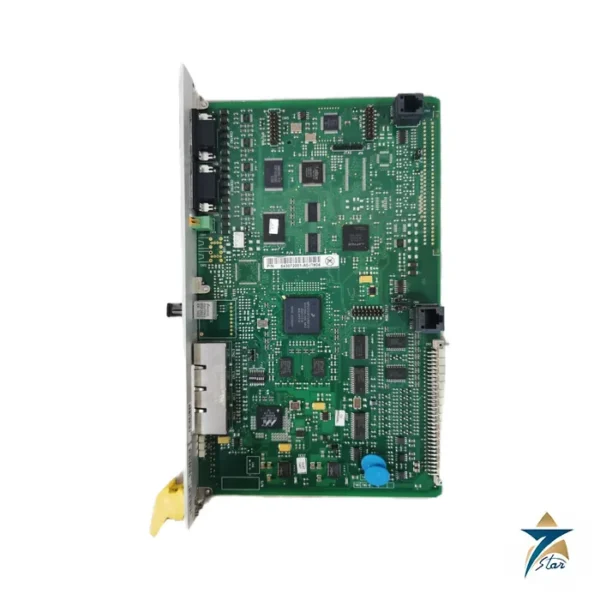
The standard modules are the PSM3.1 power supply (three relay outputs, two EtherCAT ports), the ACM3.1 AC module (two 3-phase voltage measurements and one 3-phase plus fourth current measurement) and the PCM3.1 processor and communication module (five Ethernet ports, two CAN bus connections and an SD card slot). Optional modules include the EIM3.1 engine interface (up to three per controller), GAM governor and AVR modules, IOM input and output modules and the ACM3.2 differential current module.
Ordering
Hardware modules can be replaced or added in the field and are recognised automatically. Choose the controller type, the rack size, the I/O and engine interface modules needed and the display folio. Confirm the classification society certificates on the DEIF website for the vessel. For a paralleling-and-protection unit without the power management layer, see the PPU 300 page.
Selection checks before specifying a PPM 300 system
Start by listing every power source and breaker on the switchboard single-line diagram: main gensets, the emergency generator, any shaft generator, shore connection and bus tie breakers. Each of these normally needs its own controller of the matching type, so the drawing becomes the basis of the bill of materials. Count the heavy consumers that must request power before starting, such as thrusters, cargo pumps or compressors, and decide which controller will handle each request.
Next, work through the signal list for every controller. Compare the analogue and digital points, engine signals and breaker feedback with the slots available in the R4.1 and R7.1 racks, and note where an extension rack or extra IOM module is required. If the engines have an ECU, confirm which J1939 messages the engine maker supports. Finally, agree with the classification society surveyor which functions must be approved and check the current certificates on the DEIF website for the class notation of the vessel.
Installation and wiring on board
The rack is an IP20 device, so it belongs inside a switchboard or control cabinet that gives the protection required for the space where it is fitted. Plan the panel layout so that measurement wiring, communication cables and power cables are separated and routed according to the switchboard builder’s practice and the DEIF installation instructions. Current transformer circuits should be shorted or terminated correctly before any work is done on the secondary side.
Network design deserves early attention. Decide how the controllers will be linked, whether redundant communication is required by class, and where the display units will be mounted on the switchboard front or in the engine control room. Label every cable and terminal against the drawings, because the commissioning engineer and the crew will rely on that documentation for years afterwards.
Commissioning and sea trials
Because PICUS includes system emulation, much of the application can be built and reviewed in the office before the engineer arrives on site. Use this to check breaker sequences, load-dependent start and stop settings and heavy consumer logic with the owner and the yard. On board, verify every measurement against a calibrated instrument, confirm phase sequence and breaker feedback, then test synchronising and load sharing step by step with the generators running.
Blackout recovery, preferential trips and the emergency generator sequence should be demonstrated to the surveyor as required by the approval scope. Save the final configuration and keep a copy ashore as well as on board, together with a record of the firmware version installed.
Operating environment in Oman and GCC waters
Vessels and offshore units operating along the Omani coast and in the Arabian Gulf see high ambient temperatures, humid salt air and fine dust when alongside. Even though the rack and modules are rated for a wide temperature range and condensing humidity, the switchboard itself should be ventilated or cooled so that internal temperatures stay well inside the stated limits. Inspect cabinet filters and door seals regularly, tighten terminals during planned maintenance, and look for corrosion on connectors in engine rooms and on open decks. A periodic review of the alarm log helps the crew spot recurring warnings before they turn into a blackout.
Documents and quotation
Attached: the DEIF PPM 300 data sheet 4921240647-B (EN). When requesting a price, name the variant, options, number of units and what the controller will be wired to. See Controllers & Data Acquisition for related DEIF controllers and generator control products.











Reviews
There are no reviews yet.