Compact turbocharged common-rail diesels for off-highway machines
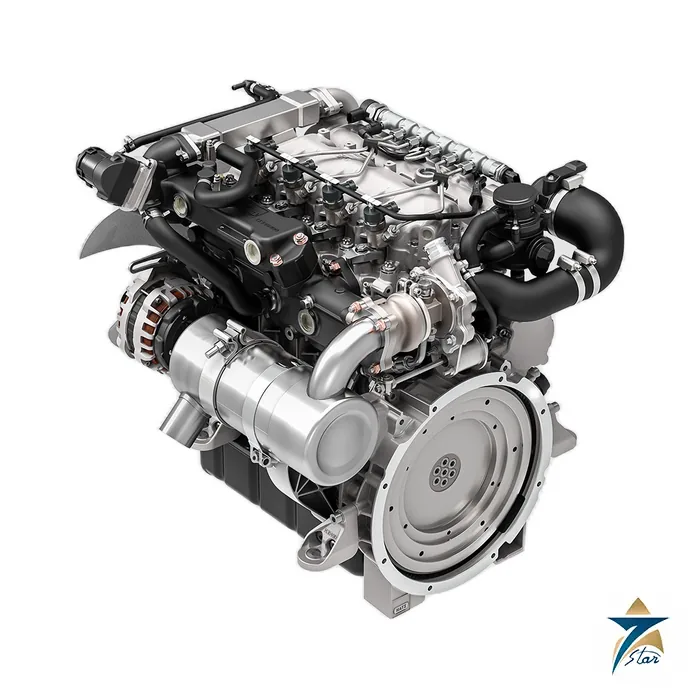
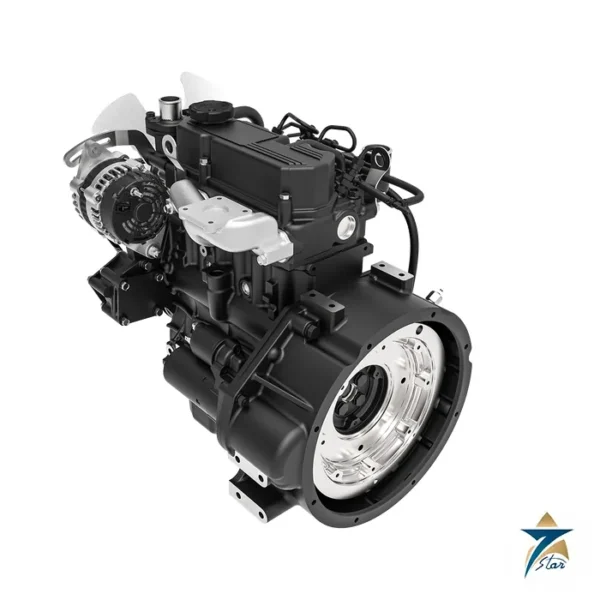
The Hatz 4H50TIC belongs to the Hatz H-Series, a family of modern three- and four-cylinder, liquid-cooled diesel engines with Bosch off-highway common-rail injection at 1800 bar and two valves per cylinder. Hatz describes the approach as downsizing: compact, turbocharged engines (depending on version) that reach a maximum output of 64 kilowatts, and says the series is up to 90 kg lighter than its nearest competitor.
The data sheet lists eight versions: 3H50T, 3H50TICD, 3H50TIC, 3H50TI, 4H50N, 4H50TICD, 4H50TIC and 4H50TI. Displacement is 1.464 litres for the three-cylinder and 1.952 litres for the four-cylinder engines, with the same 84 x 88 mm bore and stroke. The letters describe the configuration: T is turbocharged, I adds charge air cooling, C and D indicate the exhaust aftertreatment fitted for the emission class, and N is the naturally aspirated 4H50N.
Technical specifications
| Parameter |
Specification |
| Engine type |
Liquid-cooled four-stroke diesel, direct injection, Bosch common rail, 1800 bar |
| Models in data sheet |
3H50T, 3H50TICD, 3H50TIC, 3H50TI, 4H50N, 4H50TICD, 4H50TIC, 4H50TI |
| Cylinders / displacement |
3 cylinders 1.464 l; 4 cylinders 1.952 l |
| Bore x stroke |
84 x 88 mm |
| Aspiration |
Turbocharger with charge air cooling (TIC, TICD, TI); turbocharger only (3H50T); naturally aspirated (4H50N) |
| Power examples |
3H50TI 44.2 kW / 59.2 hp and 4H50TI 55.0 kW / 73.7 hp at 3000 rpm, IFN variable speed; 3H50T 18.4 kW / 24.7 hp |
| Basic engine weight (kg) |
3H50T 132; 3H50TICD 140; 3H50TIC 154; 3H50TI 133; 4H50N 159; 4H50TICD 158; 4H50TIC 173; 4H50TI 152 |
| Basic engine L x W x H (mm) |
4H50TIC 673 x 613 x 601; 4H50TICD 673 x 558 x 601; 4H50TI 670 x 570 x 601; 4H50N 675 x 536 x 660; 3H50TIC 585 x 613 x 601 |
| Starter |
12 V (2.2 kW) or 24 V (3.0 kW) |
| Alternator |
110 A at 14 V (150 A optional) or 60 A at 28 V |
| Cold start temperature |
minus 25 degrees C (12 V); minus 32 degrees C (24 V) |
| Lowest idle speed |
900 rpm |
| Control method |
CAN J1939 or multi-stage switch |
| Service interval |
500 operating hours; up to 3000 h for defined applications |
Emissions, maintenance and Open Power Unit
The engine family meets EU and US emission requirements; the US requirements are met without a particulate filter on the versions listed. The 4H50N, equipped only with an oxidation catalyst, even has CARB TRU 2023 certification for transport refrigeration. Fuel consumption below 210 g per kWh is quoted at the most efficient point, and the design keeps consumption near that optimum over a wide load and speed range.
All maintenance points are on one side of the engine, with 500-hour service intervals and up to 3000 hours approved for defined applications thanks to hydraulic valve play compensation and large filters. Every H-Series variant is available as a tested Open Power Unit with air filter, radiators, charge air cooler where fitted, hoses and a wiring loom with fuses and relays; a New Silent Pack version is up to 60 percent quieter than the OPU.
Selecting an H-Series engine
Match the versions to the emission regulation of the destination (EU Stage V, US EPA Tier 4 final or less regulated) and to the speed range, for example 1500 and 1800 rpm for constant-speed generator duty or 2200 to 3000 rpm for variable speed. Compare the basic engine, OPU and Silent Pack weights and dimensions, because the OPU and Silent Pack are considerably larger than the basic engine.
Confirm the starter voltage (12 V at 2.2 kW or 24 V at 3.0 kW), alternator size, cold start limits of minus 25 degrees C at 12 V and minus 32 degrees C at 24 V, the control method (CAN J1939 or multi-stage switch) and the oil capacity of the chosen version before ordering.
Installation planning for the 4H50TIC
An engine of this kind is normally built into a machine, generator set or pump skid by an equipment manufacturer, so most installation questions are about integration. Agree the mounting arrangement, the coupling to the driven equipment and the alignment method with the machine designer, and check the installation guidelines from Hatz for mounting, cooling air flow, intake air routing, exhaust routing and fuel supply. If the engine is supplied as a basic engine, the cooling system, intake filtration and wiring are the integrator’s responsibility and must be sized for the real duty, not for a light-load test. Where the Open Power Unit is used, much of that work is already defined, but space for airflow and service access around the unit still needs to be planned.
Commissioning and first running
Before the first start, check fluid levels, the fuel system for air and leaks, battery condition and the electrical connections between the engine and the machine controller. When the engine is controlled through CAN J1939, confirm that the controller reads the engine data correctly and that alarms and shutdowns reach the operator panel. Run the engine through its intended speed and load range, observe temperatures and pressures on the controller, and record the values as a baseline for later diagnosis. Check the exhaust aftertreatment behaviour expected for the selected emission version as described in the Hatz operating instructions.
Maintenance routine
Follow the service interval published by Hatz for the application, and record operating hours so that service is carried out on time rather than when a problem appears. Common-rail systems are sensitive to fuel cleanliness, so fuel storage tanks, transfer equipment and day tanks should be kept clean and drained of water. Use the lubricants and service parts specified in the operating manual, and keep a service log with each machine.
Heat, dust and fuel quality in Oman and the GCC
Engines on construction sites, pumping skids and remote generator sets in the Gulf work in high ambient temperature and often in heavy dust. Check that the cooling package is designed for the maximum site temperature at full load, and keep radiator and charge air cooler surfaces clean, because dust and debris on the fins quickly reduce cooling performance. Locate the air intake away from the dust raised by the machine itself and inspect the air filter more often during dusty periods. Make sure the fuel available at site meets the quality required in the Hatz documentation for the emission version, and pay attention to water and dirt in fuel stored in drums or temporary tanks.
Documents and quotation
The manufacturer data sheet is attached to this page for download. Seven Star LLC is an independent supplier in Muscat; send the exact model code, version (basic engine, OPU or Silent Pack), speed and emission requirement and quantity, and we will request a quotation. Availability depends on the model. See Motors, Pumps and Turbines for related items.













Reviews
There are no reviews yet.