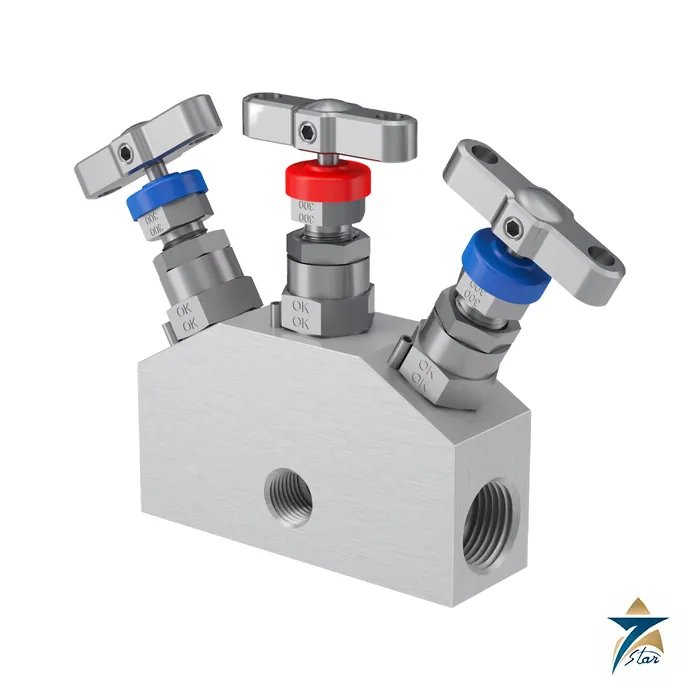
HLS3DBB 3-valve instrument manifold, remote-mount H Series
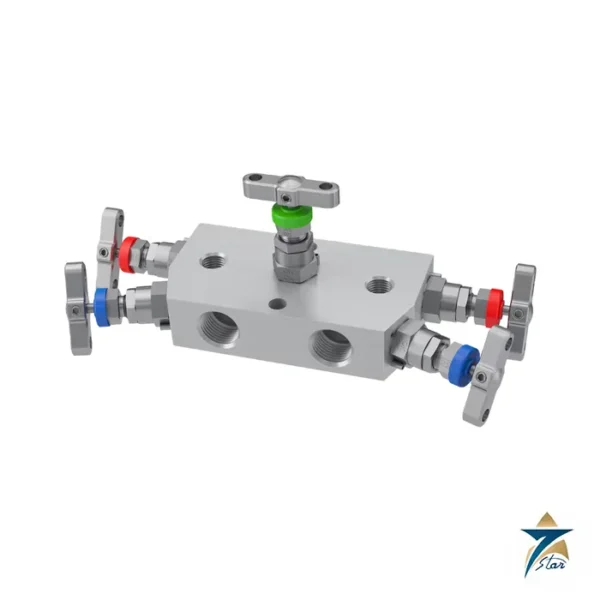
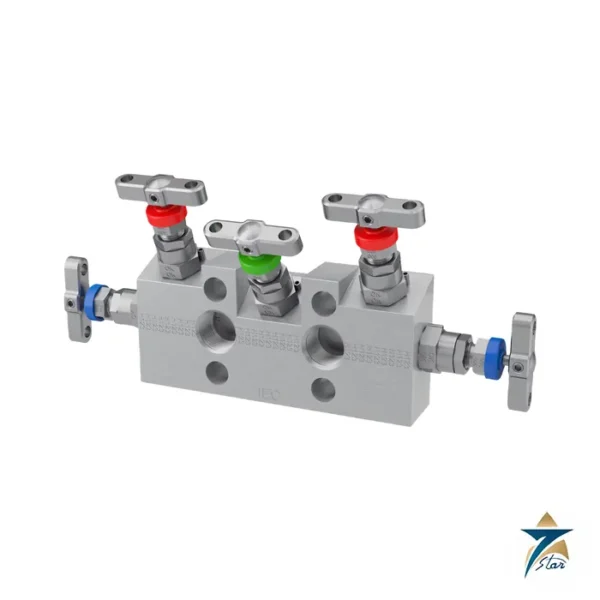
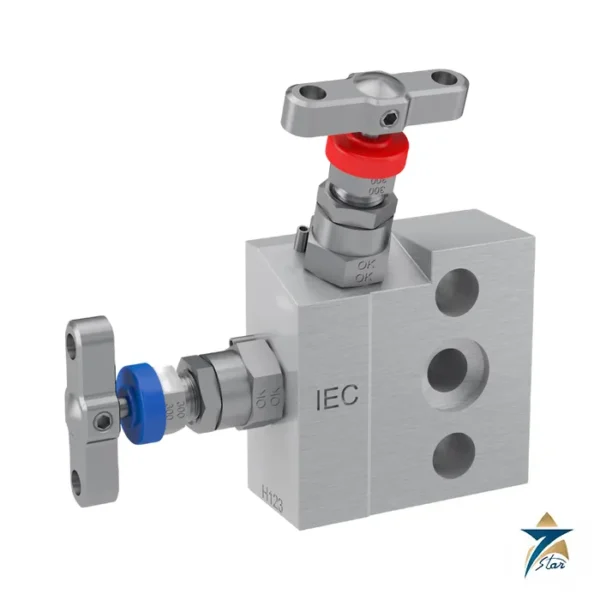
The Parker HLS3DBB is a three-valve remote-mount manifold with a double block and bleed arrangement for pressure measurement from the H Series, built as a compact, lightweight flat-barstock block in 316 stainless steel with needle-pattern valves and metal-to-metal seats. Parker describes the H Series as multiple-block instrument manifold valves for installation on pressure or differential pressure (flow) measurement devices; the remote-mount models connect to the instrument by tubing or pipe, so the instrument can sit away from the process tapping. The Parker HLS3DBB is configured as "Double Isolate and Vent" and is rated 6000 psi (414 bar).
Seven Star LLC supplies Parker HLS3DBB in Oman and the GCC for transmitter installations on oil and gas, power and water projects. Below you will find the configuration, verified data from the Parker product page, selection advice and installation notes.
HLS3DBB configuration and how it operates
A 3-valve manifold replaces a group of separate valves and fittings with a single machined body, which means fewer leak paths and a more compact, tidier installation. In the HLS3DBB the arrangement is double isolate and vent. The double isolate and vent arrangement uses two isolation valves in series plus a vent, so there are two barriers between the process and the instrument. It is the usual arrangement when the instrument must be removed under pressure and a visible bleed point is needed.
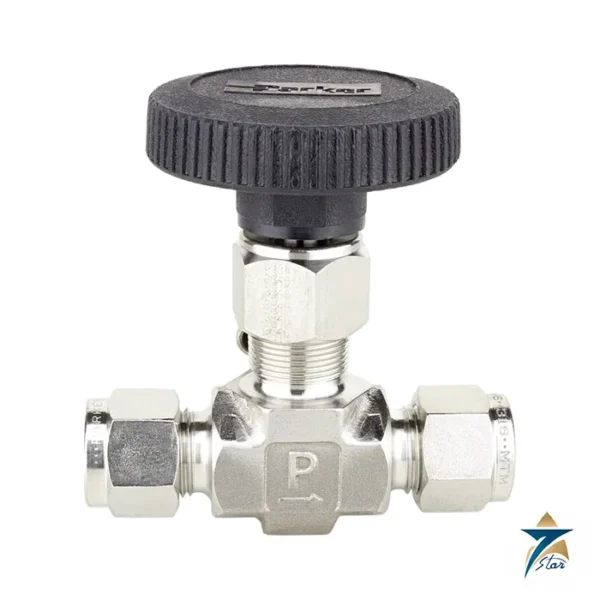
All valves in the H Series use a needle pattern with a metal-to-metal seat, which gives a positive shut-off and good resistance to wear and to particles in the process stream, and PTFE packing as standard for the stem seal. Graphite packing is the option for the high end of the temperature range.
Parker HLS3DBB technical specifications
| Parameter |
Specification |
| Manufacturer / part number |
Parker / HLS3DBB |
| Product family |
H Series needle-pattern instrument manifold (remote-mount) |
| Number of valves |
3 |
| Configuration |
Double Isolate and Vent |
| Body type |
Flat barstock |
| Body material |
316 stainless steel |
| Inlet connection |
1/2 in NPT female |
| Outlet connection |
1/2 in NPT female |
| Vent size |
1/4 in NPT female |
| Seat material |
Metal to metal |
| Packing material |
PTFE |
| Operating pressure |
6000 psi (414 bar) |
| Operating temperature |
PTFE packing: -54 to +260°C (-65 to +500°F); graphite packing: -54 to +538°C (-65 to +1000°F) |
| Fluid type |
General gaseous and liquid media |
| Mounting option |
Carbon steel or stainless steel brackets and bolts |
| Body pattern |
Short pattern |
Values are taken from the Parker product page for HLS3DBB. The temperature range depends on the packing: PTFE up to +260°C and graphite up to +538°C, and the working temperature of the whole assembly is limited by its lowest-rated component and by the instrument mounted on it.
Connections and mounting of the HLS3DBB
The inlet connection of the HLS3DBB is 1/2 in NPT female and the outlet connection is 1/2 in NPT female. The vent connections are 1/4 in NPT female on all H Series models listed here. Remote-mount models are fitted on a pipe or on a bracket with the supplied mounting option, and connected to the transmitter with impulse tubing.
Parker lists mounting brackets and bolts in carbon steel and stainless steel. In the marine and coastal atmospheres of the Gulf, stainless steel brackets and bolts are the safer choice against corrosion, while carbon steel is acceptable in sheltered, painted installations.
Where the HLS3DBB fits in the system
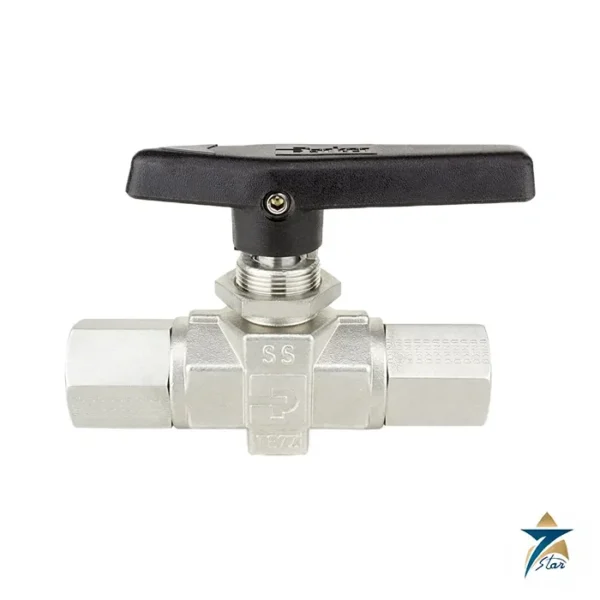
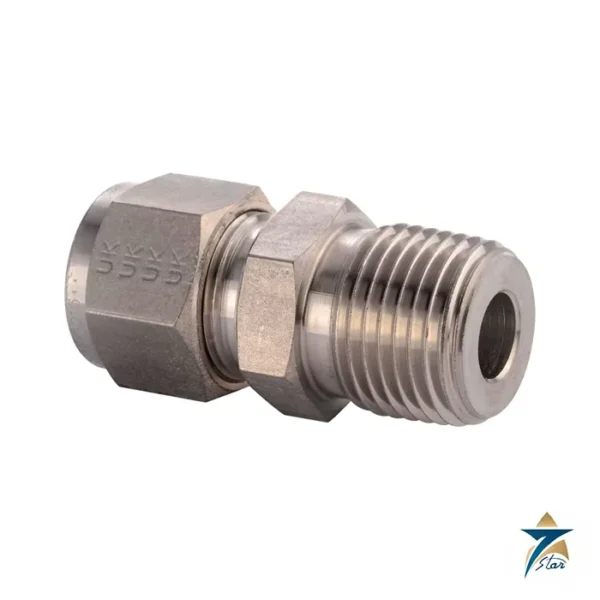
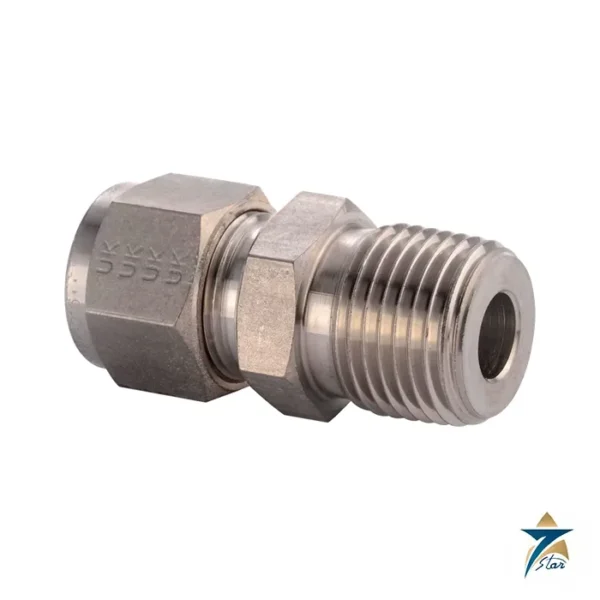
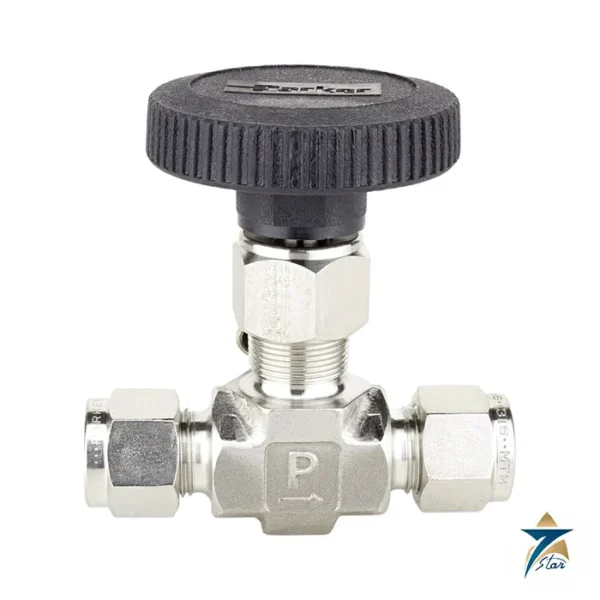
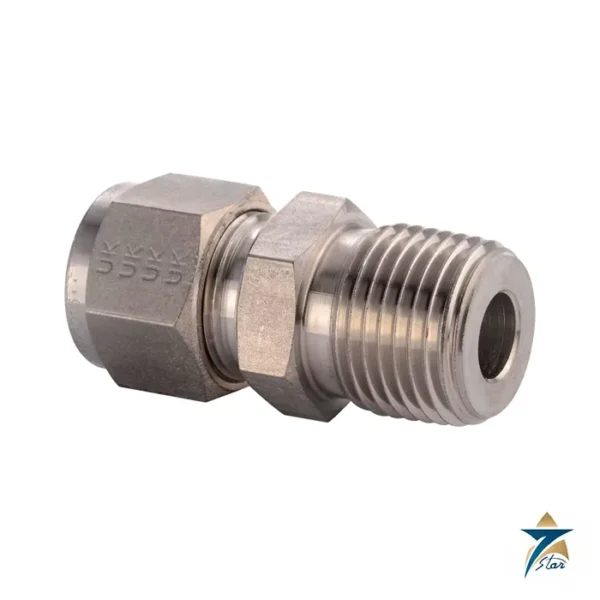
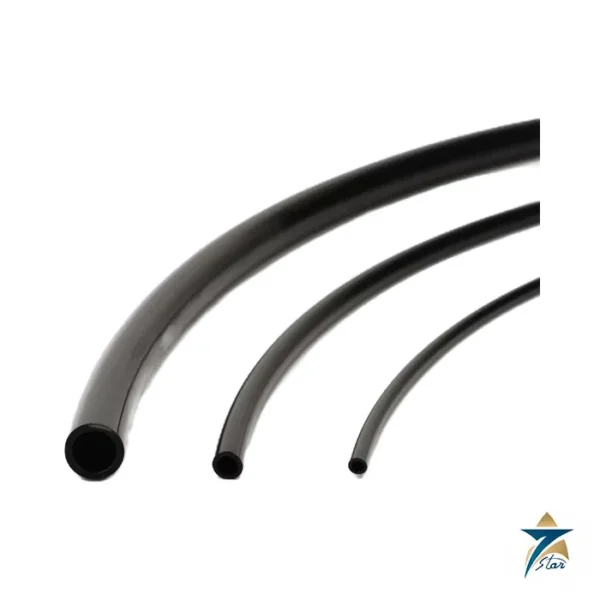
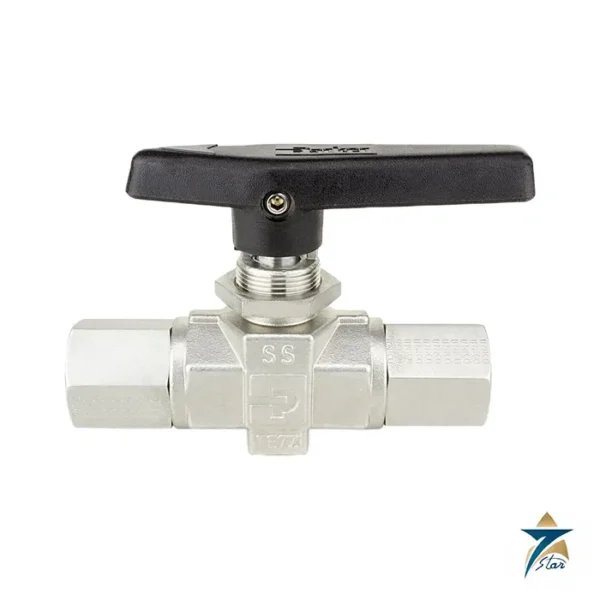
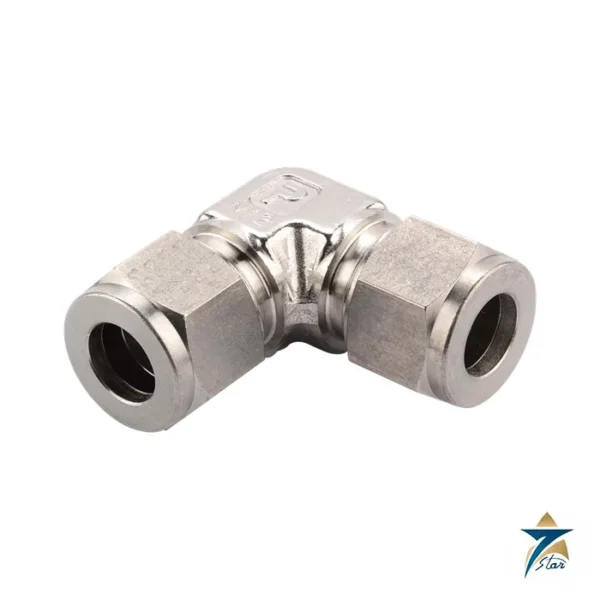
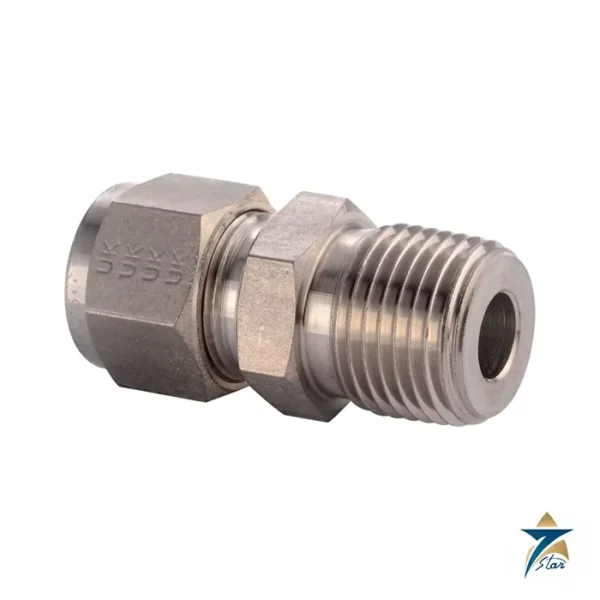
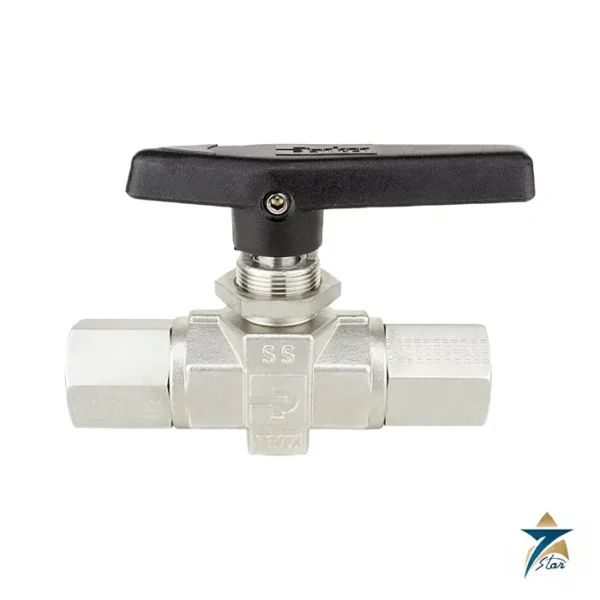
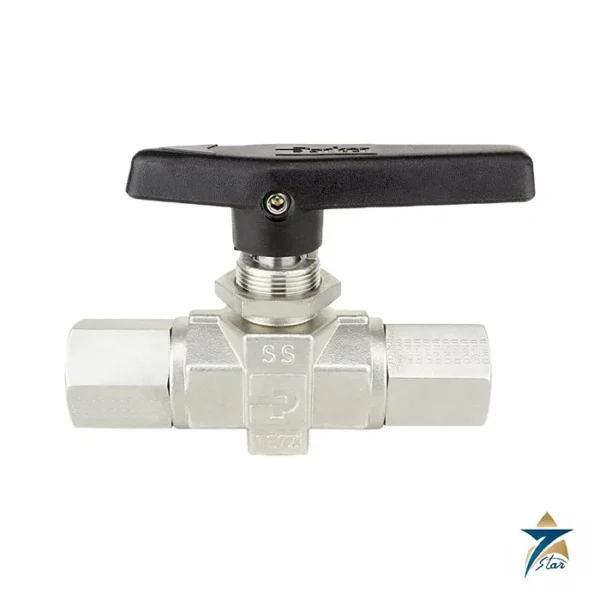
The HLS3DBB sits between the process tapping and the transmitter. Upstream there are root valves and impulse tubing, and downstream the transmitter measures pressure or differential pressure. Parker A-LOK® fittings such as 4MSC4N-316 and 8MSC8N-316 connect tubing to the NPT ports, and valves such as the 4A-B6LJ2-SSP ball valve can be used as additional root isolation.
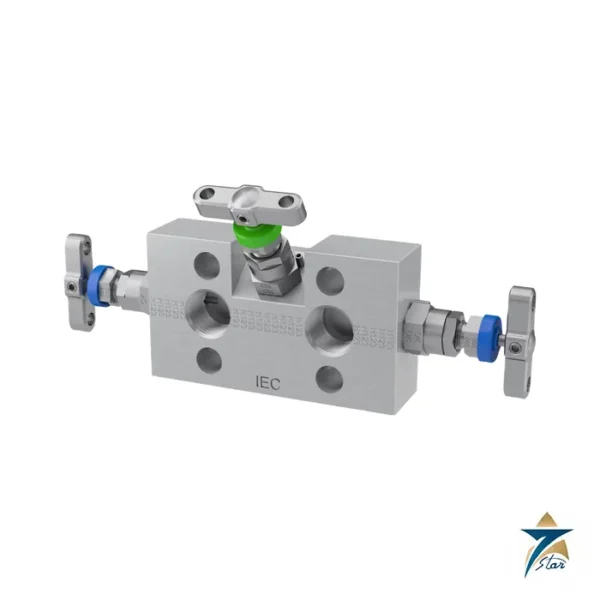
Within the same H Series group, the models HDS2MFF, HLS5MP, HDS3MA, HDS5MA differ in the number of valves, the connection type and the configuration. A two-valve manifold is enough for a pressure transmitter, while three and five-valve versions are used for differential pressure, so confirm the transmitter type first.
Selection checklist for the HLS3DBB
- Transmitter: confirm whether it measures pressure or differential pressure and what flange it has; the HLS3DBB is for remote installation with tubing.
- Number of valves: 3 valves in the HLS3DBB; fewer valves mean fewer functions.
- Pressure: 6000 psi (414 bar) for this number; the H Series catalogue also describes up to 10,000 psi (689 bar) for some remote-mount models.
- Material and packing: 316 stainless steel with PTFE packing as standard; Parker lists Alloy 400, duplex, super duplex, Alloy C276, titanium, Alloy 625, Alloy 825 and carbon steel options and graphite packing as options to request.
- Seat and stem options: regulating tips, Stellite, PCTFE and PEEK soft tips and anti-tamper, handwheel and locking T-bar operators are available by enquiry.
- Oxygen cleaning and assembly with test of free-issue instruments are available as options to be requested with the order.
Installation, commissioning and maintenance of the HLS3DBB
- Verify the transmitter flange type and spacing against the manifold before ordering; check the thread type and sealant requirements for the connections.
- Fit new gaskets or seals according to the connection type and tighten bolts evenly in a cross pattern.
- Make sure all valves are closed before pressurising, then open the process isolation valves slowly and check for leaks at every joint.
- For a DP manifold, always keep the equalising valve open before opening the block valves, then close it after the block valves are open, and use the reverse sequence for shutdown.
- Vent the instrument side before disconnecting the transmitter and make sure the vent discharge goes to a safe location.
- Tighten gland packing nuts slightly if a stem leaks; replace the packing if it keeps leaking.
Record HLS3DBB with the date of installation so that the packing, bolts and brackets can be matched at the next maintenance stop.
Typical applications in Oman and the GCC
Instrument manifolds like the HLS3DBB are used wherever transmitters measure pressure, level or flow on oil and gas production, gas processing, refineries, power stations and desalination plants in Oman and the GCC. Stainless steel bodies resist salt-laden air and process chlorides, and metal-to-metal seats and graphite packing options handle the heat from sun-heated pipework and hot process lines. Compact barstock bodies are also easier to fit in crowded instrument racks than a set of individual valves.
Typical tasks include flow measurement across an orifice plate, level measurement on pressurised vessels, line pressure monitoring and calibration of transmitters in the field without shutting down the process.
H Series manifolds compared with the HLS3DBB
| Part number |
Valves |
Mount |
Configuration |
Outlet |
| HDS2MFF |
2 |
Direct |
Isolate and Vent |
DIN IEC B flange |
| HLS3DBB |
3 |
Remote |
Double Isolate and Vent |
1/2 in NPT female |
| HLS5MP |
5 |
Remote |
Double Isolate and Equalise with Vents |
1/2 in NPT female |
| HDS3MA |
3 |
Direct |
Double Isolate and Inclined Equalise Valve |
DIN IEC B flange |
| HDS5MA |
5 |
Direct |
Double Isolate and Inclined Equalise Valve with Vents |
DIN IEC B flange |
Information to send with an RFQ for HLS3DBB
- Part number HLS3DBB and quantity.
- Transmitter make, model and flange or connection type.
- Fluid, operating pressure and temperature.
- Required material, packing and bracket options.
- Project name and delivery location in Oman or the GCC.
Documents and quotation
The official Parker catalog for the PREMIER range of H Series instrument valves and manifolds (4190-PREM, English) is attached on this page as a PDF and covers the manifold family of the Parker HLS3DBB. It shows the 2, 3 and 5-valve configurations, the direct-mount and remote-mount body styles, the pressure and temperature ratings, the materials, the dimension drawings and the ordering code. Check the valve configuration, the mounting style and the process connections against your transmitter hook-up, then send us the quantity and the delivery location for a quotation.
Seven Star LLC supplies HLS3DBB in Oman and the GCC, together with fittings, tubing and valves for the same installation. Send your RFQ with the details above.
Other Models in the Parker H Series Manifold Range
Seven Star LLC supplies models from the Parker H Series Manifold range in Oman and the GCC. Compare the related models below and request a quote for the one that matches your application.




















Reviews
There are no reviews yet.