A two-counter module for encoders and fast pulse inputs
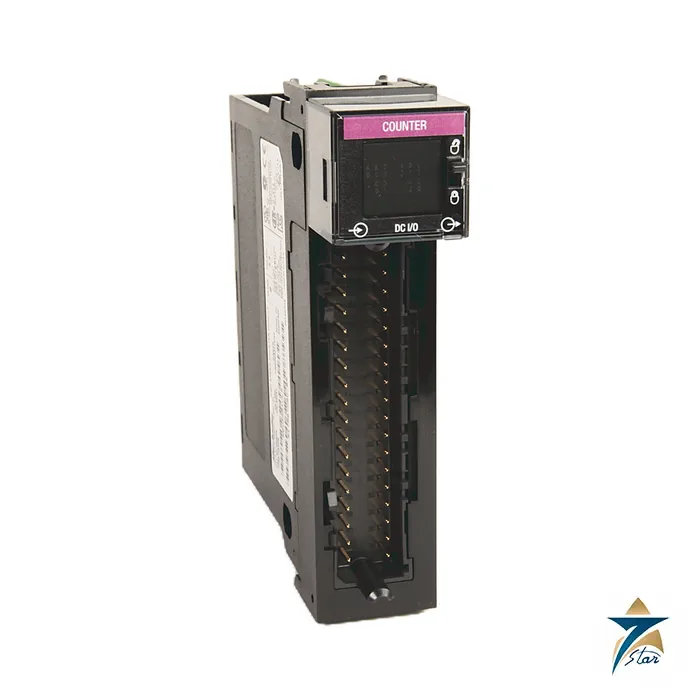
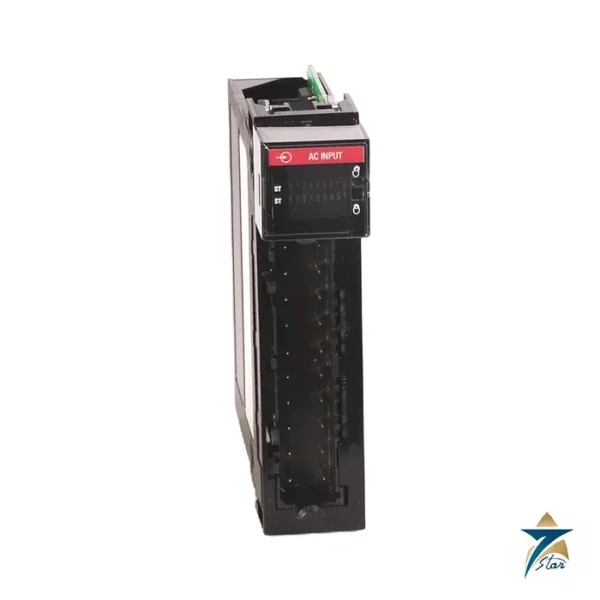
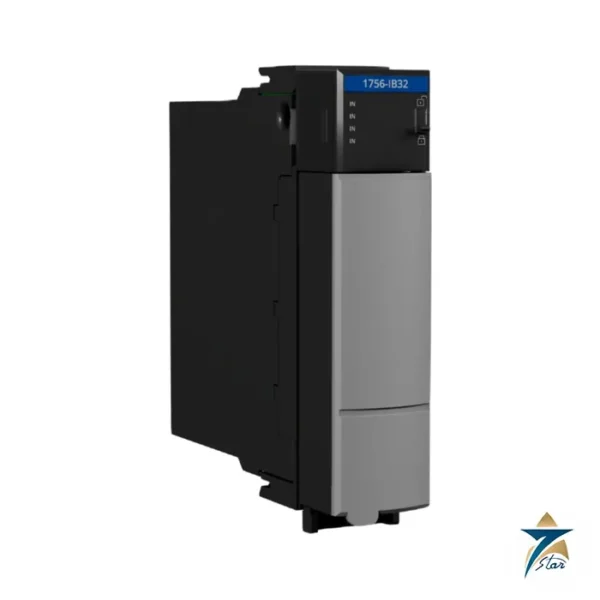
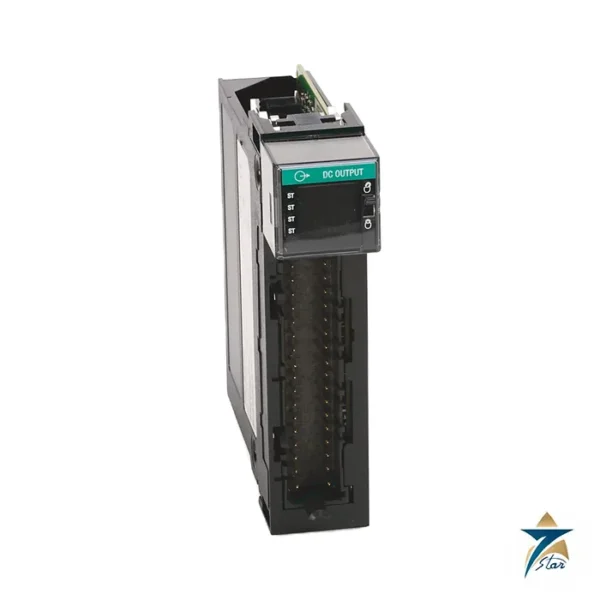
The Allen-Bradley 1756-HSC is a high-speed counter module with two independent counters, each with A, B and Z inputs for quadrature encoders, gate or reset. It counts pulses far faster than the controller can scan standard inputs, and four fast outputs on the same module allow hardware-timed switching.
Typical jobs are flow-meter pulse totalising, shaft position and speed from an incremental encoder, and cutting or batching applications where the output must change on a precise count. Operation is selectable between 5 V and 12/24 V levels for both inputs and outputs, and the counters can run independently so one module can serve two separate machines or shafts.
Technical specifications
| Parameter |
Specification |
| Catalog number |
1756-HSC (1756-HSCK conformal coated listed separately) |
| Counters |
2 |
| Inputs per counter |
3 (A, B, Z for gate/reset) |
| Input voltage |
5 V operation: 4.5 to 5.5 V DC; 12/24 V operation: 10 to 26.4 V DC |
| Input frequency, max |
1 MHz counter modes (A input); 500 kHz rate measurement; 250 kHz encoder mode |
| Count range |
0 to 16,777,214 |
| Counting frequency, max |
1000 kHz |
| Input current |
4 mA min; 15 mA nominal |
| Outputs |
4 (2 per common) |
| Output delay, off to on / on to off |
20 us nominal, 50 us max / 60 us nominal, 300 us max |
| Output current rating per point |
20 mA at 4.5-5.5 V DC; 1.0 A at 10-31.2 V DC |
| Output current limit / surge |
Under 4 A; 2 A for 10 ms every 1 s at 60 C |
| Backplane current |
300 mA at 5.1 V DC; 3 mA at 24 V DC (1.6 W) |
| Power dissipation, max |
Series A/B: 5.6 W; series C/D: 3.5 W at 60 C |
| Terminal block |
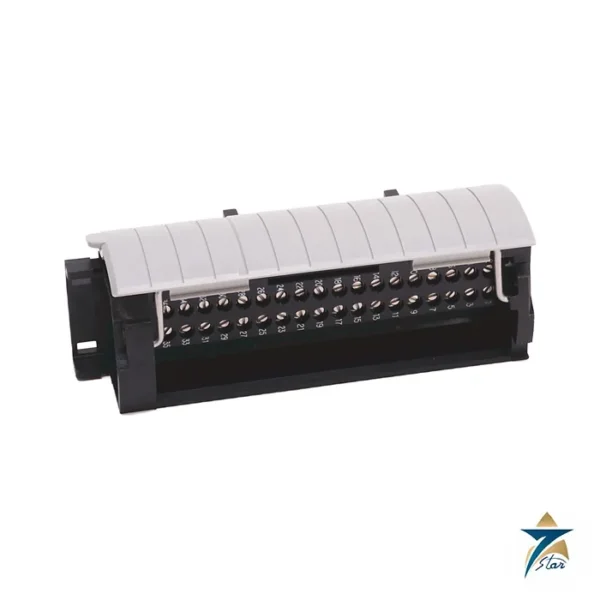
1756-TBCH or 1756-TBS6H (ordered separately) |
| Operating temperature |
0 to +60 C |
| Non-operating temperature |
-40 to +85 C |
| Vibration / shock |
2 g at 10-500 Hz / 30 g operating, 50 g non-operating |
| Slot width / keying |
1 slot; electronic keying, software configurable |
| Enclosure / wire category |
Open-style; wire category 1 |
Choosing the series and input level
The data table separates series A and B from series C and D, with a lower dissipation on the newer pair (3.5 W against 5.6 W) and a higher isolation rating. When replacing a module, record the series. The 5 V setting is for TTL-style encoders while the 12/24 V setting suits PNP-type pulse sources; a wrong setting gives false counts or none.
Selection and wiring notes
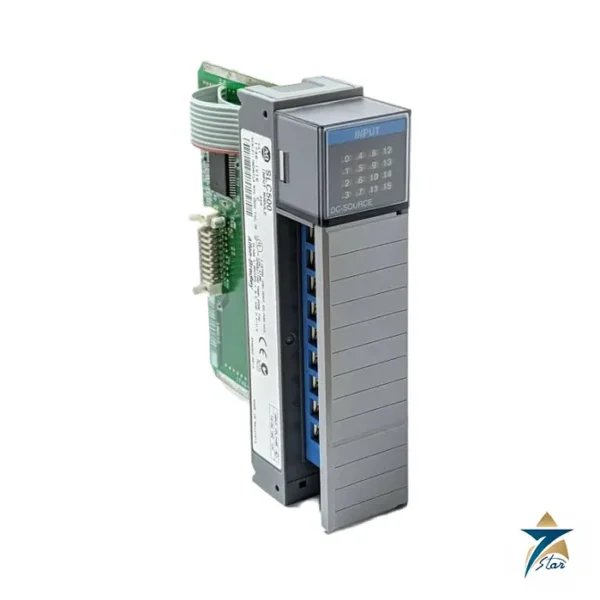
Cable shielding and correct grounding are essential at megahertz frequencies, which is why the shielded 1756-TBS6H terminal block is offered. For slower signals the standard 1756-IB16 input is cheaper. Confirm series and suffix, and check pulse levels against the voltage table. All values come from the manufacturer technical data.
Count range runs from 0 to 16,777,214, and output current per point is 20 mA at 5 V or 1.0 A at 10 to 31.2 V DC. Match the output voltage to the load before wiring, because the data sheet gives different current ratings for the two supply levels and a current limit of under 4 A.
Typical applications for the 1756-HSC
The 1756-HSC is used wherever a ControlLogix system must count pulses that are too fast for standard input modules. Typical examples include totalising pulses from flow meters in water, oil and chemical plants, reading shaft position and speed from incremental encoders on conveyors, winders and rotary tables, and cut-to-length or batching duties where an output must switch at an exact count. Because the module has two independent counters, one module can serve two shafts or two meters, and the fast outputs on the same module can switch a knife, valve or marker without waiting for the controller scan.
In process plants, the module is often used to bring turbine or positive displacement flow meter pulses into the control system for metering and batching, while in manufacturing it is more often linked to encoders on machines.
Selection and system integration
Start by listing every pulse source, its signal level and its maximum frequency. Compare the frequency with the limits in the table for the mode you intend to use, noting that encoder mode has a lower limit than simple counting. Choose the 5 V setting for TTL-style encoders and the 12/24 V setting for higher-level pulse sources, and confirm that the source can drive the input current listed. For the outputs, match the load voltage and current to the per-point ratings before connecting solenoids or relays.
Decide which terminal block suits the installation: the shielded type is the better choice for long encoder cables or electrically noisy areas. In the controller project, plan how count values, presets and output windows will be handled in logic, and agree with the process engineer how meter pulses will be scaled to engineering units.
Installation practice and site conditions in Oman
Use shielded twisted-pair cable for encoder and pulse signals, ground the shield as defined in the project wiring standard, and keep signal cables well away from motor and drive power cables. Where long runs are unavoidable, the higher signal level setting is usually more tolerant of noise than the 5 V setting. Keep the module in a closed enclosure, as it is open-style equipment.
On plant sites in Oman and the GCC, control panels can become very hot in summer, so check the panel temperature against the operating range in the table and provide cooling where needed. Dust and coastal humidity are further reasons to keep panels closed and to consider the conformal-coated version listed in the table for harsher locations. Record the module series in the maintenance files so that a like-for-like replacement can be ordered.
During commissioning, test each counter with the real pulse source at low and high speed, check that the count direction is correct for quadrature encoders, and confirm that every output switches at the intended count. Keeping these test records with the project documentation makes later fault finding much quicker for the maintenance team.
Documents and quotation
The linked Rockwell Automation technical data covers the full 1756 I/O range (file size about 15 MB, hosted by Rockwell Automation). Related PLC hardware sits in the PLC & I/O Cards category. To request a quotation send your catalog number and quantity to Seven Star LLC, an independent supplier in Muscat.



Reviews
There are no reviews yet.