A high-density DC output module for ControlLogix
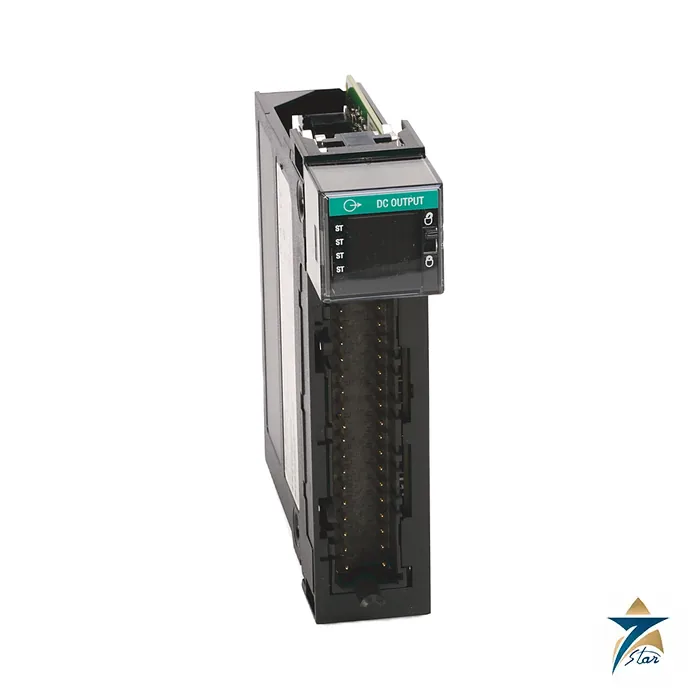
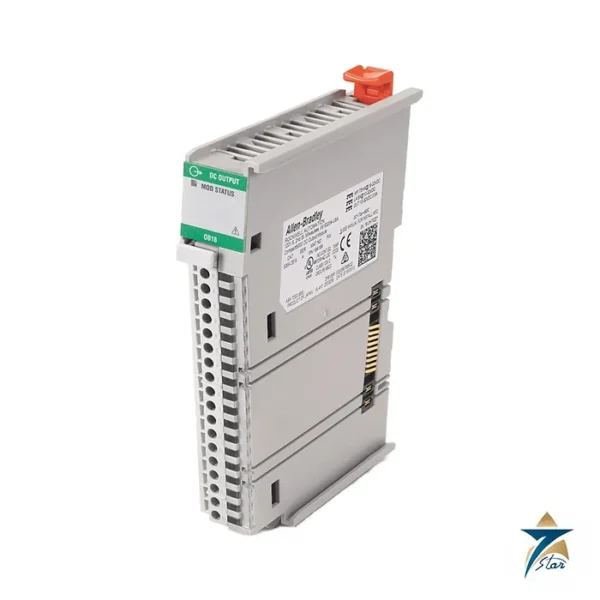
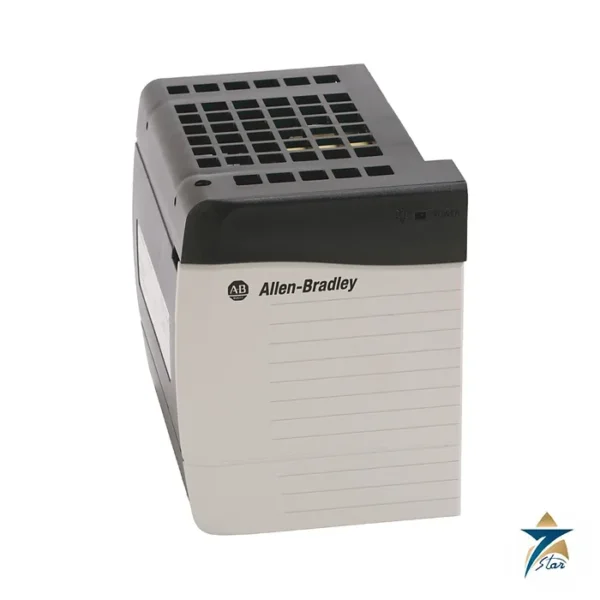
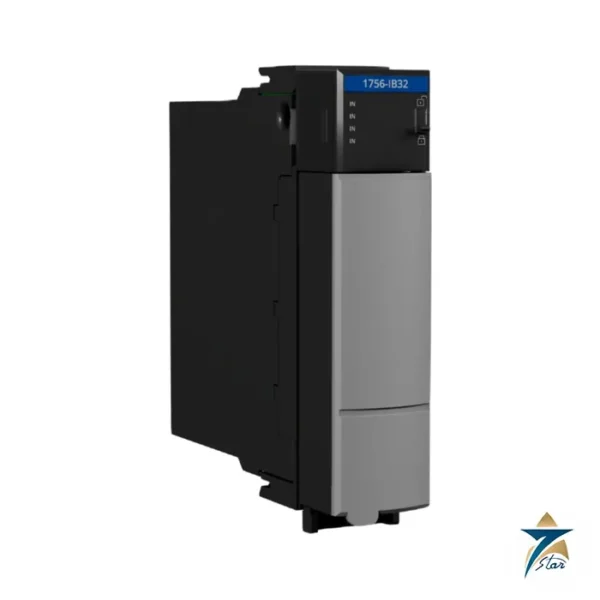
The Allen-Bradley 1756-OB32 is a ControlLogix digital output module with 32 sourcing points for 12/24V DC loads. The points are arranged as two isolated groups of sixteen, and the module takes only one chassis slot. It is used for solenoid valves, relays, indicator lamps and similar loads, and it suits panels where many outputs have to fit in a few slots.
Each point can carry 0.5 A at 50 °C or 0.35 A at 60 °C, and the whole module is rated 16 A at 50 °C and 10 A at 60 °C. Switching is fast, with 60 microseconds nominal for off to on and 200 microseconds nominal for on to off, both with a 1 ms maximum.
Technical specifications
| Parameter |
Specification |
| Catalog number |
1756-OB32 (1756-OB32K conformal coated, 1756-OB32XT harsh environment) |
| Module type |
ControlLogix 32-point 12/24V DC sourcing digital output module |
| Outputs |
32 points, 16 points per isolated group |
| Output voltage |
12/24V DC source; 10…31.2V DC |
| Output delay |
Off to on: 60 µs nominal, 1 ms max; on to off: 200 µs nominal, 1 ms max |
| Output current per point |
0.5 A at 50 °C and 0.35 A at 60 °C |
| Output current per module |
16 A at 50 °C and 10 A at 60 °C |
| Surge current |
1 A for 10 ms |
| Minimum load |
3 mA per point |
| Off-state leakage |
0.5 mA per point |
| On-state voltage drop |
200 mV at 0.5 A |
| Backplane current |
300 mA at 5.1V DC and 2 mA at 24V DC; 1.58 W total backplane power |
| Power dissipation |
4.8 W maximum at 60 °C; 16.37 BTU/hr |
| Isolation |
250V continuous, outputs to backplane; 125V group to group |
| Terminal block |
1756-TBCH or 1756-TBS6H (36-pin), ordered separately |
| Wire size |
0.33…2.1 mm² (22…14 AWG) single wire; 0.33…1.3 mm² double wire; RTB screw torque 0.5 N•m (TBCH) |
| Operating temperature |
0…60 °C (32…140 °F) |
| Vibration |
2 g at 10…500 Hz |
| Temperature code (as printed) |
T4 |
| Certifications (as printed) |
cULus (UL files E65584, E194810), CE, RCM, ATEX II 3 G Ex ec IIC T4 Gc, IECEx |
Wiring and removable terminal blocks
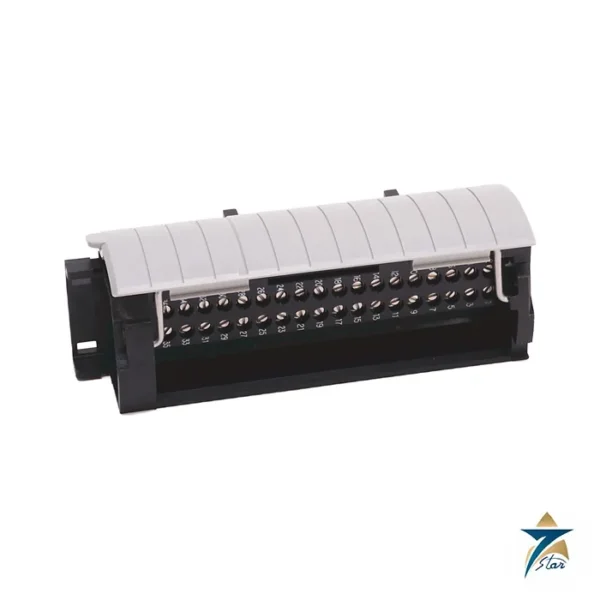
The module needs a 36-pin removable terminal block, which is not supplied with it. Rockwell Automation lists the 1756-TBCH screw-clamp block and the 1756-TBS6H spring-clamp block. Field wiring accepts 0.33 to 2.1 mm² (22 to 14 AWG) copper rated at 105 °C, and the screw terminal torque for the TBCH is 0.5 N•m. The standard housing is shallow, so order the extended-depth 1756-TBE housing if you plan to use 2.5 mm² wire.
Observe the minimum load of 3 mA per point and the off-state leakage of 0.5 mA per point when you drive high-impedance inputs. The module draws 300 mA from the 5.1V rail and dissipates up to 4.8 W at 60 °C, which should be included in the chassis current and thermal budget.
Variants and compatible products
The 1756-OB32K is the conformal-coated version and the 1756-OB32XT is the harsh-environment version. For a lower point count with relay or isolated outputs, see the other ControlLogix output modules in the same technical data publication. The module is certified for Class I Division 2 and Zone 2 use as printed in the data sheet.
Installing the module in a ControlLogix chassis
Before fitting the 1756-OB32, plan which chassis slot it will occupy and record that slot in the I/O configuration of the controller project. The module is added to the project tree under the local or remote chassis, and its slot number must match the physical position. Seat the module firmly along the chassis guides so that the backplane connector engages fully, then attach the removable terminal block and lock it in place. Because the terminal block is a separate item, it is good practice to pre-wire it on the bench, label every conductor with its point number and group, and only then fit it to the module.
Keep the two isolated groups in mind while routing field wiring. Each group of sixteen points has its own supply connection, so loads fed from different DC supplies can be split between the groups. Run output wiring away from high-voltage AC conductors and motor cables, and use the cable ducts of the panel to keep DC signal wiring tidy and easy to trace during fault finding.
Commissioning checks
After power-up, confirm that the controller recognises the module without a connection fault and that the configured catalog number and revision match the label. Force or toggle outputs one at a time from the programming software while a technician watches the field device, and tick each point off against the loop drawings. This is also the right moment to verify that relays and solenoid coils have suitable suppression, that the load current on every point stays within the per-point rating at the expected panel temperature, and that the sum of all energised points is within the module rating.
Panel environment in Oman and the GCC
Control panels in Omani plants, pumping stations and desert sites often run warmer than the surrounding room, especially when they are mounted outdoors or close to process equipment. Since the permitted current per point and per module falls as temperature rises, the panel cooling arrangement deserves attention: allow space above and below the chassis for air movement, keep filters on fans or air conditioners clean, and avoid placing heat-producing drives or power supplies directly below the I/O rack. Fine dust that settles on modules and terminal blocks can trap heat and attract moisture, so sealed enclosures and regular inspection are worthwhile. For coastal or humid locations where condensation and salt-laden air are a concern, the conformal-coated 1756-OB32K and the harsh-environment 1756-OB32XT already named on this page are the variants to compare.
Routine maintenance
During planned shutdowns, inspect the terminal block for discoloured or loose terminations, re-check screw tightness on the screw-clamp version, and clean dust from the chassis with dry, non-conductive methods. Review the diagnostic and fault history in the controller for outputs that trip or behave erratically, as this often points to a wiring or load problem rather than the module itself. Keeping a record of which loads are connected to each point makes replacement and future expansion of the panel far simpler.
Documents and quotation
The Rockwell Automation ControlLogix DC digital I/O installation instructions are attached; the full 1756-TD002 technical data is on the Rockwell Automation literature library. See our PLC and I/O cards catalogue for chassis, power supplies and controllers. Confirm the exact catalog number, series letter and firmware or hardware revision on the product label, and the compatibility with your existing system, before ordering. Stock and lead time are confirmed at quotation.




Reviews
There are no reviews yet.