Sized for instrument tracer lines
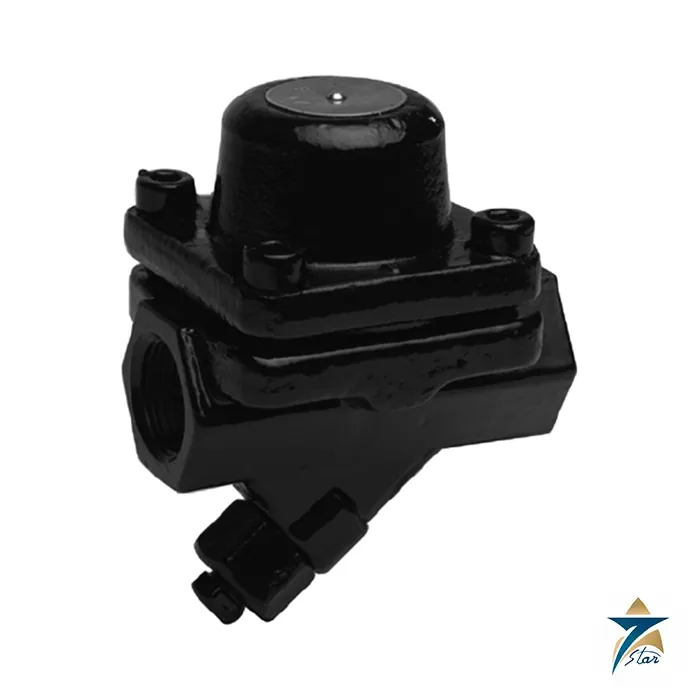
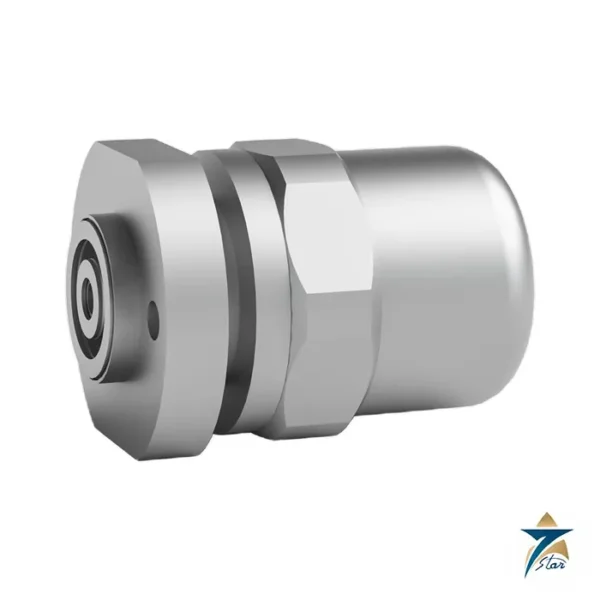
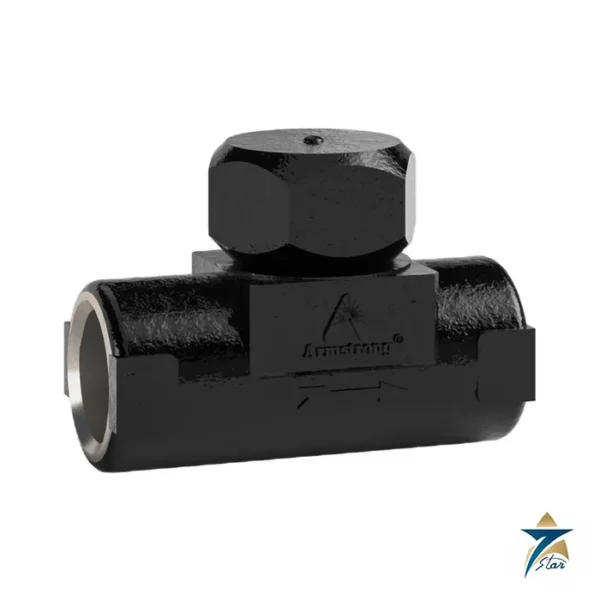
Instrument steam tracing carries very small condensate loads, and a trap that is far bigger than the load will cycle, wear and waste steam. The Armstrong TC-300 Series is a thermostatic capsule steam trap sized precisely for that low load. Armstrong says it is designed to outlast the oversized, all-purpose thermostatic and thermodynamic traps often used on tracer lines, and that it adjusts automatically to flow, including large start-up loads, at all pressures within its range.
The body and cap are carbon steel, with ASTM A105 and ASTM A350-LF2 both listed in the materials block of the sheet, and the capsule is all stainless steel, type 304. The trap is available with screwed BSPT and NPT, socketwelded or flanged connections (EN 1092-1 or ASME B16.5) in 15, 20 and 25 mm sizes, for pressures to 17 barg and a cold-water start-up capacity to 454 kg/h.
Technical specification
| Parameter |
Specification |
| Type |
Thermostatic capsule steam trap |
| Body and cap material |
Carbon steel; ASTM A105 and ASTM A350-LF2 listed in the materials block |
| Capsule |
All stainless steel, 304 |
| Maximum allowable pressure (vessel design) |
40 barg @ 350 C (may be derated by flange rating and type) |
| Maximum operating pressure |
17 barg @ 204 C |
| Pipe connections |
15, 20, 25 mm |
| Connection types |
Screwed BSPT and NPT; socketwelded; flanged EN 1092-1 or ASME B16.5 (standard flanges carbon steel, ASTM A350 LF2 optional) |
Capacity by operating differential pressure
| Differential pressure, barg |
Cold water start-up 21 C, kg/h |
Hot water start-up 100 C, kg/h |
Condensate 10 C below saturation, kg/h |
| 0.35 |
54 |
45 |
4.5 |
| 0.7 |
68 |
77 |
5.9 |
| 1.4 |
145 |
113 |
8.2 |
| 2.0 |
177 |
136 |
9.1 |
| 3.0 |
191 |
159 |
10.9 |
| 3.5 |
222 |
181 |
11.8 |
| 5.0 |
259 |
218 |
13.6 |
| 7.0 |
295 |
263 |
15.9 |
| 10.5 |
318 |
318 |
18.1 |
| 14.0 |
408 |
363 |
20.9 |
| 17.0 |
454 |
431 |
22.7 |
Capacities are based on differential pressure with no back pressure. The condensate capacity varies with the degree of subcooling; where more capacity is needed the trap adjusts automatically, up to the maximum cold water figure, by increasing the amount of subcooling.
Dimensions and weight (mm, kg)
| Item |
15 mm |
20 mm |
25 mm |
| B, height, screwed and SW |
117 |
117 |
117 |
| A, height, flanged PN40 |
117 |
117 |
117 |
| C, face to face, screwed and SW |
90 |
90 |
N/A |
| CC, face to face, flanged PN40 |
150 |
150 |
160 |
| D, centreline to top |
60 |
60 |
60 |
| Weight, screwed and SW |
1.9 |
1.9 |
1.9 |
| Weight, flanged PN40 |
4.3 |
4.5 |
4.7 |
How to read the capacity table
The three columns describe three duties. Cold-water start-up at 21 C is the highest figure and covers a tracer line that has been off and is refilling with cold condensate; hot-water start-up at 100 C is lower; and the steady condensate figure 10 C below saturation is the continuous running load. At 7 barg the table gives 295, 263 and 15.9 kg/h respectively, which shows why a capsule trap tolerates large start-ups yet passes only a few kilograms per hour in steady operation (derived from the table).
Use the right-hand column to size for a tracer or drip leg and the left-hand column only for start-up. The data sheet does not publish a minimum pressure for the TC-300, so confirm against the manufacturer if the supply may drop to a few tenths of a bar.
Ordering and use in the field
To order, specify the model number, the connection size and type, and, when flanges are needed, the flange type in detail. Because the Armstrong sheet lists carbon steel standard flanges and ASTM A350 LF2 as an option, state which is required when the line is for low-temperature service.
Typical uses are instrument and impulse line tracing, small drip legs and low-flow heating coils in oil and gas, petrochemical, power and process plants. The data sheet claims no hazardous-area approval, so none is stated here.
Reading the capacity and size data
Across the printed pressure range the cold-water start-up capacity climbs from 54 kg/h at 0.35 barg to 454 kg/h at 17 barg, about eight times, while the steady condensate figure climbs from 4.5 to 22.7 kg/h, about five times (both ratios derived from the table). That gap is what lets one small trap clear a cold tracer line quickly at start-up and then settle to a trickle. At 3.5 barg the sheet gives 222, 181 and 11.8 kg/h for cold start, hot start and running load; at 10.5 barg it gives 318, 318 and 18.1 kg/h.
The body is the same 117 mm tall in all three sizes and weighs 1.9 kg in the screwed and socketwelded forms. The flanged PN40 version weighs 4.3, 4.5 and 4.7 kg for 15, 20 and 25 mm, more than twice the screwed weight (derived), and its face-to-face length is 150 mm for the two smaller sizes and 160 mm for the 25 mm. The centreline-to-top dimension is 60 mm throughout.
Selection and installation notes
Specify a steam trap from the steam pressure, the condensate load and the connection size, and check the body material and the pressure rating against the system. Fit a strainer upstream, a union or flange for easy removal and isolation valves either side, prime the trap with condensate before start-up where the type requires it, and protect it from freezing. Inspect traps on a regular schedule to find failures early, because a failed trap wastes steam or floods the line.
On tracer lines the load is small, so use one trap per tracer line and fit it at the lowest point where condensate collects.
Information needed for a quotation
Send the full model code, the quantity, the delivery location in Oman or the GCC, the intended use and any accessories needed, so that the complete package can be quoted together.
Documents and supply information
The manufacturer data sheet is attached to this page and should be read together with the project specification and the site risk assessment before a purchase is confirmed. Ratings, standards and dimensions are quoted as printed on that sheet. Lead time, stock position and certificates available with the shipment are confirmed in the quotation, and we supply to Oman and the wider GCC region for industrial, utility and building services projects.
Documents and quotation
The Armstrong data sheet (ST-179) is attached. Another steam trap family for small loads is the Armstrong AB-3000 bimetallic trap. Related steam fittings are in pipes and fittings. Seven Star LLC is an independent supplier in Muscat; send the connection size and type, the pressure and the duty and we will confirm the model against manufacturer data before we quote.



Reviews
There are no reviews yet.