Mid-range Coriolis metering for plant balance and filling
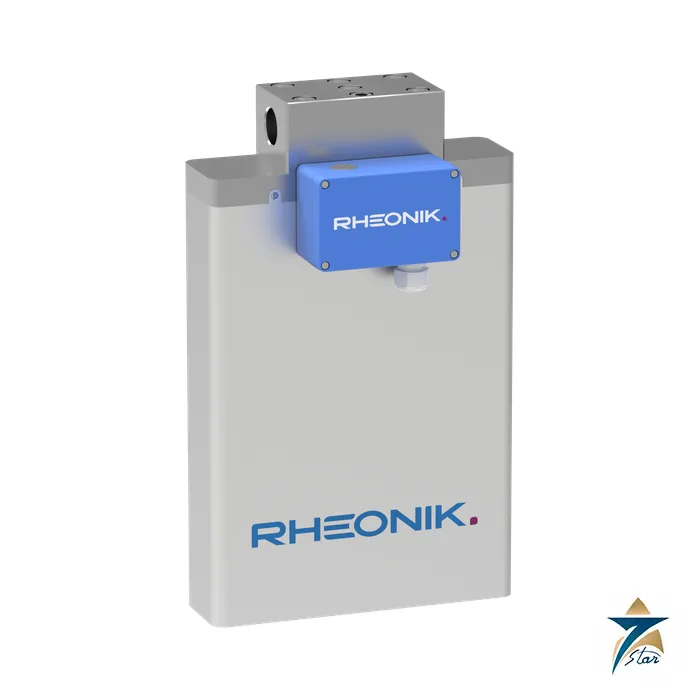
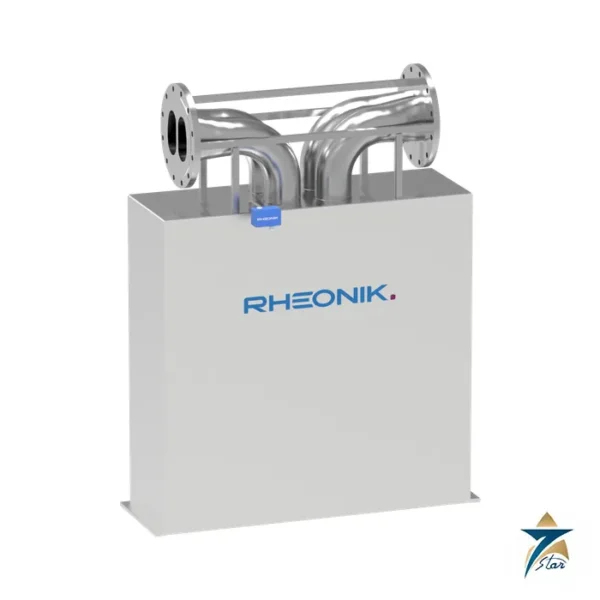
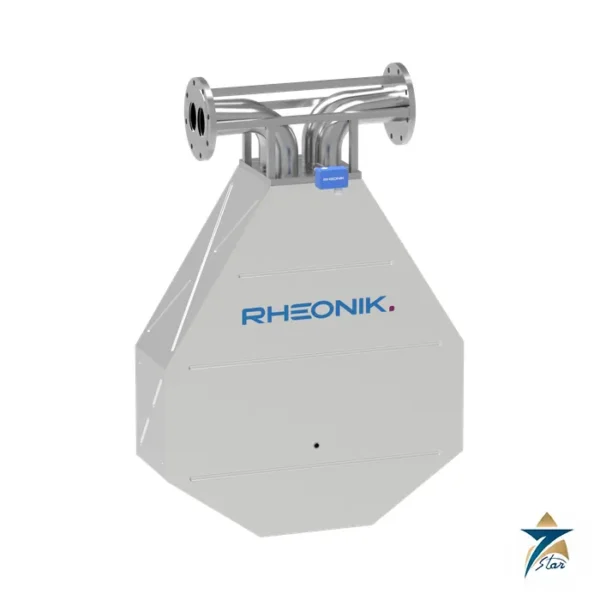
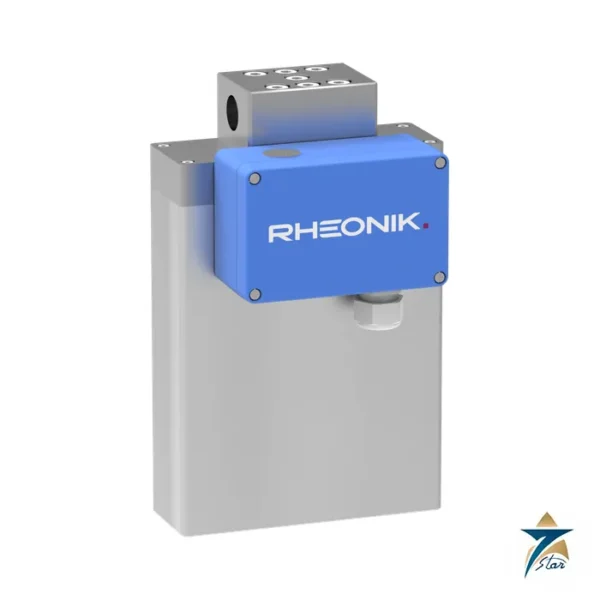
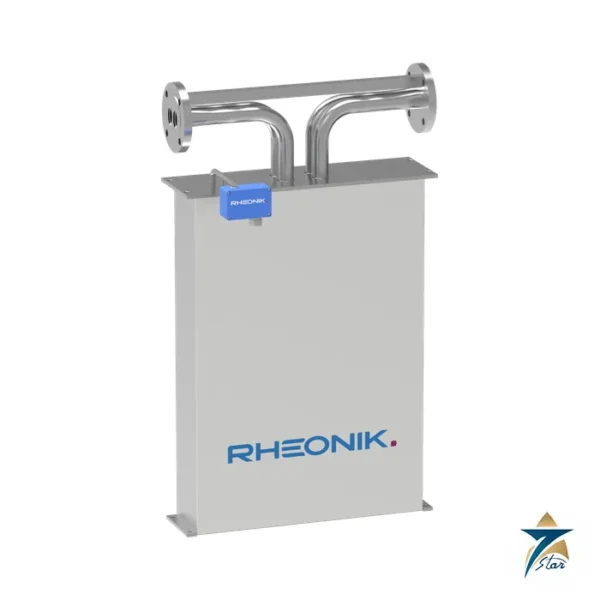
Rheonik lists the RHM20 as its industrial Coriolis meter for general flow control, plant balance, additive dosing, mixing and batching, and package and container filling. Its typical flow range of 1 to 480 kg/min suits process lines of roughly 1 to 2 inch bore, and it keeps the compact, minimal-footprint body of the series. The same sensor reports mass flow, density and temperature, so one device can replace a volumetric meter plus separate density instrument.
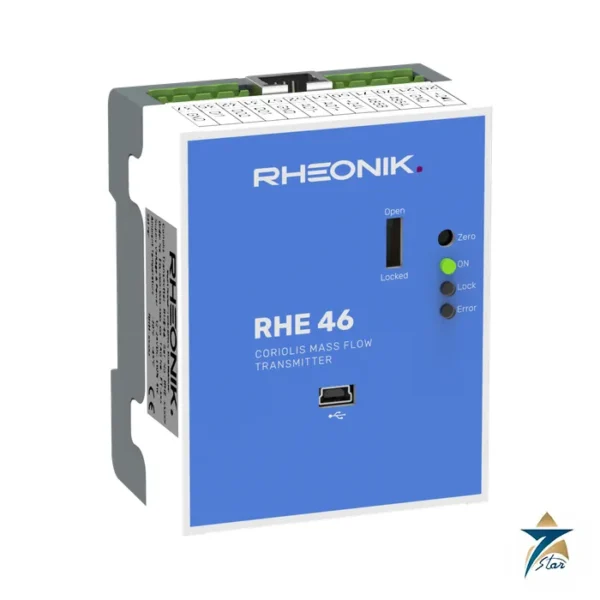
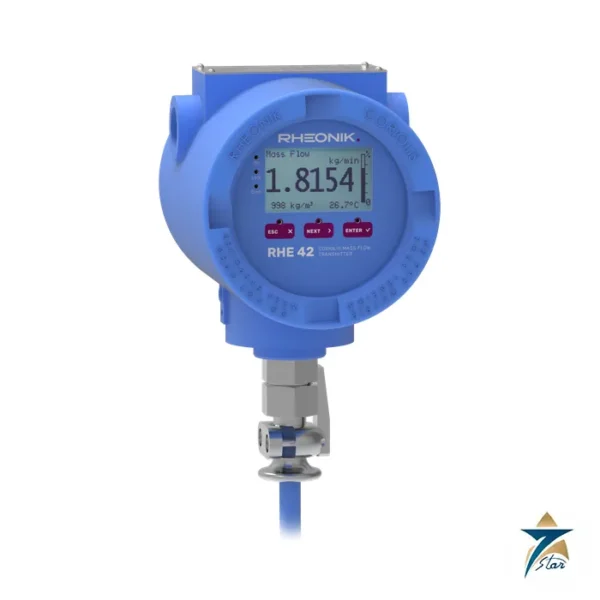
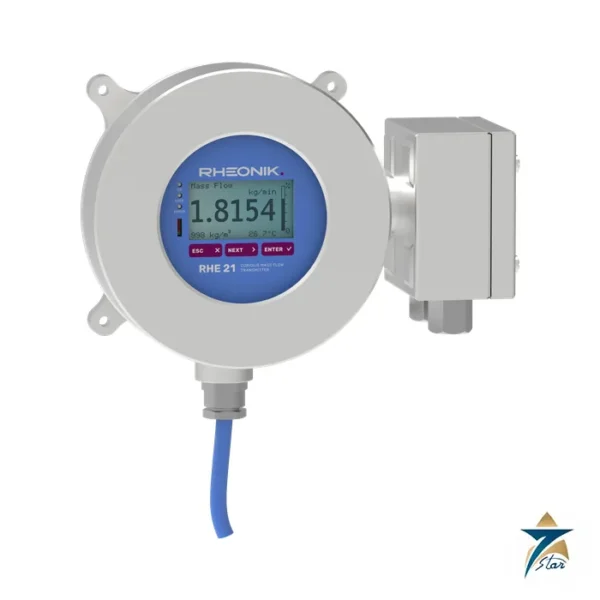
The RHM20 needs a Rheonik RHE transmitter, which can be integral or remote at up to 100 m (330 ft).
What stands out
- Pressure ratings up to 400 bar (5801 psi) and fluid temperatures from -50 to +210 C.
- Mass flow uncertainty to 0.05% and repeatability to 0.05%.
- Measurement updates at 4 kHz with an RHE40 series transmitter.
- Connection block and sealless designs, plus the AnyPipeFit custom connection commitment.
- Hazardous-area approvals selected through the order code.
Technical specification
| Parameter |
Specification |
| Nominal flow Qnom |
360 kg/min (793.66 lb/min) |
| Maximum flow Qmax |
480 kg/min (1058.22 lb/min) |
| Typical minimum flow Qmin |
1 kg/min (2.21 lb/min) |
| Pressure drop at Qnom |
About 1.3 bar (18.86 psi) on water, parallel tube |
| Zero point stability |
0.007 kg/min standard; 0.0048 kg/min premium |
| Fluid temperature |
-50 to +210 C (-58 to +410 F) |
| Ambient temperature |
-50 to +80 C; oven versions up to +210 C |
| Wetted materials |
Tubes SS 316L, Alloy C22 or Super Duplex; blocks SS 316L; flanges SS 316Ti |
| Seals |
FKM, FFKM, FVMQ, EPDM, HNBR |
| Housing |
SS 304 or SS 316L; IP66 (IECEx tested), optional IP66-IP67 |
| Weight |
About 19.5 kg threaded; about 23.5 kg with 1.5 in 150# flanges |
| Certification list |
PED; CRN on request; OIML custody transfer; DNV and CCS for marine |
Tube material and pressure
At 50 C the datasheet gives these maximum pressures: P1 SS 316L 139 bar, H1 Alloy C22 127 bar, D3 Super Duplex 809 bar, D4 Super Duplex 1137 bar and T1 tantalum 97 bar. At 350 C the P1 value falls to 88 bar and the H1 value to 80 bar. The final rating is the lowest of tube, connection block and process connection, so a flange class may limit a high-pressure tube.
Choosing a version
Connection block designs (PM) are the standard solution with short delivery; sealless parallel designs (PF and PT) have no seals between inlet and outlet. Flange examples include ANSI 1.5 in 150#, 300# and 600# at 460 mm face to face, and ANSI 2 in 150# to 2500# at 460 to 500 mm. Select the calibration (A, B, G, U or 1), a density option (N, S or D) and a terminal box (JM aluminum or SM stainless steel).
Reading the order code
The first field of the 15-field code is the performance class, S for the classic multi-purpose meter and P for the premium highest-accuracy meter. Housing codes range from NN (standard stainless steel) and SN (special SS 316) to NR, SR, NS and SS, which add a rupture disc and, in the last two, a G 3/4 in male drain connection. Seal codes are N (FKM), F (FFKM), M (FVMQ), E (EPDM) and H (HNBR), or 0 for sealless. The electrical field selects a JM or SM terminal box, a 2 m integral PTFE cable (TM) or an integral RHE42, RHE45 or RHE49 transmitter (J2, J5, J9, S9). Hazardous area approval codes are A2 (ATEX/IECEx Zone 2), A1 (Zone 1, 2), A0 (Zone 0, 1, 2), C2 (cCSAus Class I, Zone 2) and C0 (Class I, Div. 1, 2).
Accuracy factors
Turn-down from Qnom is driven mainly by the zero point stability. If a sensor is not zeroed at operating conditions, extra uncertainty from temperature and pressure can arise; a field density adjustment at operating conditions mitigates density error. Details are in the datasheet performance section.
Process effects on accuracy
The datasheet quantifies how process conditions shift results. Pressure affects mass flow by 0.0001% of rate per bar and density by a small amount per bar, and both can be compensated through a pressure sensor input to the transmitter or a manual value. Without zeroing at operating conditions, temperature adds 0.00022% of maximum flow per degree C and pressure 0.0005% of maximum flow per bar. Applying the premium calibration to higher-pressure or special-material models may give zero uncertainty up to three times higher than a standard sensor.
Applications in Oman and the Gulf
Typical duties include solvent and chemical transfer in petrochemical plants, blending, fuel and lube oil skids, and filling lines where mass-based billing or recipe control is needed.
Selection and installation notes
A Coriolis sensor is sized from the flow range and the pressure drop, so confirm the fluid, density, viscosity, operating pressure and temperature before ordering. Mount the sensor on a rigid support without stressing the pipe, keep it full of liquid, avoid mounting where vibration from pumps reaches it and follow the orientation and drain advice in the manual. Zero the meter with no flow once the line is full, record the settings, and choose the electronics and output type that match the control system.
Information needed for a quotation
Send the full model code, the quantity, the delivery location in Oman or the GCC, the intended use and any accessories needed, so that the complete package can be quoted together.
Documents and supply information
The manufacturer data sheet is attached to this page and should be read together with the project specification and the site risk assessment before a purchase is confirmed. Ratings, standards and dimensions are quoted as printed on that sheet. Lead time, stock position and certificates available with the shipment are confirmed in the quotation, and we supply to Oman and the wider GCC region for industrial, utility and building services projects.
Related items and quotation
Mounting brackets and RHE transmitters are listed in the datasheet. See flow and process measurement for related equipment. Send the fluid, rate, pressure and connection and we will quote; confirm the full order code before ordering.









Reviews
There are no reviews yet.