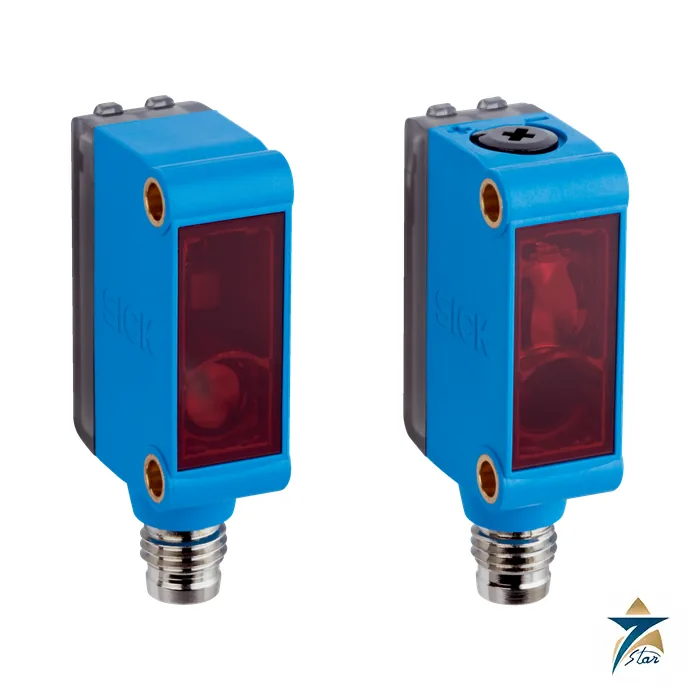
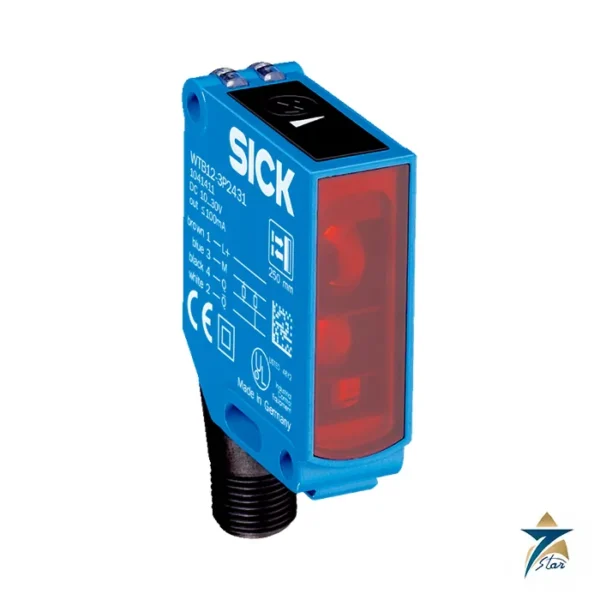
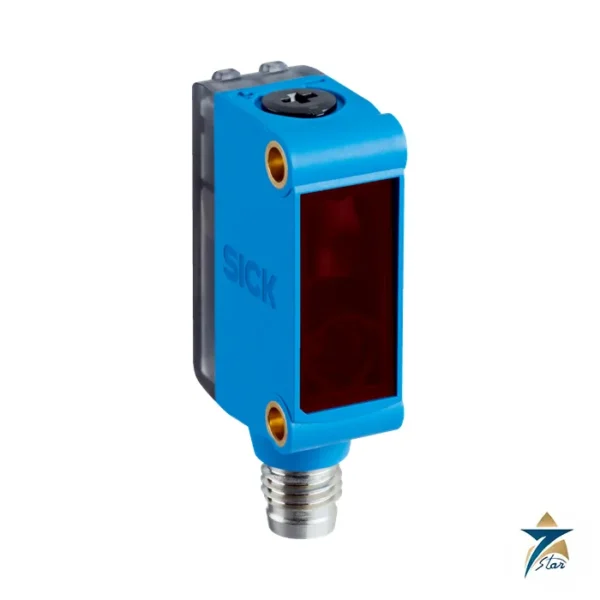
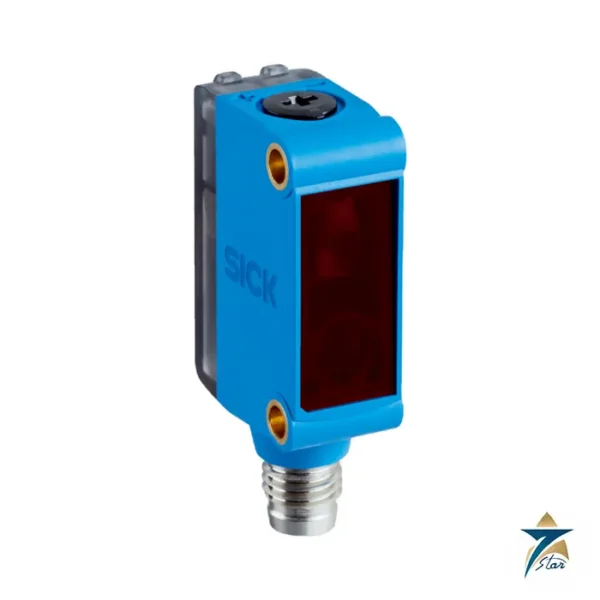
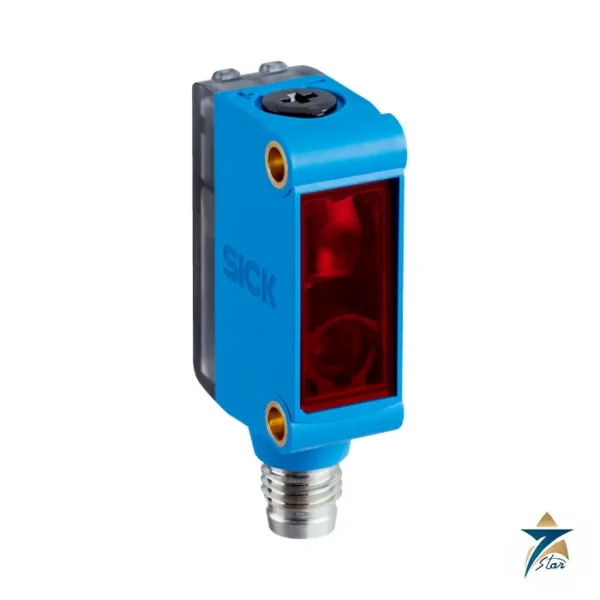
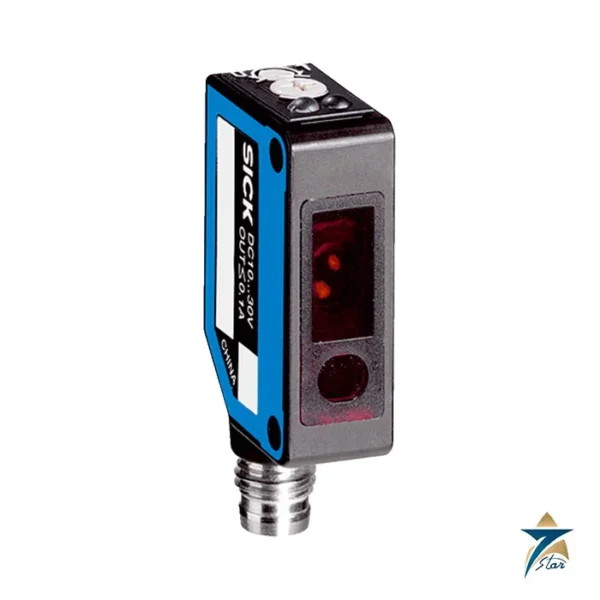
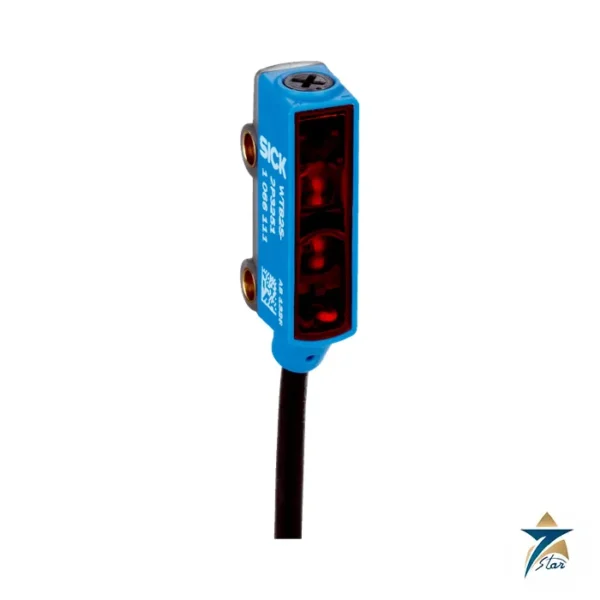
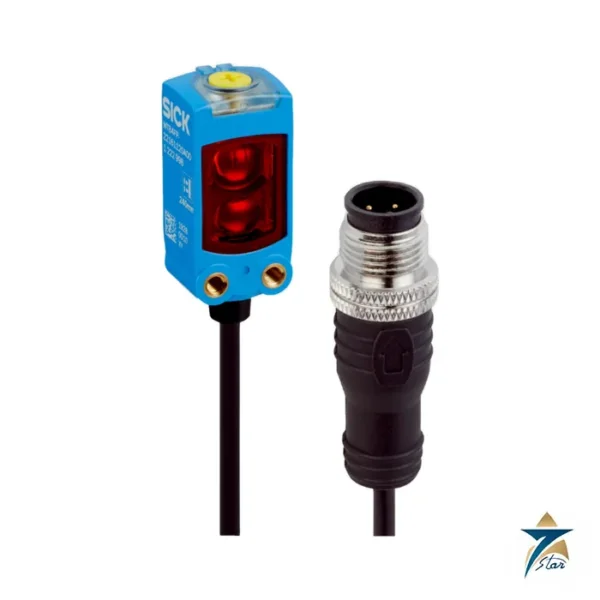
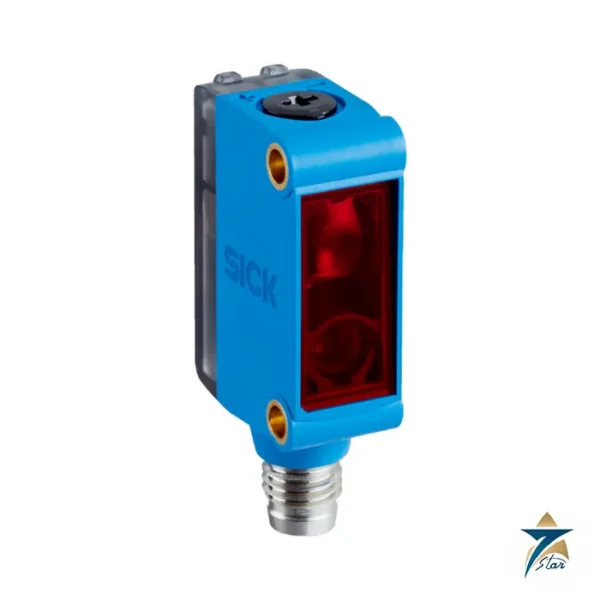
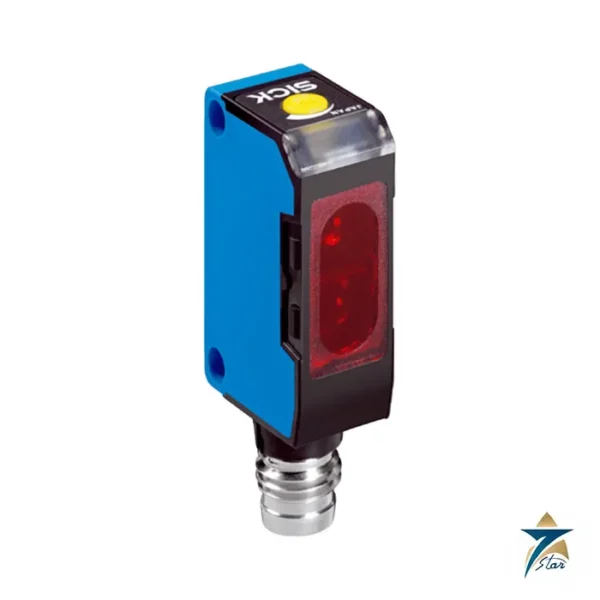
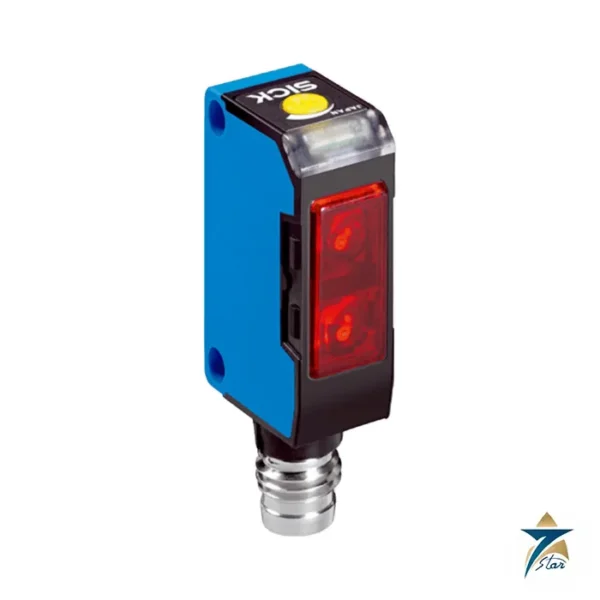
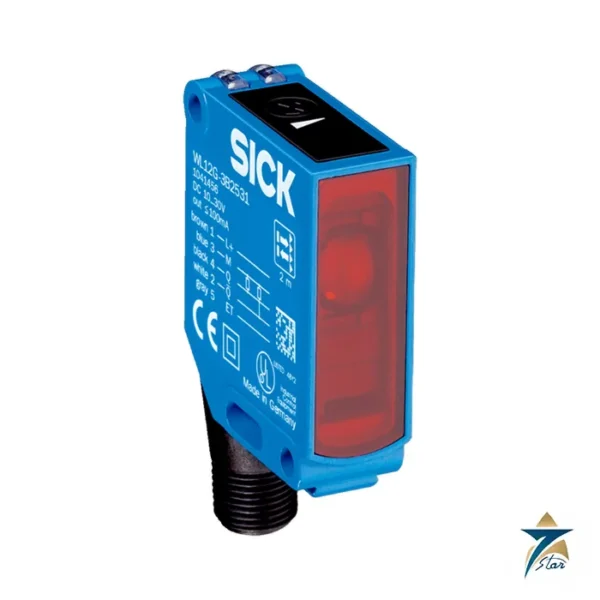
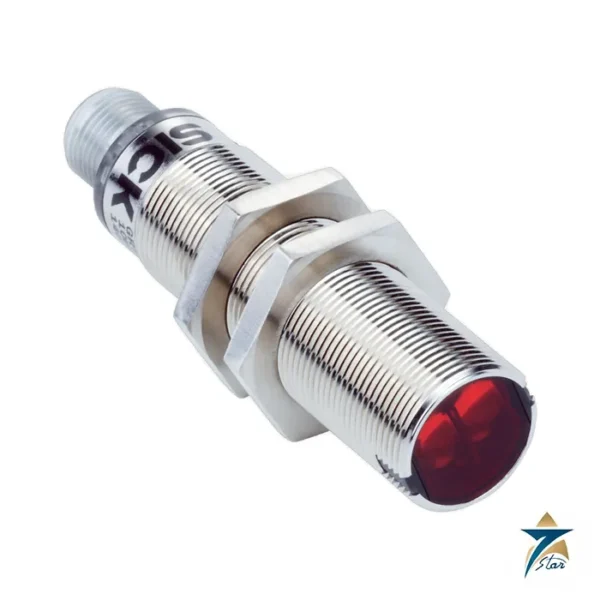
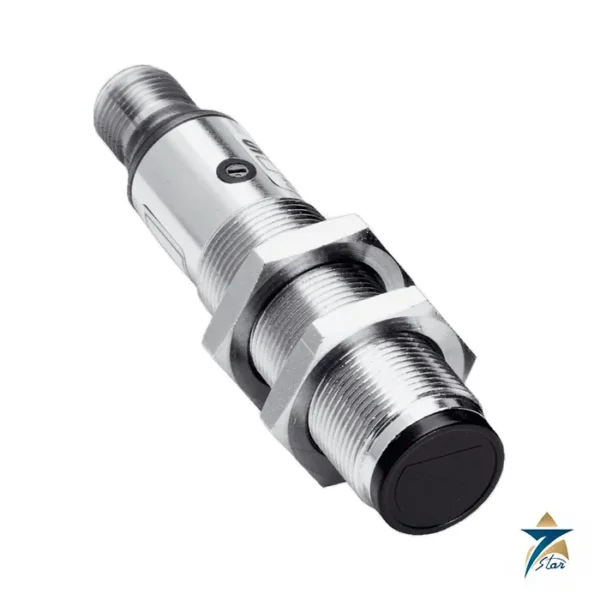
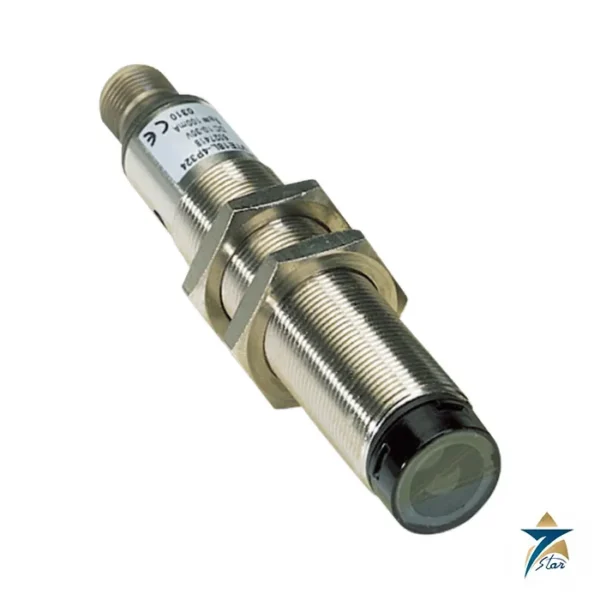
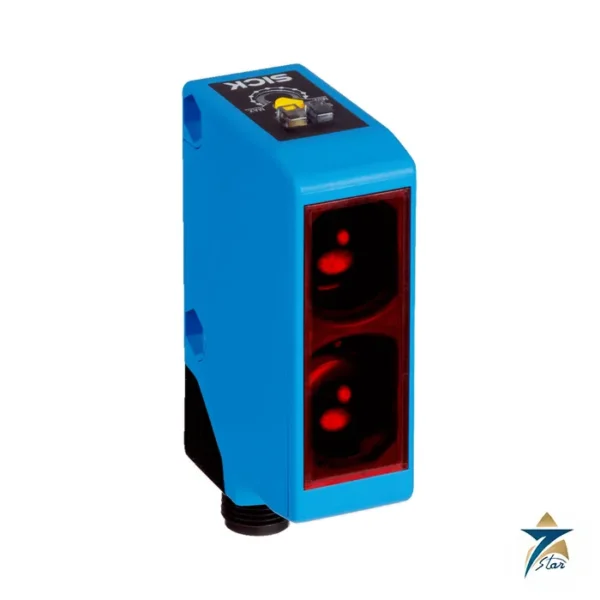
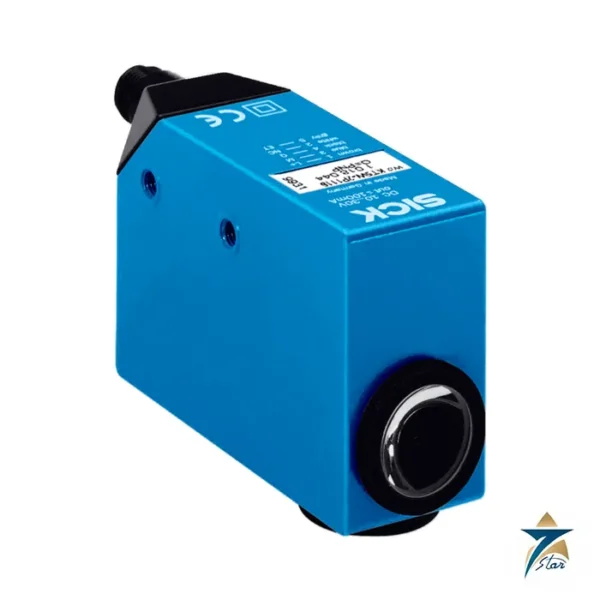
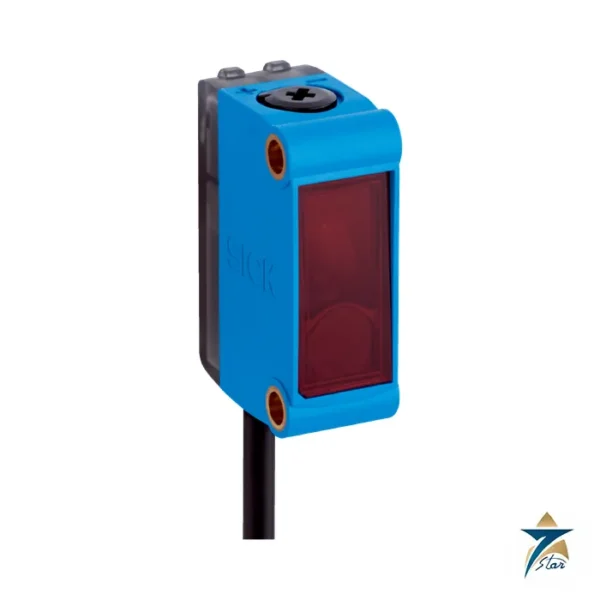
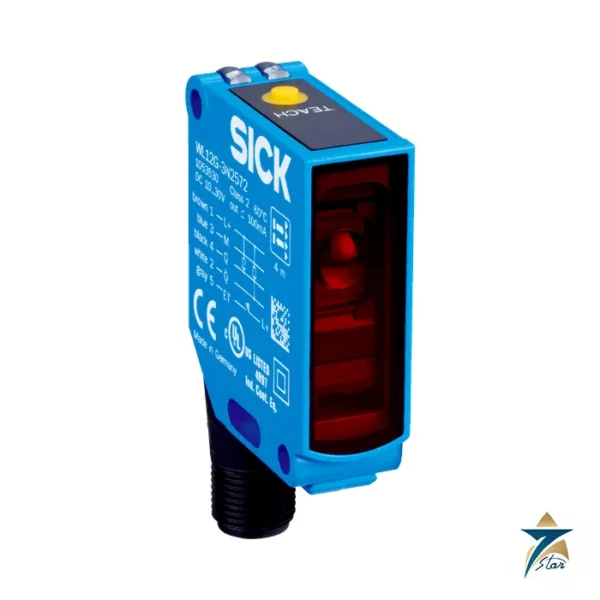
GSE6-P4212 is a SICK G6 through-beam photoelectric sensor set (part no. 1061396): a sender and a receiver that face each other, with the output changing when an object cuts the beam. Through-beam is the principle with the longest range and the highest reserve, because the light only travels one way. The data sheet gives a sensing range of 0 m … 15 m. Output: see table; connection: Male connector M8, 4-pin.
Why a G6 through-beam set suits long and narrow gaps
Because the receiver looks straight at the sender, a through-beam pair is the first choice for small, transparent-edged or dark objects that other principles struggle with, and for long gaps such as doorways, conveyor gaps and pallet entries. The price is two devices to mount and align, with wiring to both; the table lists what the set contains.
Light source: see table, light spot Ø 375 mm (12 m). Adjustment: potentiometer, 270°.
Technical specifications
| Parameter |
Specification |
| Type code |
GSE6-P4212 |
| Part number |
1061396 |
| EAN |
4047084296819 |
| Product family |
G6 |
| Functional principle |
Through-beam photoelectric sensor |
| Sensing range max. |
0 m … 15 m |
| Sensing range |
0 m … 10 m |
| Polarisation filter |
No |
| Emitted beam: Light source |
PinPoint LED |
| Emitted beam: Type of light |
Visible red light |
| Emitted beam: Light spot size (distance) |
Ø 375 mm (12 m) |
| Key LED figures: Wave length |
650 nm |
| Adjustment |
Potentiometer, 270° |
| Items supplied |
2 Stainless steel mounting brackets (1.4301/304) BEF-W100-A |
| MTTFD |
879 years |
| DCavg |
0 % |
| Supply voltage UB |
10 V DC … 30 V DC |
| Ripple |
± 10 % |
| Current consumption |
30 mA |
| Protection class |
III |
| Digital output: Type |
PNP |
| Digital output: Switching mode |
Light/dark switching |
| Digital output: Switching mode selector |
Selectable via light/dark selector |
| Digital output: Signal voltage PNP HIGH/LOW |
VS – (≤ 3 V) / approx. 0 V |
| Digital output: Output current Imax. |
≤ 100 mA |
| Digital output: Response time |
< 500 µs |
| Digital output: Switching frequency |
1,000 Hz |
| Circuit protection |
A ; B ; D |
| Housing |
Rectangular |
| Dimensions (W x H x D) |
12 mm x 31.5 mm x 21 mm |
| Connection |
Male connector M8, 4-pin |
| Connection detail: Conductor size |
0.14 mm² |
| Material: Housing |
Plastic, ABS/PC |
| Material: Front screen |
Plastic, PMMA |
| Material: Cable |
Plastic, PVC |
| Weight |
170 g |
| Enclosure rating |
IP67 |
| Ambient operating temperature |
–25 °C … +55 °C |
| Ambient temperature, storage |
–40 °C … +70 °C |
| Declarations and certificates in the data sheet |
EU declaration of conformity; UK declaration of conformity; ACMA declaration of conformity; Moroccan declaration of conformity; China RoHS; China Compulsory Product Certification (CCC) exempt; cULus certificate; Photobiological safety (DIN EN 62471) certificate |
Type code GSE6-P4212 and part number 1061396
The family prefix (GSE6) and the digits that follow describe the sensor pair; the seven-digit part number 1061396 identifies this exact set. A set is catalogued under one number even though it contains two housings, so spare-part orders for one half may carry a different number. Ask us if you need only the sender or only the receiver.
Other active types in the same SICK family, each with its own part number:
- GSE6-P4211 (part no. 1061394)
- GTE6-P4211 (part no. 1050710)
- GTE6-P4212 (part no. 1051781)
- GSE6-N4212 (part no. 1061397) – Switching output: NPN
Mounting and alignment notes
Supply 10 V DC … 30 V DC, current consumption 30 mA; housing rating IP67, ambient operating range –25 °C … +55 °C. Supplied: 2 Stainless steel mounting brackets (1.4301/304) BEF-W100-A. Mount both units on rigid brackets at the same height, align them while watching the received-light indication, and keep the lenses clean. Confirm PNP/NPN and light/dark switching against the controller input.
Typical applications for the GSE6-P4212 set
Through-beam sensing is the dependable choice where an object must be detected reliably across an open gap. Typical uses include presence detection at conveyor transfers, counting cartons and cases on packaging lines, detecting pallets at entry points, monitoring doorways and gates, and confirming that a load has passed a given position on a sorting line. Because the beam is either received or interrupted, detection depends little on the colour, gloss or surface finish of the object, which is why the method copes well with dark, shiny or irregular items.
The visible red light makes setup straightforward: the light spot can be seen on the receiver during alignment, which shortens commissioning on long gaps.
Selection and integration
Start by confirming the controller input type. This set has a PNP output, so it suits PLC inputs that expect a sourcing signal; for sinking inputs the NPN family member listed above is the relevant type. Decide whether the output should switch when the beam is clear or when it is interrupted, and set the light/dark selector accordingly so that a broken cable or loss of supply leads to the safer state for your process. Use the range figures from the data sheet with a margin rather than at the limit, especially on dusty or long installations, and use the potentiometer to adapt sensitivity to the application.
Both the sender and the receiver need supply wiring, so plan cable routes to each side of the gap. The M8 connector simplifies replacement because a unit can be exchanged without rewiring the cable.
Installation practice
Mount the sender and receiver on rigid structures that do not flex with conveyor vibration or impact from passing loads. Align them on the same axis, then check that the output switches reliably as test objects pass across the full width of the gap. Protect the units from direct mechanical contact, keep the front screens clean, and route cables away from motor and drive power cables. After installation, recheck alignment during the first routine maintenance, since structures can settle or be knocked out of position.
Site conditions in Oman and the GCC
The IP67 housing rating suits wash-down areas and dusty warehouses, but fine sand and dust settling on the front screens will reduce the received light over time, so include lens cleaning in routine maintenance in desert and port locations. Check the ambient operating range against the actual temperature at the mounting point, since sensors near roller doors, loading bays or roofs exposed to the sun can become much hotter than the surrounding air. Shading the units from direct sun helps both temperature and reliable detection.
Documents and quotation
Attached: the unaltered SICK data sheet for GSE6-P4212, part number 1061396. It is the reference if anything on this page needs checking. Tell us the quantity and the delivery location in the RFQ form, quoting the part number above, and we will come back with a quotation. Related items are listed under Sensors & Transmitters. Before ordering, confirm that output polarity, connection and range match your controller and the device being replaced. If this page and the data sheet ever differ, the data sheet applies.


Reviews
There are no reviews yet.