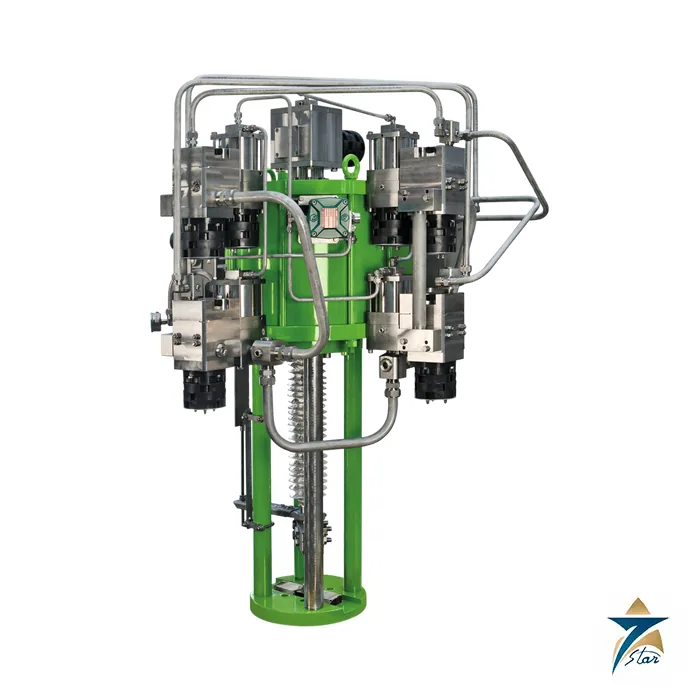
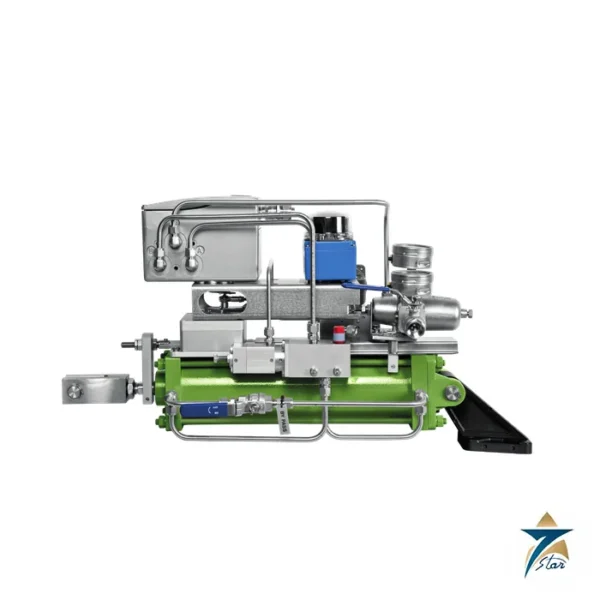
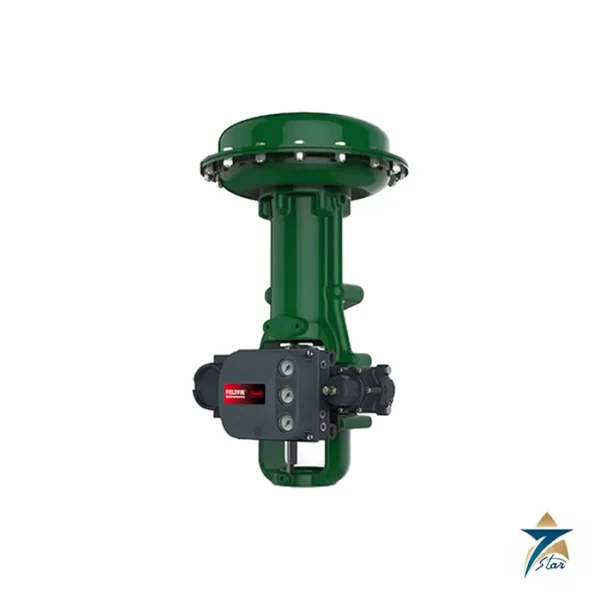
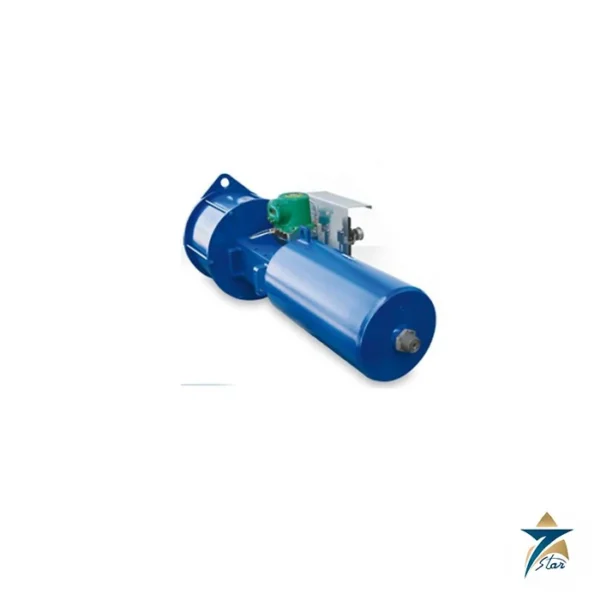
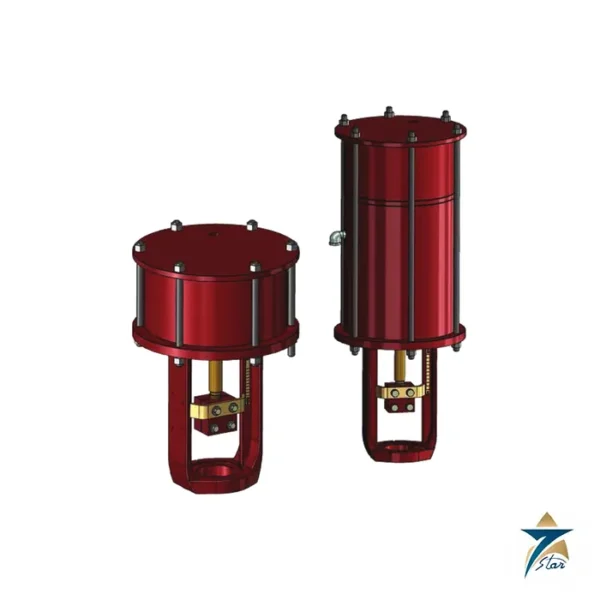
The IMI STI SC/V is a pneumatic linear piston actuator for control valves in demanding power and oil and gas service, such as turbine bypass, steam conditioning valves, desuperheaters, compressors and antisurge. A patented piston design with a double ring guiding system and a grease channel provides continuous lubrication, so operation stays smooth and precise without maintenance during the operating life.
Seven Star LLC supplies IMI STI actuators from Muscat and checks the thrust, stroke and accessory package before quoting.
Patented plug-in accessory system for severe control duties
The SC/V uses a patented plug-in connection system that lets a wide range of customer-tailored accessories and control systems be fitted, including manifold-mounted 3-way valves, exhaust mufflers with integral non-return valve that prevent contamination of the actuator internals, high-flow 3-way valves for very fast opening or closing, and a manual or hydraulic override. Actuators come in double acting and single or double acting plus spring designs, and in single, duplex or triplex configuration to optimise thrust and space.
Construction varies with size: die-cast aluminium bodies for small and medium sizes up to ND 320, carbon steel bodies for larger sizes, and a fully stainless steel design for double acting and spring-return actuators in the harshest conditions. Sizes are listed from 150 mm to 1600 mm or larger on request, with several strokes available and shorter travels on request. The brochure notes application on the North Sea.
Technical specifications
| Parameter |
Specification |
| Supply medium |
Air, nitrogen or sweet gas; sour gas version on request |
| Operating pressure |
Pneumatic up to 10 bar (design up to 12 bar) |
| Operating temperature |
-20 to 70 degC standard; lower or higher on request |
| Aluminum body, size/stroke (max thrust at 500 kPa) |
150/40 (885 daN); 200/65 to 200/150 (1,595 daN); 250/80 to 250/150 (2,485 daN); 320/100 to 320/300 (3,970 daN) |
| Aluminum body, active area |
177 cm2 (150); 319 cm2 (200); 497 cm2 (250); 794 cm2 (320) |
| Carbon steel sizes, active area / max thrust |
260: 521 cm2 / 2,605 daN; 300: 687 / 3,440; 330: 845 / 4,225; 390: 1,194 / 5,957; 400: 1,237 / 6,185; 420: 1,366 / 6,830 |
| Larger sizes |
500: 1,944 / 9,720; 520: 2,104 / 10,520; 600: 2,787 / 13,935; 650: 3,278 / 16,390; 800: 4,985 / 24,925; 850: 5,633 / 28,165; 1600: 20,050 / 100,250 |
| Strokes |
Several per size; other strokes on request |
| Certifications |
PED 2014/68/EU; ATEX 2014/34/EU; EAC TR TS 012/2011; Machinery Directive 2006/42; IP66/67M; SIL3 (IEC 61508) as a single device; EN 15714-3 |
How to specify an SC/V actuator
Give the valve stem load or required thrust and speed, the supply pressure and medium, stroke including reserve stroke, single or double acting and fail action, the accessories wanted (3-way valves, boosters, manual override, positioner, limit switches), ambient range, material preference for the body, and the certification and SIL documentation required. The brochure says an SIL analysis report of the safety loop is available on request. Thrust values above are as printed for each size at 500 kPa supply.
Information needed for actuator sizing
An SC/V actuator is sized against the valve it will drive, so the enquiry should start with the valve data. The most useful items are the valve type and size, the required stroke, the thrust needed to seat and to move the plug under the worst-case differential pressure, the fail position required by the process (open, closed or stay put), the available instrument air pressure at the minimum expected value, and the required stroking times in both directions. For turbine bypass and antisurge service the stroking time is often the decisive figure, and it drives the choice of high-flow accessories as much as the actuator size. Add the control signal type, the positioner or control system to be used, and any requirement for a manual or hydraulic override. With this information the double acting, spring or combined designs, and the single, duplex or triplex configuration, can be compared on equal terms.
Installation and commissioning on the valve
Mount the actuator on the valve yoke following the IMI STI instructions, and check that the actuator and valve stems are aligned before the stem connector is tightened. Set the travel so that the valve seats correctly and the full stroke is available, then fit and connect the plug-in accessories. Instrument air lines should be blown clean before connection, since dirt in the supply is a common cause of sticking pilot valves. Commissioning should include a stroke test at the minimum supply pressure, a check of the stroking times against the specification, a test of the fail action on loss of air or signal, and a calibration of the positioner across the full range. Record the results as the baseline for later checks.
Air supply quality
The performance of the actuator and its accessories depends on dry, clean, oil-free instrument air. In coastal plants in Oman, humid air can leave condensate in the lines if the air dryers are not working well, so check the dew point and drains as part of commissioning.
Service in Omani power and oil and gas plants
Steam conditioning and turbine bypass valves sit close to hot pipework, and many installations in Oman are outdoors or in hot turbine halls. Keep accessories, tubing and electrical connections away from direct radiant heat where possible, and use insulation or heat shields when the layout puts them close to hot surfaces. The exhaust mufflers with integral non-return valve help keep sand and dust out of the actuator internals, but they should be inspected during routine rounds to make sure they are not blocked.
Periodic checks
Although the piston design is intended for smooth operation without maintenance during its operating life, the installation around it still benefits from routine attention. Check tubing and fittings for leaks, verify that the stroking time has not drifted from the commissioning baseline, look for damage to the stem and stem connector, and confirm that the override works if one is fitted.
Documents and quotation
To request a quotation for the SC/V valve actuator, send Seven Star LLC the full model or order code, quantity, and any nameplate data from an existing unit that is being replaced or matched. Our Muscat team checks the request against the manufacturer document, which can be downloaded from this page, and replies with a formal quotation. Prices, stock and lead times are confirmed per inquiry.
Browse the valve actuators category for related products.














Reviews
There are no reviews yet.