Red inorganic-filled PTFE aimed at strongly acidic duty
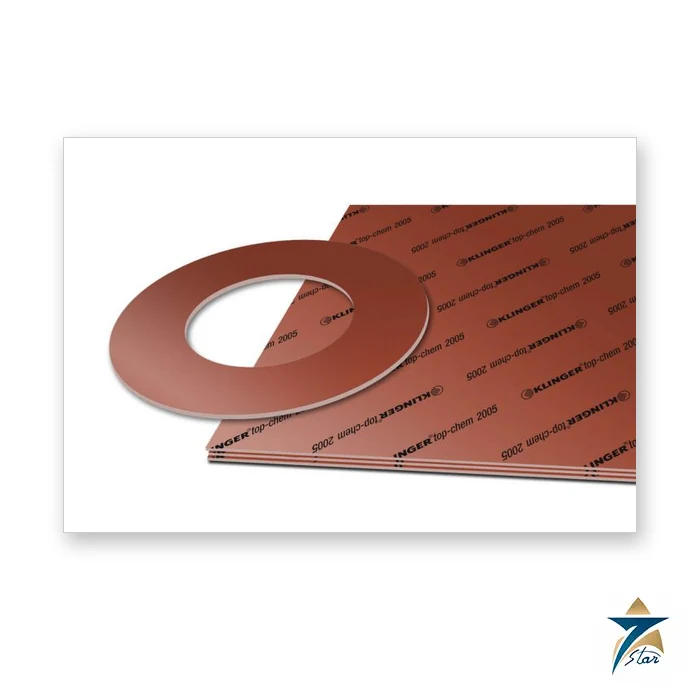
KLINGER top-chem 2005 is a PTFE material with inorganic fillers, supplied as a red sheet. Klinger names outstanding performance and high chemical resistance in strongly acidic applications, suitability for a wide range of chemical-industry uses and a role as an economical alternative among filled PTFE gaskets.
The product page lists use mainly in acids, consistent material composition and resistance to cold flow as features, and excellent chemical resistance, very good mechanical properties at medium temperatures and no ageing as benefits. Sheets are 1500 x 1500 mm in 1.0, 1.5, 2.0 and 3.0 mm thickness.
Technical specifications
| Parameter |
Specification |
| Manufacturer / model |
Klinger (Rich. Klinger Dichtungstechnik), KLINGER top-chem 2005 |
| Basis composition |
PTFE filled with inorganic fillers |
| Colour |
Red |
| Sheet size |
1500 x 1500 mm |
| Thickness |
1.0, 1.5, 2.0, 3.0 mm |
| Tolerances |
Thickness per DIN 28091-1; length and width plus or minus 50 mm |
| Certificates and approvals as printed |
Oxygen-tested, DIN-DVGW, WRAS approval, DNV approval, TA-Luft (Clean air), FDA conformity (components comply with FDA requirements), Regulation (EU) No. 1935/2004 (incl. 10/2011), VDI 2200 blowout |
| Industries listed |
General industry, chemical, oil and gas, energy, infrastructure, pulp and paper, marine, automotive, food and beverage, pharma |
| Compressibility, ASTM F 36 M (2.0 mm) |
4 % |
| Recovery, ASTM F 36 M |
40 % |
| Stress relaxation, DIN 52913, 30 MPa, 16 h |
25 MPa at 150 °C (30 MPa) |
| Klinger cold/hot compression, 50 MPa, thickness decrease |
5 % at 23 °C; 35 % at 260 °C |
| Tightness, DIN 28090-2 |
0.02 mg/(s x m) |
| Specific leak rate, VDI 2440 |
8.75E-07 mbar x l/(s x m) |
| Thickness / weight increase after immersion (percent): 100 % H2SO4 18 h at 23 °C; 100 % HNO3 18 h at 23 °C; 33 % NaOH 72 h at 110 °C |
1 / 1 (H2SO4); 1 / 2 (HNO3); no value printed (NaOH) |
| Density |
2.2 g/cm3 |
| Thermal conductivity |
0.42 W/mK |
| ASME code sealing factors, 2.0 mm, tightness class 0.1 mg/(s x m) |
y 12 MPa, m 2.8 |
| Chemical resistance chart in datasheet |
A (small or no attack) in all twelve media groups printed on the chart |
All values are typical values for a 2.0 mm sheet as printed in the Klinger datasheet; other thicknesses can differ.
Where top-chem 2005 sits in the PTFE line
Mechanically the sheet is firm: 4 % compressibility, 40 % recovery, y 12 MPa and m 2.8, with a tightness of 0.02 mg/(s x m) and a specific leak rate of 8.75E-07 mbar x l/(s x m), the lowest leak rate printed for the PTFE grades. Thickness decrease under 50 MPa is 5 % at 23 °C and 35 % at 260 °C, which is a clear step above top-chem 2000 and a reminder to keep temperature moderate.
Immersion in 100 % sulfuric and nitric acid produced 1 % thickness change and 1 to 2 % weight change; no value is printed for caustic soda, so choose top-chem 2006 for strongly alkaline media. Approvals include DIN-DVGW, WRAS, DNV, TA-Luft, FDA conformity of components, Regulation (EU) 1935/2004 and VDI 2200 blowout.
Related KLINGER gasket sheets
Choose between the PTFE sheets below mainly by medium, as each filler suits a different chemistry.
| Model |
Basis |
Colour |
Positioning printed by Klinger |
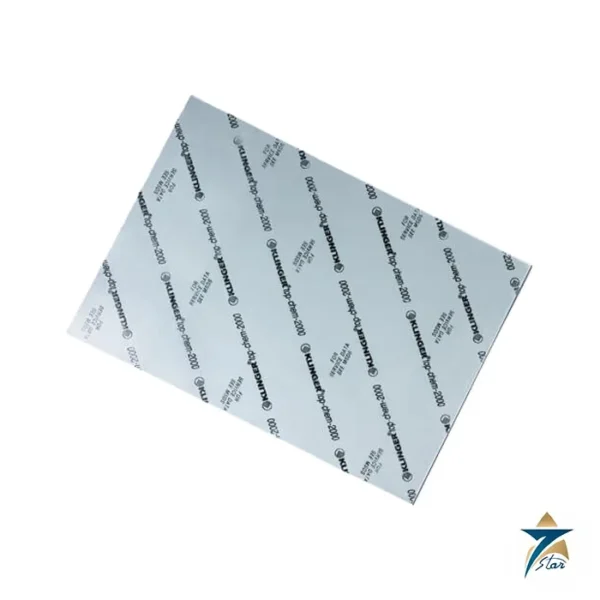
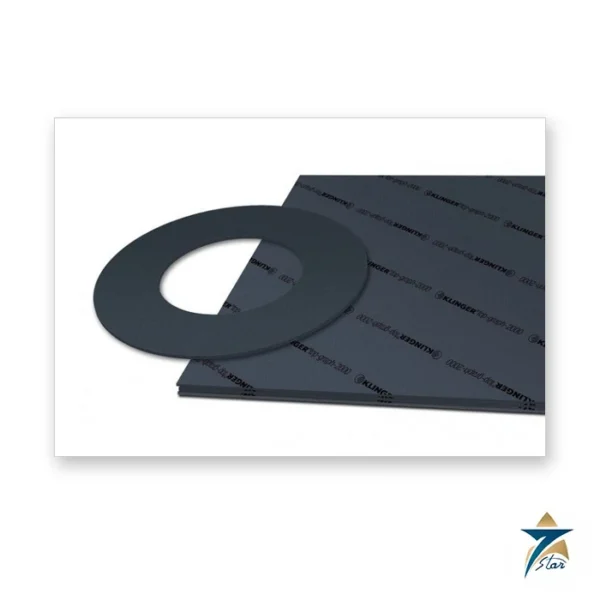
| KLINGER top-chem 2000 |
PTFE filled with silicon carbide |
Grey |
Heavy-duty, high mechanical load at high temperature |
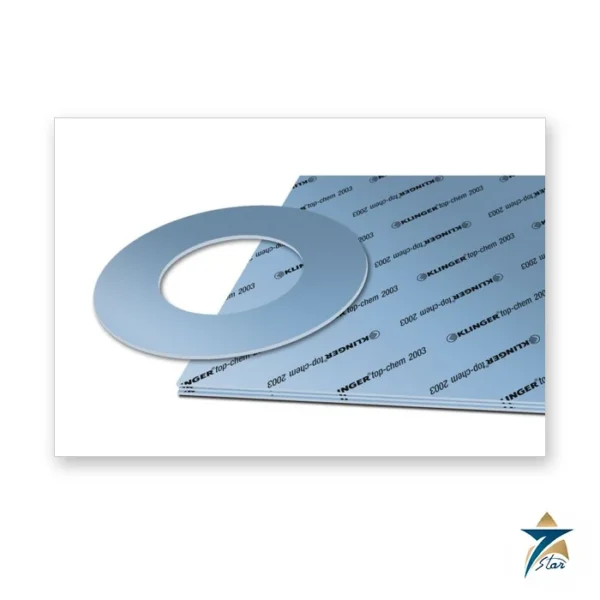
| KLINGER top-chem 2003 |
PTFE filled with hollow glass microspheres |
Blue |
Sealing at low surface load; acids and alkalis |
| KLINGER top-chem 2006 |
PTFE filled with barium sulfate |
White |
Strongly alkaline media; pigment-free |
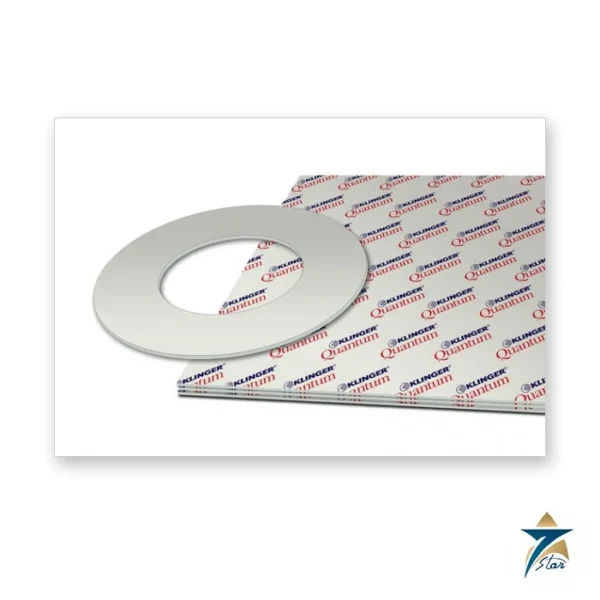
| KLINGER Quantum |
Fibre and filler compound, HNBR |
White |
Flexibility at high temperature; FDA conformity |
Documents, ordering details and quotation
Include acid type and concentration, because the datasheet gives no caustic value for this grade. For a firm quotation please give the medium, pressure, temperature, flange details, bolt load available, thickness and quantity, and say if you need whole sheets or finished gaskets. As Klinger itself points out, the printed data cannot cover every installation, so have the final choice reviewed against the actual operating conditions. More products are shown in gaskets, seals and pipe fittings.






Reviews
There are no reviews yet.