A general-purpose stainless steel elastomer bellows seal for pumps and rotating equipment
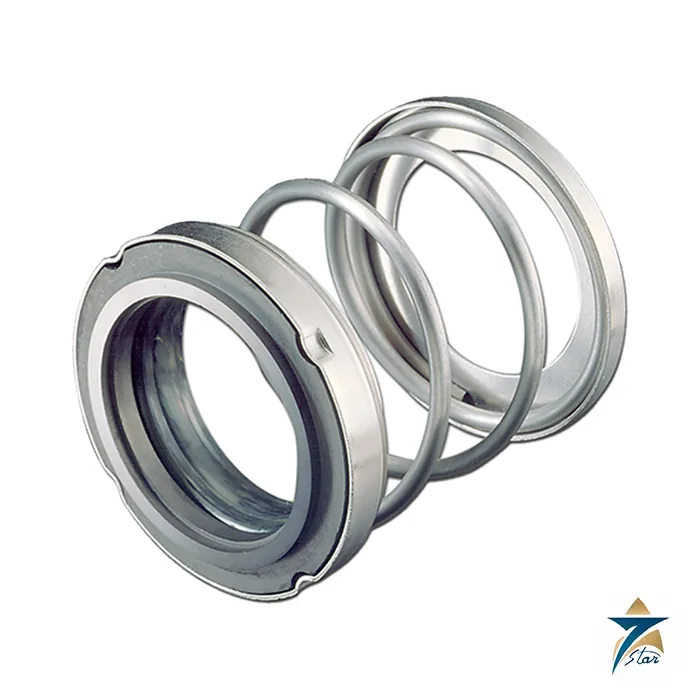
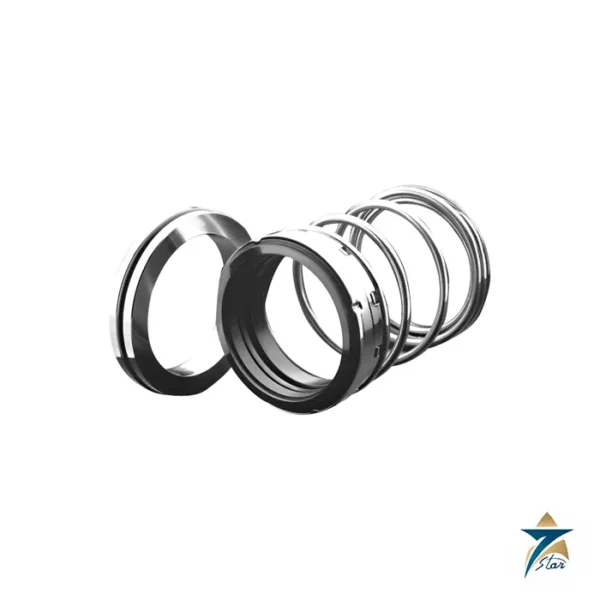
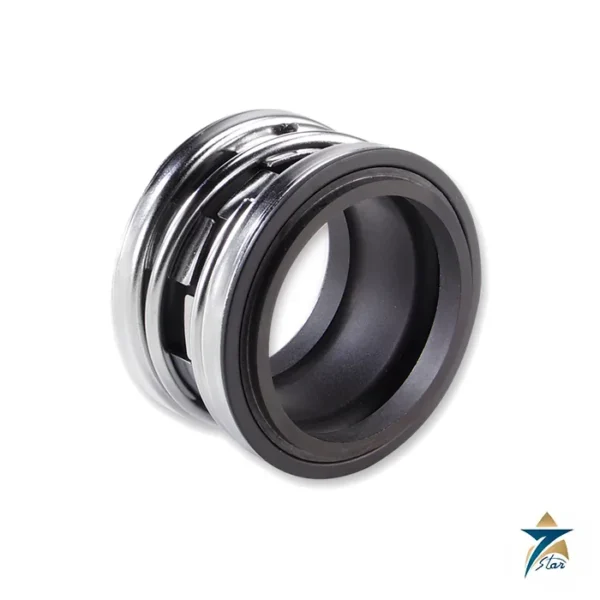
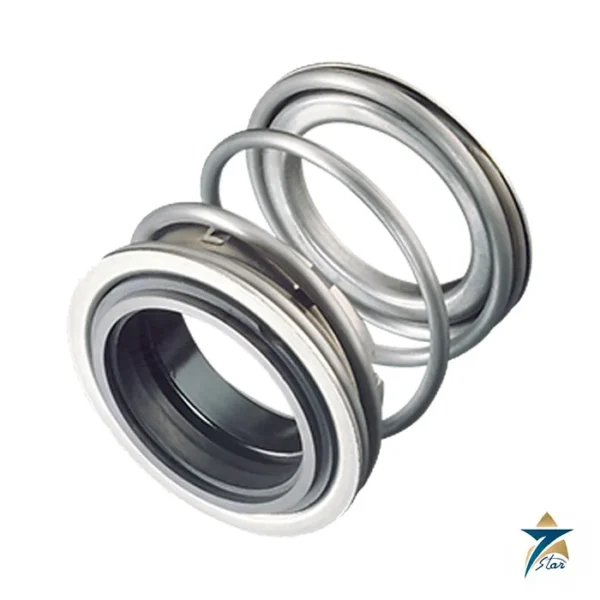
The John Crane Type 21 is a general-purpose elastomer bellows seal that John Crane describes as an industry standard with OEM designers. Built in stainless steel, it offers a service range well beyond comparably priced seals of other metallurgical construction. The positive static seal between the bellows and the shaft, together with free movement of the bellows, means there is no sliding action that could cause shaft fretting, and the seal compensates for normal shaft run-out and axial movement. It is used on centrifugal, rotary and turbine pumps, compressors, mixers, blenders, chillers and agitators in water, wastewater, food, pulp and paper and general applications.
Technical specifications
| Parameter |
Specification |
| Seal type |
Elastomer bellows, single, rotating-head design, single coil spring |
| Temperature |
-40 to 205 degC (-40 to 400 degF), depending on materials |
| Pressure |
Up to 11 bar g (150 psig) |
| Speed |
Up to 13 m/s (2,500 fpm), depending on configuration and shaft size |
| Seal sizes |
0.250 to 4.000 in. in the datasheet dimension table |
| Working height L3 |
0.625 in. (size 0.250) to 2.437 in. (size 4.000) |
| Face / primary ring |
Carbon standard; siliconized graphite, tungsten carbide (nickel binder) or solid silicon carbide optional |
| Elastomer bellows |
Buna-N standard; fluoroelastomer, ethylene propylene or neoprene optional |
| Drive band, retainer, spring holder and spring |
18-8 stainless steel standard; 316 stainless steel or Monel optional |
| Shaft surface finish |
Up to 3.125 in. diameter 125 Ra; over 3.125 in. 63 Ra |
| Shaft ovality |
0.002 in. (0.051 mm) maximum |
| End play / axial float |
Plus or minus 0.005 in. (0.13 mm) |
Design features
The seal is self-aligning and adjusts to shaft end play and run-out. A positive mechanical drive protects the elastomer bellows from overstressing, a single coil spring improves tolerance to clogging, and the seal is simple to fit and field repairable. It can be used with practically any type of mating ring. A viscosity chart in the datasheet recommends a standard seal, hard-face design or double seal for viscous fluids.
What to confirm before ordering
Provide the shaft or sleeve diameter, equipment make and model, fluid, temperature, pressure, speed and the available seal chamber space, then choose the face, elastomer and metal parts. The pressure rating is a basic figure that must be reduced with the datasheet multiplier factors for lubricity, temperature and speed. See also the John Crane Type 1 and the Pumps category.
How the John Crane Type 21 bellows seal works
A mechanical seal stops leakage along a rotating shaft by pressing a stationary face against a rotating face, with a very thin film between them. In the Type 21 the rotating head carries the primary ring and is driven by an elastomer bellows that grips the shaft. A single coil spring keeps the faces in contact, and the bellows provides the secondary seal against the shaft, so no O-ring slides on the shaft surface. The datasheet notes that the positive static seal and free-moving bellows avoid shaft fretting and absorb normal run-out and axial movement.
Because it is a single seal with one rotating head, it is compact and easy to fit in stuffing box or seal chamber spaces where a simple cartridge-free seal is acceptable.
Typical Type 21 applications
The datasheet lists centrifugal, rotary and turbine pumps, compressors, mixers, blenders, chillers and agitators, with water, wastewater, food, pulp and paper and general service. In practice this means duties such as:
- Clean and lightly contaminated water pumps on buildings, utilities and irrigation.
- Wastewater and general process transfer pumps where a robust single seal is acceptable.
- Agitators and mixers with moderate speed and pressure.
- Replacement seals on OEM pumps, since the design is noted as an industry standard with OEM designers.
Selection checklist for a Type 21 seal
- Shaft or sleeve diameter, which sets the seal size within the 0.250 to 4.000 in. range of the dimension table.
- Fluid, including viscosity, abrasives and chemical compatibility; the datasheet has a viscosity chart for choosing between a standard seal, a hard-face design or a double seal.
- Operating temperature between -40 and 205 degrees C, depending on the materials selected.
- Pressure up to 11 bar g, with the note that the basic rating must be reduced in some conditions.
- Speed up to 13 m/s, depending on configuration and shaft size.
- Face material: carbon as standard, with siliconized graphite, tungsten carbide or solid silicon carbide as options.
- Elastomer: Buna-N as standard, with fluoroelastomer, ethylene propylene or neoprene as options.
- Metal parts: 18-8 stainless steel as standard, with 316 stainless steel or Monel as options.
- Available seal chamber space, using the working height L3 from the table.
Installation and maintenance notes
The shaft finish and condition are critical: the datasheet states surface finish limits of 125 Ra up to 3.125 in. diameter and 63 Ra above that, a maximum ovality of 0.002 in. and axial float of plus or minus 0.005 in. Check these on the pump before fitting the seal, and make sure the shaft end is chamfered and free of burrs that could cut the bellows. Install the seal clean, avoid contact between the faces and any oil or grease that is not compatible with the elastomer, and set the working height to the dimension given for the seal size. Run the pump with liquid at the seal faces from the first start, because dry running quickly damages the faces. The seal is described as field repairable, so worn faces or bellows can be replaced.
Requesting a quotation for the John Crane Type 21
Send the shaft diameter, equipment make and model, fluid, temperature, pressure, speed, seal chamber dimensions and the face, elastomer and metal parts you require, together with the quantity. Seven Star LLC serves industrial customers in Oman and the GCC and replies with a quotation based on the information provided.
Documents and quotation
The attached John Crane technical specification (4 pages) includes the typical arrangement, the dimension table, materials and pressure ratings. Send the shaft size and operating conditions for a quotation.












Reviews
There are no reviews yet.