A screw-in RTD probe that speaks CANopen directly
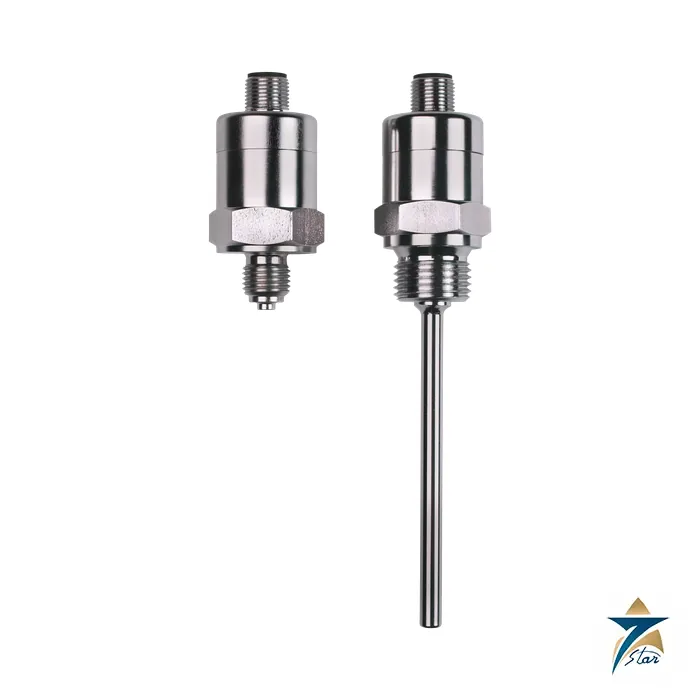
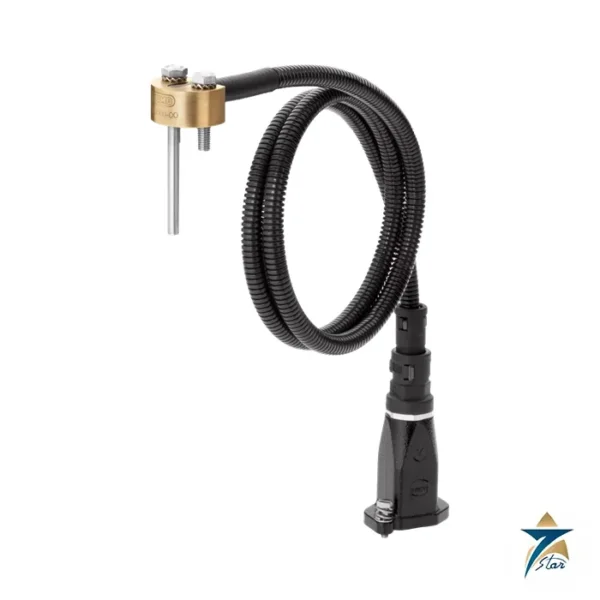
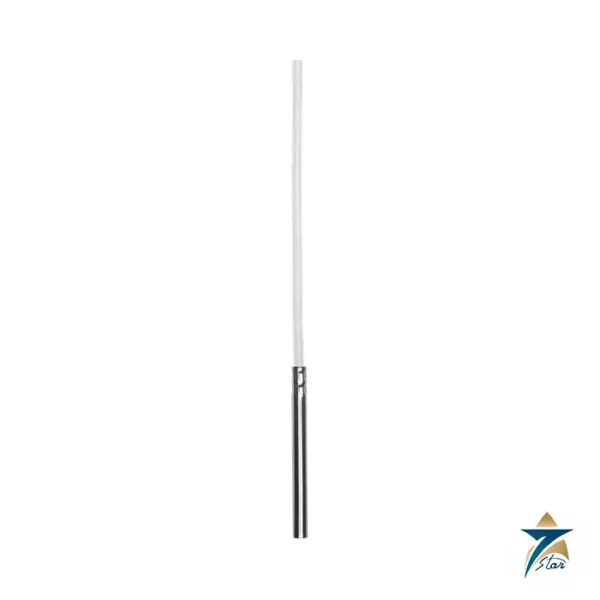
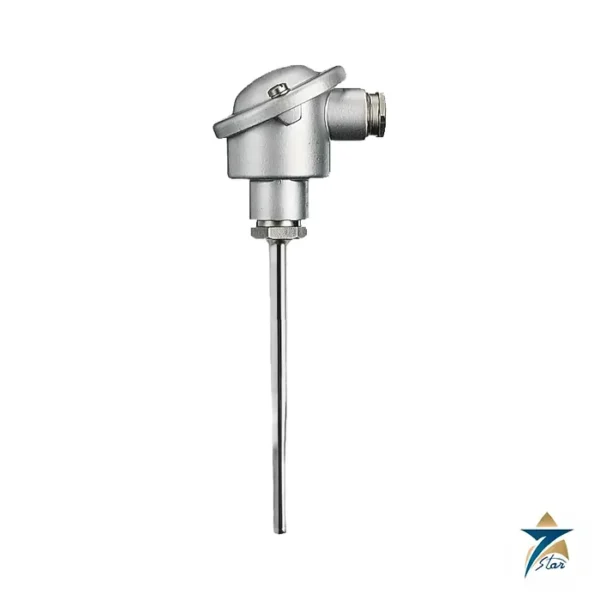
The JUMO CANtrans T (type 902910) is an RTD temperature probe with a CANopen output for temperatures from -50 to +450 degC, built as a single or double probe with a vibration-resistant construction. The Pt1000 sensor, class B to DIN EN 60751:2009, is digitalized and linearized inside the probe, and the value is made available over the CANopen serial bus as a CAN slave. The DS 404 device profile provides a large number of additional functions, and all settings are made with standard CANopen software tools. Areas of application listed by JUMO include medical technology, mechanical engineering, drive technology, commercial vehicles and railroad systems.
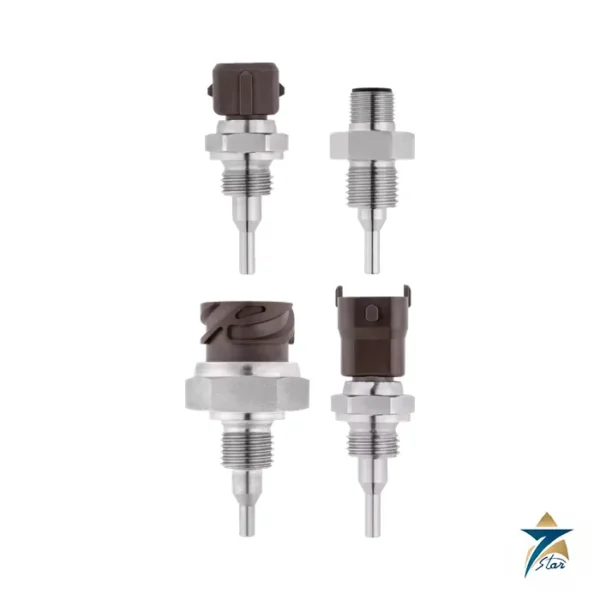
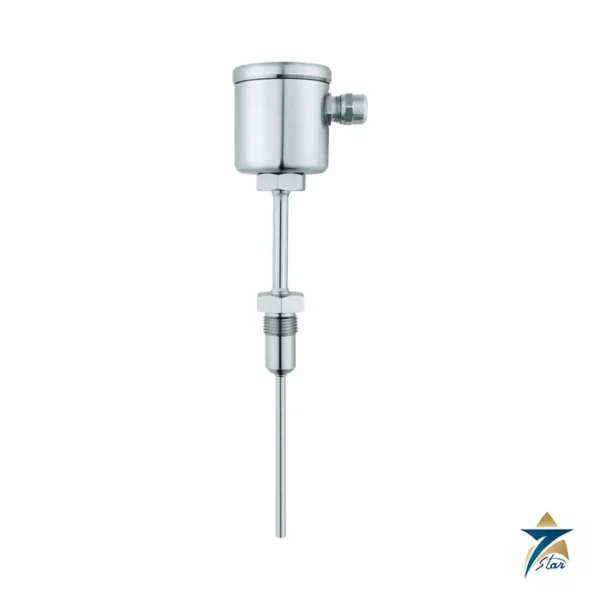
Two basic types exist: 902910/10 with a standard body and 902910/12 with an extension tube for higher temperatures. The probe seals reliably under underpressure and overpressure through its screw-in thread, and the M12 x 1 five-pole round plug conforming to IEC 60947-5-2 carries both supply and bus. A limit value monitoring function, minimum and maximum memory and fine adjustment are included.
Technical specifications
| Parameter |
Specification |
| Basic types |
902910/10 standard; 902910/12 with extension tube for higher temperatures |
| Operating temperature |
-50 to +150 degC (370); -50 to +450 degC (404) |
| Measuring insert |
Pt1000 to DIN EN 60751:2009, 1 x (1005) or 2 x (2005), 2-wire; class B (standard) or A |
| Protection tube |
Stainless steel 1.4571, diameter 6 mm; insertion length 50 to 500 mm |
| Process connection |
G 1/4, G 3/8, G 1/2, M14 x 1.5, M18 x 1.5, M20 x 1.5, 1/2-14 NPT; stainless steel 1.4571 |
| Accuracy |
Class B, max. +/-0.2 % of measuring range span; temperature influence 0.0025 % per K |
| Sampling rate |
250 ms |
| Protocol |
CiA DS 301 V4.02, CANopen slave; profile CiA DS 404 V1.2 |
| Baud rate / module ID |
20 kBaud to 1 MBaud; 1 to 127, set via LSS or SDO |
| Objects |
PDO 0 Rx, 1 Tx; SDO 1 Rx, 1 Tx; emergency, heartbeat, LSS, SYNC |
| Output units |
Degrees C, switchable to F or K; decimal places 0, 1, 2 |
| Supply |
DC 10 to 30 V; max. approx. 45 mA |
| Connection |
Round plug M12 x 1, 5-pole, IEC 60947-5-2 |
| Monitoring |
Underrange and overrange with selectable limits, probe short circuit, probe break |
| Response time |
t0.9 = 12 s in water at 0.2 m/s |
| Ambient temperature |
Operating -20 to +85 degC; storage -40 to +85 degC |
| Shock / vibration (/10) |
EL 50 mm: 50 g, 10 g (10-2000 Hz); EL 100 mm: 30 g, 5 g; EL 200 mm: 15 g, 2 g |
| Protection |
IP67 with connection plug screwed on |
Configuring a CANtrans T probe for your network
The order code reads basic type – operating temperature – measuring insert – tolerance class – tube diameter – insertion length – process connection / extra codes, for example 902910/10 – 370 – 1005 – 1 – 6 – 50 – 102 / 000. Use 902910/12 and code 404 where the process is above 150 degC so the electronics stay cool on the extension tube. Extra code 100 requests a customer-specific configuration written in plain text, and 310 steps the protection tube down for faster response.
| Accessory |
Part no. |
| PC CAN interface for USB with configuration software |
00449941 |
| Terminating resistor for CAN bus, M12 x 1 |
00461591 |
| M12 contact box, straight, 5-pole, 5 m cable |
00337625 |
| M12 contact box, angled, 5-pole, 2 m cable |
00375164 |
| Extension cable 2 m, 5-pole, M12 |
00461589 |
| T connection element, 5-pole, M12 |
00419129 |
The EDS file and operating manual are provided as downloads. Self-assembly M12 contact boxes without cable are available straight (00419130) and angled (00419133).
Bus setup, functions and installation points
Connect supply and the CAN lines through the M12 plug (pin assignment: V+ on 2, V- on 3, CAN_H on 4, CAN_L on 5, shield on 1) and terminate the bus at both ends. Baud rate and module ID are set by LSS or SDO; the object directory is accessible through the EDS file. Sensor monitoring continuously checks the sensor signal and issues high-priority emergency telegrams if an error occurs, while the heartbeat function lets the master see that the node is alive.
Further functions include scaling to any unit or to percent of range, an adjustable filter constant to suppress signal fluctuations, a freely adjustable characteristic offset (fine adjustment) and a min/max memory. Because the signal is digital over the bus, no analog cabling error or signal conditioning is needed, which is helpful on engines, hydraulic power packs and rolling stock where several CAN nodes already exist. The probe is also found in drive and machine control systems that use CANopen.
Because the sensor is digital, the output stays accurate at long distance, and the accuracy is stated as class B, max. 0.2 % of the measuring range span, with a temperature influence of 0.0025 % per K. Mechanical loading depends on insertion length for basic type 902910/10: a 50 mm probe withstands 50 g shock and 10 g vibration up to 2000 Hz, while a 200 mm probe is rated 15 g and 2 g up to 100 Hz, so short probes are preferred on engines. The measuring range limits are -50 to +150 degC and -50 to +450 degC, and freely selectable lower and upper limits trigger the monitoring function.
Documents and quotation
The JUMO data sheet 902910 is attached for download. Seven Star LLC supplies JUMO sensors from Muscat; tell us the thread, insertion length, temperature code and extension tube requirement, plus accessories, and we will quote. Related probes are listed under https://omansevenstar.com/product-category/sensors-transmitters/temperature/.







Reviews
There are no reviews yet.