Change orifice plates under pressure without a bypass
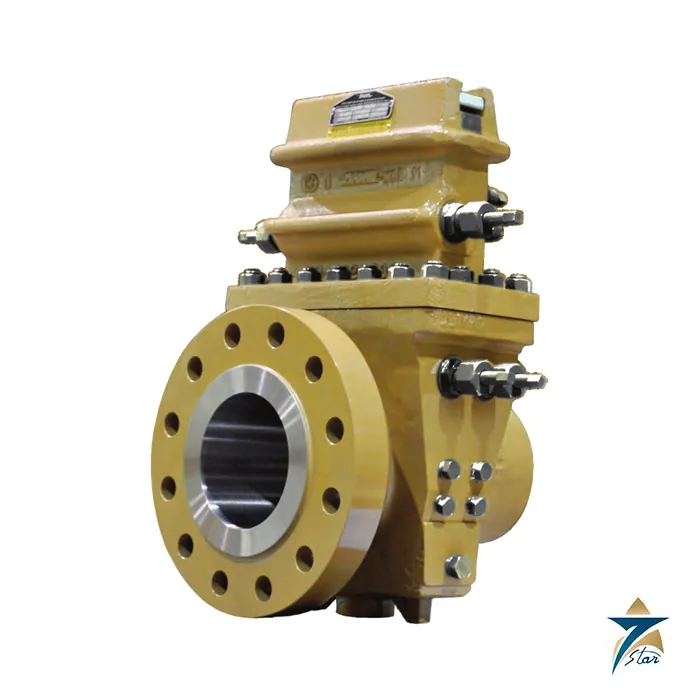
The Daniel Senior Orifice Fitting is a dual-chamber differential pressure flow device for natural gas measurement. Daniel states that it is the most widely used means of measurement for natural gas, with an installed base of well over one million fittings. Its main benefit is that the orifice plate can be changed or inspected under pressure without flow interruption: a slide valve isolates the upper chamber, so the extra valves and fittings of a conventional orifice flange installation, and any bypass, are not needed. The fitting is hydrostatically tested, repairable in the field, and offered in materials suited to sour gas service.
Technical specifications
| Parameter |
Specification |
| Type |
Dual-chamber orifice fitting with slide valve and plate carrier; differential pressure flow meter |
| Line sizes |
2 to 24 in. |
| Pressure class |
Standard: 2 to 12 in. ANSI 600; 16 to 24 in. ANSI 150 to 600; ANSI 900 and 1500 available 2 to 24 in.; consult factory above ANSI 600 |
| End connections |
Standard Flangnek raised face (FN/RF) or ring-type joint (FN/RTJ); optional flanged RF or RTJ |
| Pressure taps |
Four pairs standard on 2 to 24 in. ANSI 600; internal tap holes to API 14.3 (AGA 3) or optional ISO 5167; 0.50 in. NPT process connection |
| Line bore |
Standard Schedule 40, 80 and 160 |
| Temperature range |
-29 to +93 °C standard; -46 to +93 °C low temperature |
| Body casting |
A126 Gr. WCB standard; A352 Gr. LCC for low temperature |
| Shafts |
Stainless steel, double-ended |
| Trim options |
A (dry sweet gas), NACE (dry sour gas), AASG, 316SS PIC and 22Cr Duplex (wet sour or liquid) |
| Seals |
Dual face plate seals; one seal ring covers all pipe schedules up to Schedule 30 or standard in a line size |
| Slide valve |
Metal-to-metal hard seat with lubricant; optional soft seat 2 to 12 in. up to ANSI 600 |
| Plate alignment |
Metal-to-metal alignment in 8 in. and smaller; not field adjustable on 2 to 8 in. |
| Testing |
Hydrostatic test at 1.5 times rated CWP |
| Mounting |
2 to 12 in. vertical down or horizontal side opening; metering positions at nine, twelve or three o’clock |
Plate carrier and alignment
The orifice plate carrier for 2 to 8 in. fittings uses a four-point positioning system with metal-to-metal contact between the plate outer diameter and the carrier, which gives consistent compliance with eccentricity requirements in a vertical or horizontal plane. It is compatible with Senior fittings manufactured after 1992. Wide flow ports reduce differential pressure load across the plate during a change, a 360 degree seal ring support shelf secures the plate, and the slide valve cannot be closed unless the plate is concentric to the bore or is in the upper chamber. On 16 to 24 in. fittings of ANSI 300 or smaller, three dowel pin holes align the flanges.
Selecting trim and ordering
Select the trim package by fluid: A for dry sweet gas, NACE for dry sour gas, AASG for mildly corrosive wet sour gas, 316SS PIC or 22Cr Duplex for moderate to severe corrosion on carbon steel up to 8 mils per year. The guide includes a caution that its operating view is not a field guide; users must follow the Senior Orifice Fitting user manual supplied with each fitting. Typical applications are pipelines, gas distribution, onshore and offshore production, gas processing, FPSO and CO2 injection. See Flowmeters and related flow computers such as the FloBoss S600+.
Key features of the Senior fitting
- Dual-chamber design: the lower chamber holds the plate in the flow line, while the upper chamber, isolated by the slide valve, lets the plate be raised and removed with the line still pressurised.
- No bypass required: metering continues to be possible on a single run, which saves the cost, space and weight of extra valves and piping.
- Field repairable: seals, slide valve parts and the plate carrier can be serviced on site.
- Choice of trim: packages range from dry sweet gas to wet sour and liquid service.
- Multiple tap pairs: spare tap pairs allow redundant transmitters or a check meter to be connected.
Plate change sequence in outline
The general principle of a dual-chamber change is to open the equalising valve, open the slide valve, raise the plate carrier into the upper chamber, close the slide valve, close the equalising valve and vent the upper chamber before removing the top closure. Reinstallation reverses these steps. This summary is only for understanding the design; operators must follow the user manual supplied with the fitting, the site permit-to-work system and the company procedures for sour gas, because a mistake in sequence can release pressurised gas.
Measurement and maintenance considerations
- Install the fitting with the upstream and downstream straight lengths or flow conditioner required by the measurement standard you apply.
- Inspect plates regularly for flatness, edge sharpness and deposits, as worn or dirty plates bias the flow calculation.
- Lubricate the slide valve seat with the specified sealant at the interval in the manual.
- Check differential and static pressure transmitters and the temperature element along with the plate, so the whole meter run is verified together.
- Record plate size, bore and serial number at every change for audit and fiscal reconciliation.
Applications in Oman and GCC gas systems
Gas gathering networks, processing plants, power and desalination plant inlets and city gas distribution stations in Oman often operate continuously, which makes changing plates without shutdown valuable. Many fields carry hydrogen sulphide, so the NACE, AASG, 316SS or Duplex trims should be selected from an accurate gas analysis. Exposed fittings at desert sites see wide day-to-night temperature swings and dust, so keep tap valves and gauge lines protected and confirm that the temperature range of the selected body material covers the site design conditions.
What to include in your RFQ
- Line size, schedule and ANSI class.
- End connection type and flange facing.
- Fluid, H2S and CO2 content, water content and design temperature.
- Trim package, seat type and tap standard.
- Orifice plates, seal rings, flanges and spare parts required.
Documents and quotation
The Daniel Senior Orifice Fitting technical guide DAN-SOF-TG-0824 is attached. For a quotation send line size, ANSI class, end connection, body and trim material, fluid and H2S content, temperature range, hard or soft seat, tap standard and whether companion flanges and orifice plates are needed.















Reviews
There are no reviews yet.