Electromagnetic flowmeter for raw, potable and abstraction water
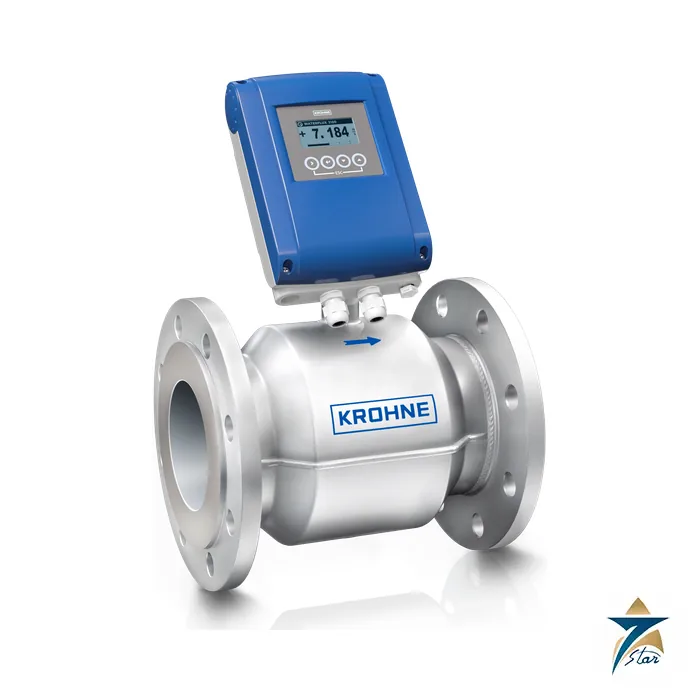
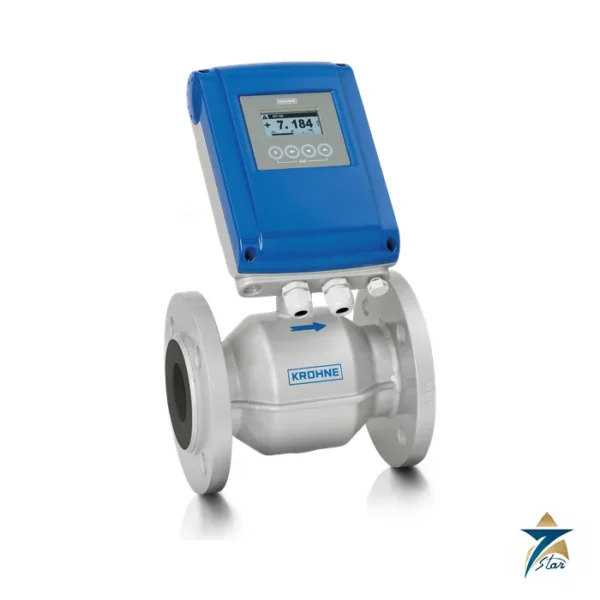
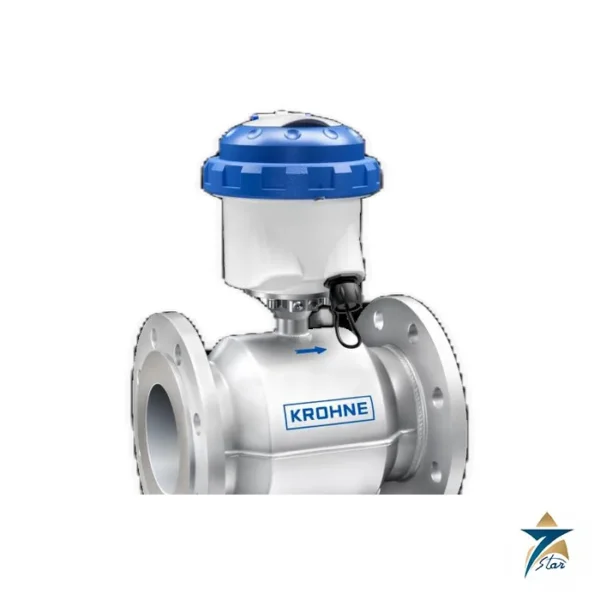
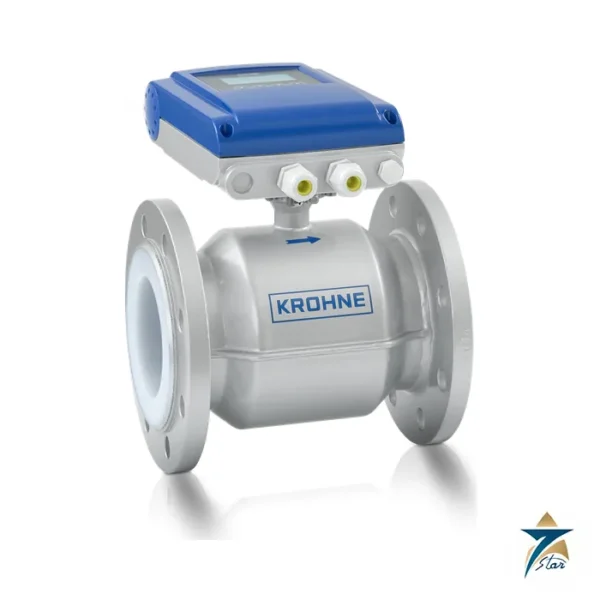
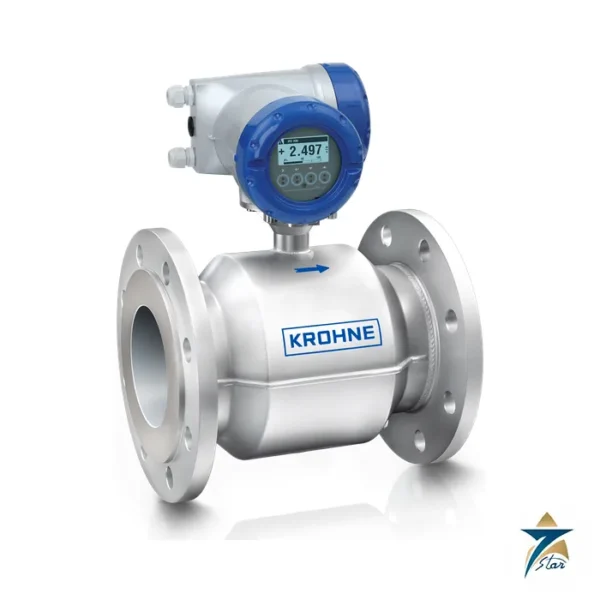
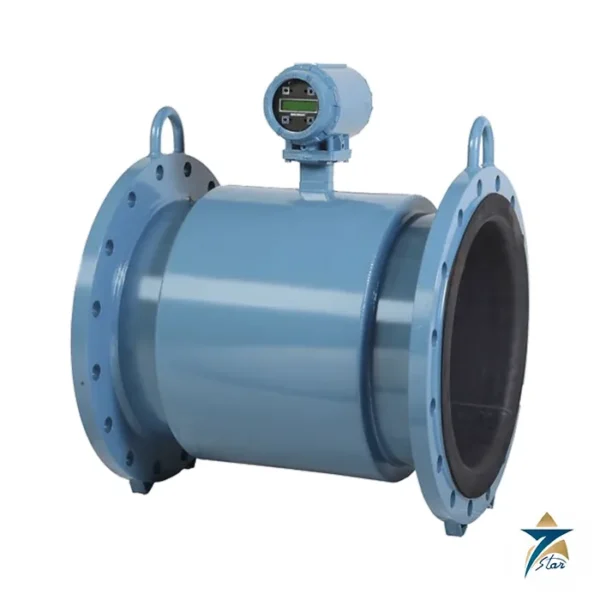
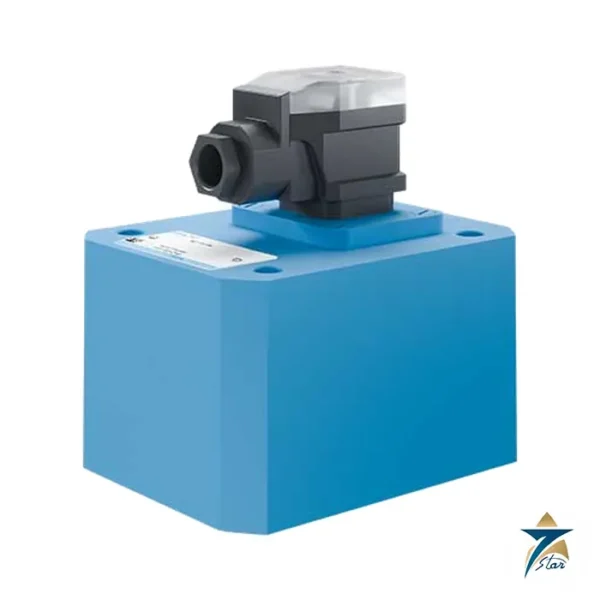
The KROHNE WATERFLUX 3100 is an electromagnetic flowmeter for standard water applications. Its rectangular, reduced cross-section sensor keeps measurement stable at low flows, gives low pressure drop and removes the need for measuring chambers. The sensor tube is fully welded and coated with Rilsan (polyamide 11), and the unit meets potable water standards listed as ACS, DVGW, NSF, TZW, KTW, WRAS and KIWA.
Standard accuracy is +/-0.3 percent of measured value or +/-1 mm/s. The meter is available in compact or field-mounted versions with the IFC 100 converter, measures in both directions, has no moving parts and offers diagnostics such as conductivity, electrode error and temperature.
Technical specifications
| Parameter |
Specification |
| Model |
WATERFLUX 3100 C (compact) / W (remote); sensor WATERFLUX 3000 with IFC 100 |
| Principle |
Electromagnetic, rectangular reduced cross-section |
| Accuracy (standard) |
+/-0.3 % of measured value or +/-1 mm/s |
| Liner |
Polyamide 11 (Rilsan) |
| Flange sizes |
EN 1092-1 DN25 to DN600; ASME 1 to 24 in; JIS 25 to 600A |
| Pressure |
Max. 16 barg / 230 psig |
| Process temperature |
-5 to +70 C / +23 to +158 F |
| Outputs |
4 to 20 mA, pulse, frequency, status; HART |
| Drinking water |
ACS, DVGW, NSF, TZW, KTW, WRAS, KIWA as listed |
| Marine |
Approvals as listed on the product page |
Positioning within the WATERFLUX range
The 3100 is the standard model for potable, ground and surface water, irrigation, abstraction, network monitoring and pump or well checks. The related WATERFLUX 3300 adds custody-transfer approvals and fieldbus outputs, while the 3070 is the battery-powered meter.
Because no measuring chamber is needed, installation cost in a water network is lower, and the low pressure drop helps pumping energy.
Operating cost is low because a WATERFLUX has no moving parts, no obstruction in the flow path and no wear items. The sensor tube is smooth and fully welded, so network operators do not worry about leakage at the sensor body, and verification can be performed on site without interrupting the supply.
Specifying the meter
Give the line size, pressure class, flange standard, compact or remote mounting and power supply. As a derived example, a DN150 PN16 irrigation line fits well inside the DN25 to DN600 range.
The hosted document is the WATERFLUX 3000 technical datasheet, which covers the sensor family. Confirm converter options and drinking-water certificates for your country before ordering.
A WATERFLUX is usually installed in buried or valve-chamber pipework, so check the available straight lengths, drainage of the chamber and the protection rating of the remote junction box. The compact design suits pump stations and treatment plants where a local display is needed, while the field version keeps electronics above flood level.
Choosing line size and version for a water network
With an electromagnetic meter the pipe size is not always the right meter size. The WATERFLUX 3100 already narrows the flow inside its rectangular measuring section, which is why it keeps a stable reading at low flows, so in most network and abstraction lines the meter can be ordered in the same nominal size as the pipe. Before fixing the size, collect the expected minimum, normal and maximum flow rates, because night flows in a distribution network or the trickle from a well at low drawdown are often what decides whether a meter reads reliably across the whole day. Check these flows against the accuracy statement of +/-0.3 % of measured value or +/-1 mm/s, which shows that at very low velocities the fixed velocity term becomes the larger share of the error.
Next decide between the compact C version and the remote W version. The compact version keeps the IFC 100 converter on the sensor and reduces wiring; the remote version lets the converter sit in a panel or kiosk while the sensor stays in the chamber. Also confirm the outputs needed by the SCADA or RTU: 4 to 20 mA with HART for analogue systems, or pulse and frequency outputs for totalising.
Data to include in an enquiry
- Nominal size and flange standard (EN 1092-1, ASME or JIS) with the pressure rating, keeping within 16 barg.
- Water type: potable, raw, ground, surface or irrigation, and the drinking-water certificate required by the utility.
- Compact or remote mounting, power supply and cable length for the remote version.
- Flow range and whether bidirectional measurement is needed.
Installation and commissioning
Install the sensor so the pipe stays full of water at all times; avoid the highest point of a line, where air collects, and the downstream side of an open discharge. Follow the straight-run requirements in the WATERFLUX 3000 datasheet, align the flanges carefully and use gaskets that do not protrude into the bore. Earthing must follow the KROHNE instructions so the electrode signal stays free of interference. At start-up, confirm the converter settings for size, flow direction and output scaling, then compare the reading with a known flow, for example a pump curve or a reservoir level change, before the meter is used for billing or reporting.
Maintenance and diagnostics
Since there are no moving parts, routine work is mostly checking. Use the converter diagnostics: a drop in measured conductivity or an electrode error can indicate an empty pipe or deposits, and the temperature value helps confirm process conditions. In valve chambers, check that drainage works, that cable glands are tight and that the junction box has not been flooded.
Notes for Oman and GCC water utilities
Many meters in the region are installed in underground chambers along long transmission mains or at wellfields in hot desert areas. The process temperature range of -5 to +70 C covers water in buried and exposed pipework, but the remote converter should be placed in shade or in a ventilated kiosk to reduce heat load. For treated sewage effluent or irrigation lines near the coast, confirm with KROHNE that the Rilsan liner and electrode material suit the water quality, and protect exposed flanges and bolts against salty, humid air.
Documents and quotation
Use the request form to ask for this model with your exact code. The attached KROHNE WATERFLUX 3000 technical datasheet (EN) lists all variants and options, and the line size, mounting version and drinking-water certificate should be confirmed before the order is released. Other products of this kind can be found in Flowmeters.













Reviews
There are no reviews yet.