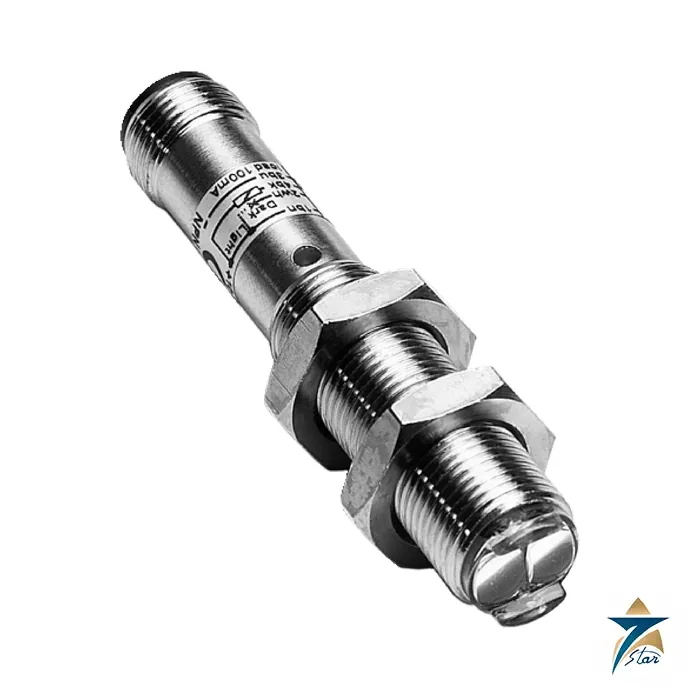
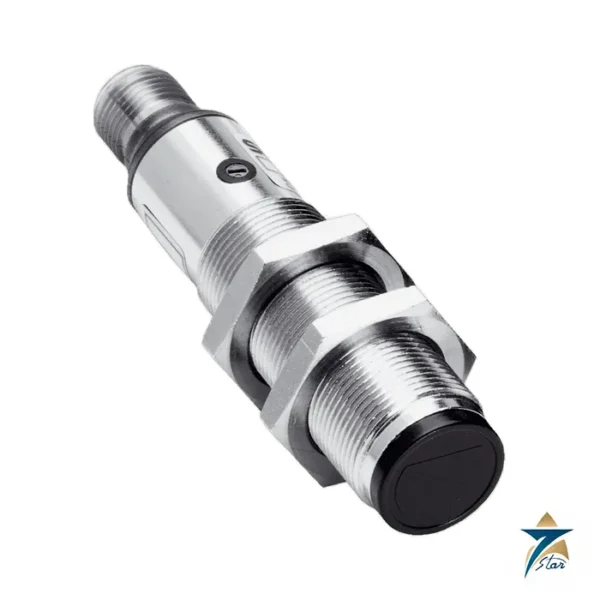
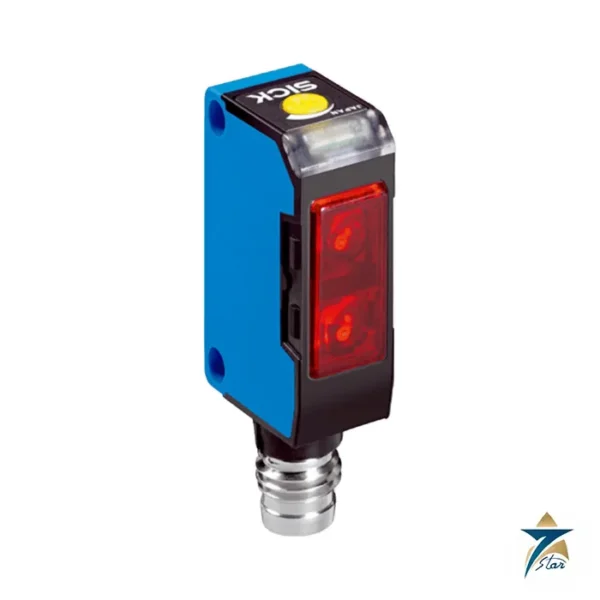
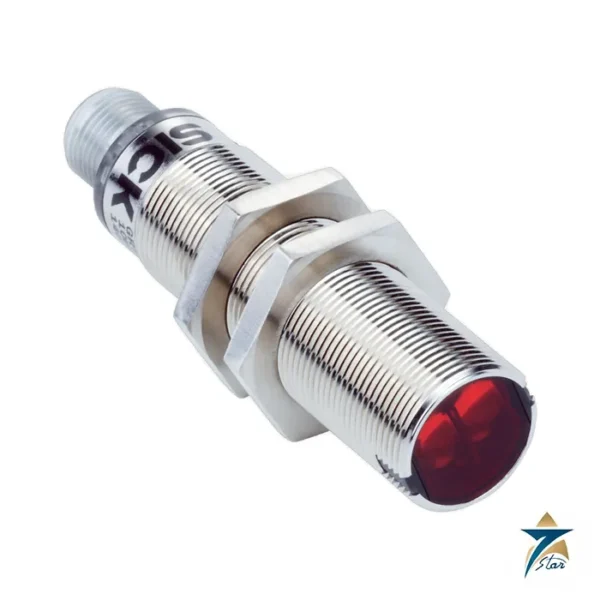
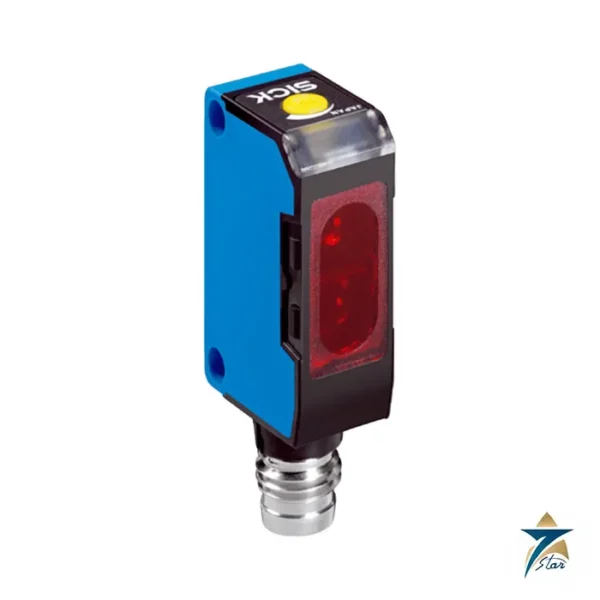
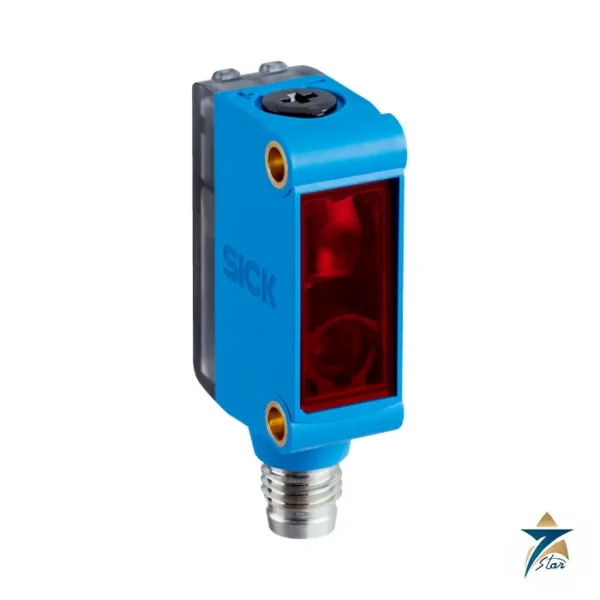
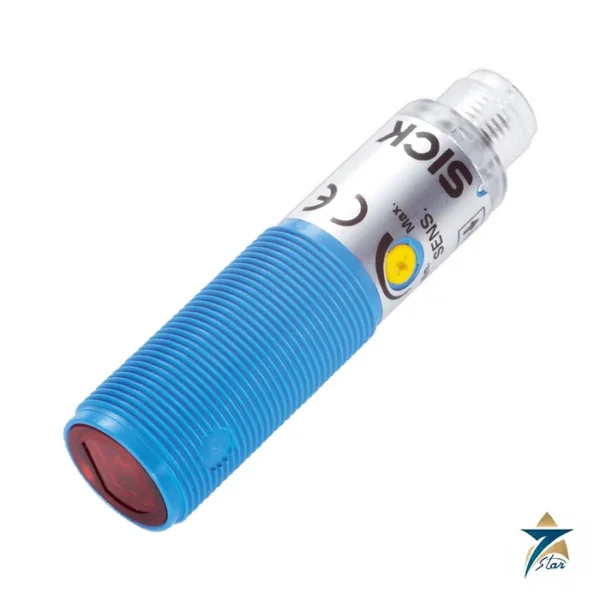
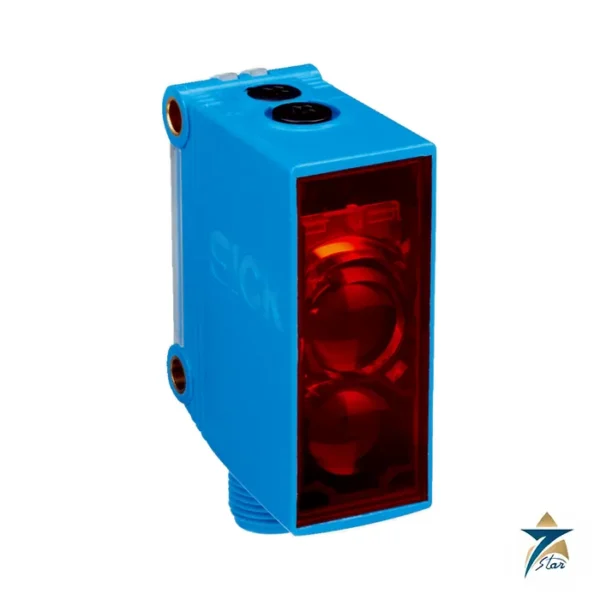
SICK’s VL12-2P430 (V12 family, part no. 6026220) is a reflector-based photoelectric sensor. The light goes out, returns from the reflector and is evaluated; an interrupted beam means an object is present. The sensing range maximum is 0.03 m … 2.8 m (sensing range value 0.03 m … 2.3 m). Output: PNP, light/dark switching; connection: Male connector M12, 4-pin.
V12 retro-reflective operation in practice
The data sheet describes a dual-lens system with a minimum distance to the reflector. Place the reflector beyond that minimum distance; closer than that the beam geometry no longer works as intended, and the sensing range figures only apply from there outwards. A polarisation filter is fitted: it passes only light that the reflector has rotated, so shiny objects are less likely to be mistaken for the reflector. Reflective tape works instead of a reflector, but its sensing range is shorter, so check the data sheet before substituting one for the other. Align by sweeping the sensor across the reflector until the received-light indicator is steady, then lock the mounting and check again after the first vibration-heavy start-up.
Light source: LED, visible red light, light spot Ø 80 mm (2 m). Adjustment: none. Response time ≤ 1.25 ms, switching frequency 400 Hz.
Technical specifications
| Parameter |
Specification |
| Type code |
VL12-2P430 |
| Part number |
6026220 |
| Product family |
V12 |
| Functional principle |
Photoelectric retro-reflective sensor |
| Dimensions (W x H x D) |
12 mm x 12 mm x 66 mm |
| Housing design (light emission) |
Cylindrical |
| Housing length |
66 mm |
| Thread diameter (housing) |
Round connector M12 x 1 |
| Sensing range max. |
0.03 m … 2.8 m |
| Sensing range |
0.03 m … 2.3 m |
| Focus |
Approx. 2.3° |
| Type of light |
Visible red light |
| Light source |
LED |
| Light spot size (distance) |
Ø 80 mm (2 m) |
| Angle of dispersion |
Approx. 2.3° |
| Wave length |
660 nm |
| Adjustment |
None |
| Supply voltage UB |
10 V DC … 30 V DC |
| Ripple |
± 10 % |
| Current consumption |
20 mA |
| Switching output |
PNP |
| Switching mode |
Light/dark switching |
| Switching mode selector |
Selectable via L/D control cable |
| Output current Imax. |
≤ 100 mA |
| Response time |
≤ 1.25 ms |
| Switching frequency |
400 Hz |
| Connection type |
Male connector M12, 4-pin |
| Circuit protection |
A ; B ; C ; D |
| Protection class |
III |
| Weight |
18 g |
| Polarisation filter |
Yes |
| Housing material |
Metal, Nickel-plated brass/PA |
| Optics material |
Plastic, PMMA |
| Enclosure rating |
IP67 |
| Ambient operating temperature |
–25 °C … +70 °C |
| Ambient temperature, storage |
–25 °C … +70 °C |
| MTTFD |
1,139 years |
| DCavg |
0 % |
| Declarations and certificates in the data sheet |
EU declaration of conformity; UK declaration of conformity; ACMA declaration of conformity; Moroccan declaration of conformity; China RoHS; China Compulsory Product Certification (CCC) exempt; cRUus certificate |
Type code VL12-2P430 and part number 6026220
Read VL12-2P430 as family VL12 plus option digits for output, connection and range. The only reliable identifier is the seven-digit number 6026220. A reflector, bracket or cable is not part of the sensor number unless the table lists it as supplied.
Versions SICK lists next to this one, all with separate part numbers:
- VL12-2N430 (part no. 6026218) – Switching output: NPN
Mounting, wiring and alignment notes
The unit runs from 10 V DC … 30 V DC and carries IP67 protection; ambient temperature in operation is –25 °C … +70 °C. The body measures 12 mm x 12 mm x 66 mm and weighs 18 g. No reflector is listed as supplied, so add a suitable reflector to the order and check the operating reserve against the distance you need. Test the sensor with the thinnest and most transparent product you will see on the line, not only with a standard carton.
Selection checks for a retro-reflective application
A retro-reflective sensor needs a place to mount the reflector on the opposite side of the conveyor, chute or doorway, and both sides must stay fixed relative to each other. Check that the distance between sensor and reflector falls inside the sensing range with some reserve, and that it is not shorter than the minimum distance. Confirm that the PNP output suits the PLC input card; if the control system expects a sinking signal, the NPN version listed on this page is the one to discuss. Decide early whether the output should be active when light is received or when the beam is interrupted, because this affects how a broken cable or a failed sensor appears to the control logic.
Think about the objects to be detected. Very glossy, mirror-like or transparent products can behave differently from opaque cartons, even with a polarisation filter, so trial the arrangement with real product before relying on it.
Commissioning on the line
After mounting and alignment, run the line at normal speed and watch the output in the PLC, not only at the sensor. Check that every object is detected once and only once, especially where products travel close together, and that gaps between them are long enough for the output to reset. Compare the response time with the line speed and the size of the smallest gap. Note the final mounting position and reflector location in the maintenance documents so that the setup can be restored after a mechanical change.
Dust, heat and humidity on Omani and GCC sites
On packaging, cement, food and logistics lines in the region, airborne dust settles on both the sensor optics and the reflector and gradually reduces the received light. Because the sensor has no adjustment, the remedy is cleaning and good alignment rather than settings. Include the optics and reflector in a regular cleaning round, using a soft cloth and cleaning agents that will not damage plastic optics. In hot warehouses or outdoor loading bays, avoid mounting the sensor where direct sun shines into the optics or where radiant heat from machinery raises its temperature towards the upper limit. On humid coastal sites, make sure the connector is fully tightened so that the IP67 rating is maintained, and route the cable so that water does not run along it into the connection.
Documents and quotation
For VL12-2P430 the manufacturer’s data sheet (part no. 6026220) is attached as a PDF copy; read it together with your control drawing before you commit to the order. A quotation needs only the part number, the quantity and the delivery destination; the RFQ form takes all three. Related items are listed under Sensors & Transmitters. We suggest a last check of the output type, plug and ratings against your site documents before the order is placed; the data sheet governs.


Reviews
There are no reviews yet.