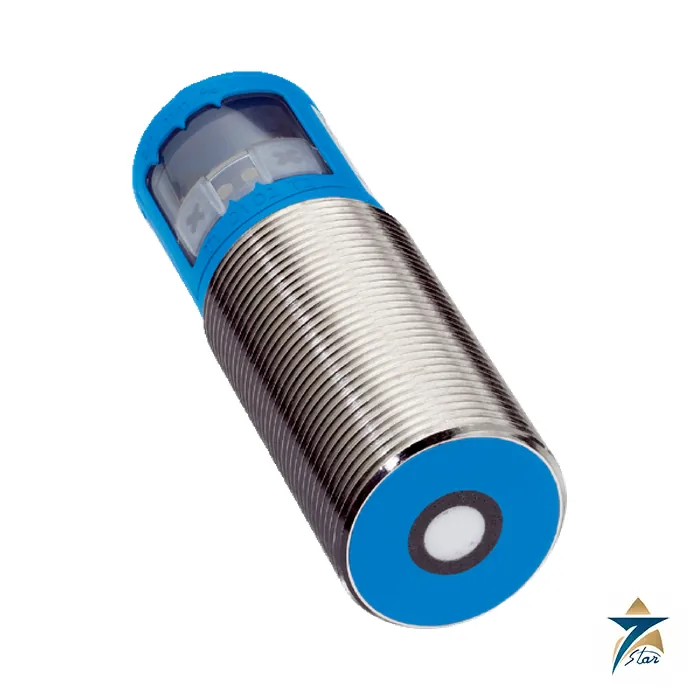
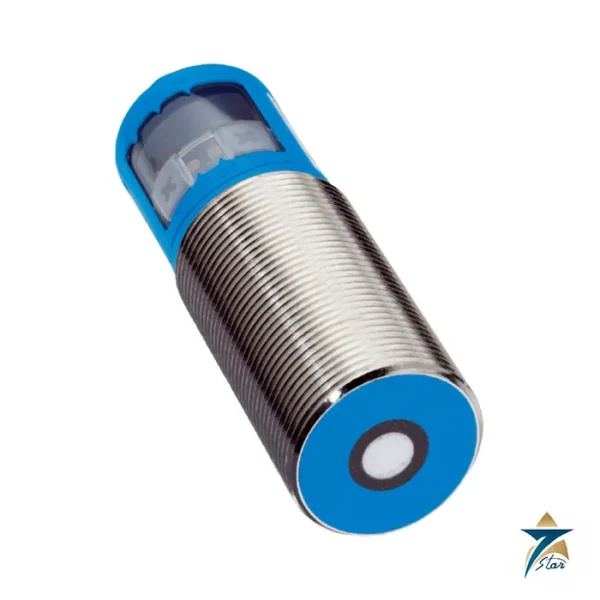
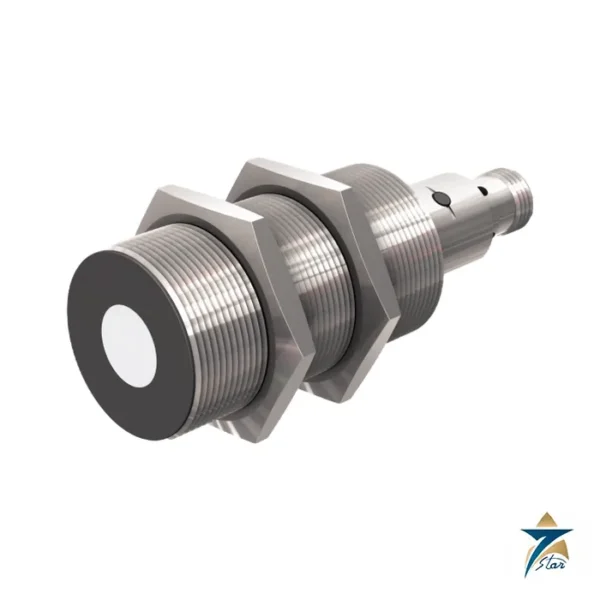
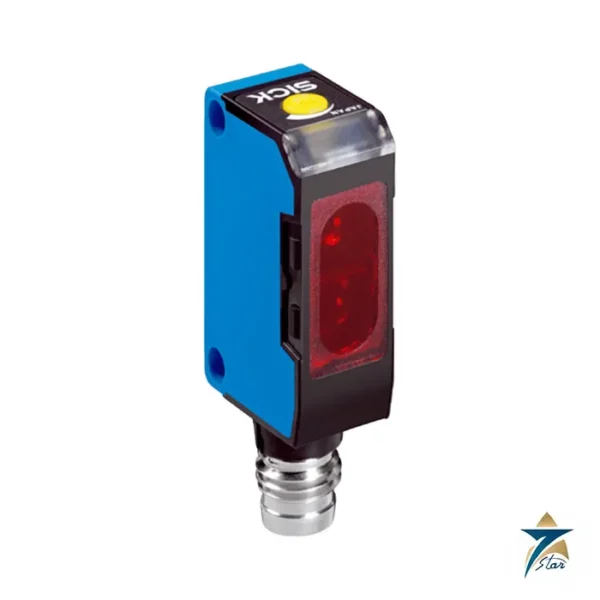
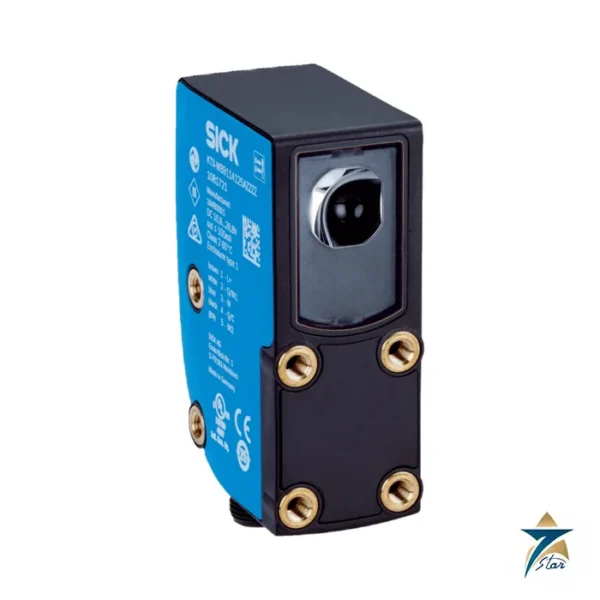
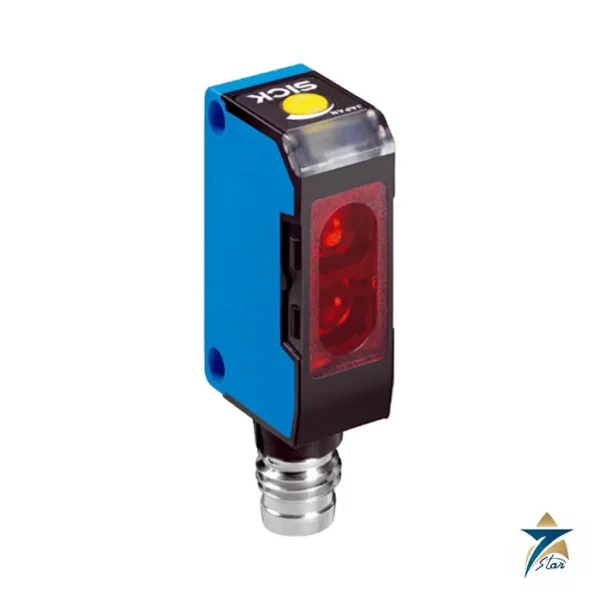
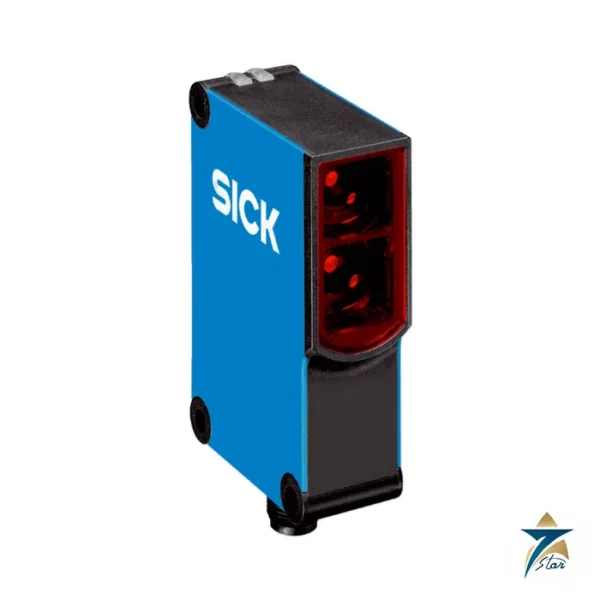
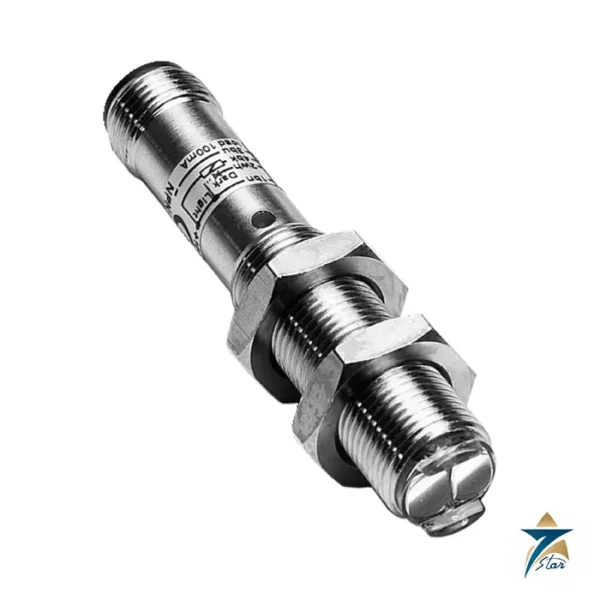
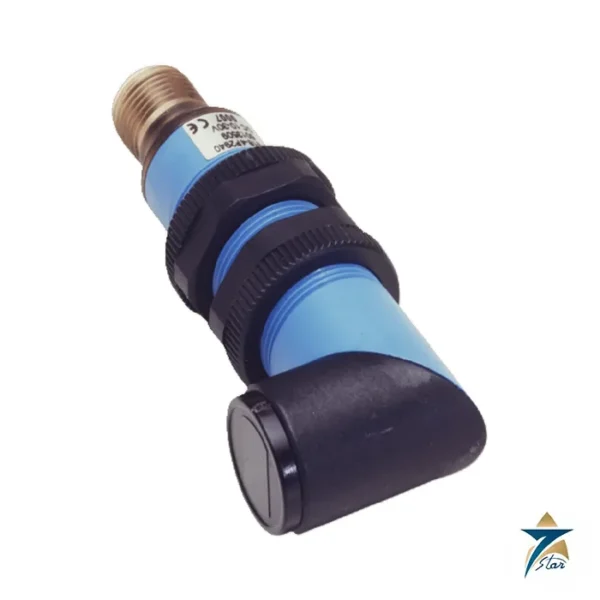
UM30-212113 is a SICK UM30 ultrasonic distance sensor (part no. 6036917). It measures the distance to an object from the travel time of a sound pulse and reports it as current output / voltage output (4 mA … 20 mA, ≤ 500 Ω). Operating range, limiting range: 65 mm … 350 mm, 600 mm; response time 64 ms; connection Male connector, M12, 5-pin.
UM30 ultrasonic sensing: range, output and limits
Ultrasonic sensors time the echo of a sound pulse, so the reading does not depend on target colour and is largely independent of surface finish. They are used for level in open tanks and hoppers, roll diameter, loop control and pallet or stack height, where clear, glossy or wet surfaces would upset an optical sensor. Air temperature changes the speed of sound, which is why the data sheets list a temperature drift or built-in compensation; check which applies if the air is not at room temperature.
On the UM30-212113 the resolution is ≥ 0.18 mm, repeatability ± 0.15 %, accuracy ± 1 % and the output time is 16 ms. The ultrasonic frequency is typically 400 kHz. Configurable functions: teach-in of analog output, scaling of analog outputs, Invertable analog output, synchronization of up to 50 sensors, multiplexing: no cross talk of up to 50 sensors, adjustable measurement filters: Measured value filters/Filter strength/Foreground suppression/Detection area/Sensitivity and sound beam, Display (can be deactivated), reset to factory default.
Technical specifications
| Parameter |
Specification |
| Type code |
UM30-212113 |
| Part number |
6036917 |
| EAN |
4047084241680 |
| Product family |
UM30 |
| Operating range, limiting range |
65 mm … 350 mm, 600 mm |
| Resolution |
≥ 0.18 mm |
| Repeatability |
± 0.15 % |
| Measurement accuracy |
± 1 % |
| Temperature compensation |
Yes |
| Response time |
64 ms |
| Output time |
16 ms |
| Ultrasonic frequency (typical) |
400 kHz |
| Detection area (typical) |
See diagrams |
| Safety-related parameters: MTTFD |
101 years |
| Safety-related parameters: DCavg |
0% |
| Analog output: Number |
1 |
| Analog output: Type |
Current output / voltage output |
| Analog output: Function |
Automatic selection of analog current or voltage output dependent on load |
| Analog output: Current |
4 mA … 20 mA, ≤ 500 Ω |
| Analog output: Voltage |
0 V … 10 V, ≥ 100,000 Ω |
| Analog output: Resolution |
12 bit |
| Multifunctional input (MF) |
1 x MF |
| Supply voltage UB |
DC 9 V … 30 V |
| Power consumption |
≤ 2.4 W |
| Initialization time |
< 300 ms |
| Display |
LED display, 2 x LED |
| Enclosure rating |
IP65 / IP67 |
| Protection class |
III |
| Dimensions (W x H x D) |
30 mm x 30 mm x 84 mm |
| Design |
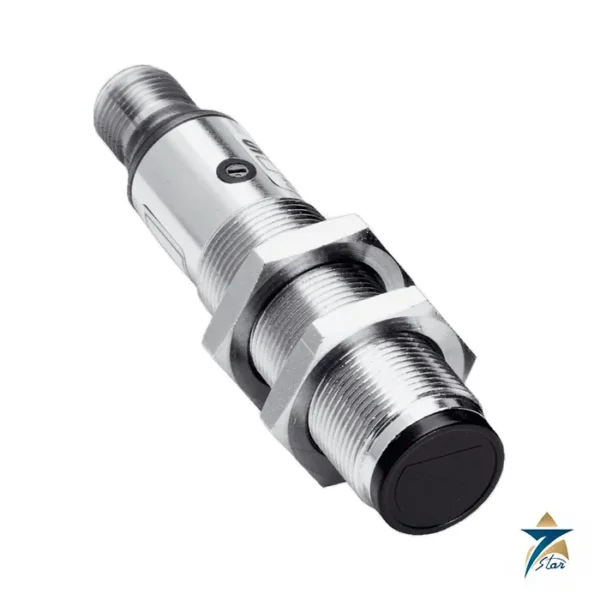
Cylindrical |
| Sending axis |
Straight |
| Housing material |
Metal (nickel-plated brass, PBT, ultrasonic transducer: polyurethane foam, glass epoxy resin) |
| Weight |
150 g |
| Thread size |
M30 x 1.5 |
| Connection type |
Male connector, M12, 5-pin |
| Ambient temperature, operation |
–25 °C … +70 °C |
| Ambient temperature, storage |
–40 °C … +85 °C |
| Declarations and certificates in the data sheet |
EU declaration of conformity; UK declaration of conformity; ACMA declaration of conformity; Moroccan declaration of conformity; China RoHS; China Compulsory Product Certification (CCC) exempt; cULus certificate |
Type code UM30-212113 and part number 6036917
SICK ultrasonic type codes encode the family (UM30) and a variant digit string. The range, output signal and connector differ between members of a family, so treat part number 6036917 as the identifier: two sensors that look alike on the shelf may have different outputs and are then not interchangeable.
Other active types in the same SICK family, each with its own part number:
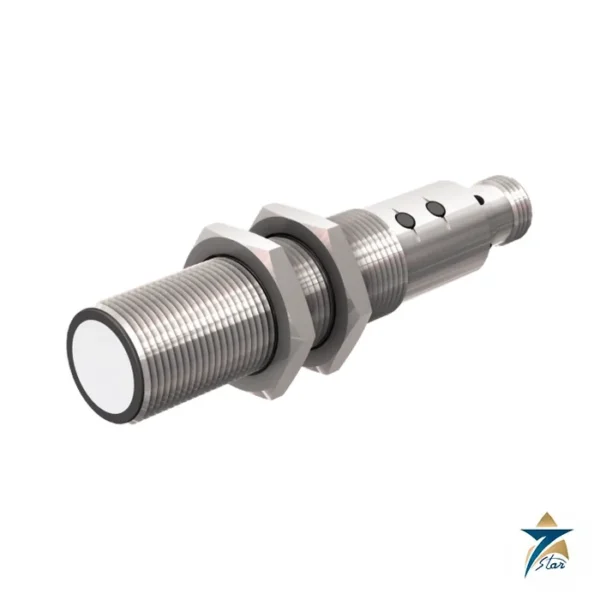
- UM30-21211B (part no. 6068448) – Communication interface: IO-Link
- UM30-212114 (part no. 6037675)
- UM30-212112 (part no. 6037665)
- UM30-212118 (part no. 6036922)
- UM30-212115 (part no. 6037670)
Mounting, wiring and set-up notes
Wire it to a supply of DC 9 V … 30 V. Protection is IP65 / IP67, and the permitted ambient range in operation is –25 °C … +70 °C. The body measures 30 mm x 30 mm x 84 mm and weighs 150 g. Current draw is ≤ 2.4 W. Indication: LED display, 2 x LED. Mount the transducer square to the target; a tilt of a few degrees can already lose the echo on a smooth surface. After teaching, move the target through its full travel and confirm the analog signal follows the expected scale.
Selection checks for the UM30-212113
This version has a short operating range, so it suits close-range tasks such as small container levels, web loop control and object presence near a conveyor. Measure the nearest and farthest positions the target will ever take and make sure both lie inside the operating range, with some margin at each end. Confirm whether the controller expects a current or voltage signal, because the output selection depends on the connected load. If an IO-Link signal is needed instead of an analog one, the family list above names the type that carries that interface. When replacing an existing sensor, compare the part number rather than the housing appearance.
Commissioning in the machine
Mount the sensor in a rigid holder using the M30 thread, aim it square to the target and keep the sound cone free of brackets, guards and frame members. After connecting the M12 cable, power up, wait for initialisation and use teach-in to set the analog output limits at the real minimum and maximum target positions. Where several UM30 sensors operate close together, use the synchronisation or multiplex function so they do not disturb each other. Record the final settings so they can be checked or restored later.
Heat, dust and coastal humidity in the Gulf
The operating limit of +70 °C is generous, but sensors near ovens, on outdoor equipment or inside unventilated cabinets in an Omani summer can still approach it, so measure the real air temperature at the mounting point. Direct sunlight on the housing and hot air rising from the process can also create temperature layers that influence the speed of sound. Dust and sand on the transducer face and condensation in humid coastal plants weaken the echo; choose a mounting point where deposits are less likely and plan regular inspection.
Keeping the measurement reliable
During routine maintenance, check the transducer face for deposits and clean it gently according to SICK guidance, inspect the connector for corrosion or moisture and confirm that the holder is tight. Compare the analog value against a known target position periodically. Keep a record of the configuration so that a replacement unit can be taught to the same settings with minimum downtime.
Documents and quotation
Attached: the unaltered SICK data sheet for UM30-212113, part number 6036917. It is the reference if anything on this page needs checking. Tell us the quantity and the delivery location in the RFQ form, quoting the part number above, and we will come back with a quotation. Related items are listed under Sensors & Transmitters. Before ordering, confirm that output polarity, connection and range match your controller and the device being replaced. If this page and the data sheet ever differ, the data sheet applies.




Reviews
There are no reviews yet.