A flow control valve that holds speed as load changes
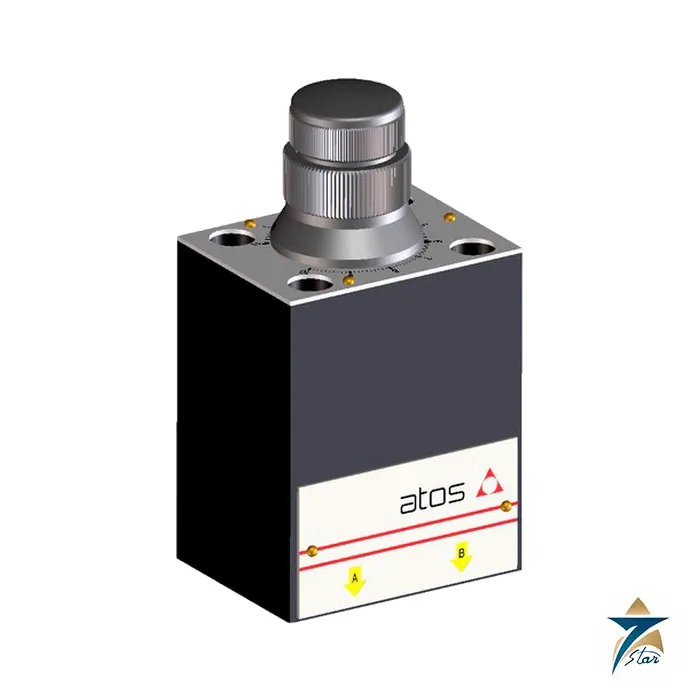
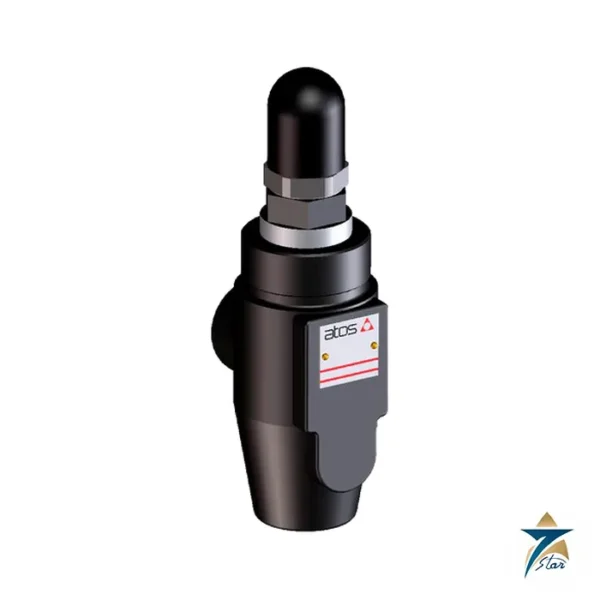
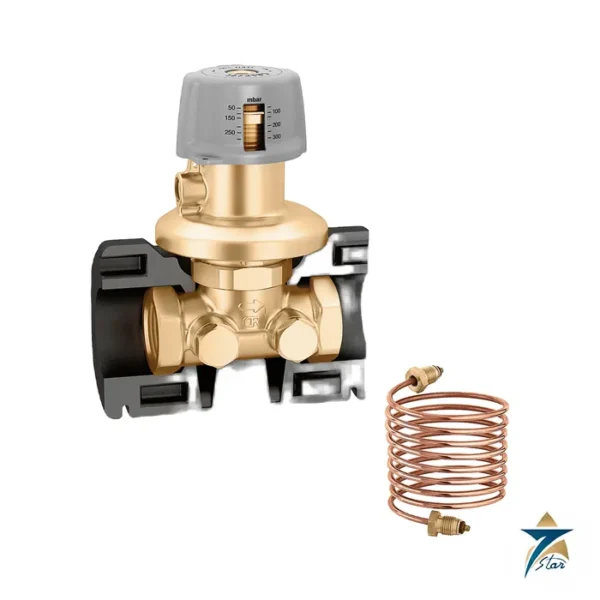
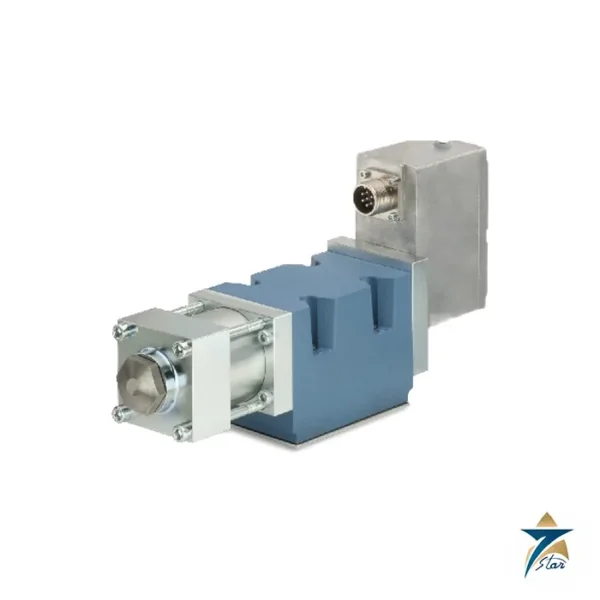
The Atos QV-06 is a pressure-compensated, two-way flow control valve for subplate mounting. The controlled flow rate does not follow pressure variations, so a cylinder or motor keeps the same speed when the load changes. A graduated micrometer knob sets the flow, and clockwise rotation increases it. Most valves are supplied with a built-in check valve that gives free flow in the opposite direction (B to A), and a version without the check valve is available.
It is a common choice for feed speed control on small cylinders, clamping and positioning circuits, and for metering oil to lubrication or pilot lines. An optional lock key on the knob protects the setting from tampering.
Technical specifications
| Parameter |
Specification |
| Valve type |
Flow control valve, pressure compensated, 2-way, subplate mounting |
| Size |
06; the model-code page calls the pattern not standard ISO, so confirm the subplate with the datasheet |
| Maximum regulated flow |
Five versions: 1.5, 6, 11, 16 and 24 l/min (codes /1, /6, /11, /16, /24) |
| Minimum regulated flow |
50 cm3/min |
| Maximum pressure |
250 bar |
| Free flow B to A through check valve |
Up to 24 l/min |
| Maximum flow on port A |
24 l/min |
| Regulating pressure drop |
About 3 to 8 bar depending on version |
| Options |
K lock key on setting knob; V without bypass check valve |
| Assembly position |
Any |
| Ambient temperature |
Standard -30 to +70 degC; /PE -20 to +70 degC; /BT -40 to +70 degC |
| Fluid temperature and seals |
NBR -20 to +80 degC (HFC -20 to +50 degC); FKM /PE -20 to +80 degC; low-temperature NBR /BT -40 to +60 degC |
| Viscosity and cleanliness |
15 to 100 mm2/s recommended; ISO 4406 class 20/18/15, NAS 1638 class 9 |
| Mass |
1.2 kg |
| Compliance |
RoHS 2, REACH |
Selecting the flow version
Choose the version whose maximum flow is just above the highest speed you need, so the micrometer scale gives a fine resolution at working positions. A 6 l/min valve is the better choice than a 24 l/min valve for a small clamp cylinder that needs a slow, repeatable stroke. The order code QV-06/6/K reads as valve type, size, maximum regulated flow and construction option.
Meter-in control (flow into the actuator) is straightforward with the built-in check valve returning free flow. For meter-out control on an overrunning load, place the valve in the return line and check that the minimum pressure drop for compensation is available.
Compensation works only while the valve has its regulating pressure drop available, about 3 to 8 bar depending on the version, so supply pressure must exceed load pressure by at least that amount. Below it the valve behaves like a fixed restrictor and the speed starts to follow the load. The minimum regulated flow of 50 cm3/min allows slow creep movements on small actuators. After commissioning, fit the lock key option if operators can reach the machine, and note the knob position in the machine documentation.
What to confirm before ordering
State the version code, the lock-key option, the seal material for your fluid and whether the check valve is wanted. Verify the mounting pattern against the datasheet drawing, because the size is marked not standard ISO. Related Atos valves are listed under hydraulic valves and components.
Where to place the valve in the circuit
The QV-06 controls flow in one direction, from A to B, so its position decides how the actuator speed is governed. In a meter-in arrangement the valve sits in the line feeding the cylinder and controls the oil entering it; this works well when the load always resists the motion. In a meter-out arrangement the valve sits in the return line and controls the oil leaving the cylinder, which holds back loads that tend to run ahead, such as a vertical cylinder lowering a weight or a load that overruns at the end of a feed. A bleed-off arrangement, with the valve in a branch to tank, is sometimes used to save energy but gives less precise speed control. Decide on the arrangement before ordering, because it affects whether the built-in check valve is needed for free reverse flow or whether the version without it is the better fit.
Mounting and first setting
Check that the subplate or manifold pattern matches the valve before installation, as noted in the specification table, and make sure the mounting surface is flat, clean and free of burrs. Fit new seals, tighten the fixing screws evenly to the torque in the Atos documentation, and flush the system so that contamination from the installation does not reach the compensator. Start with the knob turned towards a low flow, run the actuator, and open the valve gradually until the required speed is reached. Once the setting is correct, the K lock key, where fitted, prevents unintended changes during production.
Allowing for the regulating pressure drop
The compensator needs a minimum pressure difference across the valve to hold the flow steady. If the pump or relief setting leaves too little margin above the load pressure, the actuator may slow down when the load rises. Check this during commissioning by watching speed under the heaviest working load.
Oil cleanliness and temperature in Omani plants
Fine control at low flow depends on clean oil, because small particles can lodge in the metering orifice and cause erratic speed. Keep filters in good condition, use breather filters on the tank to stop dust entering, and sample the oil at regular intervals. High ambient temperatures in Oman raise oil temperature and lower its viscosity, so check that the fluid stays within the temperature limits of the chosen seal type and that the cooler, where fitted, is working. Pressure compensation keeps speed largely independent of load, but oil temperature still has some effect, so a setting made on a cold morning may need a small correction in the afternoon heat.
Inspection during maintenance
If the actuator speed drifts or becomes unsteady, check oil cleanliness and temperature first, then the pressure margin across the valve, before removing the valve itself. Record the knob setting before any work so the speed can be restored afterwards.
Documents and quotation
The attached Atos technical table C210 (revision 10.0, July 2026) holds the regulation diagrams, pressure-drop curves through the check valve and the dimensions. Send the version code, options and quantity for a quotation.




Reviews
There are no reviews yet.