Compact ceramic OEM pressure transmitter for pneumatics and plant
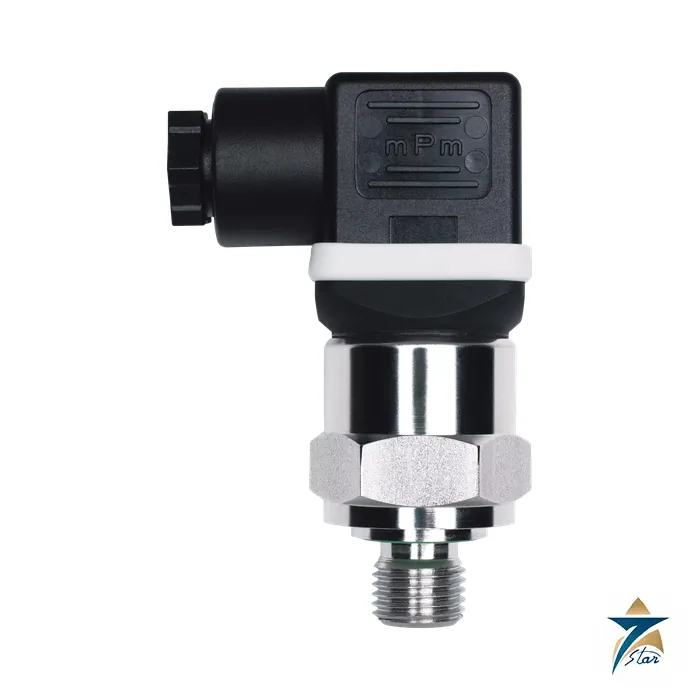
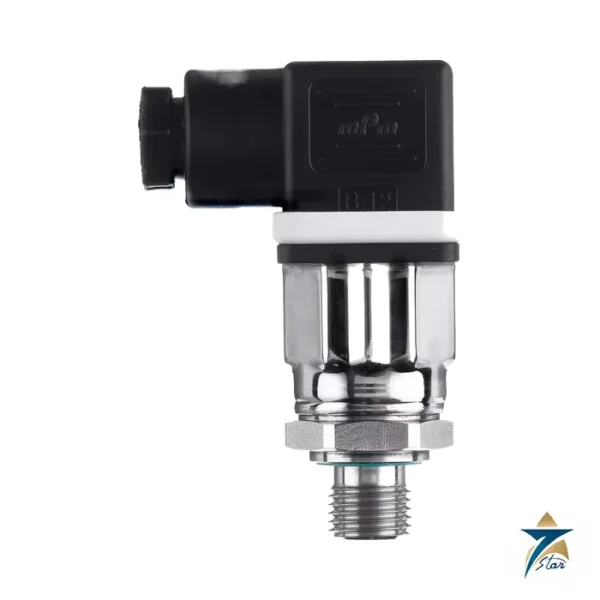
The JUMO MIDAS (type 401001) is an OEM pressure transmitter for liquid and gaseous media that uses a proven ceramic thick-film sensor and an elastomer-sealed process connection. It is only 58 mm long in its shortest form and covers relative pressure from 0 to 1.6 bar up to 0 to 100 bar, plus compound ranges that start at -1 bar.
JUMO lists compressors, mechanical and plant engineering, industrial pneumatics, commercial vehicles and building technology as the target uses. The electrical signal is a standard voltage or current, taken out through an attached cable, an M12 plug connector or a DIN line socket, and a wide set of threaded process connections lets the unit be fitted into existing blocks and manifolds.
Technical specifications
| Parameter |
Specification |
| Data sheet type |
401001/000 |
| Measuring principle |
Ceramic thick-film sensor |
| Ranges (relative) |
0 to 1.6, 2.5, 4, 6, 10, 16, 25, 40, 60, 100 bar; -1 to +0.6, +1.5, +3, +5, +9, +15, +24 bar; special ranges on request |
| Outputs |
4 to 20 mA two-wire; 0.5 to 4.5 V ratiometric; 0 to 10 V; 1 to 5 V; 1 to 6 V (three-wire) |
| Supply |
DC 10-30 V (4-20 mA); DC 4.75-5.25 V (ratiometric); DC 8-30 V (1-5 V, 1-6 V); DC 11.5-30 V (0-10 V) |
| Step response T90 |
3 ms or less |
| Long-term stability |
0.2 % MSP per year or better |
| Overload / burst (example) |
0 to 1.6 bar range: 6 bar overload, 12 bar burst; per-range values in the data sheet |
| Process connections |
G 1/8 and G 1/4 (DIN EN 837), 1/4-18 NPT, G 1/4 and G 1/2 (DIN 3852-11), 7/16-20 UNF |
| Seal options |
FPM (standard), CR, FFPM |
| Electrical connection |
Cable (2 m standard), M12 plug, DIN EN 175301-803 form A line socket |
| Protection |
IP67 with cable or M12; IP65 with line socket (with suitable mating part) |
| Weight |
About 100 g with G 1/4 process connection |
Order code in steps
The base type 401001/000 is followed by the measuring range code (455 for 0 to 1.6 bar through 464 for 0 to 100 bar; 479 to 485 for ranges beginning at -1 bar; 999 special), the output code (405 for 4 to 20 mA, 412, 415, 418 or 420 for the voltage outputs) and the process connection code (501, 502, 511, 521, 523 or 562). Seal codes are 601 (FPM, standard), 602 (CR) and 604 (FFPM), the connection material is 20 (stainless steel), and the electrical connection is 11, 36 or 61.
Extra codes cover a choke in the pressure channel (591), oil and grease free preparation (624), an enlarged pressure channel (630, required for the 100 bar range) and a technical passport (954). Specifying the seal against the medium matters: the data sheet asks the user to check seal durability.
Selection guidance
Pick the range so normal pressure sits in the middle of the span, keeping peaks below the overload value listed for that range. Two-wire 4 to 20 mA suits longer cable runs and PLC analog cards, while the ratiometric 0.5 to 4.5 V version is meant for systems that supply a regulated 5 V and measure ratiometrically. The device must be powered from a circuit that meets the limited-energy requirements of EN 61010-1.
Mount in any position; calibration is done upright with the process connection down. For hydraulic oil service above the 100 bar limit see the H20 HP type 401020 instead.
Fitting the MIDAS transmitter into the process
Install the JUMO MIDAS with a spanner on the hexagon of the process connection only; never turn the transmitter by its housing, cable or plug, because torque applied there can damage the seal between the sensor and the body. Check that the thread on the block or manifold matches the ordered connection code exactly, as a G thread and an NPT thread can look similar but will not seal against each other. For connections that seal on an elastomer, make sure the sealing face is clean and undamaged before tightening.
Choose a tapping point where the measured pressure is representative and stable. On compressor lines and pneumatic manifolds, avoid locations directly after a fast-acting valve where pressure spikes are sharpest, and on liquid service, mount the unit so that trapped air can escape and no gas pocket forms in front of the sensor. Where pulsation or water hammer is expected, discuss the choke option listed in the order code with the system designer.
Electrical connection and first checks
Wire the transmitter to the connection diagram for the chosen output: two wires for the current version, three for the voltage outputs. Route the signal cable away from contactor coils and motor leads, and check that the supply voltage at the transmitter terminals stays within the band given for that output. At commissioning, vent the line to atmosphere and confirm that the zero reading matches the start of the range, then apply a known pressure from a reference gauge or pressure source and compare. Note both values in the commissioning record.
Service in Oman and Gulf conditions
Compressors, chillers and building services in Oman and the GCC run in high ambient temperatures, and transmitters fitted on compressor heads or pipework in direct sunlight can get considerably hotter than the air around them. Check the medium and ambient temperature limits in the JUMO data sheet against the real installation. Dust and humidity are the main risks at the electrical connection; the protection rating depends on the connector or line socket being correctly mated and sealed, so check gaskets whenever a plug is removed. Condensate in compressed air lines can also collect at low points and reach the sensor if the tapping is at the bottom of a pipe; a side or top tapping avoids this.
Maintenance and selection checks
Include the transmitter in routine instrument checks by comparing its reading with a calibrated gauge at operating pressure, which shows any drift over time. Inspect cables for heat damage near hot equipment and check the seal at the process connection for leaks. When ordering a replacement or a new unit, confirm the range, output, process connection, seal material and electrical connection from the existing order code or nameplate, so that the new transmitter drops into the same position without changes to the panel or the pipework.
Documents and quotation
Open the attached JUMO MIDAS OEM pressure transmitter data sheet 401001 (EN) for the complete data and dimension drawings. Before you place an order, confirm the pressure range, output signal and seal material with the system designer, then submit your request with the exact code; our team prepares the quotation. Related items are listed under Pressure Instrumentation.













Reviews
There are no reviews yet.