Two current inputs for transmitters in a POINT I/O node
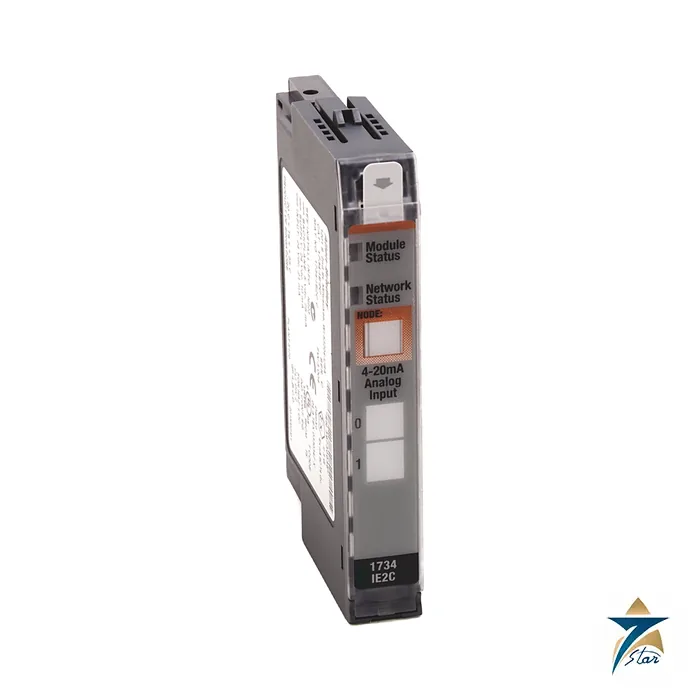
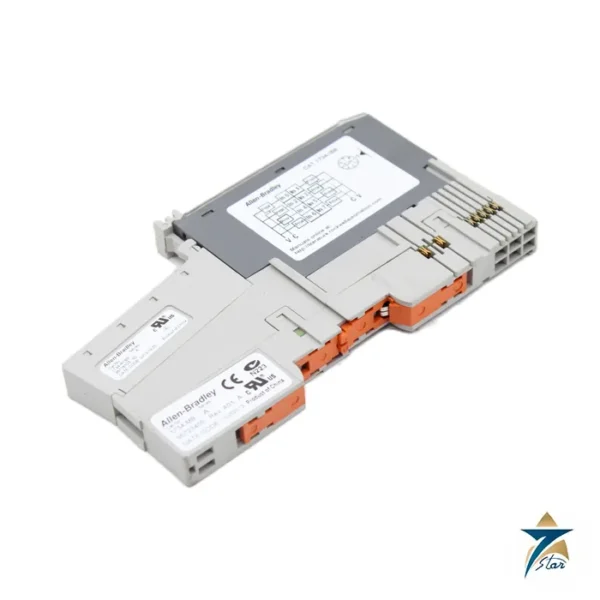
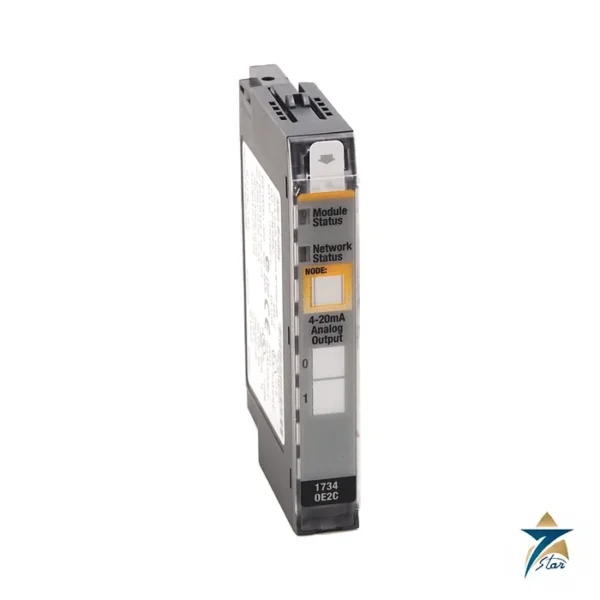
The Allen-Bradley 1734-IE2C is a two-channel current input module for the POINT I/O distributed system. It accepts 4 to 20 mA or 0 to 20 mA signals from two-wire and four-wire transmitters and reports them as 16-bit values across the POINTBus to the network adapter.
It is used where a small number of analog points are needed next to a pump, tank or skid, without running individual cables back to a central rack. The installation sheet covers both the 1734-IE2C and its voltage sibling, 1734-IE2V; only the current version is described here.
Technical specifications
| Parameter |
Specification |
| Manufacturer / family |
Allen-Bradley (Rockwell Automation) / POINT I/O |
| Catalog number |
1734-IE2C (1734-IE2CK is the coated version) |
| Inputs |
2 single-ended, non-isolated, current |
| Input current range |
4 to 20 mA or 0 to 20 mA |
| Resolution |
16 bits over 0 to 21 mA, 0.32 uA per count |
| Absolute accuracy |
0.1% of full scale at 25 °C (77 F) |
| Accuracy drift with temperature |
30 ppm per C |
| Input impedance |
60 ohm |
| Input update rate, per module |
100 ms at 60 Hz notch (default); 120 ms at 50 Hz; 24 ms at 250 Hz; 12 ms at 500 Hz |
| Digital filter time constant |
0 to 10,000 ms (default 0 ms) |
| External DC power |
24V DC nominal, 10 to 28.8V DC, 10 mA at 24V DC |
| POINTBus current, max |
75 mA at 5V DC |
| Keyswitch position |
3 |
| Dimensions (H x W x D) / weight |
56.6 x 12.1 x 77.5 mm / 33 g |
| Isolation |
No isolation between channels; tested to withstand 2550V DC for 60 s |
Resolution, update time and filtering
The input resolution is 16 bits over 0 to 21 mA, which equals 0.32 microamps per count, with an absolute accuracy of 0.1% of full scale at 25 °C. The input impedance is 60 ohm, and the module provides digital filtering with a time constant adjustable from 0 to 10,000 ms.
Notch filter selection sets the update rate. At the default 60 Hz notch the update rate is 100 ms per module and the step response per channel is 70 ms; moving to a 500 Hz notch brings the update rate to 12 ms. Choose the slower notch where mains-frequency noise is a problem and the faster one for loops that must react quickly.
Installation and wiring
The module takes 24V DC field power (10 to 28.8V DC) at 10 mA and 75 mA from the 5V DC POINTBus. Maximum power dissipation is 0.6 W. It fits the 1734-TB, 1734-TBS, 1734-TB3, 1734-TB3S, 1734-TOP, 1734-TOPS, 1734-TOP3 and 1734-TOP3S wiring bases, with keyswitch position 3.
Use shielded, 22 to 14 AWG copper wire rated 75 °C or higher. There is no isolation between individual channels, so loops that must stay separated need isolators. The sheet lists ATEX and IECEx Zone 2 marks (Ex ec IIC T4 Gc) among the certifications as printed; check the label for the marks on the module supplied.
Key features
- Narrow 12 mm module: two analog inputs in a slice that fits between digital modules in the same POINT I/O node.
- 16-bit resolution: fine resolution of 0.32 µA per count gives smooth trends for level, pressure and flow transmitters.
- Selectable notch filter: trades update speed against noise rejection, with a software filter time constant for further smoothing.
- Removal and insertion under power: POINT I/O modules can be exchanged on the wiring base while the node stays energised, subject to the hazardous-area restrictions on the module label.
- Coated version available: 1734-IE2CK for harsher atmospheres.
Wiring two-wire and four-wire transmitters
Two-wire (loop-powered) transmitters take their supply from the 24 V DC field power available on the wiring base; the loop current flows from the supply through the transmitter and back into the module input. Four-wire transmitters have their own power supply and drive the current signal into the input, with the signal return connected to the module common. Because the inputs are single-ended and share a common, mixing transmitters with different ground references can cause errors; a loop isolator solves this where needed.
Choosing the wiring base
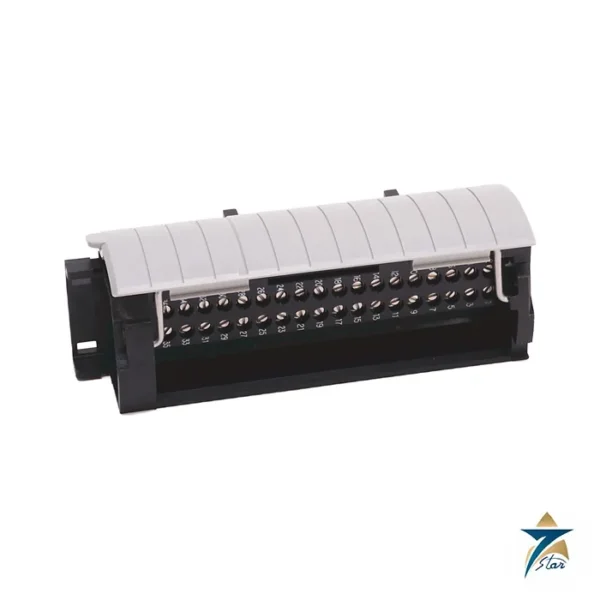
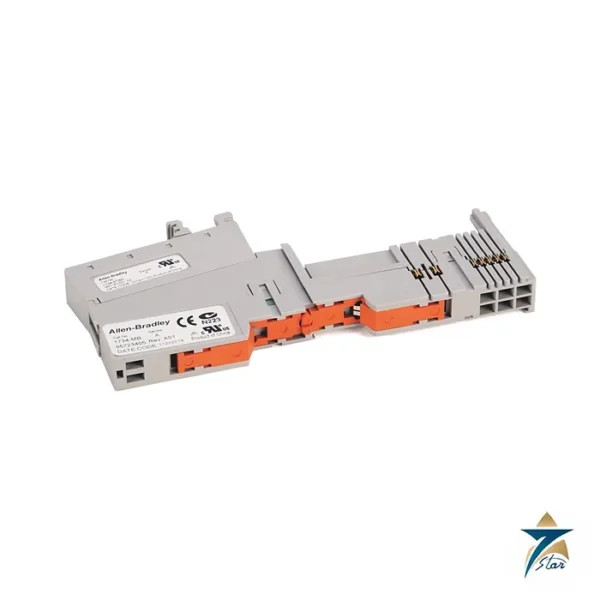
The 1734-TB and 1734-TBS two-piece bases allow the module to be removed without disturbing field wiring. The 1734-TB3 and TB3S versions add extra terminals for common and supply connections, which makes two-wire transmitter wiring tidier. The S suffix indicates spring-clamp terminals, while the others use screw terminals. One-piece TOP bases are more compact but need rewiring when the base itself is replaced.
Configuration in the controller
In Studio 5000 Logix Designer the module is added under the POINT I/O adapter (for example 1734-AENT or 1734-AENTR on EtherNet/IP). Configuration includes the input range, notch filter, digital filter, alarm limits and scaling. The module reports underrange and overrange status, which can be used to detect a broken wire on a 4 to 20 mA loop, since current drops below 4 mA when the loop opens.
Applications
- Tank level and pressure transmitters on remote I/O panels near the process.
- Flow meters and analysers on packaged water treatment and dosing skids.
- Temperature transmitters with 4 to 20 mA output in HVAC and process plants.
- Retrofitting a few extra analog points into an existing POINT I/O node without changing the controller.
Practical tips for Oman and GCC sites
Remote I/O panels in oil fields, pumping stations and utility plants in the region often face high enclosure temperatures and fine dust. Check that the panel temperature stays within the module rating, provide ventilation or cooling where necessary, and consider the conformally coated 1734-IE2CK where humidity, salt air or corrosive gases are present. Earth cable shields at one end only, normally at the panel, to avoid ground loops on long field cables.
Spares and maintenance
Since POINT I/O modules are inexpensive to stock and quick to change, keeping a spare 1734-IE2C per site is common practice. After replacement, the controller downloads the stored configuration automatically, provided the keyswitch on the base is set to position 3 and the module type matches.
What to include in your RFQ
- Catalog number 1734-IE2C or coated 1734-IE2CK, series and quantity.
- Wiring bases, adapter and power modules if building a new node.
- Transmitter types and any isolator requirements.
Documents and quotation
The manufacturer sheet 1734-IN027 includes the input table, update-rate table and the certification page. Provide the 1734-IE2C reference, series, quantity, adapter or controller and the transmitter types when you request a quotation. Related hardware is shown in PLC & I/O Cards.







Reviews
There are no reviews yet.