The removable field terminal for ControlLogix modules
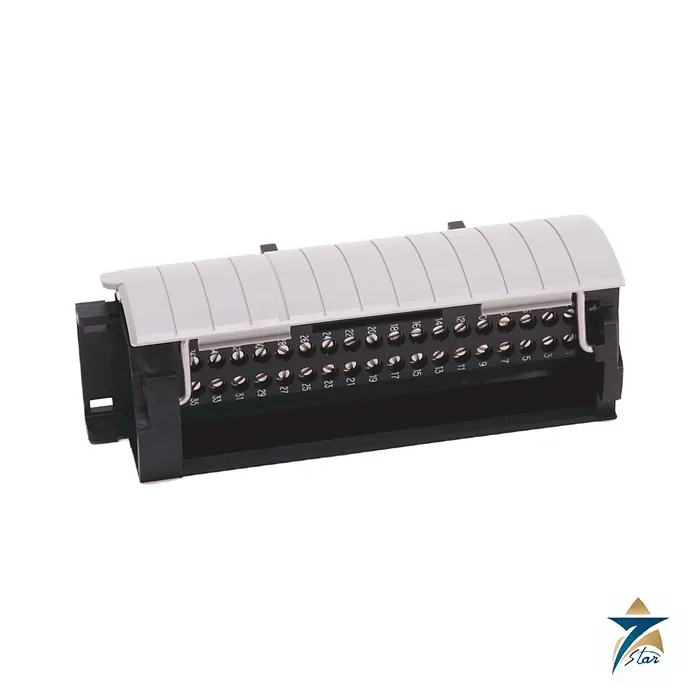
The Allen-Bradley 1756-TBCH is a 36-pin cage-clamp removable terminal block (RTB) for ControlLogix 1756 I/O modules. It plugs into the front of the module, brings all field wiring to a single removable connector and lets the module be exchanged without disturbing the field cables.
Terminal blocks are not shipped with the I/O modules; the manufacturer technical data states that RTBs must be ordered separately. For that reason a spare 1756-TBCH is a useful stocking item next to each module type that uses it.
Technical specifications
| Parameter |
Specification |
| Manufacturer / family |
Allen-Bradley (Rockwell Automation) / ControlLogix 1756 accessories |
| Catalog number |
1756-TBCH (1756-TBCHXT is the extended-temperature version) |
| Description |
36-pin cage-clamp removable terminal block with standard housing |
| Screw torque |
0.5 N.m (4.4 lb.in) |
| Screwdriver width |
3.2 mm (1/8 in.) |
| Single-wire connection |
0.33 to 2.1 mm² (22 to 14 AWG) solid or stranded shielded copper rated 105 °C or greater, 1.2 mm insulation max. |
| Double-wire connection |
0.33 to 1.3 mm² (22 to 16 AWG) copper rated 105 °C or greater |
| Conductors per terminal |
One conductor with single-wire sizes; two with double-wire sizes |
| Maximum wire size housing |
Extended housing 1756-TBE needed for 2.5 mm² (14 AWG) wiring |
| Alternative terminal blocks |
1756-TBS6H spring clamp; 1756-TBNH 20-position NEMA screw clamp |
| Supplied with I/O modules |
No, ordered separately |
| Used with |
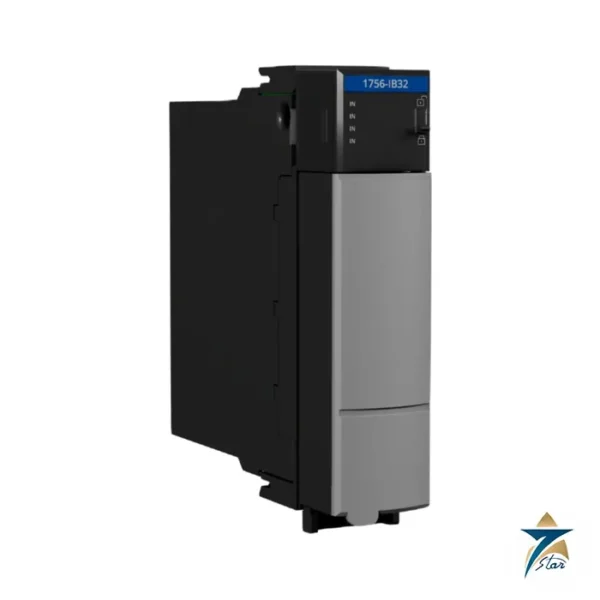
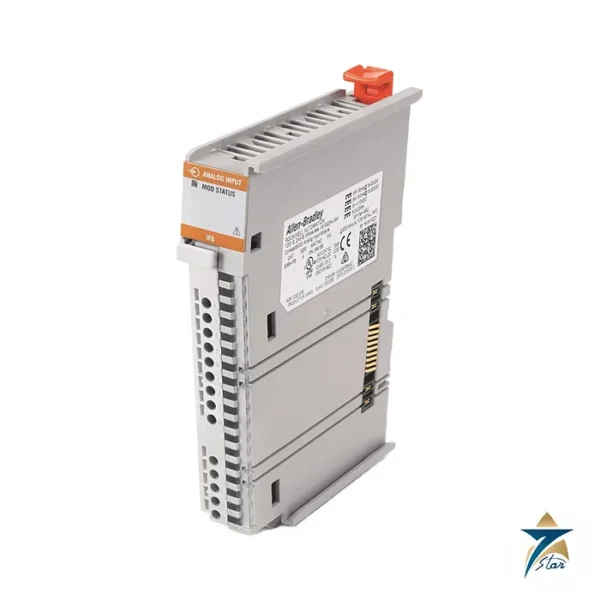
Many 1756 digital and analog modules, for example 1756-IB32, 1756-IB16, 1756-IF16 |
Which modules use it
The installation sheets list the 1756-TBCH for many high-density modules, including the 32-point 1756-IB32 and the 16-point analog 1756-IF16. The type of module determines which RTB is required, so check the module sheet. A 36-pin cage-clamp block is not interchangeable with a 20-pin block, and the safety-rated blocks (1756-TBCHS and similar) must not be used with non-safety modules.
The cage clamp is tightened with a 3.2 mm screwdriver to 0.5 N.m. Single-wire terminations take 0.33 to 2.1 mm² (22 to 14 AWG) solid or stranded copper rated 105 °C or more; double-wire terminations take 0.33 to 1.3 mm² (22 to 16 AWG), with no more than two conductors per terminal.
Housing and wire size choice
The standard housing on the front of the wiring arm is not deep enough for 2.5 mm² (14 AWG) wiring. When thicker conductors are planned, order the extended housing, catalog number 1756-TBE. If separate power sources are used, do not exceed the isolation voltage stated for the individual module.
The 1756-TBS6H spring-clamp terminal block and the 1756-TBNH NEMA screw-clamp block are the other families in the same accessory table. The cage-clamp type is the usual selection where a standard screwdriver is used and wires are changed rarely.
The terminal block is a separate order item from the I/O module, so list the base module and its wiring accessory together on the requisition to avoid a delay on site.
Key features of the 1756-TBCH
- 36 cage-clamp terminals in one removable block, matching the high-density 1756 modules that need 32 or more field connections.
- Cage-clamp terminations that grip the conductor with a plate rather than the screw tip, which spreads the clamping force over the wire and suits both solid and stranded conductors.
- Two conductors per terminal within the double-wire size range, useful for looping commons between points.
- Wiring arm with a housing that protects the terminations and guides the cable bundle away from the module face.
- Mechanical keying that can be set to prevent a wired block being plugged into the wrong module type.
Choosing between cage clamp, spring clamp and NEMA screw
| Block |
Termination |
When it suits |
| 1756-TBCH |
Cage clamp, 36 pins |
Standard screwdriver tools, permanent wiring, wide wire range |
| 1756-TBS6H |
Spring clamp, 36 pins |
Faster wiring without torque checks, high-vibration machinery |
| 1756-TBNH |
NEMA screw clamp, 20 positions |
Modules that use the 20-pin connector |
| 1756-TBCHXT |
Cage clamp, extended temperature |
XT modules and installations outside the standard temperature range |
Keying and module protection
Before the block is installed, fit the keying bands so the block and the module carry matching codes. Once keyed, a terminal block wired for a DC input module cannot be fitted to an AC output module in the same chassis, which protects equipment and personnel from wiring mix-ups when maintenance staff swap modules. Document the key positions in the panel drawings so a spare block can be coded the same way.
Using the 1756-TBCH in Oman and GCC panels
In control rooms and remote I/O shelters across oil and gas fields, utilities and process plants in Oman, the terminal block is the point where field cabling meets the controller. Heat cycles between day and night, and vibration from nearby compressors or pumps, can loosen poorly tightened terminations over time. Tighten each terminal to the specified 0.5 N.m with a calibrated screwdriver, and include a check of terminal tightness in shutdown maintenance. Use copper conductors rated 105 °C or higher as the manufacturer requires, and keep ventilation filters clean so dust does not accumulate on the wiring arm. Ferrules on stranded wire help to keep terminations tidy in dense 36-way blocks.
Practical wiring tips
- Plan conductor sizes before ordering; if 2.5 mm² (14 AWG) wire is required, order the 1756-TBE extended housing at the same time.
- Label each wire with its terminal number and tag so the block can be rewired quickly after damage.
- Leave a service loop in the bundle so the block can be removed without stressing conductors.
- Keep a pre-wired spare block for critical loops to shorten replacement time.
What to include in your RFQ
List 1756-TBCH with quantity, the module catalog numbers it will serve, whether the extended housing 1756-TBE or the extended-temperature 1756-TBCHXT is needed, and the delivery location.
Documents and quotation
The installation sheet 1756-IN062 shows the block with the digital modules, and the technical data 1756-TD002 contains the RTB table. Send the 1756-TBCH reference, quantity and the module types it will serve for a quotation. Related hardware is in PLC & I/O Cards.






Reviews
There are no reviews yet.