A lighter duplex filter for lines that cannot be shut down
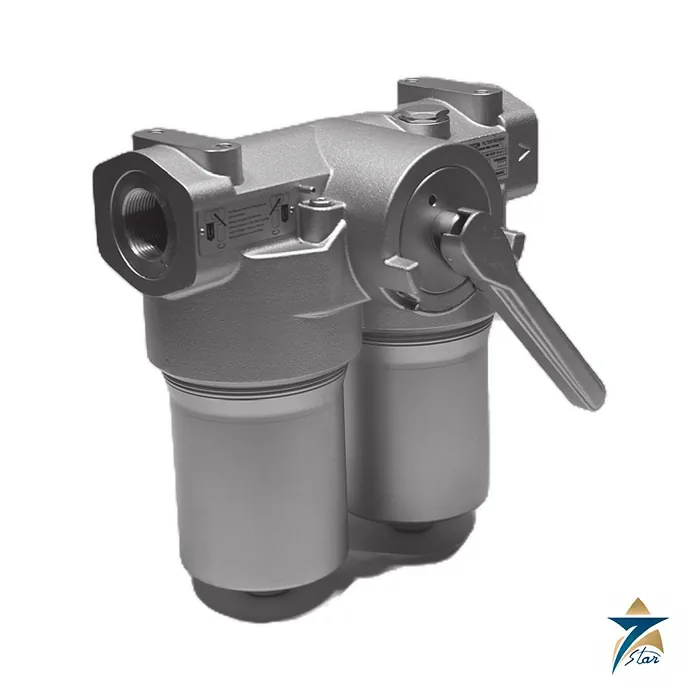
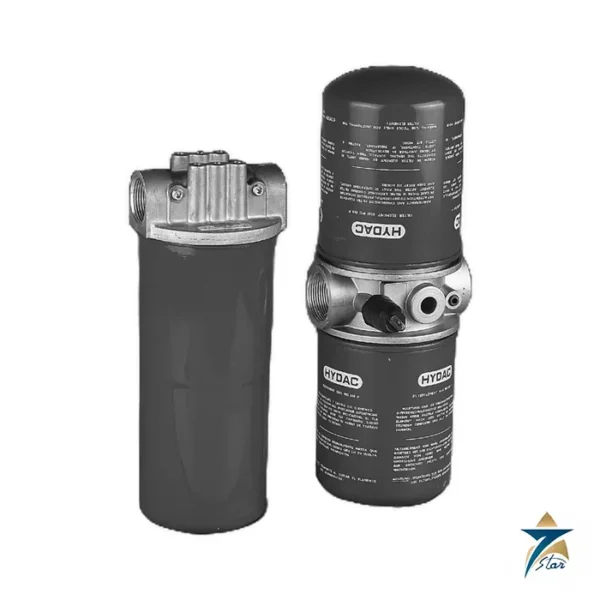
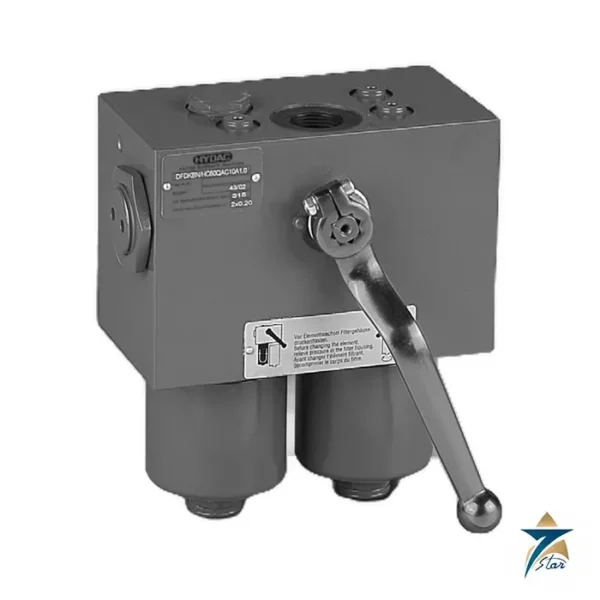
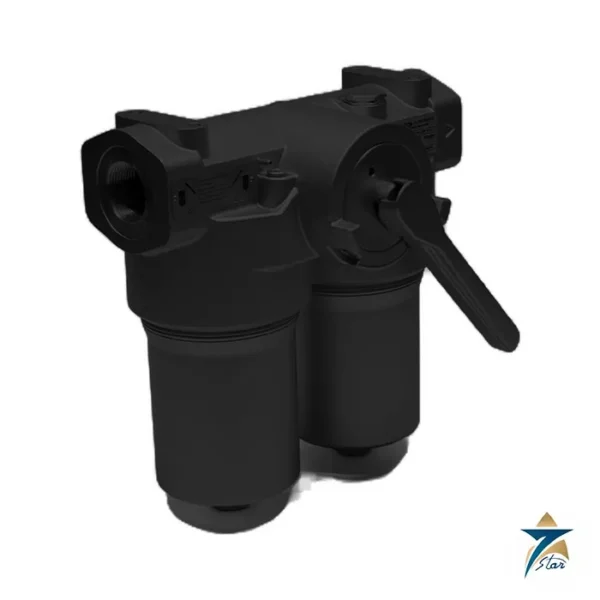
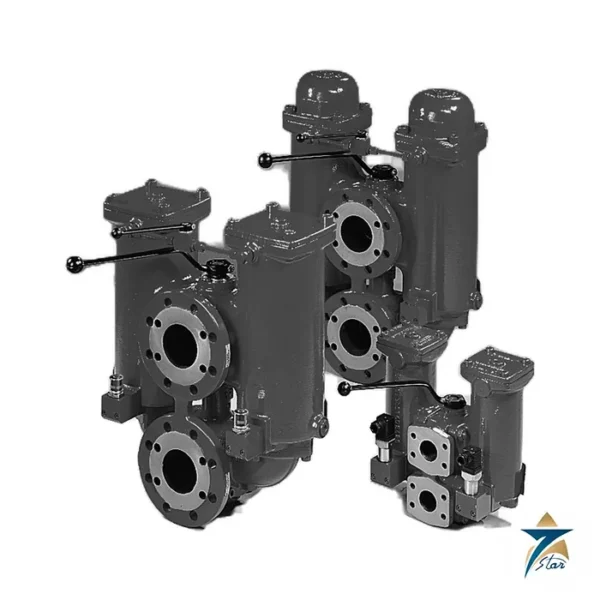
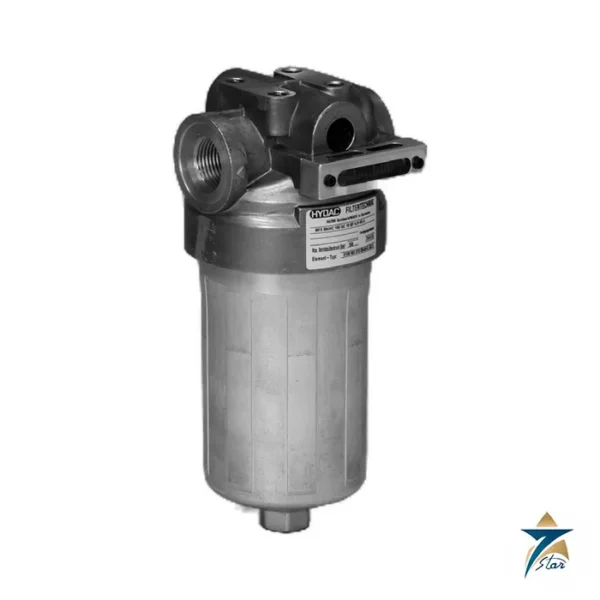
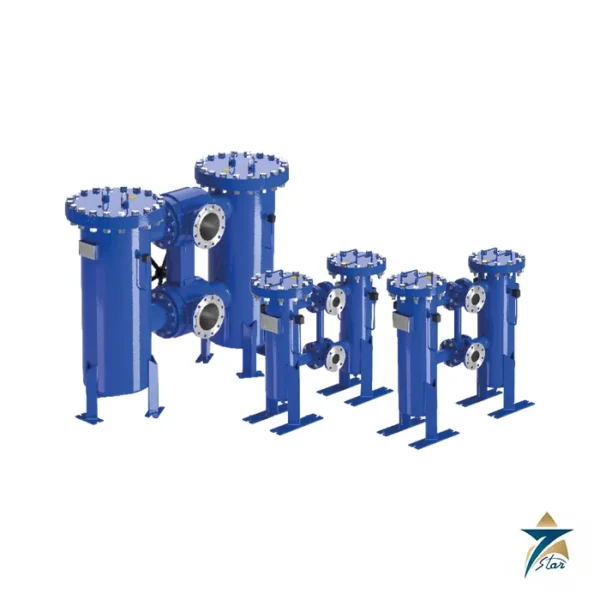
The Hydac FLND is a duplex inline filter with an aluminium head, a built-in change-over valve and two screw-in bowls. It does the same job as the ductile iron FMND, a filter that keeps flowing while one side is serviced, but in a lighter housing for lower-pressure circuits and lube and control oil lines.
Nine sizes are listed. FLND 40, 63, 100, 160, 250 and 400 follow DIN 24550, and FLND 60, 110 and 140 use the manufacturer’s own dimensions. Flow reaches 400 l/min.
Technical specifications
| Parameter |
Specification |
| Series |
FLND, sizes 40, 60, 63, 100, 110, 140, 160, 250, 400 |
| Type |
Change-over inline filter, single switching valve and check valve |
| Maximum flow |
Up to 400 l/min |
| Nominal pressure |
63 bar (FLND 40 to 140); 25 bar (FLND 160 to 400) |
| Fatigue strength |
1,000,000 cycles at nominal pressure, 0 to nominal pressure |
| Temperature range |
-10 °C to +100 °C |
| Filter head material |
Aluminium |
| Filter bowl material |
Aluminium (steel on FLND 100 and 140) |
| Clogging indicator |
VM, up to 210 bar operating pressure; setting 2.5 bar or 5 bar |
| Bypass (optional) |
3.5 bar or 7 bar (others on request); standard model has no bypass |
| Element materials |
Optimicron (sizes 60, 110, 140), Betamicron BN4HC (40, 63, 100, 160, 250, 400), BH4HC, wire mesh |
| Collapse pressure |
ON 20 bar; BN4HC 20 bar; BH4HC 210 bar; wire mesh 20 bar |
| Connections |
G1/2 to G1 1/2 threads, SAE DN 25 and DN 38 (3000 psi) by size |
| Oil drain plug |
Standard on FLND 160 to 400; option SO184 on FLND 40 to 140 |
| Seals |
NBR (FPM or EPDM on request) |
| Certificates |
Manufacturer’s test certificates O and M, 3.1 certificates and type approvals available |
How it differs from the FMND
The housing is aluminium instead of ductile iron, and the nominal pressure is different: FLND 40 to 140 are rated at 63 bar, and FLND 160 to 400 at 25 bar. Where a circuit sees pressure peaks above those values, the iron-bodied change-over filter is the one to look at. The element range and the DIN 24550 interface are shared, so the same Betamicron element sizes apply.
The sheet’s order example is FLND BN/HC 250 D D F 10 D 1 .X /-L24: type, element material, size, pressure letter (D = 25 bar, F = 63 bar), change-over type D, port letter, micron rating, indicator and type code. Reverse flow (RL) for FLND 160 and above is available on request.
Options and care
Accessories listed are a bypass valve, an oil drain plug, FPM or EPDM seals and the reverse-flow design. Filters with a switching valve have a permissible leakage that depends on the operating medium, so ask for the value if leakage across the valve matters. The housing must be earthed, and electrical indicator power should be switched off before the connector is removed.
Compatible fluids are hydraulic oils H to HLPD, lubrication oils, compressor oils, biodegradable HETG, HEES and HEPG and fire-resistant HFA to HFC and HFD; high-water-content fluids on request. Send the nameplate code, the pressure class and the micron rating when you ask for a quotation.
Key features at a glance
- Two filter sides in one housing, so the element on the standby side can be changed while the system keeps running on the other.
- Aluminium filter head that reduces weight on skids, mobile frames and compact lubrication units compared with cast iron duplex housings.
- Screw-in bowls that are removed from below, giving straightforward element access in tight spaces.
- Integrated check valve logic and a single switching valve that directs flow through one side at a time.
- Choice of optional bypass setting, which protects the element from collapse during cold start or a sudden contamination load.
- Visual or electrical clogging indicator, so service can be planned on actual element condition rather than on fixed intervals.
- DIN 24550 sizes that make element sourcing and interchange simpler on existing plant.
Selecting the right size and element
Begin with the maximum flow rate and the viscosity of the oil at the lowest expected operating temperature. Clean housing pressure drop plus clean element pressure drop should remain well below the indicator setting, otherwise the indicator will trigger shortly after a new element is fitted. Hydac publishes pressure drop curves for every housing and element combination, and these should be used rather than selecting only on the maximum flow figure in the table.
The filtration rating follows the cleanliness target of the most sensitive component in the circuit. Servo and proportional valves usually require finer filtration than gear pumps or simple lubrication points. For pressure lines check also the collapse pressure of the element; where the standard model without bypass is used, an element with a higher collapse rating such as BH4HC can be considered.
Typical circuit positions
| Position |
Reason for a change-over filter |
| Lube oil supply to turbine or compressor bearings |
Bearings cannot run without oil, so the filter must be serviceable on line. |
| Control oil for governors and actuators |
Fine filtration protects small orifices while plant stays on line. |
| Low-pressure hydraulic power unit lines within the 63 bar or 25 bar rating |
Continuous operation during element change. |
| Gearbox circulation systems |
Removal of wear particles without stopping the drive. |
Changing an element safely
- Check the indicator to identify which side is clogged.
- Switch the change-over lever to the clean side and confirm flow and pressure are stable.
- Depressurise the isolated side; on sizes with an oil drain plug, drain it before opening.
- Unscrew the bowl, remove the element, and clean the bowl and seal faces.
- Fit a new element of the same type and micron rating with a new O-ring if needed, refit the bowl and vent the side before it is put back into service.
Never open a bowl while that side is under pressure, and dispose of used elements and oil according to local environmental rules.
Operating in Oman and GCC plants
High ambient temperatures in the region lower oil viscosity in summer, while desert dust is a constant contamination source through breathers and cylinder rods. A duplex filter lets maintenance teams respond to rising contamination immediately instead of waiting for a shutdown. Aluminium housings resist rust better than plain steel in humid coastal sites, but external surfaces should still be inspected in salty atmospheres near the coast.
Information for an RFQ
- The complete type code from the nameplate, or the required size, pressure class and connection.
- Flow rate, fluid type and viscosity, and the required filtration rating.
- Indicator type and voltage, bypass setting and seal material.
- Number of spare elements to be quoted with the housing.
Documents and quotation
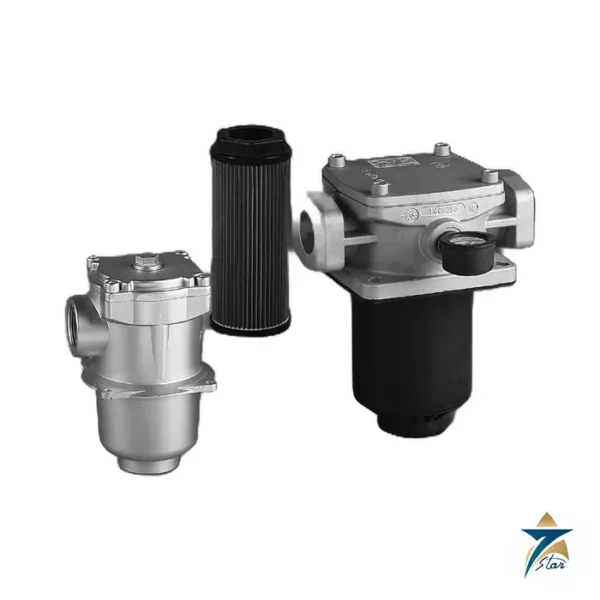
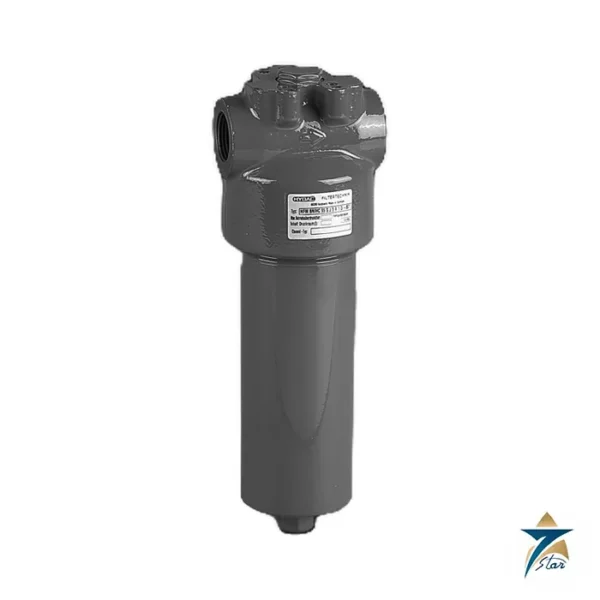
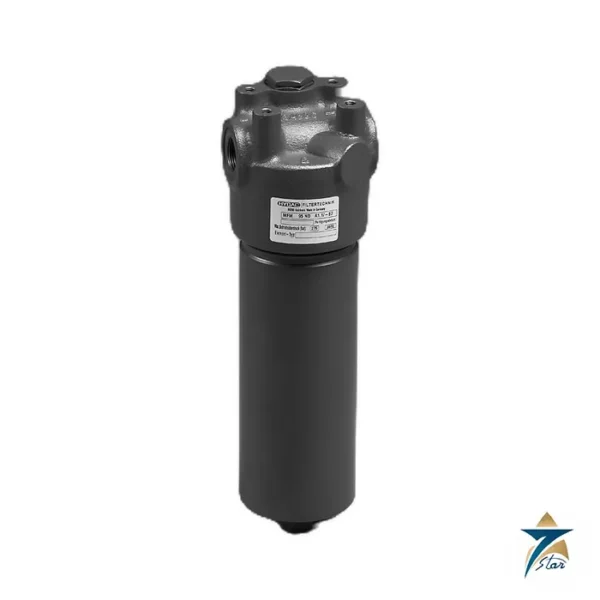
The datasheet (E 7.561.6/11.16) is attached. Related: filter housings and the Hydac RFM return line filter.

Reviews
There are no reviews yet.