Surge control for larger pump stations
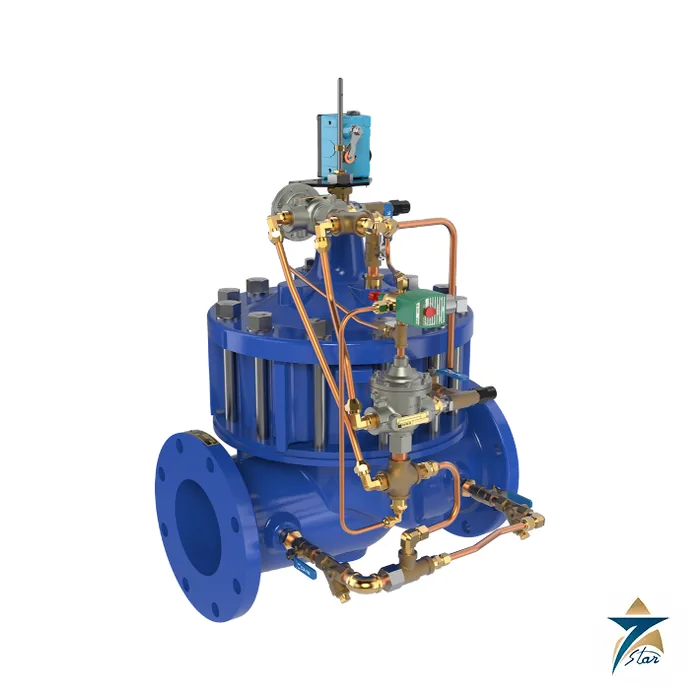
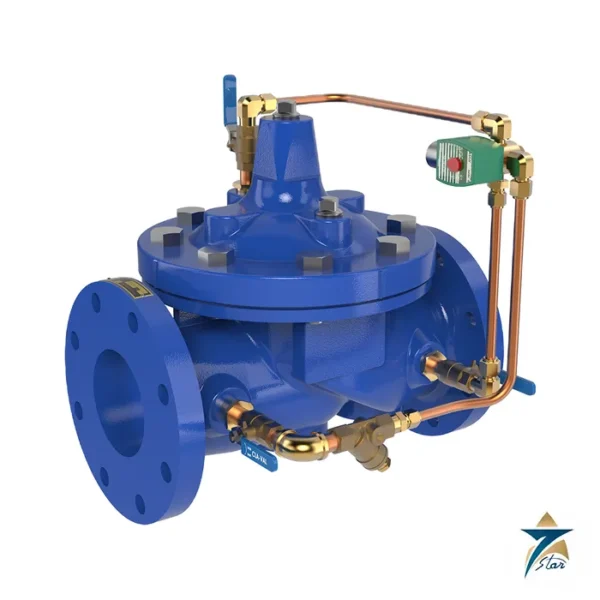
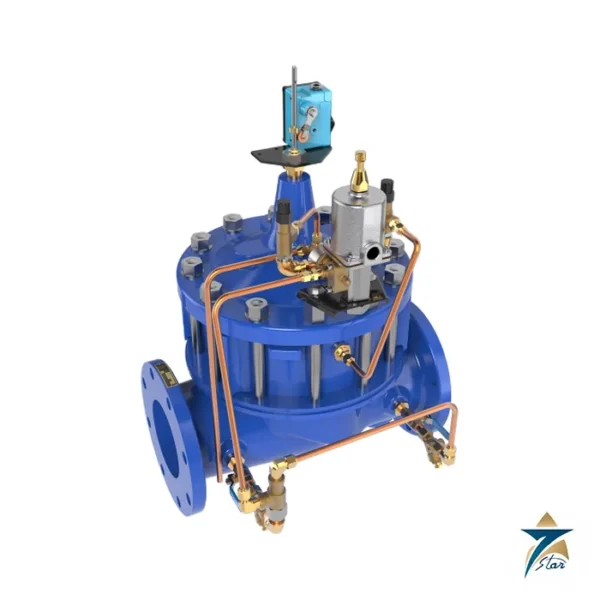
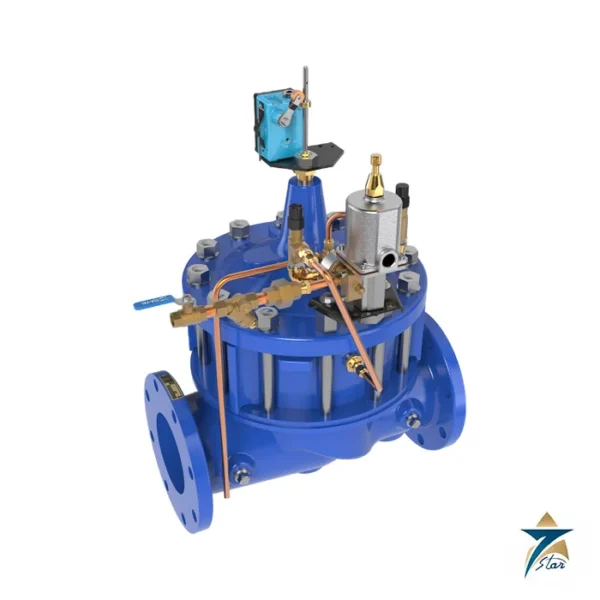
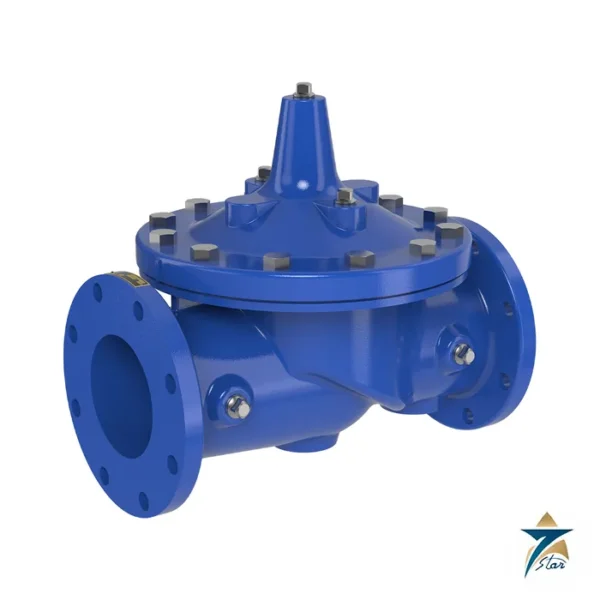
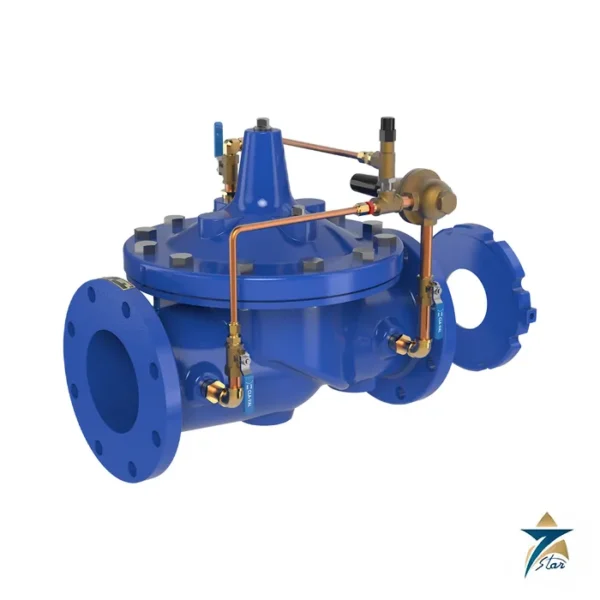
The Cla-Val 60-19 is the booster pump control valve with a high capacity pilot system, designed for larger pump stations. Like the smaller 60-11, it is installed on the pump discharge and removes the pipeline surges that come from starting and stopping the pump. It is listed in 10, 12, 14 and 16 inch flanged sizes with low head loss and a built-in check valve.
The pump starts against a closed valve. The solenoid control is energized and the valve opens slowly; at shutdown the solenoid is de-energized and the valve closes slowly while the pump continues to run. A limit switch assembly then releases the pump starter.
Technical specifications
| Parameter |
Specification |
| Model |
Cla-Val 60-19 booster pump control valve, high capacity pilot system (uses 100-03 Powercheck) |
| Sizes |
10, 12, 14, 16 in; flanged, globe or angle |
| Body and cover materials |
Ductile iron ASTM A536, cast steel ASTM A216-WCB, bronze UNS 87850 (10 to 16 in) |
| Max. pressure, 150 class / 300 class |
Ductile iron 250 / 400 psi; cast steel 285 / 400 psi; bronze 225 / 400 psi |
| Pilot system |
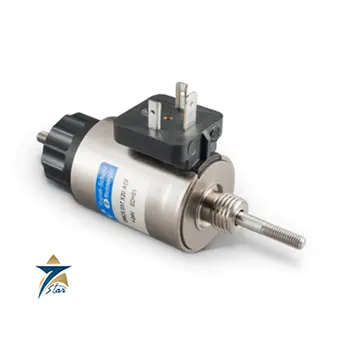
CS3M solenoid control, 102E three-way valve, CVS-1 shuttle valve, X105LCW switch assembly, CV flow controls |
| Solenoid enclosure |
NEMA 1, 2, 3, 3S, 4, 4X watertight; explosion-proof available |
| Max. operating differential |
200 psi (solenoid control) |
| Temperature |
Water to 180 °F |
| Suggested max. flow (gpm) |
4,900 (10 in), 7,000 (12 in), 8,400 (14 in), 11,000 (16 in) |
| Stem travel |
2.80 in (10 in), 3.40 in (12 in), 4.00 in (14 in), 4.50 in (16 in) |
| Weight, approx. |
940 lb (10 in), 1,675 lb (12 in), 2,460 lb (14 in), 3,100 lb (16 in) |
Sequence of operation
Cla-Val describes three steps. With the pump off, static line pressure goes through a strainer, shuttle valve, solenoid control and three-way valve to the chamber above the diaphragm and holds the valve shut. When the starting switch closes, the solenoid shifts and fluid above the diaphragm drains to atmosphere, while pump pressure is routed through a shuttle valve to the lower diaphragm chamber and opens the valve; the opening speed is set by a speed control. On stopping, the solenoid de-energizes, pump pressure is directed above the diaphragm, and the valve closes slowly through a second speed control. If power fails when the valve is open, the built-in check valve closes immediately to prevent reverse flow.
Water is discharged from the solenoid exhaust port each time the valve opens or closes, so provision should be made for drainage. For the best check action, install the valve with the stem vertically up.
Sizing and installation notes
Sizing is similar to non-modulating valves: select the smallest size that handles the pump output at an acceptable head loss, because oversizing nullifies the ability to prevent surges. Suggested maximum flow is 4,900 gpm at 10 in, 7,000 gpm at 12 in, 8,400 gpm at 14 in and 11,000 gpm at 16 in. Pilot components are the CS3M solenoid control, a 102E three-way valve, CVS-1 shuttle valve and X105LCW switch assembly, with optional X46A strainer, CK2 isolation valves, X141 gauge, X43 Y-strainer and the PC-22D pump control panel.
The solenoid enclosure can be NEMA 1, 2, 3, 3S, 4 or 4X watertight, with explosion-proof types available, and the maximum operating differential is 200 psi. A 52-03 or 652-03 Surge Anticipator is recommended for power failure protection.
How the Cla-Val 60-19 works
The valve is a diaphragm valve with a pilot system. With the pump off, line pressure above the diaphragm holds it shut. When the pump starts, the solenoid shifts, the pressure above the diaphragm drains and pump pressure opens the valve slowly. At shutdown the solenoid releases, pressure goes above the diaphragm and the valve closes slowly while the pump still runs. A limit switch then lets the starter act.
Where the 60-19 is used
- Larger booster pump stations
- Pump discharge lines
- Pipelines with surge on start
- Pipelines with surge on stop
- Stations needing a built-in check valve
Selection checklist for the 60-19
- Size of 10, 12, 14 or 16 inch
- Globe or angle pattern
- Body material
- Pressure class
- Solenoid enclosure type
- Flow in gpm
- Water temperature
- Space and weight
Installation, commissioning and maintenance notes for the 60-19
Install the valve on the pump discharge with room to remove the cover. Connect the solenoid and the limit switch to the starter circuit. Set the opening and closing speed with the flow controls. Test a start and a stop and watch the pressure. Keep the strainer clean.
Requesting a quotation for the Cla-Val 60-19
Please send the size, the body material, the pressure class and the solenoid voltage. Seven Star LLC serves industrial customers in Oman and the GCC and replies with a quotation based on the information provided.
60-19 sizes
The sizes are 10, 12, 14 and 16 inch, flanged.
60-19 body materials
The body is ductile iron, cast steel or bronze.
60-19 pressure ratings
Ductile iron is rated 250 and 400 psi, cast steel 285 and 400 psi, and bronze 225 and 400 psi, for the two classes.
60-19 pilot system
The pilot has a CS3M solenoid control, a 102E three-way valve, a CVS-1 shuttle valve and an X105LCW switch assembly.
60-19 operating differential
The maximum operating differential is 200 psi with the solenoid control.
60-19 temperature
The valve handles water up to 180 degrees F.
60-19 flow
The suggested maximum flow runs from 4,900 gpm for 10 inch to 11,000 gpm for 16 inch.
60-19 stem travel
The stem travel runs from 2.80 inch for 10 inch to 4.50 inch for 16 inch.
60-19 weight
The weight runs from 940 lb for 10 inch to 3,100 lb for 16 inch.
Valve records for the 60-19
Record the size, the speed settings and the date of each test.
Choosing the right 60-19 size
Choose the size by the flow of the pump so that the valve is not oversized at low flow.
Documents and quotation
The engineering data sheet E-60-19 (US units) is attached. State the size, pressure class, trim, solenoid voltage and enclosure, pump flow and static pressure when requesting a quotation. For smaller pumps see the Cla-Val 60-11; other valves of this kind are under Control Valves.











Reviews
There are no reviews yet.