A mid-range CompactLogix 5370 controller on EtherNet/IP
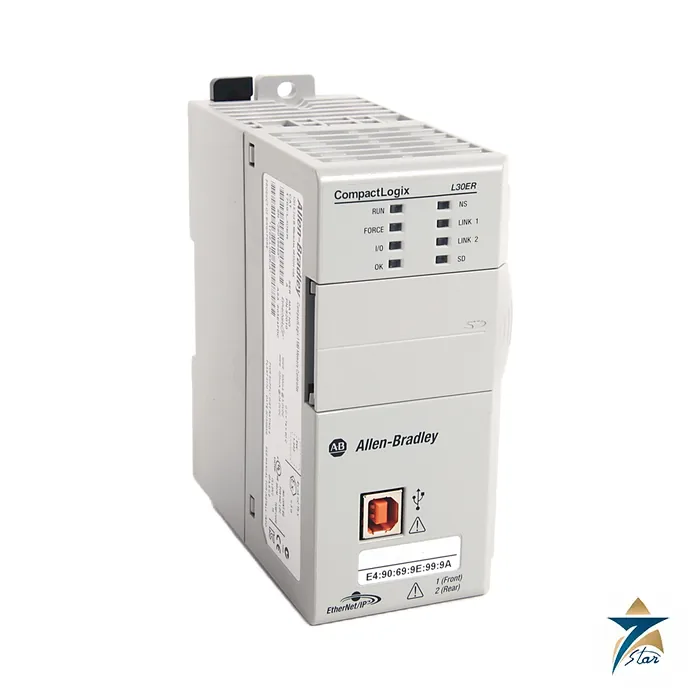
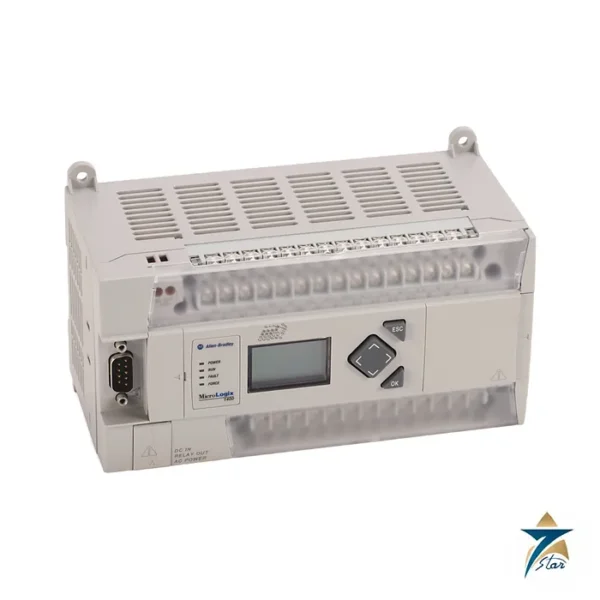
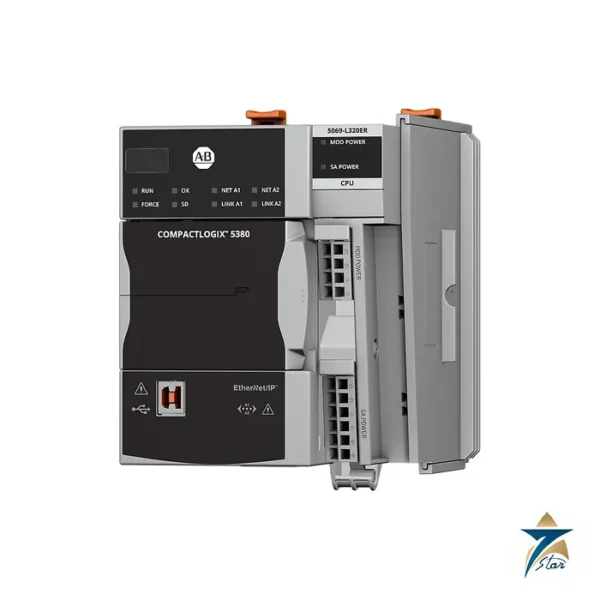
The Allen-Bradley 1769-L30ER is a CompactLogix 5370 L3 controller with 1 MB of user memory. It combines the control processor with two built-in EtherNet/IP ports and runs standard Logix applications, so it is used on machine and skid control where a single controller reads local Compact I/O and remote EtherNet/IP devices.
Within the 5370 L3 range, the L30ER sits below the 2 MB 1769-L33ER. The M variants (for example the L30ERM) add integrated motion axes; the plain L30ER does not list motion support, so choose the exact variant that matches the project.
Technical specifications
| Parameter |
Specification |
| Manufacturer / family |
Allen-Bradley (Rockwell Automation) / CompactLogix 5370 L3 |
| Catalog number |
1769-L30ER (variants listed: 1769-L30ER-NSE, 1769-L30ERK, 1769-L30ERM) |
| User memory |
1 MB |
| Built-in communication |
Two EtherNet/IP ports (one IP address) and one USB port for temporary connection |
| EtherNet/IP nodes, max |
16 |
| Controller connections |
256 |
| Local expansion modules, max |
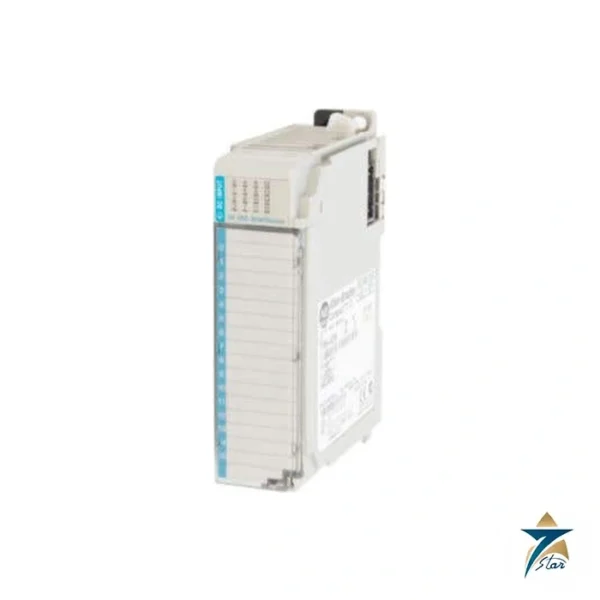
8 1769 Compact I/O modules |
| I/O banks, max |
3 |
| Tasks |
32 tasks (continuous and periodic), 100 programs per task |
| Sockets, max |
32 |
| Programming languages |
Relay ladder, structured text, function block, SFC |
| Other networks |
DeviceNet through the 1769-SDN scanner |
| Memory card |
1784-SD1 or 1784-SD2 SD card; no battery needed (internal energy storage) |
| Right end cap |
1769-ECR required on the right side of the system |
| Software |
Studio 5000 Logix Designer |
Capacity at a glance
The technical data lists up to 16 EtherNet/IP nodes, 256 controller connections, 32 sockets and as many as 32 tasks with up to 100 programs per task. Up to eight 1769 Compact I/O modules can be installed as local expansion modules, spread over a maximum of three banks. The programming languages are relay ladder, structured text, function block and sequential function chart.
The two Ethernet ports are part of an embedded switch and share one IP address, which allows a linear topology without an external switch. A USB port is for temporary connection only. DeviceNet networks are reached through a 1769-SDN scanner module.
Memory card, power and the end cap
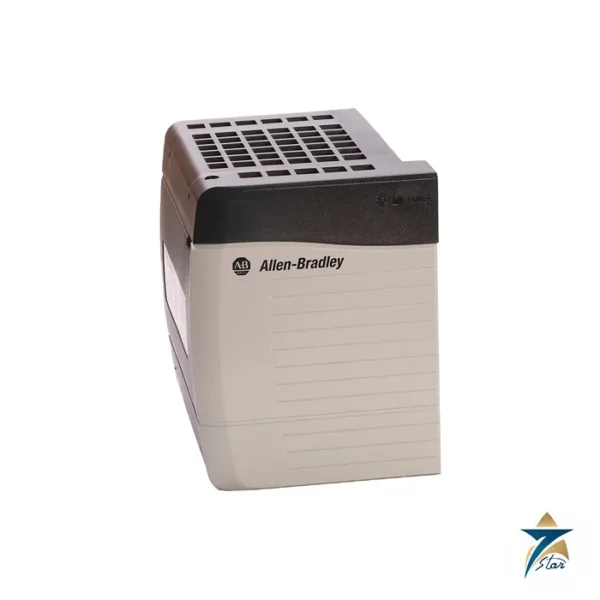
A battery is not needed because the controller uses internal energy storage, and projects can be stored on a 1784-SD1 or 1784-SD2 SD card. The controller needs a 1769 power supply for the bank, and the manual notes that a 1769-ECR right end cap must be installed on the right-hand side of the system.
The controller is programmed in Studio 5000 Logix Designer. Firmware revision, project size and the number of I/O modules should be checked before a replacement, because a project saved for a larger controller may not fit in the L30ER memory.
Order the power supply and the right end cap together with the controller so that the bank can be completed in one delivery and tested before it is released to the machine.
Key features of the 1769-L30ER
- Dual-port EtherNet/IP: the embedded switch supports linear and Device Level Ring topologies, so devices can be daisy-chained without separate switches.
- Logix architecture: the same programming environment and instruction set as larger ControlLogix systems, which makes code and skills transferable across a plant.
- Battery-free memory retention: internal energy storage preserves the program on power loss, removing battery replacement from the maintenance plan.
- SD card support: programs and firmware can be stored on a removable card for backup or quick restore.
- Integrated power supply for the local bank: the controller powers the local Compact I/O modules directly from its 24 V DC input.
Choosing the right CompactLogix variant
The main decisions are memory, number of EtherNet/IP nodes and motion. The L30ER suits small to medium machines with a moderate amount of logic and a limited number of networked drives, HMIs and remote I/O adapters. If the node count is close to the limit, or the program is expected to grow through future modifications, a larger L3 controller provides headroom. Projects that require integrated motion over EtherNet/IP should use an M variant. The -NSE variant is intended for applications where no stored energy may remain in the controller after power-off, and the K version adds conformal coating for harsher atmospheres.
Firmware and software compatibility
Check the firmware revision the project was developed on and the Studio 5000 Logix Designer version available on the engineering laptop. New controllers may ship with a firmware revision different from the one in the existing program; the controller can be flashed to the required revision with Rockwell tools.
Installation and system build
Mount the controller on DIN rail or panel inside an enclosure, with Compact I/O modules attached to its right side and the 1769-ECR end cap closing the bank. Observe the power supply distance rating of each I/O module, which limits how far it can sit from the power source. Ground the system as described in the installation instructions and keep 24 V DC wiring and Ethernet cables segregated from motor power wiring.
In hot climates, pay attention to enclosure temperature. Control panels in GCC plants are often installed in air-conditioned rooms or fitted with cooling units; keep the controller within its published operating temperature and leave the clearances around the modules free for convection.
Applications in Oman and the GCC
The 1769-L30ER is widely used on packaging machines, water and wastewater skids, HVAC central plants, material handling systems, compressor and pump packages, and process skids for oil and gas service. Its EtherNet/IP ports make integration with PowerFlex drives, PanelView HMIs and SCADA systems straightforward.
What to include in an RFQ
- Catalog number and variant: 1769-L30ER, -NSE, K or M version.
- Required firmware revision, if the project is fixed to one.
- Accessories: 1769-ECR end cap, SD card, Compact I/O modules.
- Quantity and delivery location.
- Whether the unit replaces an existing controller or is for a new project.
Documents and quotation
The CompactLogix controller technical data 1769-TD005 contains the comparison tables used here. For a quotation, send the 1769-L30ER reference, firmware revision, quantity and the I/O configuration. Related products are listed in PLC & I/O Cards.








Reviews
There are no reviews yet.