A precision regulator operated by a plunger, lever or pilot signal
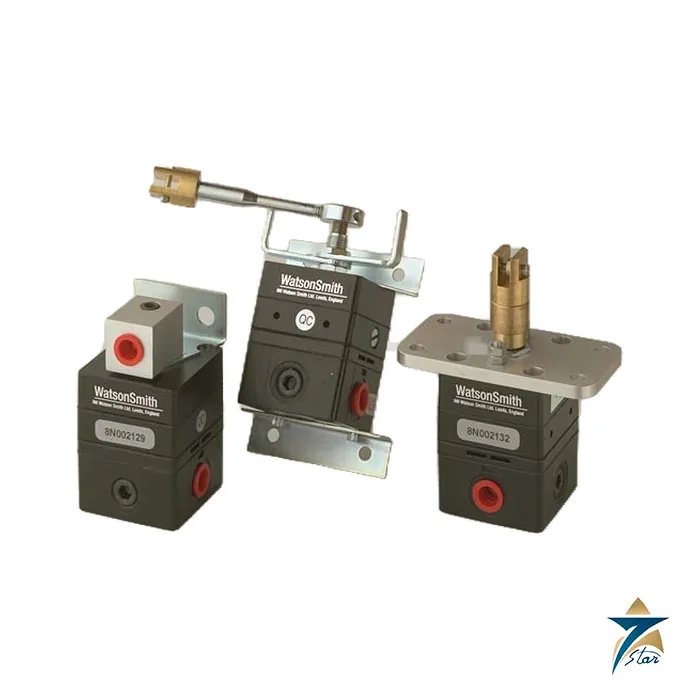
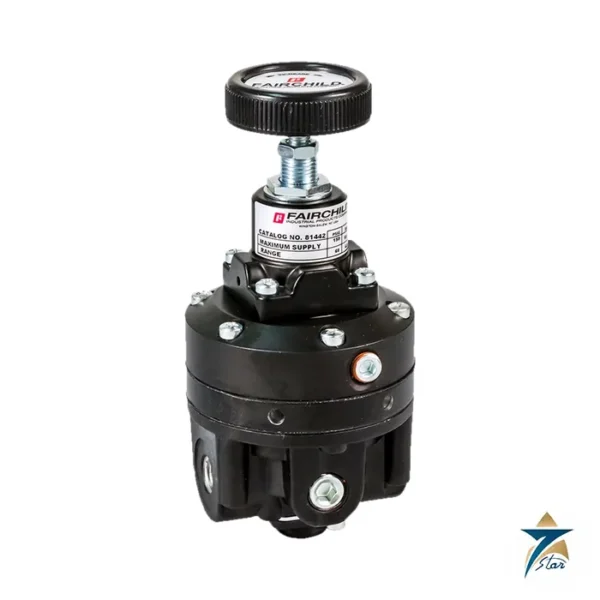
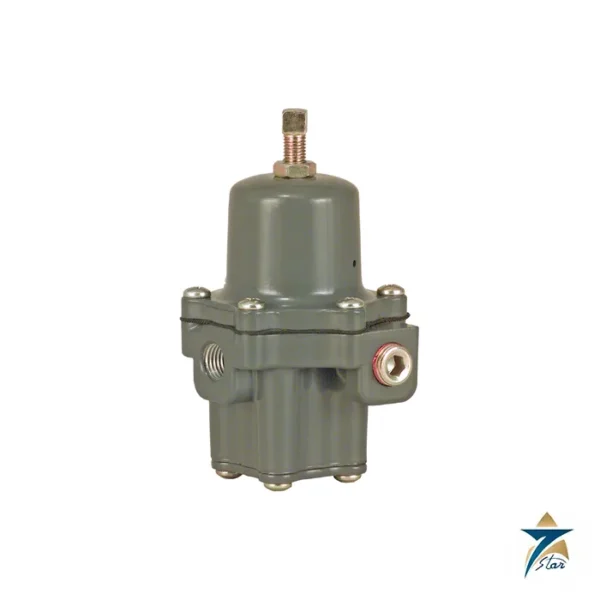
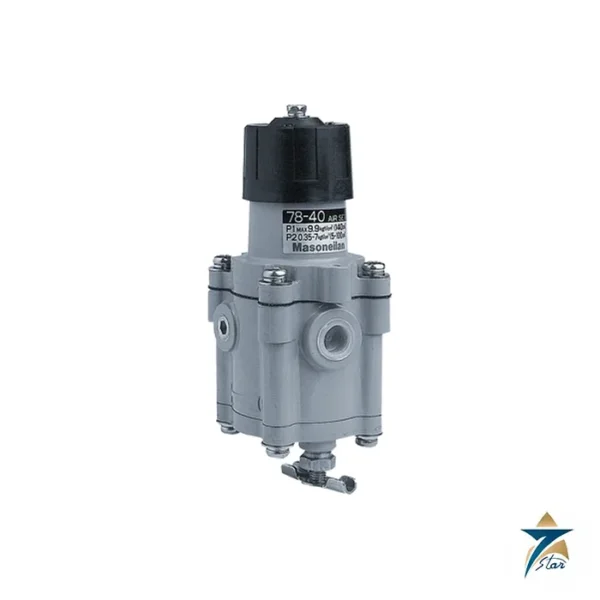
The Watson Smith Manostat mechanically operated series uses the same precision regulator base unit as the manual version but is driven by a mechanism, which makes it suitable for machine control. The datasheet lists plunger-operated, lever-operated and volume boosting air relay versions, and says the unit is suitable for dead-end conditions. Its example is textile, railway, laboratory and paper processing equipment, such as controlling a conveyor belt position: a handwheel unit and a lever unit are combined so that when the belt slips sideways the lever-operated Manostat raises the cylinder pressure and pushes the belt back to centre.
We found this datasheet only as a copy issued as Watson Smith Instrumentation literature (dated 10/06) and hosted by a UK instrument supplier; we did not find the product in current manufacturer literature, so treat it as an older, legacy line and confirm current availability, any replacement model and lead time before you rely on it.
Technical specifications
| Parameter |
Specification |
| Type |
Manostat precision pressure regulator, mechanically operated |
| Versions |
Plunger (dome or clevis fitting); lever; volume boosting air relay (normal or bias) |
| Order codes |
180100R, 180200R, 160300R, 180400R, 190400R |
| Output ranges |
0.2 to 1 bar (3 to 15 psi); 0.14 to 1.7 bar; 0.14 to 4 bar; 0.14 to 8 bar |
| Minimum outlet pressure |
0.1 to 0.14 bar (1.5 to 2 psig) |
| Air supply |
Oil-free dry air or dry gas below 25 micron; at least 0.2 bar above output; max. 10 bar |
| Flow capacity |
Up to 300 Nl/min (10 scfm) |
| Accuracy / air consumption |
0.10 percent and 0.2 l/min (to 1.7 bar); 0.05 percent and 0.6 l/min (to 4 bar); 0.02 percent and 1.2 l/min (to 8 bar) |
| Response / sensitivity |
Below 0.2 s for 50 percent load change; better than 0.3 mbar |
| Plunger force / lever |
4 to 30 N; lever 125 degrees plus or minus 10 percent, torque 13.75 N mm |
| Operating temperature / protection |
Minus 20 to plus 70 degrees C; IP65 |
| Connections / materials |
1/4 NPT female plus two gauge ports; zinc die-cast, beryllium copper capsule, nitrile diaphragms |
Operating mechanisms
The plunger version is fitted with a dome or a clevis. A direct linear movement along the capsule axis changes the regulated pressure with the dome fitting, while the clevis suits sinusoidal movement. Plunger force depends on range and adjustment and is between 4 and 30 N, and pre-travel on all instruments keeps the plunger in contact with the cam outside the range. The lever version works as a pneumatic position converter: an angular movement of 125 degrees plus or minus 10 percent gives the full range adjustment, for example 3 to 15 psig, with a torque of 13.75 N mm needed to move the lever.
The volume boosting air relay gives remote control of regulated pressure with minimal air usage in normal mode (1:1 between signal and regulated pressure) or with a bias of up to 2 bar (30 psig). Plunger travel on the standard ranges is 0.93 mm (0.037 inch) on 0.2 to 1 bar and 1.65 mm (0.065 inch) on the higher ranges.
Ordering and what to confirm
Order codes printed in the datasheet are 180100R, 180200R, 160300R, 180400R and 190400R, each tied to an output pressure range (0.2 to 1 bar or 3 to 15 psi, 0.14 to 1.7 bar, 0.14 to 4 bar and 0.14 to 8 bar) and a mechanism, so send the range and mechanism together and we will check the exact code against the datasheet. Alternative pneumatic connections are special order. Confirm the mounting (any attitude, integral mounting nut, panel or through-hole), the air quality and the availability of this older model.
How the Watson Smith Manostat Mechanical Operated regulator works
A mechanism such as a plunger or lever moves against the regulator. The movement changes the force on the capsule inside the regulator. The regulator then raises or lowers the outlet pressure to match. The outlet pressure follows the position of the mechanism.
Where the Manostat Mechanical Operated regulator is used
- Machine control
- Textile equipment
- Railway equipment
- Laboratory equipment
- Paper processing equipment
Selection checklist for the Manostat Mechanical Operated regulator
- Plunger, lever or air relay version
- Output range
- Supply pressure
- Flow needed
- Accuracy needed
- Mounting position
- Air quality
- Operating temperature
Installation, commissioning and maintenance notes for the Manostat Mechanical Operated regulator
Mount the regulator so that the plunger or lever meets the moving part. Connect clean dry air to the supply port. Connect the output to the cylinder or device. Adjust the position of the mechanism while watching a gauge. Keep the air free of oil and water.
Requesting a quotation for the Manostat Mechanical Operated regulator
Please send the output range, the version and the air supply details. Seven Star LLC serves industrial customers in Oman and the GCC and replies with a quotation based on the information provided.
Manostat Mechanical Operated regulator type
It is a precision pressure regulator driven by a mechanism.
Manostat Mechanical Operated regulator versions
Versions are plunger, lever and volume boosting air relay.
Manostat Mechanical Operated regulator dead-end use
The unit suits dead-end conditions.
Manostat Mechanical Operated regulator output ranges
Output ranges run from 0.2 to 1 bar up to 0.14 to 8 bar.
Manostat Mechanical Operated regulator supply
The maximum supply pressure is 10 bar.
Manostat Mechanical Operated regulator air quality
The air must be dry and oil-free below 25 micron.
Manostat Mechanical Operated regulator flow
The flow capacity is up to 300 Nl/min.
Manostat Mechanical Operated regulator response
The response is below 0.2 s for a 50 percent load change.
Manostat Mechanical Operated regulator plunger force
The plunger force is 4 to 30 N.
Manostat Mechanical Operated regulator temperature
The operating temperature is minus 20 to plus 70 degrees C.
Manostat Mechanical Operated regulator protection
The protection rating is IP65.
Manostat Mechanical Operated regulator connections
The connections are 1/4 NPT female plus two gauge ports.
Manostat Mechanical Operated regulator materials
The body is zinc die-cast with a beryllium copper capsule and nitrile diaphragms.
Regulator records for the Manostat Mechanical Operated unit
Record the version, the set position and each adjustment.
Choosing the right Manostat Mechanical Operated version
Choose the version from the type of movement that drives it.
Documents and quotation
The datasheet is attached for download. Seven Star LLC is an independent supplier in Muscat. Send the model or order code, quantity and operating conditions and we will request a quotation; availability depends on the model. Related items: Regulators.







Reviews
There are no reviews yet.