A two-phase sensed regulator for PMG-excited alternators
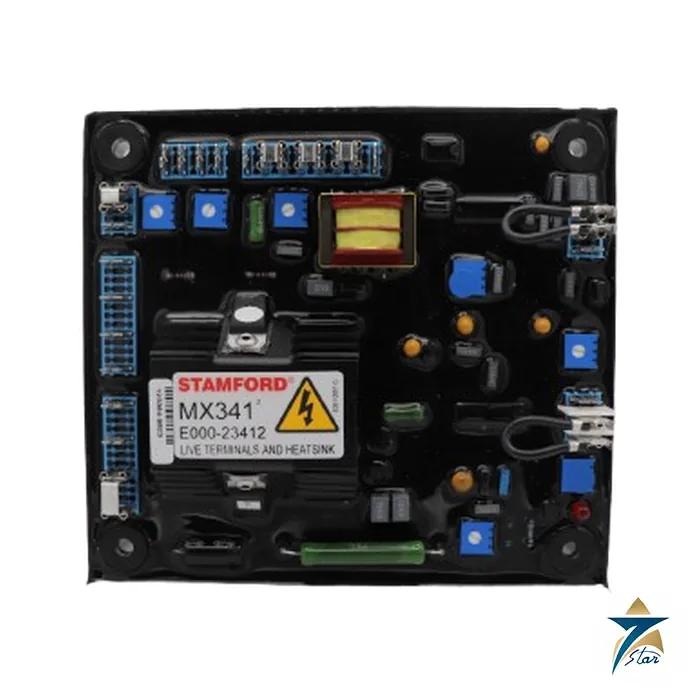
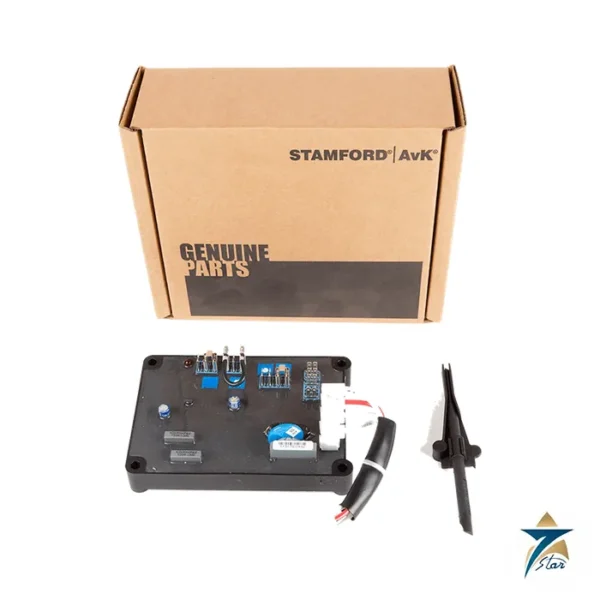
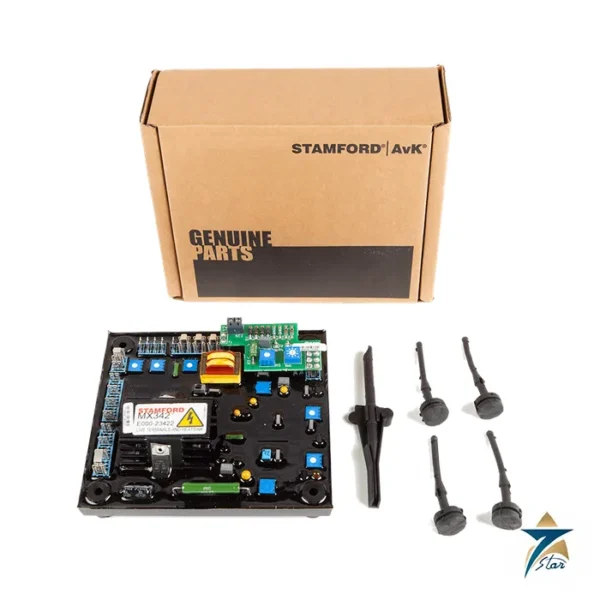
The STAMFORD MX341 is a two-phase sensed AVR for brushless generators with PMG excitation. It senses voltage in the main generator winding, controls the power fed to the exciter stator and so the main rotor, and compensates for load, speed, temperature and power factor. Like the MX321 it draws its power from a PMG, keeping the control circuits clear of non-linear load distortion.
Under-speed protection reduces the output voltage below a pre-set knee frequency, and the adjustable DIP helps a turbocharged engine recover from large impact loads.
Technical specifications
| Parameter |
Specification |
| Part number (UC manual service parts) |
E000-23412/1P |
| Sensing input |
190-264 V ac maximum, single phase, two wire, 50-60 Hz |
| PMG supply |
Three-phase, three-wire, 140-220 V ac, 3 A per phase at 100-120 Hz |
| Exciter output |
Maximum 120 V dc, 2.7 A continuous, 6 A for 10 s intermittent |
| Load on exciter field |
At least 15 ohms |
| Voltage regulation |
+/-1% when the engine governs to 4% |
| Drift with temperature |
0.03% per degree C of AVR ambient change (10 min) |
| Build-up ramp |
3 seconds |
| Response times |
AVR 10 ms; exciter field to 90% in 80 ms; terminal volts to 97% in 300 ms |
| Remote trim |
+/-10% using a 1 k ohm 1 W trimmer (mod status D onwards) |
| Under-frequency protection |
Set point 95% Hz; slope 170% down to 30 Hz; jumper-selectable |
| Analogue input |
+/-5 V dc max; 1 V for 5% generator volts; 1 k ohm |
| Droop input |
10 ohm burden; 0.07 A for 5% droop at 0 PF; max 0.33 A |
| Over-excitation protection |
Set point 75 V dc, 10 s fixed delay |
| Power dissipation |
12 W maximum |
| Environment |
Operating -40 to +70 C; humidity 95% non-condensing; storage -55 to +80 C |
Controls and adjustments
Seven trimmers are listed: VOLTS, STABILITY, UFRO, DROOP, VTRIM, EXC TRIP and DIP. The frequency selection links cover four-pole and six-pole machines at 50 and 60 Hz, and a stability selection link chooses the response for machines below 90 kW, between 90 and 550 kW or above 550 kW. After fitting a replacement, turn VOLTS fully anti-clockwise, set STABILITY and any remote trimmer to mid position, run on no load at nominal frequency and raise VOLTS to rated voltage.
Sensing, droop and external controls
The isolating transformer on the sensing input allows connection to different winding configurations. The droop CT input supports parallel running, and the analogue input accepts a STAMFORD power factor controller or another floating device with 500 V ac isolation. An uncontrolled excitation condition is limited by internal shutdown of the output device, which stays latched until the generator has stopped.
What to confirm before ordering
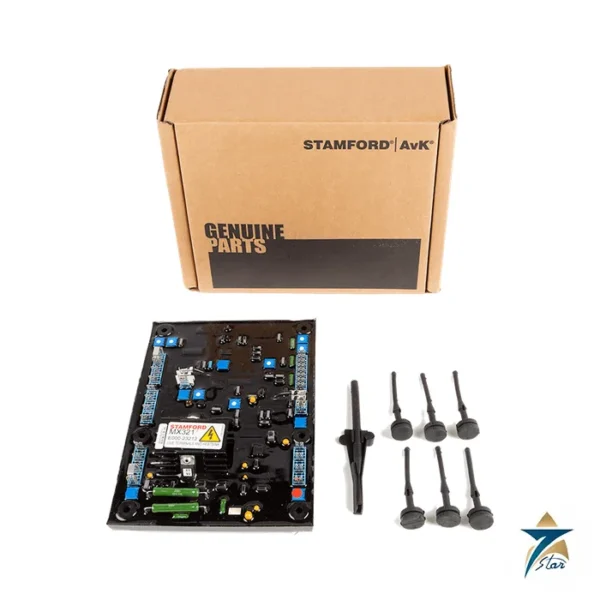
The MX341 and MX321 look similar but differ in sensing (two-phase versus three-phase RMS) and output current (2.7 A versus 3.7 A). Match the replacement to the code printed on the existing board and the alternator wiring diagram. Modification status D or later is needed for the external trim range quoted. The datasheet limits vibration to 50 mm/s from 20 to 100 Hz and 3.3 g from 100 Hz to 2 kHz, and over-excitation is flagged after a fixed 10 second delay at 75 V dc, shown on the common LED.
Choosing the right regulator for the alternator
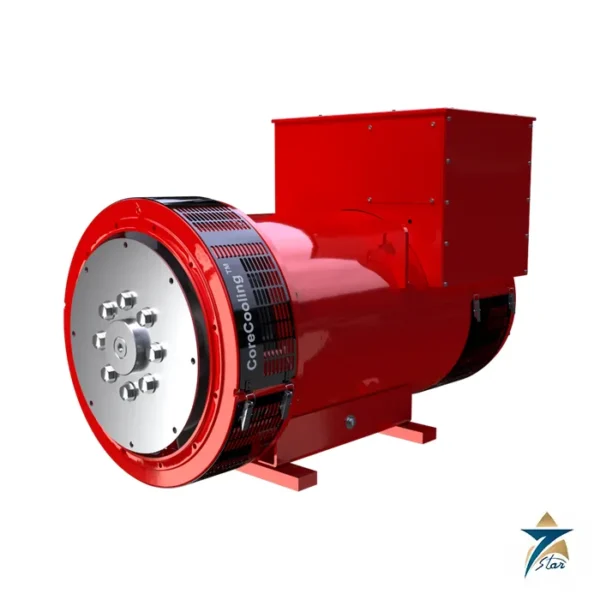
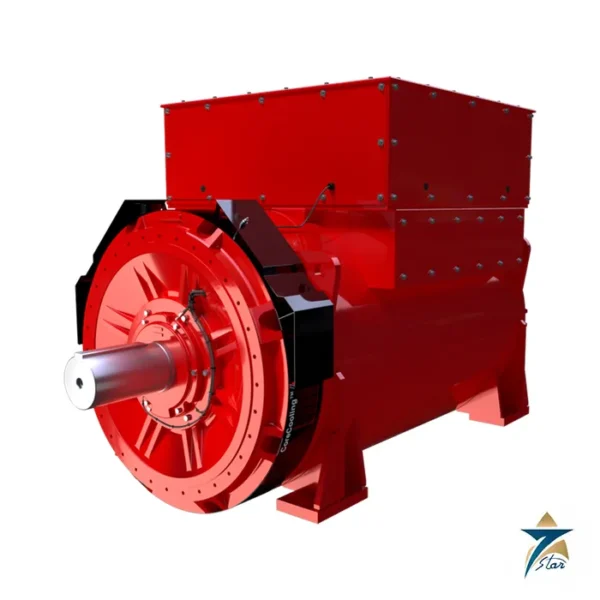
An AVR replacement should always start from the alternator, not from the regulator alone. Check that the machine is a brushless STAMFORD generator with PMG excitation, that the existing regulator is an MX341, and that the sensing and exciter wiring on the alternator match the wiring diagram for this model. The PMG supply, the sensing voltage range and the minimum exciter field resistance listed in the specification table should all be compared with the alternator data before the part is ordered. If the site has changed the generator duty, for example by adding parallel operation or a power factor controller, confirm that the droop and analogue inputs will be used and wired accordingly.
Installation and commissioning practice
Isolate the generator set and make sure the engine cannot start before removing the old regulator. Label every wire as it is disconnected, transfer the frequency and stability selection links to match the machine, and fit the new unit securely so that it is not exposed to excessive vibration. Follow the adjustment sequence given above: start with VOLTS fully anti-clockwise, set STABILITY and any remote trimmer to the middle, run on no load at nominal frequency and bring the voltage up to rated value.
Once the no-load voltage is correct, apply load in steps and observe voltage recovery. Adjust STABILITY if the voltage hunts, and set UFRO, DIP, DROOP and EXC TRIP according to the alternator manual and the engine characteristics. Record final settings in the generator log so that they can be repeated after future service work.
Integration with generator controls
In standby and prime power installations, the AVR works alongside the engine governor and the generator controller. Stable engine speed is essential for good voltage regulation, which is why the regulation figure on the datasheet is quoted with a defined governing band. For sets that run in parallel, the droop CT input and correct CT polarity are critical to share reactive load between machines, and the settings should be checked with all sets running together.
Operating in GCC heat, dust and humidity
Generator enclosures in Oman and the GCC can reach high internal temperatures, especially in containerised and canopy sets standing in direct sun. Keep the regulator within its rated operating environment, maintain enclosure ventilation, and remove dust from the area around the regulator during routine generator servicing. Avoid condensation in humid coastal sites, as the humidity rating is for non-condensing conditions. Check connections for tightness at each service, because vibration and thermal cycling can loosen terminals over time.
What to include in your RFQ
Provide the alternator model and serial number, the code and modification status printed on the existing AVR, the quantity, and whether the unit is for a single generator or a paralleled installation.
Documents and quotation
Seven Star LLC supplies STAMFORD MX341 regulators on request. The datasheet is linked above. Send the alternator model, serial number and the code on the old AVR. For related parts see Diesel Generator Spare Parts, or the Cummins 312/315 kVA diesel generator set for a complete set. Verify the specification revision before ordering.



Reviews
There are no reviews yet.