When a mechanical spindle is no longer enough
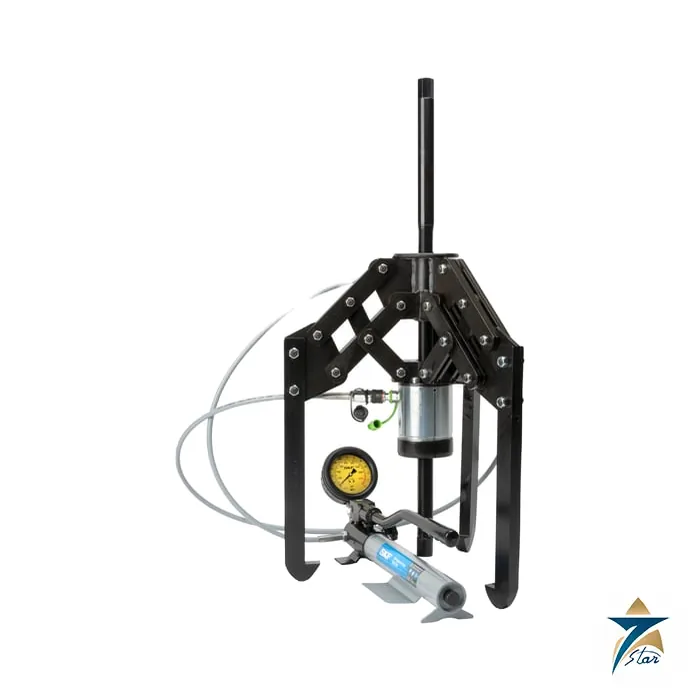
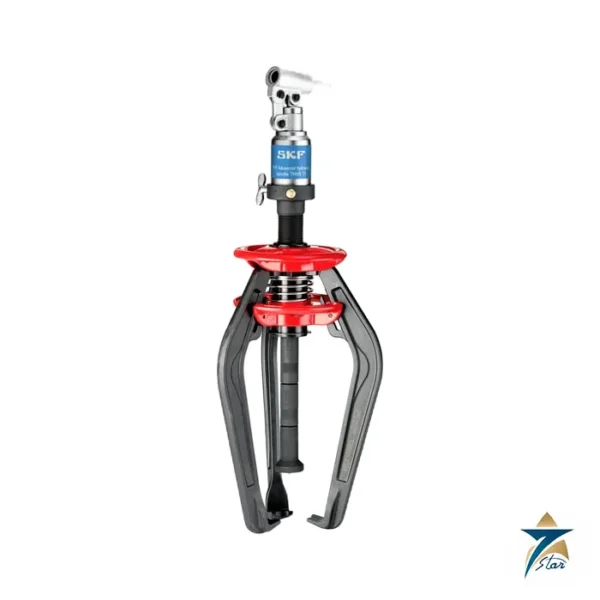
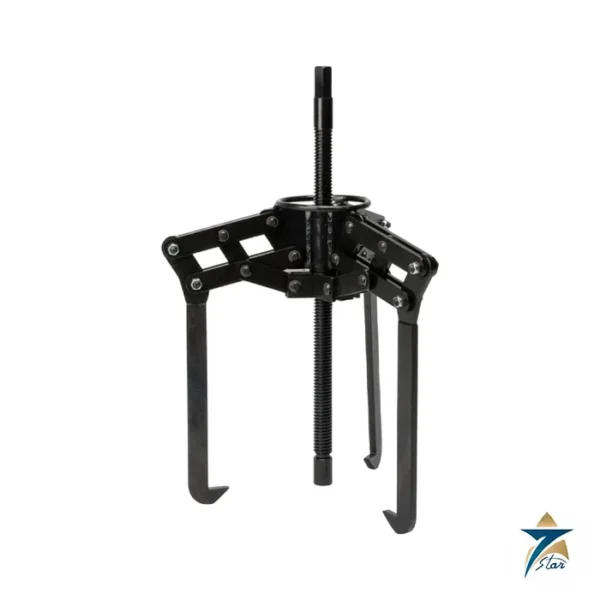
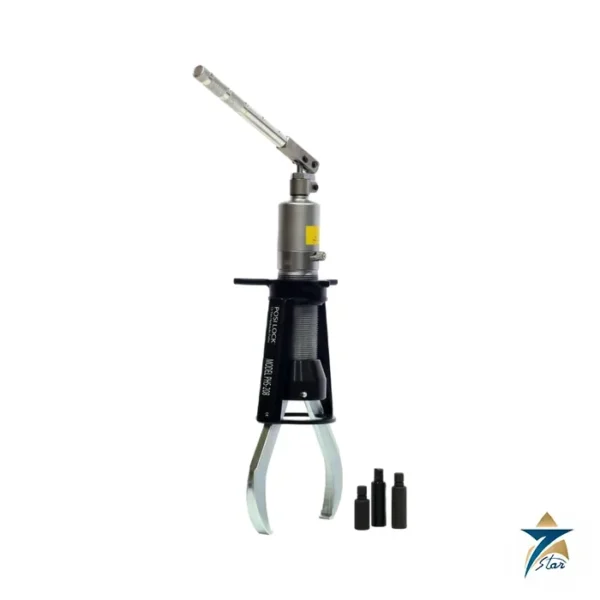
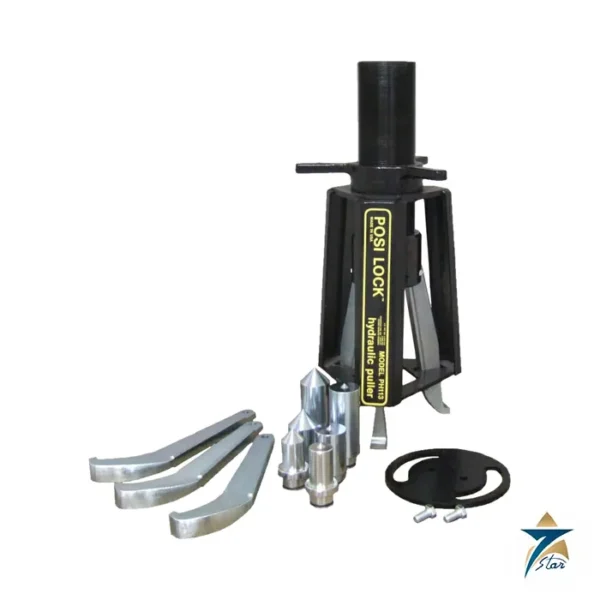
The SKF TMHP 30/170 belongs to the hydraulically assisted heavy duty jaw puller series. It combines a spindle and a hydraulic cylinder, so the working length is easily adjusted and a high force can be applied through a hand pump instead of a long wrench. The puller is self-centring and uses the same pantograph system as the mechanical TMMP series for an exceptional grip. It is equipped with a lifting handle and eye bolt for easy handling, and it is supplied with the SKF hydraulic pump TMJL 100.
The 30 in the designation stands for the 300 kN maximum withdrawal force and the 170 for the 170 mm effective length of the arms. This is the shortest-arm version of the 300 kN size; the 350 mm and 600 mm versions are listed in the same family.
Technical specifications: the TMHP series
| Parameter |
Specification |
| TMHP 30/170: width of grip |
290 to 500 mm (11.4 to 19.7 in.) |
| TMHP 30/170: effective length of arms |
170 mm (6.7 in.) |
| TMHP 30/170: claw height |
35 mm (1.4 in.) |
| TMHP 30/170: stroke |
50 mm (2 in.) |
| TMHP 30/170: max. working pressure, hydraulic cylinder |
80 MPa (11 600 psi) |
| TMHP 30/170: maximum withdrawal force |
300 kN (34 US ton) |
| TMHP 30/170: weight |
45 kg (99 lb) |
| TMHP 15/260 |
150 kN; grip 195 to 386 mm; arms 264 mm; stroke 100 mm; 34 kg |
| TMHP 30/350 and 30/600 |
300 kN; grip 290 to 500 mm; arms 350 and 600 mm; 47 kg and 56 kg |
| TMHP 50/140, 50/320, 50/570 |
500 kN; grip 310 to 506 mm; arms 140, 320, 570 mm; stroke 40 mm |
| Without pump |
Add suffix X to the designation, for example TMHP 30/170X |
Using the TMJL 100 pump and choosing arm length
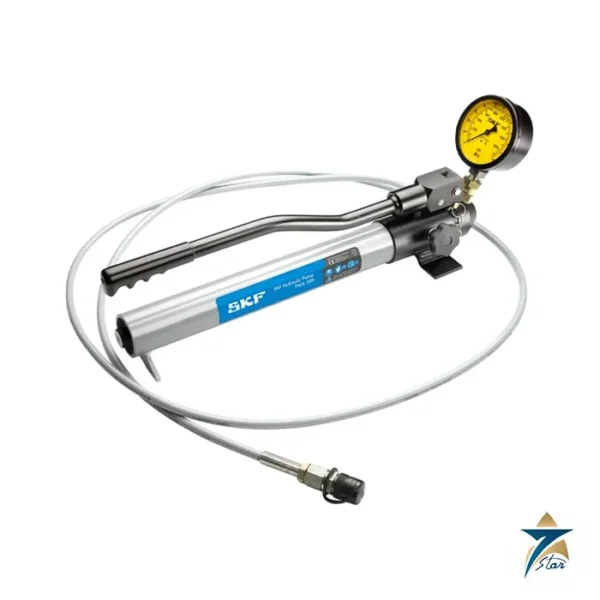
The pump supplied with the puller delivers up to 100 MPa, while the puller cylinder is limited to 80 MPa working pressure, so watch the gauge. See our listing of the
SKF TMJL 100 hydraulic pump.
. Choose the arm length so the claws reach the back of the part without bottoming the cylinder: 170, 350 or 600 mm in the 300 kN size. Weights of 45 to 56 kg mean the lifting handle and eye bolt should be used with a hoist or support. The mechanical alternative for lower forces is the
SKF TMMP 10.
; other tools are under
Electric Motors.
Confirm before ordering
Check the grip range against the part diameter, the arm length against the depth and the force against the interference fit. Confirm whether you need the pump or the X version, and the delivery details.
Because the hydraulic cylinder can generate large forces quickly, set up the puller with the claws hooked evenly, the spindle in line with the shaft, and a clear area around the tool. Pump slowly, watch the gauge and the part, and release pressure if anything moves out of line. Never exceed the 80 MPa cylinder limit, and never stand in line with the shaft axis during the pull.
Inspect the hydraulic hose, coupling and cylinder for leaks or damage before connecting the pump, and bleed air from the system as the pump instructions describe. Use the lifting handle when positioning the puller, support its weight until the claws are seated, and keep the oil clean. Pullers of this size are workshop tools; moving them into confined plant areas needs a lifting plan.
Preparing the job before the pull
A successful withdrawal with the TMHP 30/170 begins before the puller is lifted into place. Identify the part to be removed, such as a bearing, coupling hub, gear or pulley, and look at how it is fitted: an interference fit that has been in service for years, with corrosion or fretting at the bore, will usually need more force than the original fitting. Check that the back face of the part offers a firm, even edge for the claws, and that the shaft end is in good condition to take the spindle load.
Measure the outside diameter at the gripping point and the distance from the shaft end to the back face. These two figures, compared with the grip range and the 170 mm effective arm length in the table, tell you whether this version is suitable or whether a longer-arm version in the family would be needed.
Area and lifting preparation
With a weight of around 45 kg, the puller should be positioned with a hoist, crane or suitable support using the lifting handle and eye bolt. Clear the work area, provide a stable working platform, and agree who operates the pump and who watches the part. Where the removed component is heavy, arrange support for it as well, so that it does not drop when it comes free.
Carrying out the withdrawal
Seat the claws evenly behind the part and use the spindle to take up the slack so that the hydraulic stroke is available for the pull itself. Check alignment once more, then build pressure gradually with the TMJL 100 pump while watching the gauge and the part. If the part does not start to move at a reasonable pressure, stop and reassess rather than continuing to the limit. Because the stroke is limited, longer withdrawals may need pressure to be released and the spindle reset before continuing.
After removal, inspect the shaft seat for damage before fitting the replacement part. Record the pressure needed for the pull, which helps the maintenance team plan similar jobs in future.
Use and storage in Oman and GCC workshops
Maintenance workshops and plant sites in Oman often work in high temperatures with airborne sand. Keep the hydraulic coupling clean and protected whenever the pump is disconnected, wipe the cylinder and spindle clean after each job, and store the puller and pump in a closed cabinet rather than in an open yard. Dust that enters the hydraulic system can damage the pump and cylinder over time.
Heat also affects the operator and the tool. Avoid leaving the puller or pump in direct sun before use, and schedule heavy outdoor pulling work for cooler times of the day where the job allows.
Inspection between jobs
Before each use, check the claws and arms for cracks, wear or deformation, confirm that the pantograph mechanism moves freely, and look for oil leaks around the cylinder and hose. Take a damaged puller out of service rather than attempting improvised repairs, and keep the SKF leaflet and instructions with the tool for reference.
Documents and quotation
The SKF leaflet is attached. Send the exact designation, quantity and delivery point, and we will quote.

Reviews
There are no reviews yet.