A microprocessor flame scanner with integrated amplifier and flame relay
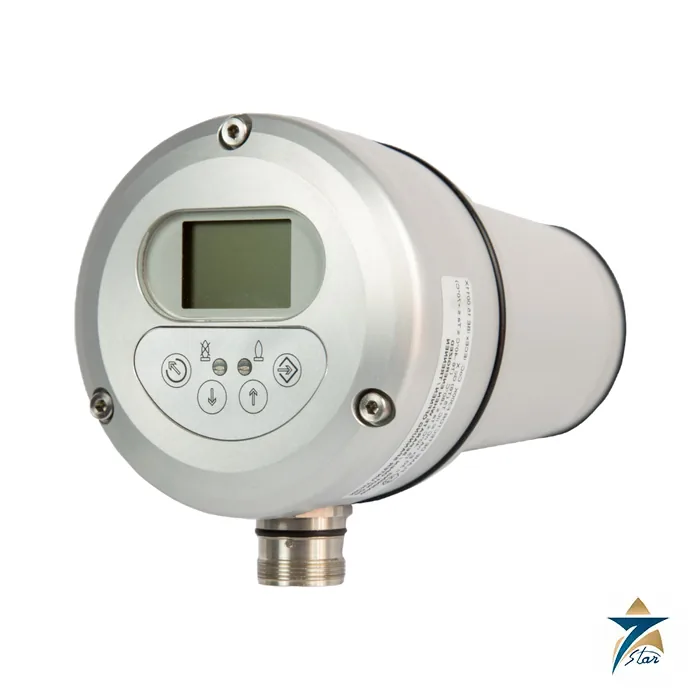
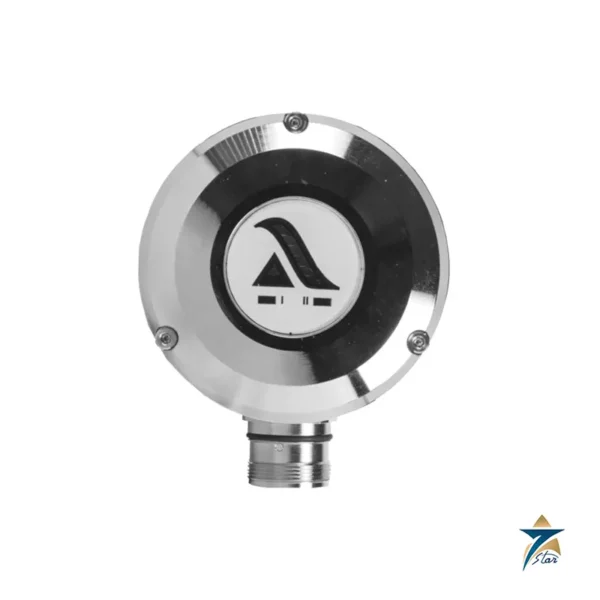
The LAMTEC F300K is a compact flame scanner that combines the flame sensor, amplifier and flame relay in one cylindrical housing. LAMTEC positions it as the next generation of flame monitoring for industrial furnaces and power stations, with digital flame frequency evaluation in 14 selectable ranges from 5 to 210 Hz, three selectable operating modes, a flame self-learning function and remote software with diagnostics. The standard version is certified for Ex Zone 2 and SIL 3, and it is rated for -40 to +85 degC with the housing in IP67.
The device can be operated through four buttons without opening the housing, so IP67 is retained during commissioning. A version with integrated user interface adds a graphic display, a simulation of the switching behaviour for setting the flame on/off parameters, and parameter back-up and upload.
Technical specifications
| Parameter |
Specification |
| Function |
Compact flame scanner with integrated sensor, amplifier and flame relay |
| Frequency evaluation |
Digital, 14 selectable ranges, 5 to 210 Hz |
| Operating modes |
3, externally preselectable and switchable during operation |
| Amplification / threshold |
13 pre-selectable amplification levels; switching threshold adjustable over the whole signal range |
| Analogue output |
0/4 to 20 mA, configurable for flame intensity or RMS value of the sensor signal |
| Field bus interfaces (via FSB gateway) |
PROFIBUS (slave), MODBUS TCP (client/server), MODBUS RTU (master/slave), Ethernet (frame), CANopen |
| Ambient temperature |
-40 to +85 degC; higher temperatures possible with the cooling air housing; F300K-FO fibre optic version up to 350 degC at the sensing end |
| Protection |
IP67 |
| Hazardous location approvals listed |
Ex Device Group II Category 3, IBExU12ATEX Ex nA nC ic IIC T5 (T6) Gc X (Zone 2); Class I, Division 2, Groups A, B, C, D |
| Other approvals listed |
SIL 3 (DIN EN 61508 Parts 1-7); Gas Appliances Directive 2009/142/EC; Pressure Equipment Directive 2014/68/EU |
| Fuels |
Gas, oil, coal, biomass, process waste gases, dust, special fuels, chemical residues |
| Available versions |
LED display or integrated user interface; single or double sensor (IR/UV); optional extended flame rating (5 flame intensities, 3 RMS values) |
Sensor types for the fuel
| Type |
Spectrum |
Approx. view angle |
Preferred applications (LAMTEC selection table) |
| F300K UV-4 |
215-360 nm |
8 degrees |
Oil, gas, dust, refinery, blast furnace gases and hydrogen; fibre optic use |
| F300K UV-4.6 |
215-360 nm |
8 degrees |
Special applications with fibre optics |
| F300K IR-2 |
850-1200 nm |
20 degrees |
Combustion space monitoring |
| F300K IR-3 |
1000-1700 nm |
60 degrees |
Oil, gas, wood, coal and dust furnaces with high flue gas recirculation |
| F300K IR-4 |
1000-2200 nm |
60 degrees |
As IR-3 per the selection table |
| F300K UVIR-1 |
UV 215-360 nm and IR 850-1700 nm |
8 degrees |
Oil, gas, refinery and furnace gases; coal and dust with strong recirculation |
Accessories and what to confirm before ordering
Listed accessories include FN30 power supplies, silicone or LiYcY connecting cables in 3, 5 and 10 m, FG30-00 and FG30-20 Ex II connection housings, the FB30 external user interface, the FFP30 flame scanner test device, the FK41 cooling air housing and adjustment bracket, fibre optic systems, the FSB gateway and repeater, and F300K remote software. Confirm the sensor type for the fuel, display version, supply, field bus needs and whether Zone 2 or a cooling housing is required. Older LAMTEC scanners on this site include the F200K Ex; see also flame detection and sensors.
How the LAMTEC F300K works
The F300K looks at the flame through a sensor and reads how fast the light flickers. A flame flickers within a certain frequency range, while a hot wall behind it does not. The microprocessor evaluates the flickering signal, compares it with the set threshold and switches the flame relay. The amplifier, the evaluation and the relay are all inside one housing, so no separate amplifier box is needed.
Where the F300K is used
- Industrial furnaces
- Power station boilers
- Gas and oil burners
- Coal and biomass firing
- Process waste gas burners
Selection checklist for the F300K
- Sensor type: infrared, ultraviolet or double sensor
- Fuel being burned
- Frequency range, from 5 to 210 Hz
- Operating mode
- LED display or integrated user interface
- Analogue output of 0/4 to 20 mA
- Fieldbus gateway needs
- Ambient temperature and cooling air housing
Installation, commissioning and maintenance notes for the F300K
Sight the scanner at the flame zone, with a clear view and the right angle to the burner. Wire the supply and the flame relay, and use the four buttons to set the amplification and the threshold. The housing stays closed, so IP67 is kept. Clean the sight window and check the signal at each burner service.
Requesting a quotation for the LAMTEC F300K
Please send the sensor type, the fuel, the interface version and the quantity. Seven Star LLC serves industrial customers in Oman and the GCC and replies with a quotation based on the information provided.
F300K frequency ranges
There are 14 selectable ranges from 5 to 210 Hz, and 13 amplification levels.
F300K operating modes
Three modes can be preselected and switched during operation.
F300K interfaces
Via the FSB gateway, the data sheet lists PROFIBUS, MODBUS TCP, MODBUS RTU, Ethernet and CANopen.
F300K temperature range
Ambient temperature runs from minus 40 to plus 85 degrees C, with IP67 protection.
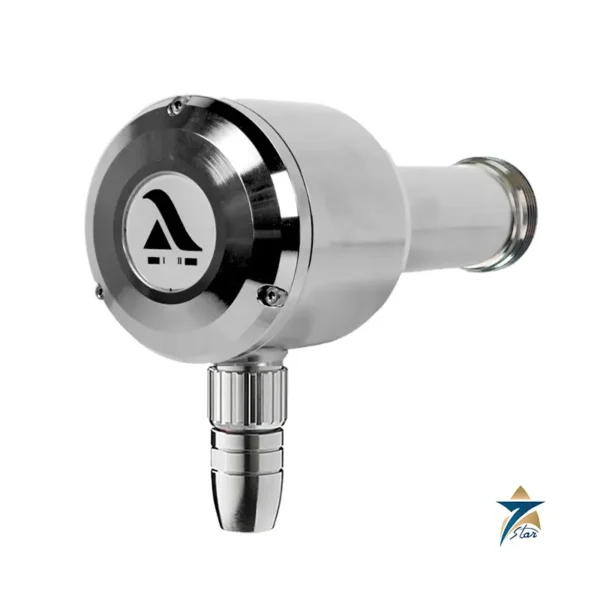
F300K fibre optic version
The F300K-FO version allows up to 350 degrees C at the sensing end.
F300K diagnostics
Remote software gives diagnostics, and the interface version adds a graphic display and parameter back-up.
Burner records for the F300K
Record the settings, the signal level and the date of each check.
Choosing the right F300K sensor
Choose infrared or ultraviolet from the fuel and the flame colour.
Documents and quotation
The attached LAMTEC brochure (DLT7651-20, copyright 2020) covers features, selection criteria and accessories. Send the exact sensor type, display version and quantity with your enquiry.












Reviews
There are no reviews yet.