Miniature two-piece locking assembly for shafts from 6 mm
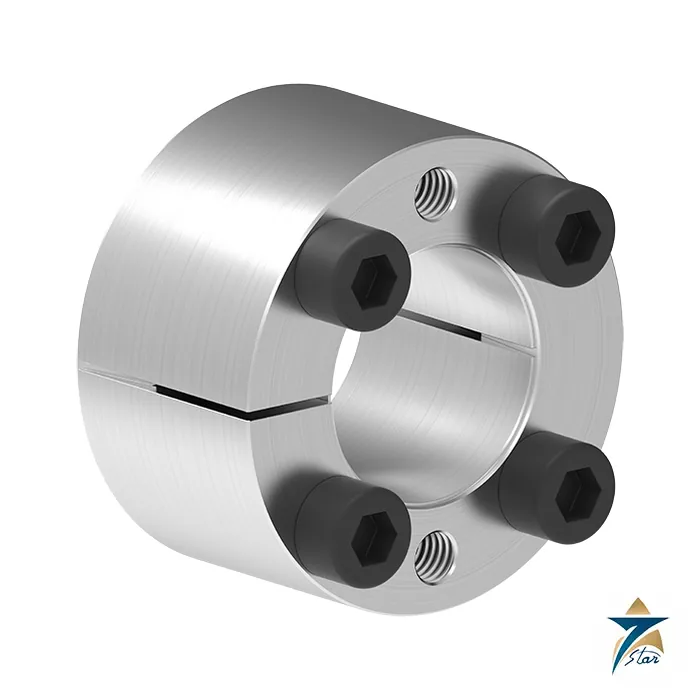
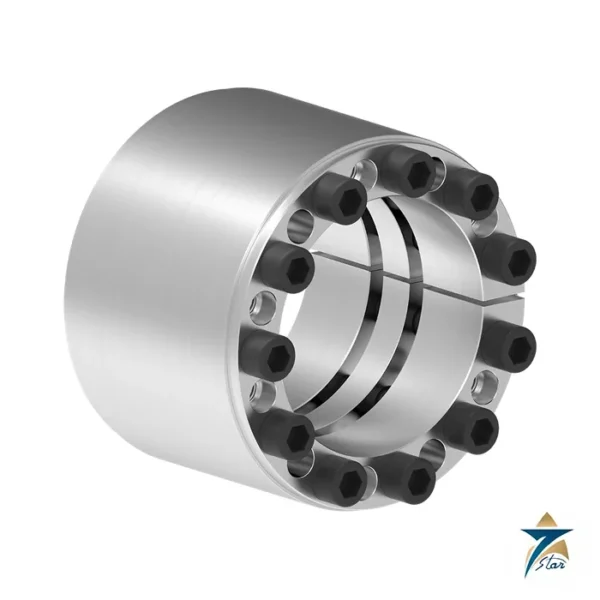
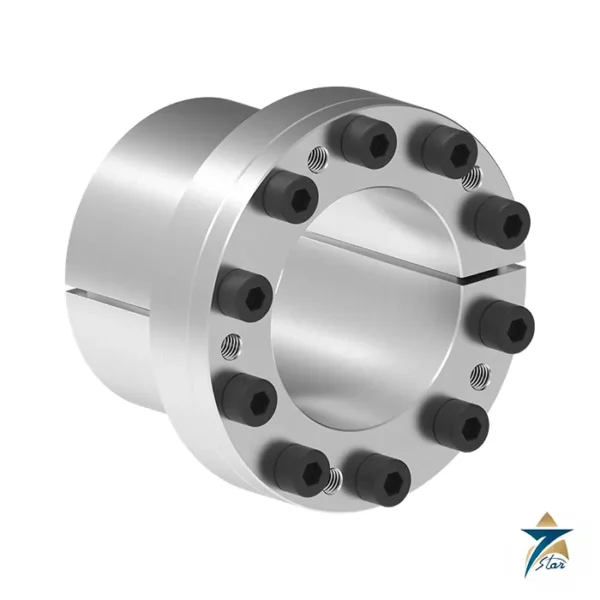
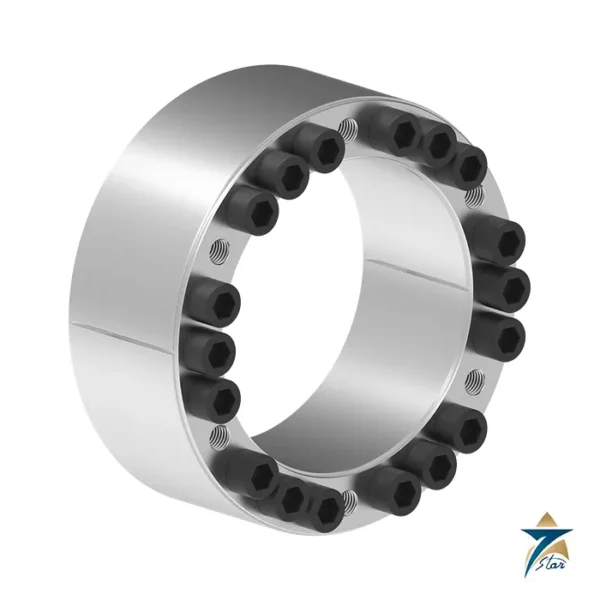
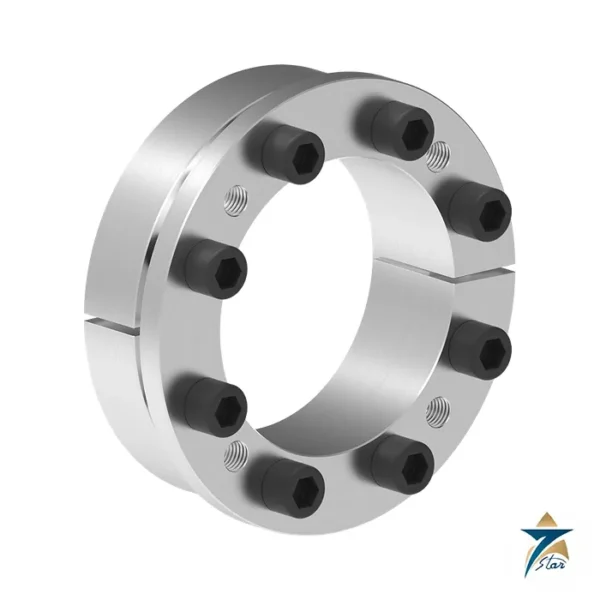
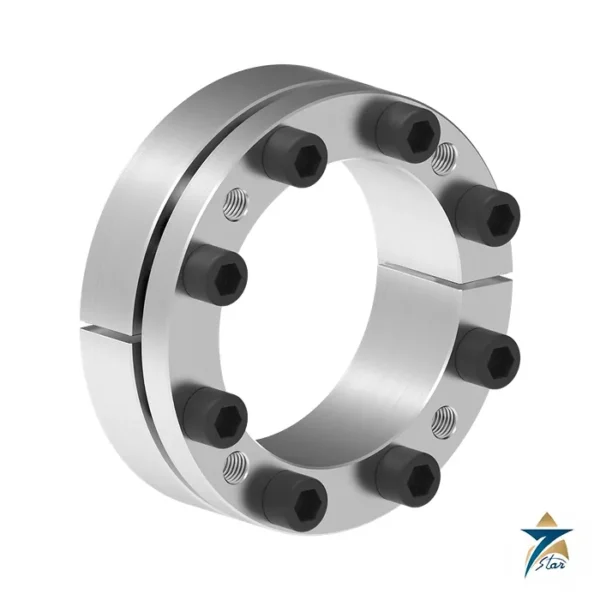
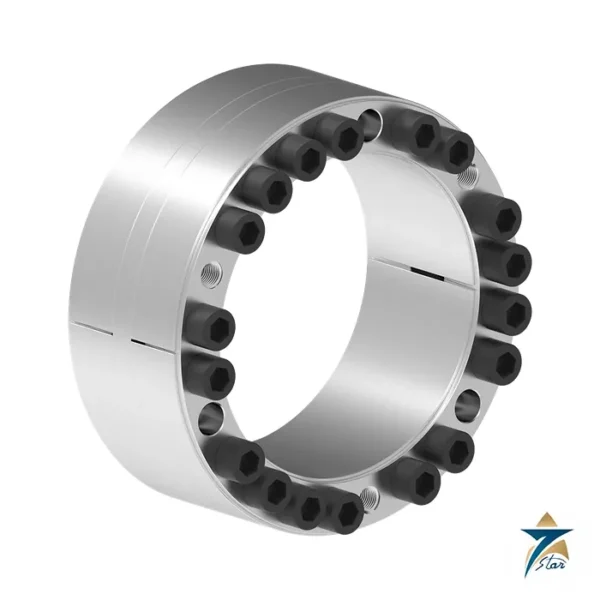
The RfN 7061 is the small-shaft member of the RINGFEDER locking assembly range: a cost-efficient, two-piece, self-centring assembly for medium torques, available from a 6 mm shaft up to 50 mm. Its rings are formed as a double cone, which RINGFEDER credits with very good concentricity, and the small number of screws keeps mounting time and cost low. Because surface pressure is low, it also suits thin-walled hubs with a low yield limit, such as aluminium pulleys, levers and small gear wheels.
Torque ranges from 6 Nm at 6 mm to 1,900 Nm at 50 mm, with axial forces from 2 kN to 75 kN. The table also covers the inch bores 6.35, 9.53 and 25.4 mm, which makes it handy on equipment built to inch shafting. During mounting the hub moves slightly, and only a few release screws are needed to dismantle.
Technical specifications
| Parameter |
Specification |
| Manufacturer |
RINGFEDER POWER TRANSMISSION GmbH, Groß-Umstadt, Germany |
| Series |
RINGFEDER RfN 7061 locking assembly, two-piece, self-centring, double-cone rings (stainless steel version listed separately) |
| Shaft diameter d |
6 to 50 mm |
| Hub bore diameter D |
16 to 80 mm |
| Overall length L |
13.5 to 44 mm |
| Transmissible torque T |
6 Nm (6 x 16) to 1,900 Nm (50 x 80) |
| Transmissible axial force Fax |
2 kN to 75 kN |
| Surface pressure on shaft pW / hub pN |
90 to 195 N/mm2 / 50 to 115 N/mm2 |
| Locking screws |
M2,5 to M8; 3 to 8 screws depending on size |
| Screw tightening torque TA |
1.2 Nm to 41 Nm |
| Inch shaft sizes |
6.35, 9.53 and 25.4 mm (1/4, 3/8 and 1 inch) are included in the table |
| Surface finish |
Shaft and hub bores Ra 1.6 um or better |
| Tolerances |
Shaft h8, hub H8 |
| Ordering example |
RfN 7061 6 16 (d = 6 mm, D = 16 mm) |
Selected sizes from the tech paper
The table holds 30 sizes. Screws are tightened to between 1.2 and 41 Nm, so a small torque wrench is needed on the smallest sizes.
| d x D (mm) |
L (mm) |
T (Nm) |
Fax (kN) |
Screws |
TA (Nm) |
| 6 x 16 |
13,5 |
6 |
2 |
3 x M2,5 |
1,2 |
| 10 x 20 |
15,5 |
15 |
3 |
4 x M2,5 |
1,2 |
| 16 x 32 |
21 |
70 |
8 |
4 x M4 |
4,9 |
| 20 x 38 |
26 |
150 |
15 |
4 x M5 |
9,7 |
| 30 x 55 |
32 |
470 |
30 |
6 x M6 |
17 |
| 40 x 65 |
37 |
840 |
40 |
8 x M6 |
17 |
| 50 x 80 |
44 |
1,900 |
75 |
8 x M8 |
41 |
Where it fits and what to check
The tech paper names aluminium timing belt pulleys and thin-walled levers as typical uses of low-pressure assemblies; small gearbox pinions and similar light hubs are the same kind of job, where a key would cost space and concentricity. The 20 x 38 size, for example, transmits 150 Nm and 15 kN with 4 M5 screws at 9,7 Nm, and measures 26 mm in length. The product paper also lists a stainless steel RfN 7061 for machinery that has to be cleaned intensely, and the RfN 7110 as a further small-diameter series.
Shaft h8 and hub H8 tolerances with Ra 1.6 um apply; the table lists d and D only, so bore the hub to the assembly outside diameter D. Confirm before ordering: required torque, whether an inch or a metric bore is needed, hub material, and the length of hub available (L and L1).
The connection behaves like a mild overload device: once the set frictional force is exceeded, the assembly slips and protects the machine parts, although RINGFEDER states that locking assemblies are not suitable as sliding clutches. No maintenance is required, and the extraction holes mean no extra tooling is needed to dismantle the joint.
Selection considerations for small shaft-hub connections
Choosing an RfN 7061 size starts with the shaft diameter, but the decision rests on torque and axial force. Calculate the peak torque of the drive, including starting and braking peaks, and compare it with the transmissible torque in the table with a sensible safety margin; if bending moments or combined loads act on the joint, check them with the manufacturer’s method in the tech paper. Next look at the hub: its material, outside diameter and available length decide whether the hub can carry the surface pressure without deforming. The low surface pressure of this series is an advantage for aluminium and other soft materials, but a thin hub still needs to be checked.
Keyless connections give a backlash-free joint that can be positioned freely in angle and along the shaft, which helps when timing pulleys, cams or encoder drives must be set precisely. They also avoid the notch effect of a keyway in a small shaft.
Installation practice
Clean the shaft, hub bore and the locking assembly before fitting and follow the assembly instructions of the tech paper exactly, because the friction values behind the torque ratings depend on the stated surface condition. Slide the assembly into the hub and onto the shaft, position the hub, and tighten the screws evenly in several rounds, working around the circle until the stated tightening torque is reached on every screw. Use a calibrated torque wrench of a suitable range, since the smallest sizes need very low torques and are easy to overtighten. Check the run-out of the hub after tightening if concentricity is critical.
Removal, inspection and reuse
To dismantle, loosen the locking screws and use the release screws as described in the tech paper to separate the cones. Inspect the cone surfaces, shaft and hub bore for scoring or fretting before reusing any part, and replace damaged screws with screws of the same grade and size. If a joint has slipped in service, find the cause of the overload before refitting, since repeated slipping damages the contact surfaces.
Use in GCC machinery
Packaging machines, conveyors and small drives in Oman and the GCC often run in warm, dusty workshops and humid coastal sites. Keep the joint surfaces clean during assembly, because sand or grit trapped between the cones affects clamping, and protect exposed steel surfaces against corrosion; where machines are washed down intensively, the stainless steel version listed in the product paper is worth considering. For an RFQ, state the shaft diameter, metric or inch, the hub bore and length, the hub material, the torque and axial force to be transmitted, and the quantity required.
Documents and quotation
The attached PDF is the RINGFEDER tech paper for the RfN 7061 (05.2024). Related drives are listed under Electric Motors and Gear Units. Send shaft and hub dimensions and the torque for a size check.



Reviews
There are no reviews yet.