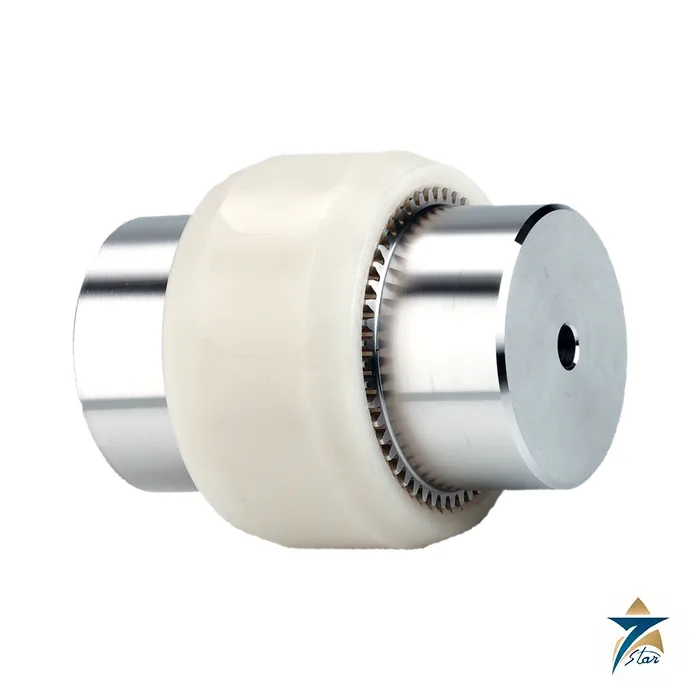
Curved-tooth coupling with a nylon sleeve
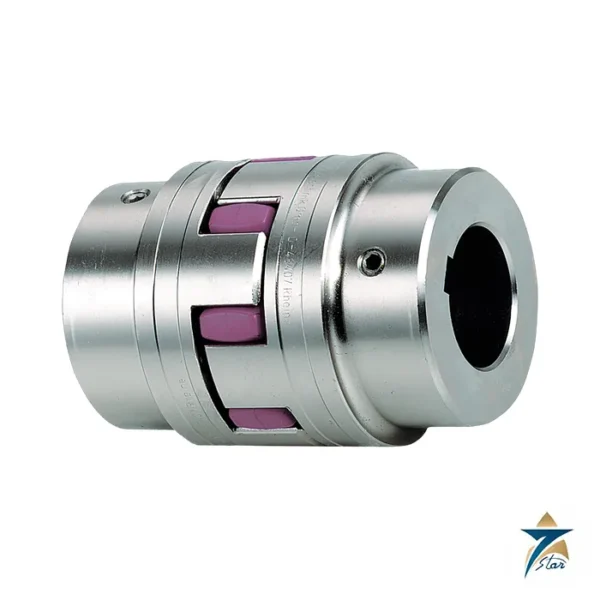
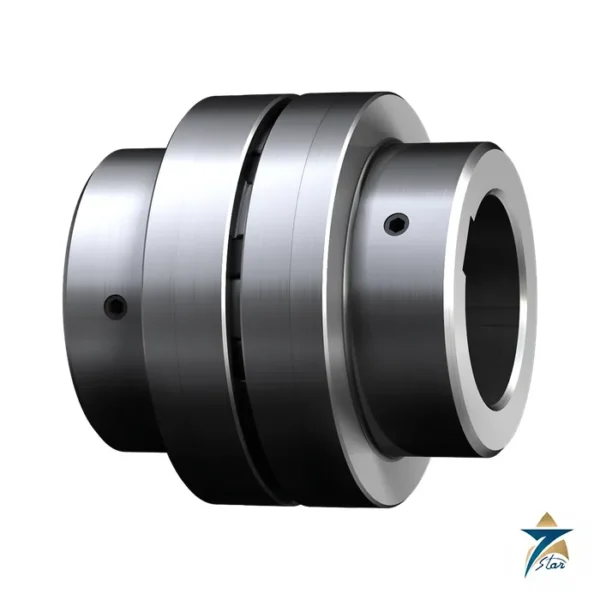
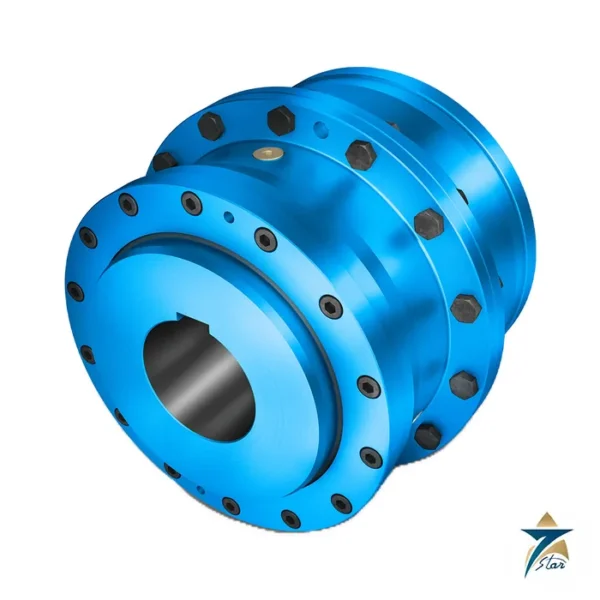
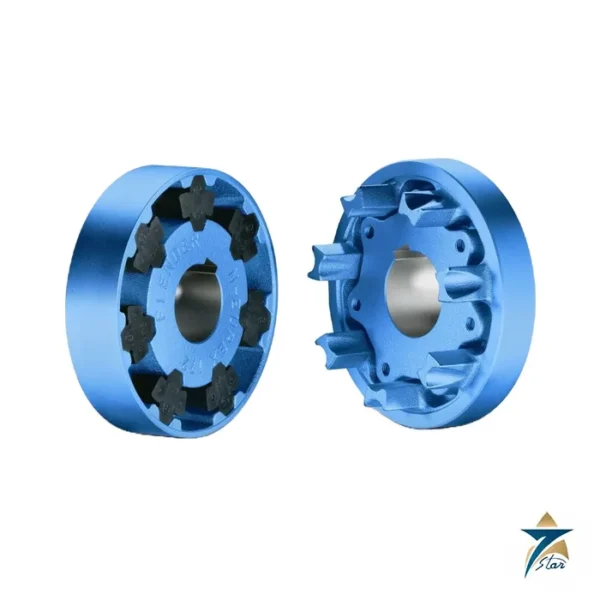
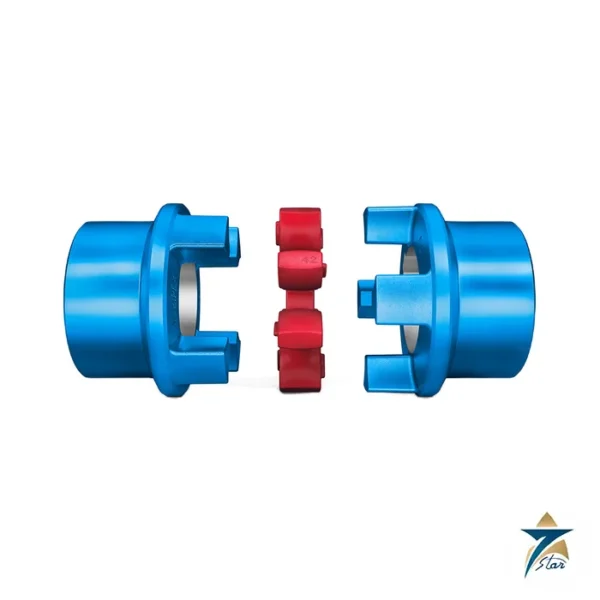
The KTR BoWex is a non-failsafe curved-tooth gear coupling: two steel hubs with crowned external teeth engage a nylon sleeve with matching internal teeth. The curved tooth shape avoids edge pressure when the shafts are misaligned, so the coupling runs almost free from wear and needs no lubrication. KTR says BoWex was the first curved-tooth coupling to combine steel and plastic; it was developed in Rheine in the 1950s.
This page uses KTR operating and assembly instructions KTR-N 40110 EN (edition 19). They cover the BoWex junior plug-in coupling (two-part), the junior M coupling (three-part), type M, type M…C and type I for the larger sizes.
Technical specifications
| Parameter |
Specification |
| Manufacturer |
KTR Systems GmbH, Rheine, Germany |
| Coupling type |
Non-failsafe curved-tooth gear coupling, nylon sleeve |
| Types in KTR-N 40110 |
Junior plug-in (two-part), junior M (three-part), M, M…C (conductive sleeve), I |
| Sizes |
Junior 14, 19, 24; M 14 to 65; M…C 14 to 80; I 80, 100, 125 |
| Junior, rated torque TKN |
5 Nm (size 14), 8 Nm (size 19), 12 Nm (size 24); maximum speed 6,000 rpm |
| Type M and I, rated torque TKN |
10 Nm (size 14) to 2,500 Nm (size 125); TK max. is 3 times TKN |
| Type M…C, rated torque TKN |
15 Nm (size 14) to 1,000 Nm (size 80); TK max. is 3 times TKN |
| Maximum speed, type M and I |
14,000 rpm (size 14), 6,000 rpm (size 42), 2,120 rpm (size 125) |
| Maximum finish bore, type M |
15 mm (M-14), 24 mm (M-24), 38 mm (M-38), 48 mm (M-48), 65 mm (M-65) |
| Axial displacement Ka |
Plus or minus 1 mm for every size |
| Radial displacement Kr at 1500 rpm |
Plus or minus 0.30 mm (size 14) to 0.45 mm (size 125) |
| Angular displacement Kw at 1500 rpm |
Plus or minus 1.0 degree (size 14) to 0.4 degrees (size 125) |
| Explosion protection marking |
II 2G Ex h IIC (or IIB) T6 to T4 Gb X; II 2D Ex h IIIC T80 °C to T120 °C Db X; I M2 Ex h I Mb X |
| Ambient temperature, sleeve |
T4: -30 °C to +100 °C; T5: -30 °C to +75 °C; T6: -30 °C to +60 °C |
Where each BoWex type fits
The junior types are small plug-in couplings for drives up to 12 Nm, such as pumps, fans and small machine drives. Type M uses steel hubs with a nylon sleeve up to size 65 and is the general-purpose choice; the M…C versions use a black conductive sleeve and carry a higher rated torque for the same size, while type I with circlips covers sizes 80 to 125. For gases of explosion group IIC the conductive black sleeve is marked for IIC on all listed sizes, whereas the standard light sleeve on sizes M-24 to M-65 is marked for group IIB.
As with other KTR elastomer couplings, the torque figures refer to the sleeve only. The transmittable torque of the shaft-hub connection depends on bore, key and fit and has to be checked by the buyer. For drives with torsional vibration, typically diesel engines and piston machines, KTR asks for a torsional vibration calculation. Selection follows DIN 740 part 2.
Assembly and wear inspection
Hubs keep for 6 to 9 months in dry storage and nylon sleeves for up to 5 years. Both halves are pushed on the shaft with a setscrew to DIN EN ISO 4029, and the sleeve is slid over the teeth; the type I sleeve is delivered with its circlips already fitted. Alignment must stay within the displacement table, with radial and angular shares combined to a maximum of 100 percent. In explosion group IIC only half of the table values are permitted, and the figures apply up to an ambient temperature of 80 °C.
In potentially explosive atmospheres KTR recommends a first check of torsional backlash and sleeve wear after 3,000 operating hours or at the latest six months, and 2,000 hours or three months in the stricter case. The nylon sleeve must be replaced when the torsional backlash limit for that size is reached.
Documents and quotation
The attached PDF is the KTR operating and assembly instruction for BoWex. Overall lengths and hub dimensions for each type are in its dimension tables. To quote, send the sizes of both shafts and keyways, rated power and speed, the type (junior, M, M…C or I), ambient temperature, and the explosion-protection category if relevant. For companion drive equipment see Electric Motors and Gear Units.







Reviews
There are no reviews yet.