Locking assembly with a collar that locates the hub
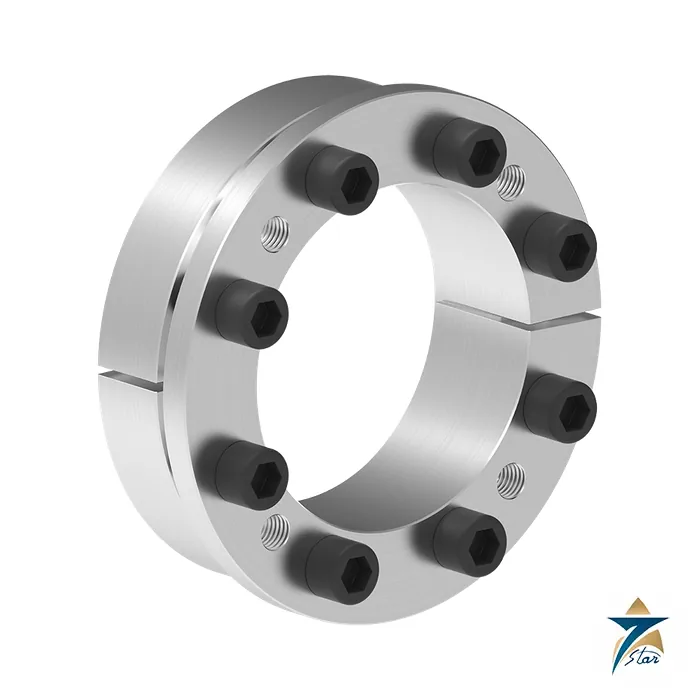
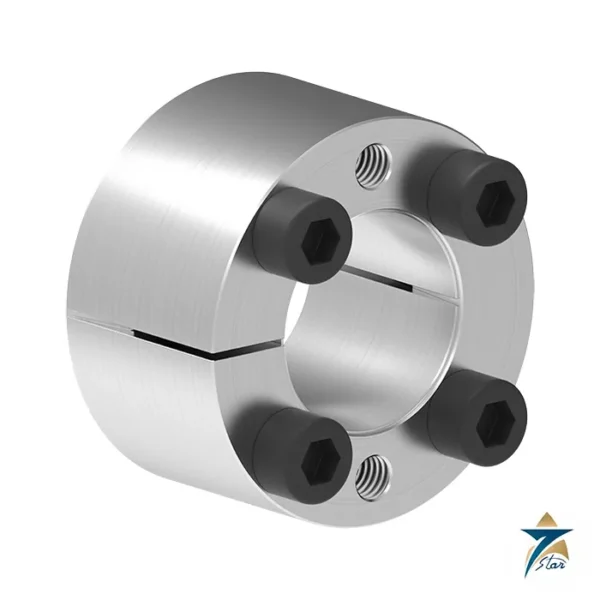
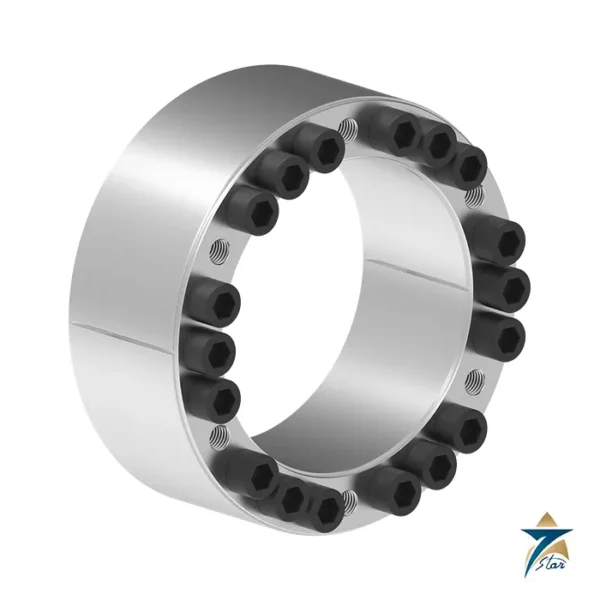
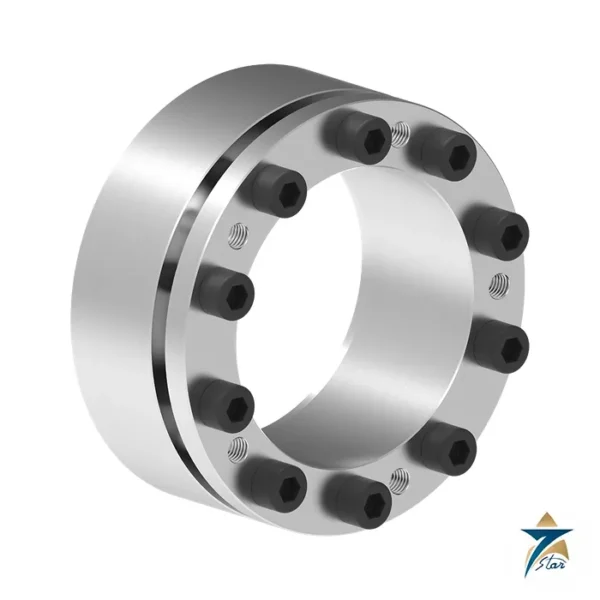
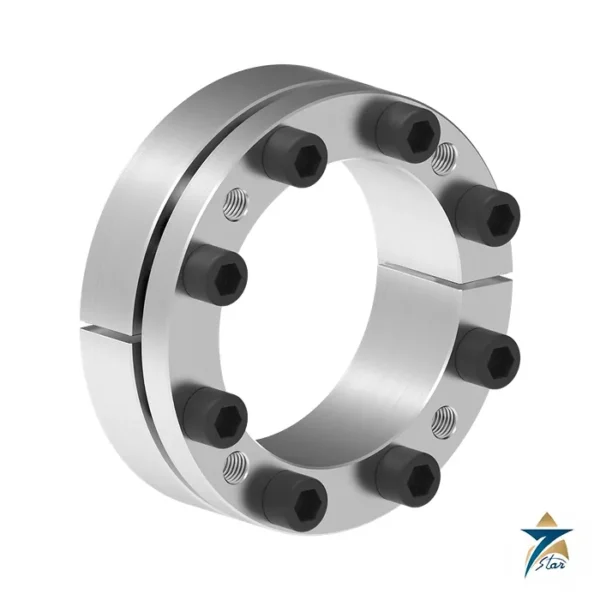
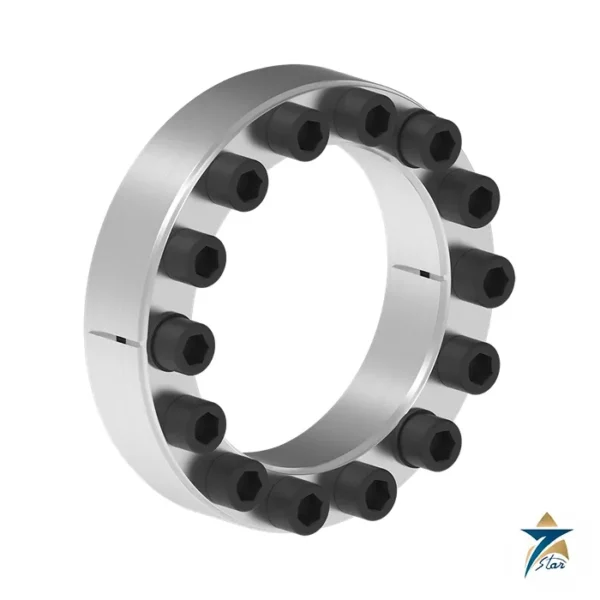
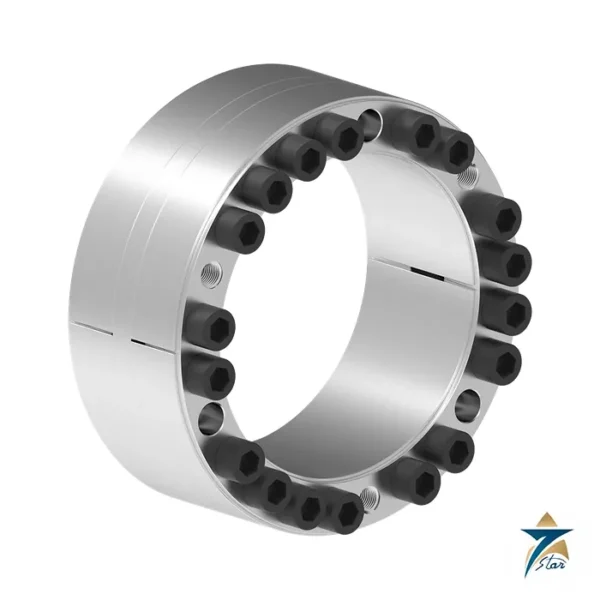
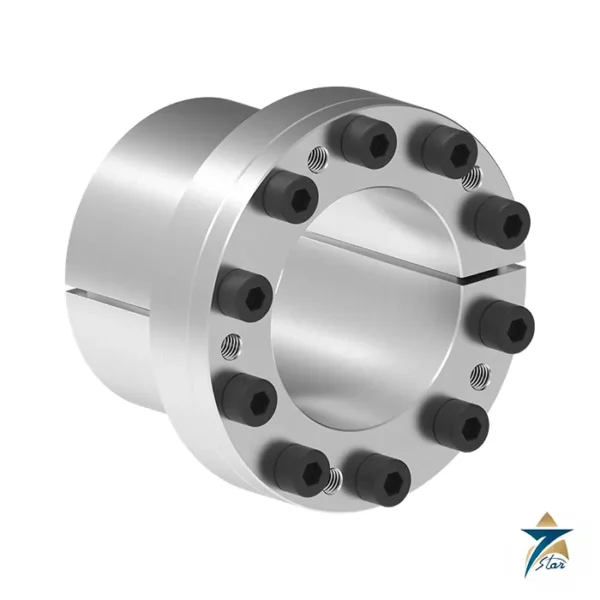
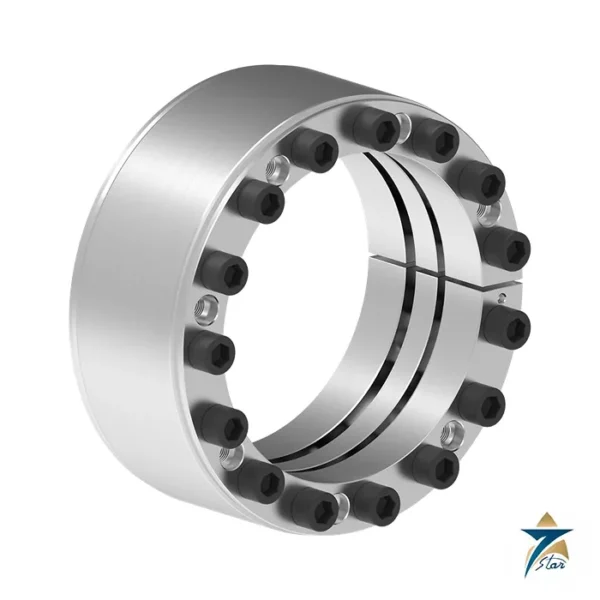
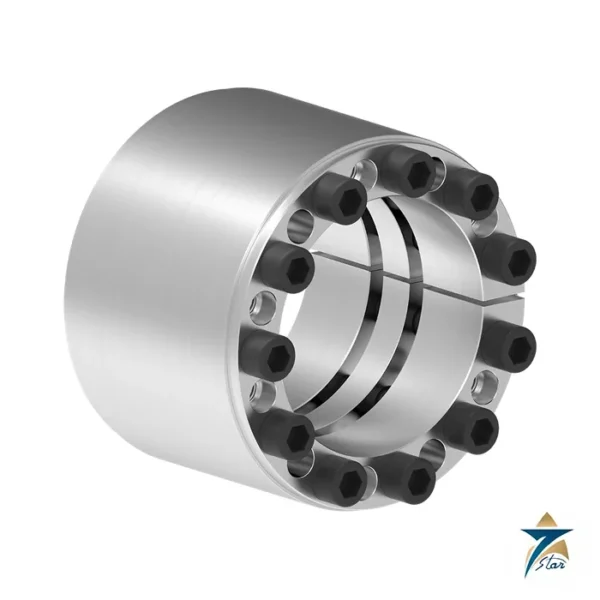
The RfN 7006 is a two-piece, single-taper locking assembly that shares the good points of the RfN 7003 but adds a large collar. The larger flange diameter stops the hub moving axially during mounting, which is why RINGFEDER also recommends it for belt pulleys. The collar seats against the hub face, so the hub lands at a known axial position every time and run-out is easy to control. It is self-centring and suited to higher speeds and high radial loads.
Sizes run from 19 to 400 mm shaft diameter, with torque from 270 Nm to 375,945 Nm.
Technical specifications
| Parameter |
Specification |
| Manufacturer |
RINGFEDER POWER TRANSMISSION GmbH, Groß-Umstadt, Germany |
| Series |
RINGFEDER RfN 7006 locking assembly, two-piece, single taper, with collar |
| Shaft diameter d |
19 to 400 mm |
| Hub bore diameter D |
47 to 495 mm |
| Overall length L |
34 to 138 mm |
| Transmissible torque T |
270 Nm (19 x 47) to 375,945 Nm (400 x 495) |
| Transmissible axial force Fax |
28 kN to 1,880 kN |
| Surface pressure on shaft pW / hub pN |
135 to 234 N/mm2 / 94 to 141 N/mm2 |
| Locking screws |
M6 x 20 to M22 x 60; 5 to 21 screws depending on size |
| Screw tightening torque TA |
17 Nm to 930 Nm |
| Weight |
0.3 kg to 60.3 kg |
| Collar outside diameter DB1 |
56 mm (d 19) to 504 mm (d 400) |
| Surface finish |
Shaft and hub bore Ra 1.6 um or better |
| Tolerances |
Shaft h8, hub H8 |
| Ordering example |
RfN 7006 55 85 (d = 55 mm, D = 85 mm) |
Selected sizes from the tech paper
Overall length L, ring width L3 and installation length L4 (to the collar) differ, so check the drawing in the PDF. Collar diameter DB1 is given for every size, for example 154 mm at d = 100.
| d x D (mm) |
L (mm) |
T (Nm) |
Fax (kN) |
Screws |
TA (Nm) |
Weight (kg) |
| 19 x 47 |
34 |
270 |
28 |
5 x M6 x 20 |
17 |
0.3 |
| 30 x 55 |
34 |
512 |
34 |
6 x M6 x 20 |
17 |
0.3 |
| 50 x 80 |
41 |
1,810 |
72 |
7 x M8 x 25 |
41 |
0.8 |
| 75 x 115 |
50 |
5,018 |
134 |
8 x M10 x 30 |
83 |
1.7 |
| 100 x 145 |
56 |
10,005 |
200 |
8 x M12 x 35 |
145 |
2.8 |
| 150 x 200 |
68 |
25,613 |
342 |
10 x M14 x 40 |
230 |
5.2 |
| 200 x 260 |
78 |
51,225 |
512 |
15 x M14 x 40 |
230 |
9.6 |
| 300 x 375 |
102 |
149,908 |
999 |
18 x M18 x 50 |
485 |
25.5 |
| 400 x 495 |
138 |
375,945 |
1,880 |
21 x M22 x 60 |
930 |
60.3 |
Installing against a collar
When designing the hub, use L4 as the length from the collar face to the end of the ring so the bore depth matches the assembly. Screws are tightened evenly in sequence; because the hub is held by the collar, the usual small shift toward the screw head does not occur. Values come from the tech paper for oiled installation. At 100 x 145 the series carries 10,005 Nm with a torque of 145 Nm on 8 screws of M12x35; at 400 x 495 it carries 375,945 Nm with 21 screws of M22x60 at 930 Nm.
The product paper also offers the RfN 7007 as a modified RfN 7004 with the same collar principle, an axially fixed hub and a low surface pressure, which can be chosen for thin-walled hubs. Shaft h8 and hub H8; ordering example RfN 7006 55 85. Confirm before ordering: hub face geometry, belt pull or radial load, and whether a thin hub calls for the low-pressure RfN 7007.
Installation is simple: only a few screws are tightened, the angle between hub and shaft can be set in any position without fitting work, and dismantling uses threaded extraction holes, so no auxiliary tools are needed. Because shaft and hub carry no keyway, the shaft keeps its fatigue strength under constant reverse torsion.
Sizing checks before choosing an RfN 7006
Selection starts with the peak torque the connection must carry, not the nominal motor rating. Include starting torque, shock loads, reversing duty and any combined axial force, then compare the result with the transmissible torque and axial force for the shaft diameter in the tech paper table, keeping a service factor that suits the drive. Where torque and axial load act together, the combined load has to be checked using the method given by RINGFEDER rather than by reading each value on its own.
The hub must also be strong enough to carry the surface pressure pN created when the screws are tightened. Hub material, outside diameter and the length of the bore engaged by the ring all influence this, and the tech paper gives the calculation basis for the minimum hub outside diameter. For belt pulleys and sprockets, add the radial pull from belt or chain tension to the review, since the collar design is often chosen precisely for these components.
Preparing shaft and hub for assembly
Machine the shaft to h8 and the hub bore to H8 with a surface finish of Ra 1.6 µm or better, as stated in the specification. Remove burrs and sharp edges, clean both surfaces, and apply the light oil film that the tightening values assume. Do not use lubricants containing additives that drastically reduce friction unless the manufacturer’s instructions allow it, because the transmissible torque depends on the friction conditions behind the published figures.
Use a calibrated torque wrench and tighten the locking screws in several passes around the circle until each one reaches the specified TA without further rotation. Record the final value for the maintenance file.
Dismantling and periodic inspection
To release the connection, loosen all locking screws a few turns in sequence, then use the threaded extraction holes as described in the tech paper to separate the rings. Clean and inspect the taper surfaces before refitting; damaged or heavily worn parts should not be reused on critical drives. During planned stoppages, check that the screws are still at the specified torque and look for signs of slip marks on shaft or hub.
Service conditions in Oman and GCC plants
Conveyors, fans, pumps and crushers in quarries, cement plants and ports across Oman are exposed to heat, abrasive dust and, near the coast, salt-laden humidity. Fine dust and moisture can reach exposed shaft ends and connection faces, so guards and covers on the machine should be kept in place and the outside of the connection kept clean. Where corrosion is a concern, discuss surface protection for the shaft and hub with the machine designer, and include the locking assembly screws in the routine torque check after the first period of operation in hot conditions.
Documents and quotation
The attached PDF is the RINGFEDER tech paper for the RfN 7006 (05.2024). Related drive items are listed under Electric Motors and Gear Units. Send shaft diameter, torque and pulley or hub details.

Reviews
There are no reviews yet.