- Vibration Monitoring
- Industrial Communications
- AC Drives
- PLC & I/O Cards
- Automation Accessories
- Controllers & Data Acquisition
- Industrial Computers
- Encoders
- Safety Switches & Guard Locking
- CCTV & Security
- Isolator & Barrier
- Motor Soft Starters
- HMI Displays
- Pneumatic Cylinders
- Automation Software
- Servo Drives
- Robotics
- Machine Vision
Sensors & Transmitters
Laser Distance, LiDAR & Radar Sensors
Laser distance sensors, LiDAR scanners and radar sensors measure position and distance without contact, from millimetre precision on a machine to hundreds of metres on a crane or stacker. Seven Star LLC, an independent supplier in Muscat, supplies these sensors from SICK, Banner Engineering, Keyence, Pepperl+Fuchs and ifm to industrial and logistics customers in Oman and the GCC.
Read the full category guide- 6 products
- 5 brands


Category guide
About Laser Distance, LiDAR & Radar Sensors
Laser distance sensors, LiDAR scanners and radar sensors measure position and distance without contact, from millimetre precision on a machine to hundreds of metres on a crane or stacker. Seven Star LLC, an independent supplier in Muscat, supplies these sensors from SICK, Banner Engineering, Keyence, Pepperl+Fuchs and ifm to industrial and logistics customers in Oman and the GCC.
Types of sensor in this category
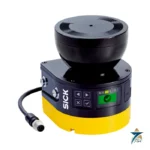
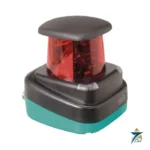
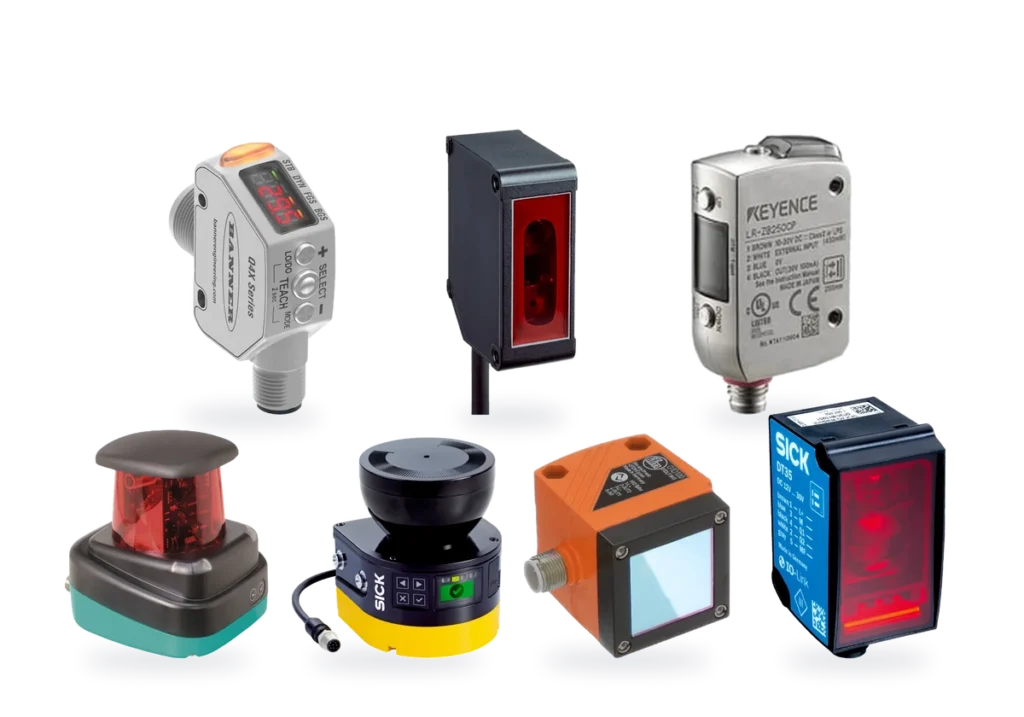
Laser distance sensors such as the SICK Dx35, Dx50, Dx100, Dx500 and DT20 Hi, the ifm O1D100 and the Banner Q4X measure distance by time of flight or triangulation for positioning, level and gap measurement. Displacement sensors like the SICK OD Mini, Banner Q5X and Keyence LR-Z give high resolution over short ranges for thickness and height checks. 2D LiDAR sensors, for example the SICK TiM, LMS, LRS and MRS ranges and the Pepperl+Fuchs R2000, scan a plane to detect objects and map areas for vehicles, cranes and gates. Radar sensors from Banner work through dust, rain and fog where optical sensors struggle, and the SICK microScan3 is a safety laser scanner for protecting hazardous areas around machines and vehicles.
How to select a distance sensor
Define the measuring range, the accuracy and repeatability needed, the target surface and the response time. Long ranges on dark targets may need a reflector mode sensor. Choose the output: analogue, switching, IO-Link, serial or Ethernet. For LiDAR, check the scanning angle, range on low-reflectivity objects, angular resolution and whether a safety-rated device is required. Outdoors, sunlight, dust and rain influence the choice between laser and radar.
Data needed for a quotation
Send the part number, or the range, accuracy, target, output, interface and quantity. We check the item against the manufacturer data.
What to include in your inquiry
These details let us quote the right item the first time.
- Measured variable and range
- Medium, pressure and temperature
- Process connection and material
- Output signal or protocol
- Model code or nameplate photo of the existing device
- Hazardous-area approval, if required
Missing some of them? Send what you have. A nameplate photo or an old part number is enough to start.