- Vibration Monitoring
- Industrial Communications
- PLC & I/O Cards
- AC Drives
- Automation Accessories
- Controllers & Data Acquisition
- Industrial Computers
- Encoders
- Safety Switches & Guard Locking
- CCTV & Security
- Isolator & Barrier
- Motor Soft Starters
- HMI Displays
- Pneumatic Cylinders
- Automation Software
- Servo Drives
- Robotics
- Machine Vision
NDT Accessories
Couplants
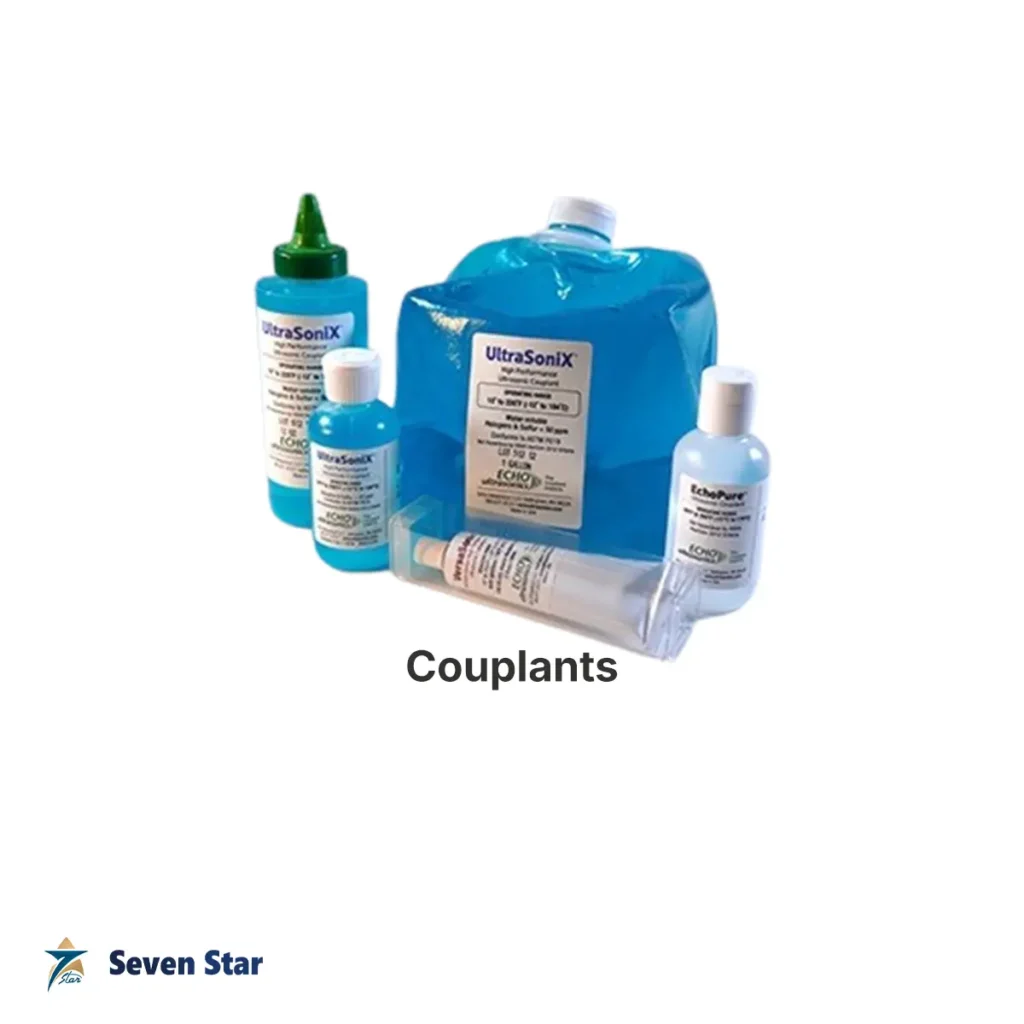
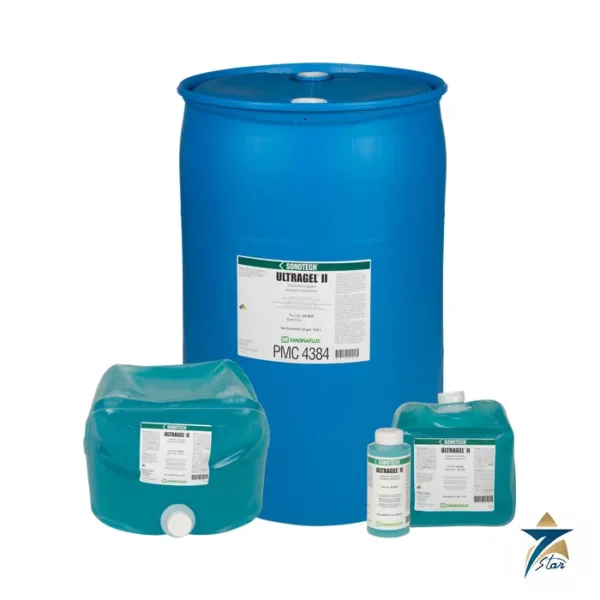
Couplants are the gels, pastes and liquids placed between an ultrasonic probe and the test surface so that sound can pass into the part. Air blocks ultrasound almost completely at the frequencies used in NDT, so even a thin film of air under the probe stops the measurement. The first product listed here is Magnaflux Ultragel II, a medium-viscosity general purpose gel rated from -23 to 99 °C. Seven Star LLC in Oman can also source other ultrasonic couplants on request for thickness gauging, flaw detection and bolt tension work.
Read the full category guide- 1 product
- 1 brand
Category guide
About Couplants
Couplants are the gels, pastes and liquids placed between an ultrasonic probe and the test surface so that sound can pass into the part. Air blocks ultrasound almost completely at the frequencies used in NDT, so even a thin film of air under the probe stops the measurement. The first product listed here is Magnaflux Ultragel II, a medium-viscosity general purpose gel rated from -23 to 99 °C. Seven Star LLC in Oman can also source other ultrasonic couplants on request for thickness gauging, flaw detection and bolt tension work.
Types of couplant in ultrasonic testing
General purpose couplants are water-based gels, often with glycol or glycerin, in several viscosities. Thin liquids suit smooth surfaces and scanning. Thick gels stay in place on rough, vertical or overhead surfaces. High temperature couplants are formulated to resist evaporating on hot pipe. Normal-incidence shear wave probes need a special, very viscous couplant, because ordinary liquids do not transmit shear waves.
Choosing an NDT couplant
Match the couplant to surface temperature, surface roughness, orientation and the material. For austenitic stainless steel, nickel alloys and titanium, codes such as ASME Section V limit halogen and sulfur content, and a batch analysis certificate is normally required. Consider cleanup too, since residue can interfere with painting or welding.
What to tell us
Send the surface temperature range, the material, the quantity and container size, and any contaminant limits in your procedure. Inspection teams elsewhere in the GCC can ask in the same way.
What to include in your inquiry
These details let us quote the right item the first time.
- Material and thickness range
- Application (corrosion survey, weld inspection, bolt tension)
- Instrument model, when ordering probes or accessories
- Transducer frequency and type
- Standards the inspection must follow
Missing some of them? Send what you have. A nameplate photo or an old part number is enough to start.