A piloted proportional valve for high flows
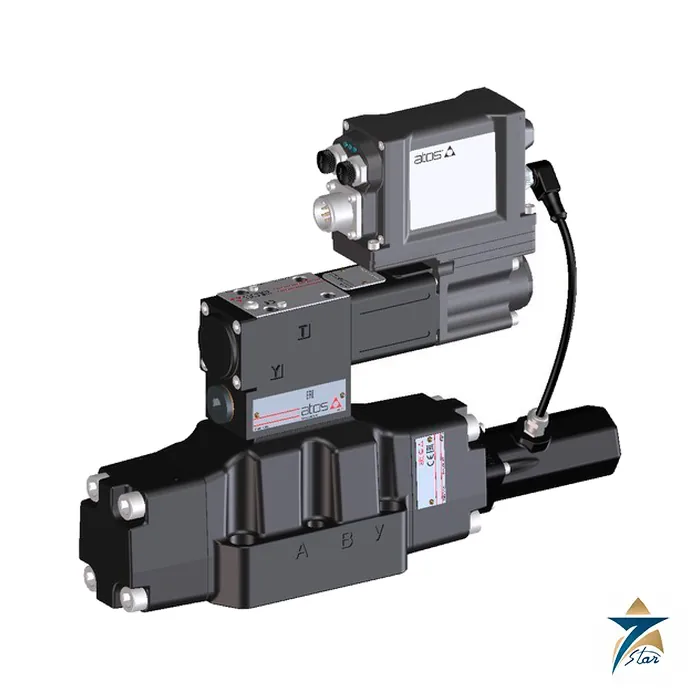
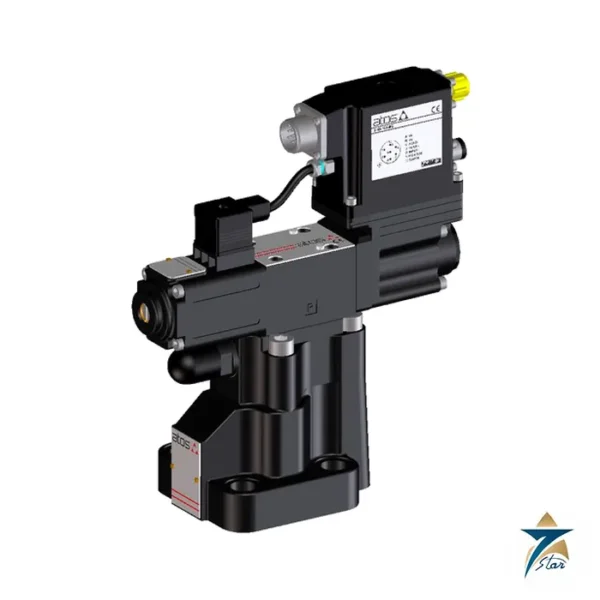
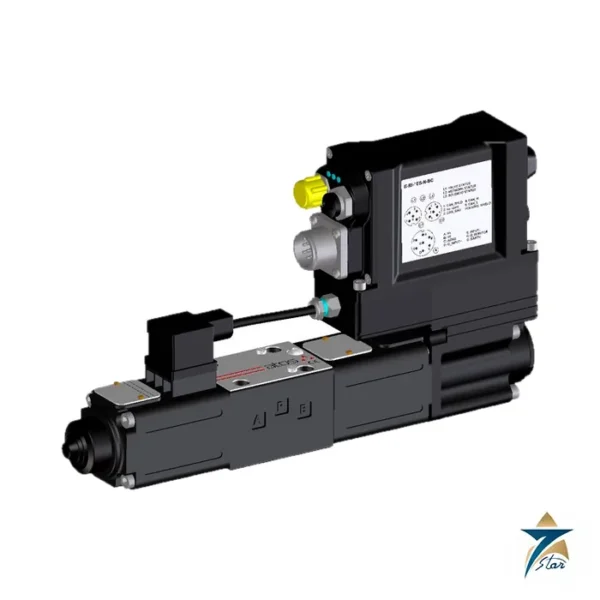
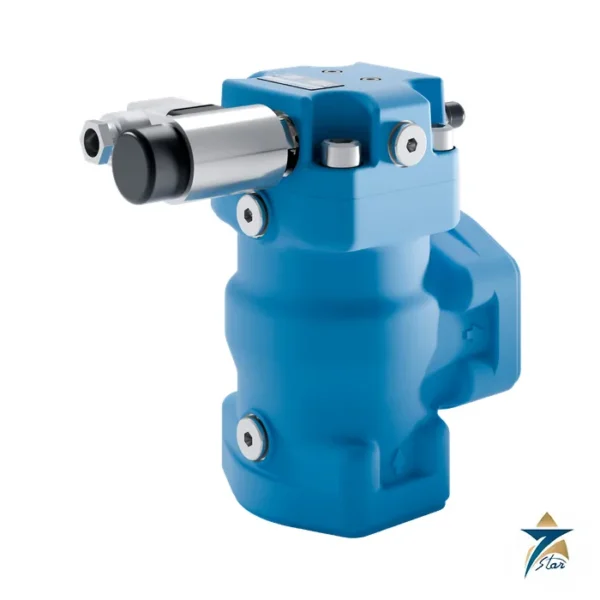
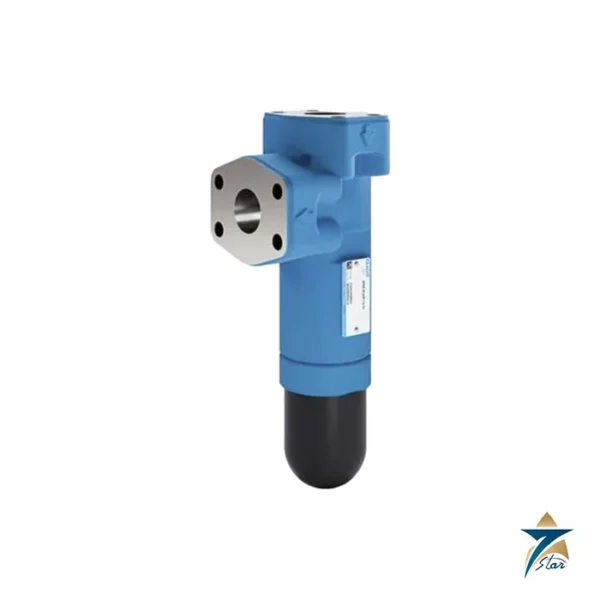
The Atos DPZO-LEB is a digital, piloted proportional directional valve with two LVDT transducers, one on the pilot valve and one on the main stage. It is aimed at high-speed closed-loop control of larger axes, with positive spool overlap for good dynamics and uncompensated flow regulation. The range covers ISO 4401 sizes 10, 16, 25, 27, 32 and 35, with maximum permissible flows from 180 up to 3500 l/min and pressures up to 350 bar.
LEB is the basic execution with an analog reference or IO-Link; LES is the full execution with fieldbus and optional alternated pressure or force control. The valves are used on presses, plastics and die-casting machines, heavy test rigs, steel and rolling mill positioning and large hydraulic cylinders.
Technical specifications
| Parameter |
Specification |
| Valve type |
Proportional directional, piloted, positive overlap, 2 LVDT, on-board digital driver |
| Sizes (ISO 4401) |
10, 16, 25, 27 (4M), 32, 35 |
| Ways |
4/3 and 4/4 |
| Maximum permissible flow |
180 l/min (size 10) up to 3500 l/min (size 35) |
| Pressure limits |
P, A, B, X 350 bar; T 250 bar (10 bar with option /D); Y 10 bar |
| Pilot pressure |
Minimum 25 bar, maximum 350 bar; option /G advised above 150 bar |
| Response time, 0-100 percent step |
Up to 50 ms (size 10) rising to up to 120 ms (size 35) |
| Hysteresis and repeatability |
Hysteresis to 0.1 percent; repeatability +/-0.1 percent of full regulation |
| Electrical supply |
Nominal 24 VDC, rectified and filtered 20 to 32 V; power draw up to 50 W |
| Solenoid |
Maximum current 2.6 A; coil resistance 3 to 3.3 ohm; insulation class H (180 degC) |
| Command inputs and outputs |
Analog command of +/-10 VDC or +/-20 mA, with monitor, enable and fault outputs |
| Digital interfaces |
IO-Link on LEB, fieldbus on LES; Bluetooth and USB service port on every valve |
| Alternated p/Q control (LES) |
Pressure (SP, one transducer) or force (SF with two transducers, SL with one load cell) |
| Safety options (LES) |
Functional-safety versions certified by TUV: IEC 61508 to SIL 3, ISO 13849 to category 4, PL e |
| Protection and temperature |
IP66 or IP67 once mating connectors are fitted; ambient -20 to +60 degC (-40 degC with /BT); tropicalized electronics |
| Reliability |
MTTFd 75 years to EN ISO 13849 |
Sizing the valve
The model code DPZO-LES-SN-NP-271-L5 shows the structure: valve type, driver, alternated control, fieldbus, size digit (1 for size 10, 2 for 16, 4 for 25, 4M for 27, 6 for 32, 8 for 35), configuration and spool. Nominal flow at a 10 bar drop from P to T runs from about 100 l/min for the smallest size to about 1500 l/min for the largest, and is higher at 30 bar. Size the valve from the speed and force profile of the axis, then check the piloting flow and volume, which Atos gives per size (for example about 1.7 l/min at size 10 up to 20 l/min at size 35 for a step input).
Valve leakage is small: the main stage leaks in the range of about 0.15 to 3.6 l/min depending on size and pressure, which is worth knowing for power-pack cooling.
What to confirm before ordering
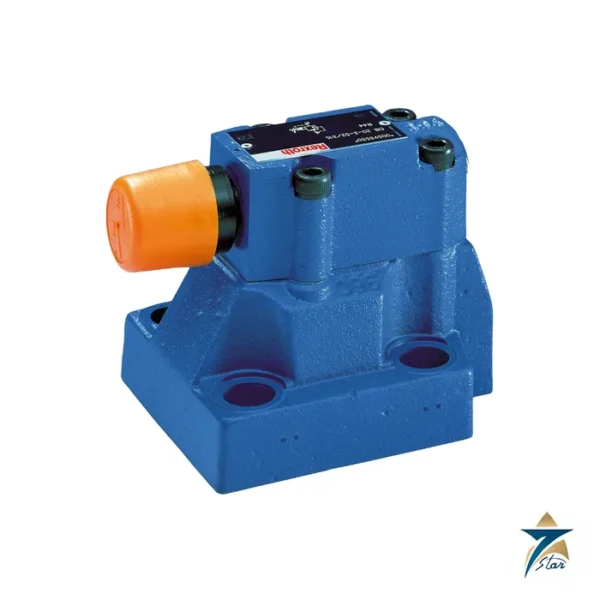
Name the size, driver (LEB or LES), fieldbus, spool and configuration, pilot and drain options, and whether the safety or p/Q options are needed. The pilot supply must be dimensioned for the piloting flow. For a direct proportional valve for smaller flows see the Atos DHZO-TEB, and for a conventional pilot-operated valve the Bosch Rexroth 4WEH. More valves are under hydraulic valves and components.
How the Atos DPZO-LEB works
A small pilot valve with a position sensor moves the main spool through pilot pressure. A second sensor on the main stage reports the real spool position to the on-board driver. The driver compares the command with the position and corrects it in a closed loop. The spool opens in proportion to the command, so the flow to the cylinder follows the signal.
Where the DPZO-LEB is used
- Presses
- Plastics machines
- Die-casting machines
- Heavy test rigs
- Steel and rolling mill positioning
Selection checklist for the DPZO-LEB
- ISO 4401 size from 10 to 35
- Flow up to 3500 l/min
- Pressure up to 350 bar
- Pilot pressure of 25 to 350 bar
- Analog command or IO-Link
- Spool type
- Supply of 24 VDC
- Ambient temperature
Installation, commissioning and maintenance notes for the DPZO-LEB
Mount the valve on a flat, clean subplate with the seals fitted. Connect the 24 VDC supply and the command signal with shielded cable. Check the pilot pressure and use the drain port as required. Set up the valve from the service port with Bluetooth or USB. Keep the oil clean.
Requesting a quotation for the Atos DPZO-LEB
Please send the size, the spool code, the flow and the quantity. Seven Star LLC serves industrial customers in Oman and the GCC and replies with a quotation based on the information provided.
DPZO-LEB sizes
The ISO 4401 sizes are 10, 16, 25, 27, 32 and 35.
DPZO-LEB flow
The maximum flow runs from 180 l/min for size 10 to 3500 l/min for size 35.
DPZO-LEB pressure limits
Ports P, A, B and X take 350 bar and port T takes 250 bar.
DPZO-LEB response time
The step response runs from 50 ms for size 10 to 120 ms for size 35.
DPZO-LEB hysteresis
The hysteresis is up to 0.1 percent and the repeatability is plus or minus 0.1 percent.
DPZO-LEB electrical supply
The supply is 24 VDC, and the power is up to 50 W.
DPZO-LEB command
The analog command is plus or minus 10 VDC or plus or minus 20 mA.
DPZO-LEB protection
The valve is rated IP66 or IP67 with the mating connectors fitted.
Valve records for the DPZO-LEB
Record the spool code, the driver settings and the date of each service.
Choosing the right DPZO-LEB size
Choose the size by the flow at the working pressure drop, and the LES version where a fieldbus is needed.
Documents and quotation
The attached Atos technical table FS175 (revision 12.0, April 2026) contains the model code, spool flow tables, response diagrams, fieldbus data and dimensions for every size. Send the full code, interface and quantity for a quotation.








Reviews
There are no reviews yet.