Overview
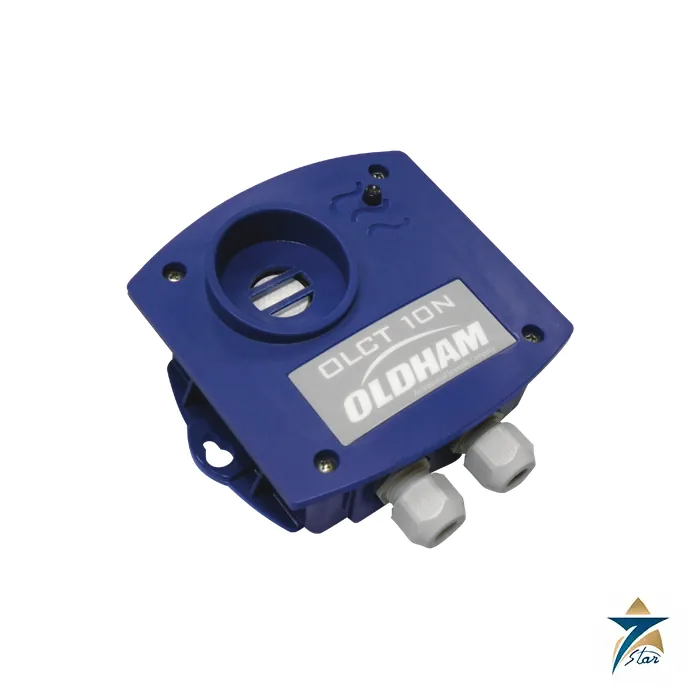
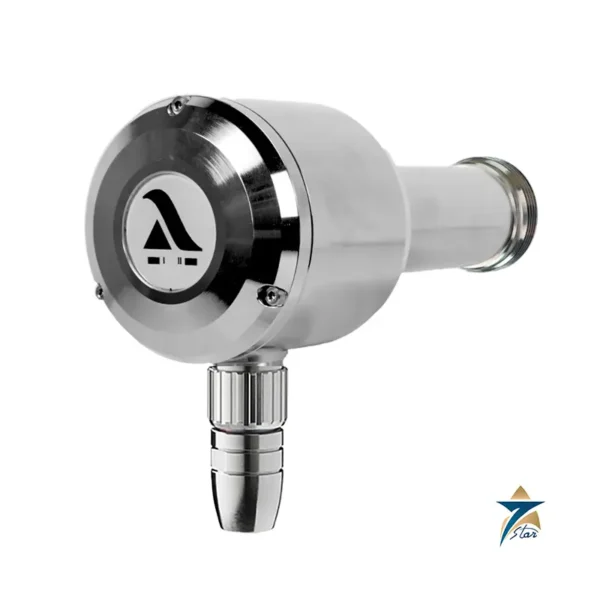
The Oldham OLCT 10N is a digital fixed gas detector from Teledyne Gas and Flame Detection, designed to detect the most common combustible gases, toxic gases and oxygen in commercial and light industrial applications. Instead of a 4-20 mA loop, the Oldham OLCT 10N communicates over an RS485 digital line with Teledyne’s MX 16, MX 32, MX 43 or MX 256 controllers. Teledyne states that up to 32 detectors can be connected on the same digital line or spread across eight lines, and that all transmitter information reaches the controller in less than one second. The digital bus reduces cabling cost compared with running a separate cable to each detector.
Seven Star LLC supplies the Oldham OLCT 10N, its sensor versions and accessories to car parks, plant rooms, boiler houses, workshops, cold stores, water treatment plants and light industrial facilities in Oman and the GCC. Our Muscat engineers help match the gas, range and controller, and we provide model selection support from Muscat.
Key Features of the Oldham OLCT 10N
- Digital technology: RS485 Modbus with Teledyne’s proprietary protocol for addressable detectors on a shared line.
- Wide gas coverage: catalytic sensors for methane, propane, butane and hydrogen, electrochemical sensors for oxygen and toxic gases, and infrared sensors for carbon dioxide.
- Non-intrusive calibration: a simple magnetic wand allows one-person calibration without opening the enclosure, and calibration information such as span reserve is stored in the detector.
- Rugged housing: UV and shock resistant ABS enclosure, IP65 waterproof and dustproof.
- ATEX zone 2 and 22 version: the explosion-protection version is certified ATEX II 3 GD for use in zones 2 and 22.
- Low consumption: as little as 2.5 mA at 24 VDC for electrochemical versions.
Gases and Measuring Ranges
According to the Teledyne brochure, the Oldham OLCT 10N is available for CH4, C3H8, C4H10 and H2 at 0-100 percent LEL (−20 to +55°C); O2 at 0-30 percent volume with a two-year sensor (−20 to +50°C) or a five-year sensor (−40 to +50°C); CO at 0-300 or 0-1000 ppm; H2S at 0-30 or 0-100 ppm; NO at 0-100 or 0-300 ppm; NO2 at 0-10 or 0-30 ppm; NH3 at 0-100 or 0-1000 ppm (−20 to +40°C); and CO2 at 0-5000 ppm, 0-5 percent volume or 0-100 percent volume (−40 to +50°C). Each range has its own part number, for example OLCT10N-001 for 0-100 percent LEL methane, OLCT10N-204 for 0-300 ppm CO, OLCT10N-213 for 0-30 ppm H2S and OLCT10N-252 for 0-5000 ppm CO2.
Wiring and Controller Integration
The Oldham OLCT 10N runs on 12 to 30 VDC. Typical consumption at 24 VDC is 2.5 mA with an electrochemical sensor, 50 mA with a catalytic sensor and 20 mA with the infrared CO2 sensor. Two M16 cable entries accept cable from 4 to 8 mm outside diameter. With an MX 43 controller, Teledyne lists up to 32 detectors at 1000 m using 0.9 mm2 (AWG 18) cable. With a 24 VDC MX 32 controller, the brochure lists up to eight toxic or oxygen detectors at 1000 m, or up to eight explosive gas detectors at 225 m, on the same cable size, because catalytic sensors draw more current. This difference matters when planning long cable runs in car parks or tunnels.
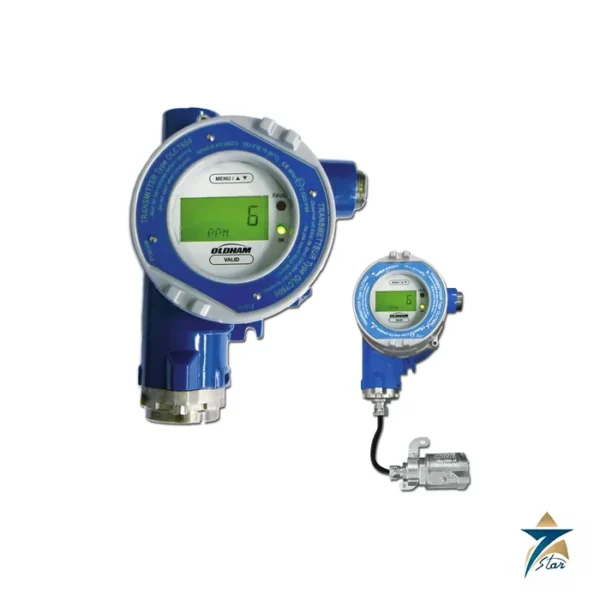
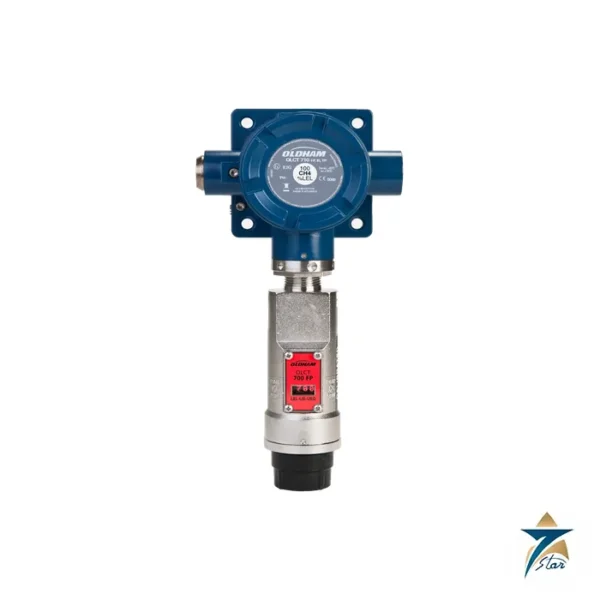
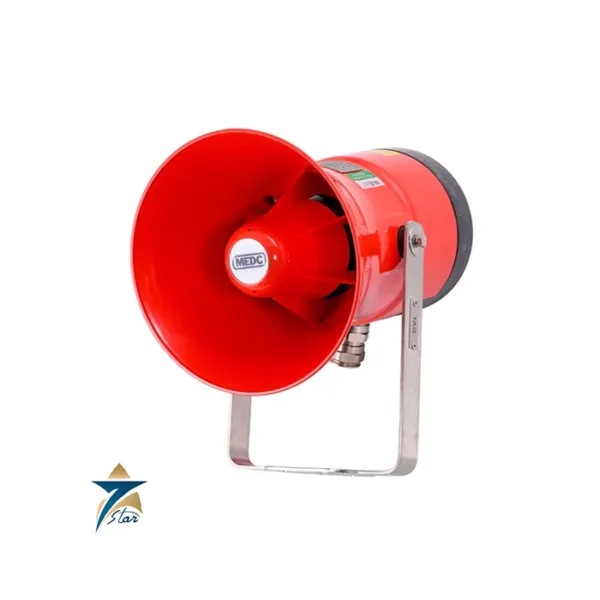
The controller handles alarm thresholds, relays, sirens and beacons. Projects that need many points or larger plants may use the MX 43 or the Oldham MX 62 gas detection controller, while explosion-proof 4-20 mA detectors such as the Oldham OLCT 100 and the Oldham OLCT 710 are used where the area classification is zone 1 or where an analog signal is preferred.
Digital Versus Analog Detection (General Guidance)
This comparison is general engineering background rather than manufacturer data. A conventional 4-20 mA detector needs its own cable back to the control panel, so wiring cost grows with every point added. A digital detector such as the Oldham OLCT 10N shares one twisted pair line with other addressable detectors, so a long car park or a multi-room building can be covered with fewer cable runs and fewer panel input cards. The trade-off is that the cable size, line length and number of catalytic detectors per line must be checked against the controller limits, because catalytic sensors draw much more current than electrochemical cells. For this reason, many projects combine the Oldham OLCT 10N on digital lines for toxic and oxygen points with careful line design for combustible points.
Applications of the Oldham OLCT 10N
- Car park CO and NO2 monitoring with ventilation control through the controller relays.
- Boiler rooms and kitchens for natural gas or LPG leak detection.
- Refrigeration plant rooms using ammonia or CO2.
- Battery charging rooms for hydrogen detection.
- Water and wastewater pump stations for H2S and oxygen deficiency.
- Laboratories and workshops using inert or toxic gases.
Installation and Maintenance (General Guidance)
The following is general practice rather than Teledyne data. Mount detectors for gases lighter than air, such as methane and hydrogen, near the ceiling, and detectors for heavier gases, such as LPG, near the floor. Place CO and toxic gas detectors in the breathing zone or as required by local codes. Avoid locations with direct water spray or where the sensor may be blocked by dust. Calibrate and bump test the Oldham OLCT 10N at the intervals recommended in the user manual and by the site safety procedure, using certified calibration gas and the OLCT 10N calibration tool kit. Replace sensors before the end of their expected life, and record every calibration so span reserve can be tracked over time.
Accessories
For the Oldham OLCT 10N, Teledyne lists a shock guard protector (part 6123717) and an OLCT 10N calibration tool kit (part 6331163) for the detector. Seven Star LLC can supply these accessories together with the detectors and the matching controller.
Technical Specifications
| Parameter |
Oldham OLCT 10N (Teledyne brochure GF-30023G-EN) |
| Detection |
Combustible gases, toxic gases, oxygen, CO2 |
| Output |
RS485 Modbus, proprietary protocol |
| Power supply |
12 to 30 VDC |
| Consumption at 24 VDC |
2.5 mA electrochemical; 50 mA catalytic; 20 mA infrared CO2 |
| Calibration |
Non-intrusive, magnetic wand |
| Cable entries |
2 x M16, cable 4 to 8 mm |
| Dimensions (L x H x W) |
118 x 110 x 60 mm |
| Housing |
ABS, UV and shock resistant; IP65 |
| ATEX (explosive versions) |
II 3 GD; Ex dc ec IIC T4 Gc; Ex tc IIIC T135°C Dc; −20°C to +55°C |
| EMC |
EN 50270 |
How to Order
To order the Oldham OLCT 10N, send Seven Star LLC the gas to be detected, the range, the quantity of detectors, the controller model and the cable lengths involved. Our Muscat team will prepare a formal quotation and can propose a complete detector and controller package. The Teledyne brochure and user manual can be downloaded from this page, and we provide model selection support from Muscat for customers across Oman and the GCC.














Reviews
There are no reviews yet.