Large reference reflector for long beam paths
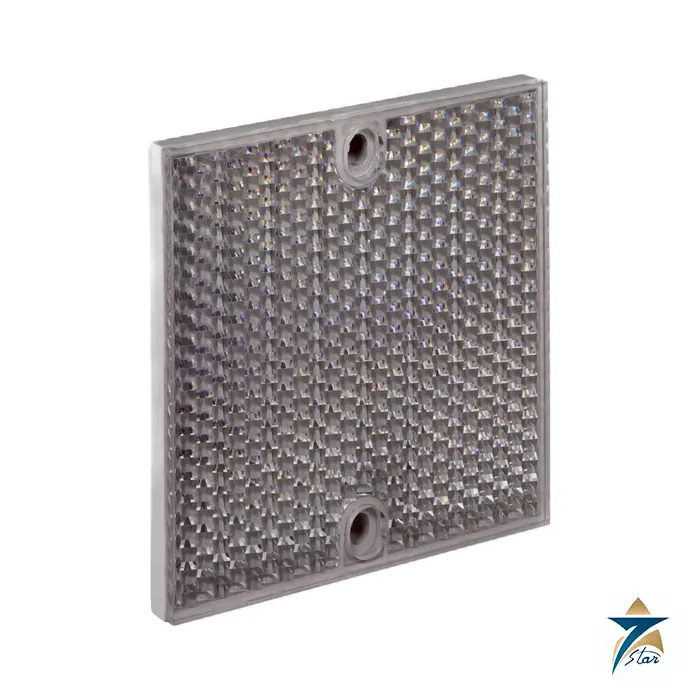
The SICK PL80A (part no. 1003865) is the large square-format member of the standard reflector line, measuring 84 mm by 84 mm with a 8.5 mm profile. It is the reflector that SICK names as the reference part in many retro-reflective sensor data sheets, including several W12, W9, W250, G10 and GR18 types, so the ranges printed for those sensors can be reproduced when the PL80A is used.
Because it offers the largest reflective area of the PL series, it is the usual choice for long beam paths, dusty sites and installations where the alignment tolerance has to be generous.
Technical specifications
| Parameter |
Specification |
| Manufacturer |
SICK |
| Type |
PL80A |
| Part no. |
1003865 |
| Product segment |
Reflectors and optics |
| Product |
Reflectors |
| Product version |
Standard reflectors |
| Description |
Rectangular, screw connection |
| Mounting system type |
Screw-on |
| Material |
PMMA/ABS |
| Dimensions (W x H x L) |
84 mm x 8.5 mm x 84 mm |
| Ambient operating temperature |
-30 °C … +65 °C |
| Conformity document |
RoHS manufacturer declaration |
Why the reference reflector matters
A retro-reflective sensor data sheet always states its range relative to one named reflector. For example, the SICK WL250-2P2431 data sheet quotes up to 13 m with a PL80A, and the WL12-3P2431 lists 5 m with the same reflector. Choosing the PL80A therefore removes doubt: the printed range applies and the sensor operates with the intended function reserve.
On a conveyor or gate, align the reflector so that the beam hits its centre, keep the face parallel to the sensor and clean it on a schedule. The data sheet adds that reflectors used in freezer areas should be acclimatised before mounting and fixed without heavy mechanical stress or tension on the body.
Its 84 mm square face is also the easiest to hit when a bracket flexes or a conveyor frame vibrates, which is why it suits long gate and dock applications. The reflector is only 8.5 mm high, so the mounting plate stays flat to the frame.
Ordering details
The PL80A is a single article, part no. 1003865, with no code positions to decode. SICK lists the wider reflector range at www.sick.com/Reflectors. When requesting a quote for a sensor project, list the reflector separately and state the sensor type, since some sensors ship with a reflector in the box and others do not.
How a retro-reflector works with the sensor
A retro-reflective photoelectric sensor houses its emitter and receiver in one body and aims the light at a reflector on the opposite side of the conveyor, door or gate. The PL80A is built from a field of small corner-cube (triple prism) elements moulded in PMMA. Each prism returns the light parallel to the incoming beam, back towards the sensor, even when the reflector is not exactly perpendicular to the beam. When an object passes through the path it interrupts the returning light and the sensor switches.
Many retro-reflective sensors use polarised light to avoid being fooled by shiny objects. Prismatic reflectors such as the PL80A rotate the plane of polarisation of the returning light, which the sensor recognises as the genuine reflector signal. Plain mirrors, glossy packaging or stainless steel surfaces do not do this, so a correctly specified polarised sensor with a prismatic reflector ignores them. Simple reflective tape or foils are not always suitable for polarised sensors; check the sensor data sheet.
Key features
- 84 x 84 mm reflective surface, the largest square format in the PL series, which tolerates misalignment and vibration.
- Robust PMMA front with ABS housing and screw-on mounting.
- Low 8.5 mm profile that sits flat against a frame or bracket.
- Reference reflector for many SICK retro-reflective sensors, so the data-sheet range applies directly.
- Ambient temperature range of −30 °C to +65 °C.
Typical applications
- Vehicle and pallet detection at loading docks, gates and car park barriers
- Long conveyor sections in warehouses, airports and distribution centres
- Door and roller-shutter safety monitoring (as a non-safety presence signal)
- Height and overhang checks at the entry of automated storage systems
Use in Oman and GCC conditions
Dust is the main factor that reduces the range of reflector-based systems in the Gulf. Fine sand and dust settle on both the sensor optics and the reflector face and lower the signal margin over time. The larger face of the PL80A returns more light than smaller reflectors and so leaves more margin before the sensor drops out. Include the reflector in a regular cleaning schedule using a soft cloth and water or a mild cleaning agent, and avoid solvents and abrasive pads that can cloud the PMMA surface. For outdoor installations, keep in mind the +65 °C upper limit: a reflector mounted on a dark metal post in direct summer sun can become very hot, so mount it in the shade where possible or on a bracket that does not trap heat.
Mounting guidance
- Fix the reflector with the screws on a stiff bracket so it does not move when trucks or forklifts pass.
- Align the sensor beam with the centre of the reflector, then check the sensor’s signal indicator for adequate reserve.
- Do not tighten the screws so far that the plastic body is stressed or distorted.
- Protect the reflector from impact where vehicles operate, for example with a guard plate set slightly forward of the face.
What to include in your RFQ
Specify PL80A, part no. 1003865, the quantity, the sensor types it will be used with and the required delivery point. If you need fixing screws or a mounting bracket, list them as separate items.
Documents and quotation
This page links the original SICK data sheet for PL80A (part no. 1003865). Values in the specification table were copied from that document. Seven Star LLC supplies SICK products as an independent supplier in Muscat; send your request with the exact type and part number, the quantity and the delivery point, and mention any need for a matching sensor or fixing screws. Please verify the details with us before placing an order, since the manufacturer may change data without notice. See also automation accessories and the SICK WTB4-3 miniature photoelectric sensor.












Reviews
There are no reviews yet.