Non-invasive moisture check for concrete floors and screeds
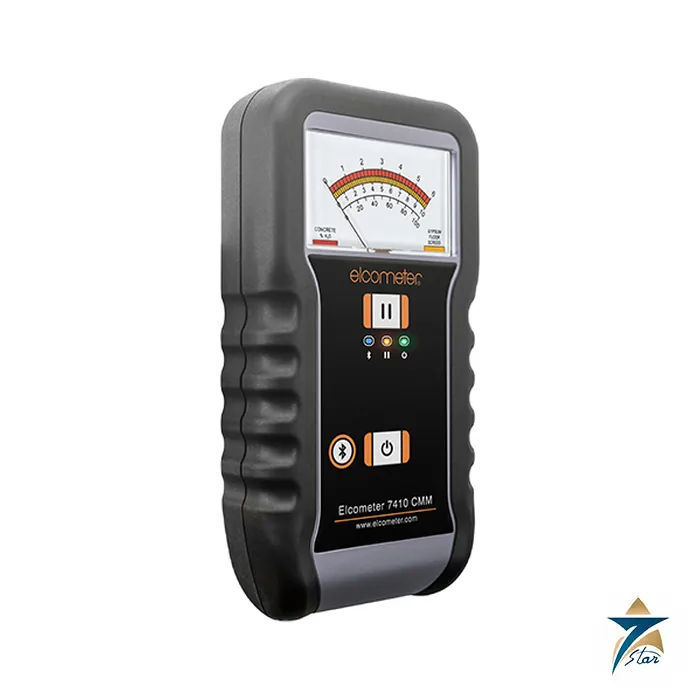
The Elcometer 7410 Concrete Moisture Meter is a hand-held, non-destructive instrument for checking the moisture content of concrete before a coating or floor covering is applied. Two electrodes on the base of the meter create a low-frequency alternating electric field that penetrates about 20 mm (3/4 in.) into the slab; the meter measures the electrical impedance, which varies with moisture content, and shows the result on a moving coil dial. Applying a coating to a floor that is too damp can cause premature adhesion failure, blistering and delamination, so manufacturers of coating and flooring systems generally require a moisture test first. The datasheet lists ASTM F2659.
Technical specifications
| Parameter |
Specification |
| Part number |
K0007410M002 |
| Measuring range |
Concrete 0-6% moisture content; floor screed 0-10 (comparative scale) |
| Reference scale |
0-100, comparative or qualitative only |
| Measurement depth |
20 mm (3/4 in.) |
| Substrate type |
Concrete, gypsum floor screed |
| Display |
Moving coil meter with linear scale, HOLD function, Bluetooth connectivity for an app |
| Power supply |
2 x AA batteries; automatic power-off after 5 minutes of inactivity |
| Dimensions and weight |
160 x 85 x 38 mm (6.3 x 3.5 x 1.5 in.); 344 g (12.1 oz) |
| Supplied with |
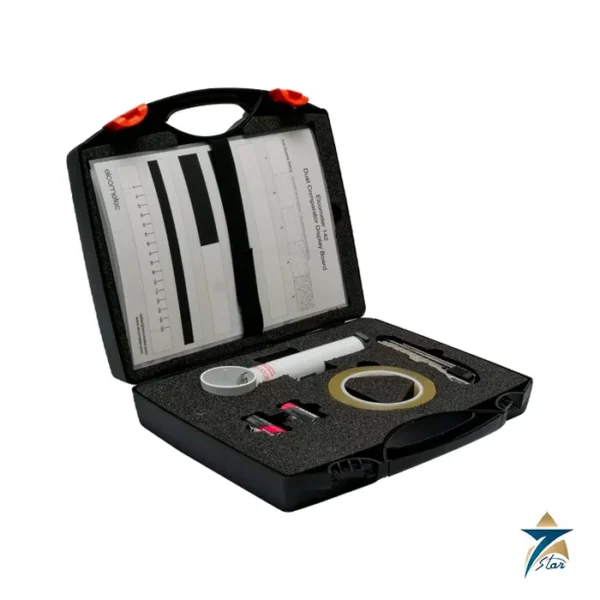
Meter, battery, carry case, calibration certificate and operating instructions |
Preparing the slab and taking readings
The user guide recommends turning off artificial heating or drying equipment at least 96 hours before final readings, keeping the building at normal service temperature and humidity for at least 48 hours, and removing coverings, adhesive residue, curing compound, sealers and paint from the test area at least 48 hours beforehand. The meter is pressed onto clean, dust-free concrete with all spring-loaded electrode pins fully compressed. Concrete is read on the 0-6% scale, gypsum and other screeds on the 0-10 comparative scale. The guide advises taking three to four tests close together and using the highest reading, avoiding direct sunlight and heat sources, and including potentially damp areas such as the centre of the slab and within about 1 m of walls. Readings through paint, coatings or adhesives are qualitative or comparative rather than quantitative. The guide notes that moisture content readings have no consistent linear correlation with calcium chloride emission or relative humidity test results, so always follow the coating or flooring manufacturer limits.
Limitations and calibration
The user guide states that the meter will not detect or measure moisture through electrically conductive materials such as metal sheeting or cladding, many types of black EPDM rubber or wet surfaces, and that it is not suited to comparative readings through thick floor coverings such as wood. It also gives a typical drying period of at least 3 to 4 weeks per 25 mm of concrete or sand and cement screed, longer in humid or cold conditions. A calibration-check plate is available for on-site assessment. Related instruments on this site include the Elcometer 319 dewpoint meter for ambient conditions; see all portable test and measurement instruments.
How the Elcometer 7410 works
The Elcometer 7410 has two electrodes on its base. They create a low-frequency alternating electric field that goes about 20 mm into the concrete. Water in the concrete changes the electrical impedance, and the meter converts that to a reading on a moving coil dial. It does not drill or damage the slab, so the check can be repeated at many places in a short time. It is a comparative tool for finding wet areas, and the user can then confirm the result with another method if the specification calls for it.
Where the Elcometer 7410 is used
- Floors before coating
- Floors before tiles, vinyl or timber
- Floor screeds
- Slabs on new building sites
- Repair work after water damage
Selection checklist for the Elcometer 7410
- Substrate: concrete or gypsum screed
- Scale: 0-6 percent for concrete, 0-10 for screed
- Measurement depth of 20 mm
- Need for HOLD function
- Bluetooth link to an app
- Batteries: 2 x AA
- Case and calibration certificate
- Coating or flooring maker moisture limit
Installation, commissioning and maintenance notes for Elcometer 7410
Press the meter flat on clean concrete so that all spring-loaded pins are fully compressed. Read the dial and press HOLD if you want to freeze the value. Take three or four tests close together and keep the highest. The meter switches off after five minutes if not used, and the batteries are two AA cells. Keep the pins clean and store the meter in its case.
Requesting a quotation for the Elcometer 7410
Please send the part number, the substrate, the quantity and whether you need extras. Seven Star LLC serves industrial customers in Oman and the GCC and replies with a quotation based on the information provided.
Elcometer 7410 scales
Concrete is read on the 0-6 percent scale. Gypsum and other screeds use the 0-10 comparative scale. There is also a 0-100 reference scale that is only comparative.
Elcometer 7410 size
The meter measures 160 by 85 by 38 mm and weighs 344 g, so one hand can hold it.
Elcometer 7410 supplied items
The kit has the meter, the batteries, a carry case, a calibration certificate and the operating instructions.
Elcometer 7410 standard
The data sheet lists ASTM F2659 as the standard reference.
Elcometer 7410 test records
Write down the position, the date, the temperature and the reading for each test so the results can be compared later.
Choosing the right Elcometer 7410 test plan
Include damp-prone places such as the slab centre and about 1 m from walls, and avoid direct sun and heat sources while testing.
Documents and quotation
The attached Elcometer datasheet gives the specification and the standard. Please confirm before ordering the substrate type, the moisture limit set by your coating or flooring specification and whether a calibration-check plate is needed, and send these with your enquiry so the part number can be checked against the manufacturer documentation.




Reviews
There are no reviews yet.