A rugged handheld XRF analyzer for alloy verification, scrap sorting and screening
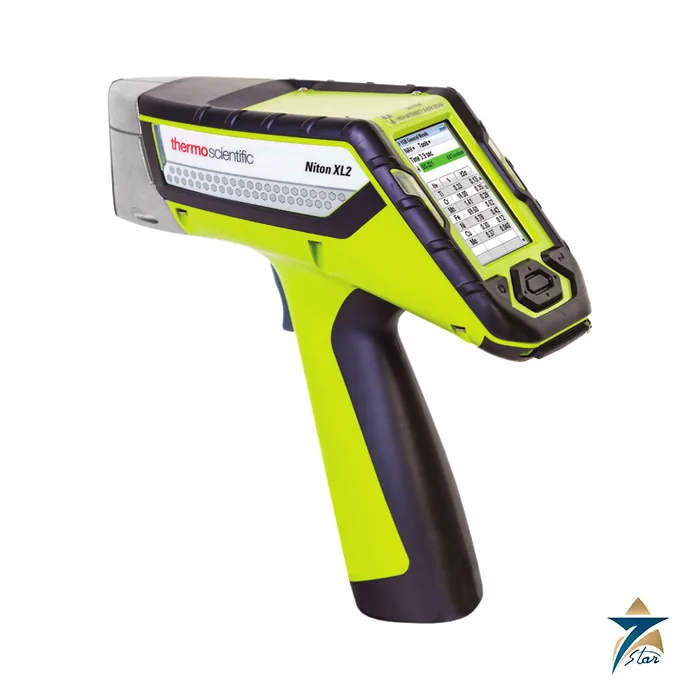
The Thermo Fisher Niton XL2 Plus is a handheld X-ray fluorescence (XRF) analyzer for point-and-shoot elemental analysis. Thermo Fisher lists its applications as verification of metals and alloys in manufacturing, positive material identification (PMI), sorting at scrap recycling operations, coating thickness from single-element layers, precious metal assay, geochemical analysis for ore trading and grade control, heavy metal screening of polluted soils, lead in paint inspection and screening of hazardous substances in consumer goods. It is built around a 2 W silver-anode X-ray tube, a silicon drift detector and a fundamental parameter calibration that corrects for sample matrix effects.
Technical specifications
| Parameter |
Specification |
| Analytical range |
Mg to U |
| X-ray source |
Ag anode tube, 6-45 kV, 1-200 uA, 2 W maximum; dynamically adjustable current |
| Detector |
Silicon drift detector (SDD) with Detector ProGuard protection |
| Spot size |
8 mm collimation |
| Calibration modes |
General Metals, Precious Metals, Coatings, Mining, Soils, Electronic Alloys, Plastics, Industrial Lead in Paint, Lead in Paint Products |
| Libraries |
Default alloy libraries based on SAE, AISI, ASTM and AA standards; user-editable |
| Ingress protection |
IP54 (splash and dust proof) |
| Operating environment |
-10 to 50 degrees C; 0 to 80% RH non-condensing |
| Display |
Fixed-angle colour resistive touchscreen |
| Power |
7.4 V lithium-ion battery (hot-swappable) or 12 V DC, 3 A, 36 W supply |
| Memory |
64 MB system, 128 MB user storage; about 10,000 readings with spectra |
| Data transfer |
USB, Bluetooth and RS-232; Niton Data Transfer (NDT) PC software |
| Weight and size |
1.53 kg (3.4 lb) with battery; 25.6 x 27.5 x 10 cm (10 x 10.8 x 3.9 in) |
| Compliance |
CE, RoHS, FCC, Industry Canada, IEC 61010-1, UL 61010-1 |
Built for the shop floor and the field
The sealed IP54 housing, Detector ProGuard and a hot-swap battery are aimed at harsh industrial use, and Thermo Fisher notes that sharp items can be analyzed with a reduced puncture risk. An integrated micro camera and nose-guard alignment help position each measurement, and the touchscreen interface keeps operation to a simple point-and-shoot routine. The built-in system check performs standardization automatically, and the interface is available in eleven languages including English, Chinese, Spanish, French and German. Optional Bluetooth GPS, a wireless barcode reader and portable, mobile or field-mate test stands extend its use.
Standard kit and selection notes
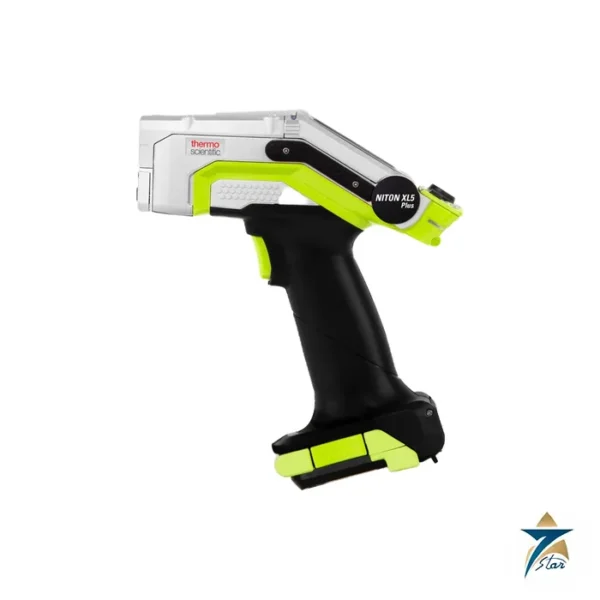
The standard package includes a locking shielded carrying case, two lithium-ion battery packs, a 110/220 VAC charger and adaptor, check samples, belt holster, safety lanyard and USB and RS-232 PC cables. Handheld XRF analyzers are subject to radiation-source licensing that varies by region, so confirm the registration requirements for your site before ordering. Choose the calibration modes according to the materials you test, for example alloys for PMI or mining and soils modes for geochemical work. For a higher-performance model see the Thermo Fisher Niton XL5 Plus; more instruments are listed under Portable Test and Measurement. The attached specification sheet (2018) contains the full data. Please send the materials you need to analyze, the elements of interest and the required detection limits with your enquiry so the right calibration modes and accessories can be confirmed.








Reviews
There are no reviews yet.