AC/DC pulse TIG power source for aluminium and steel
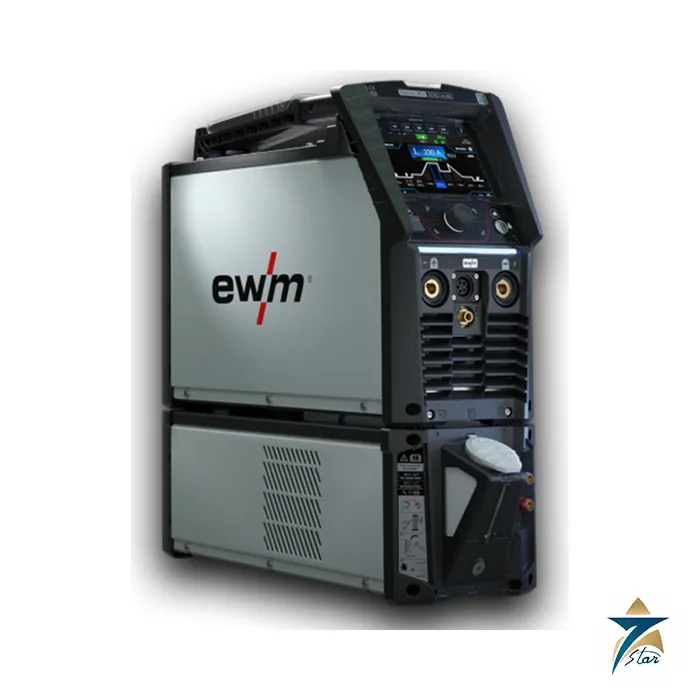
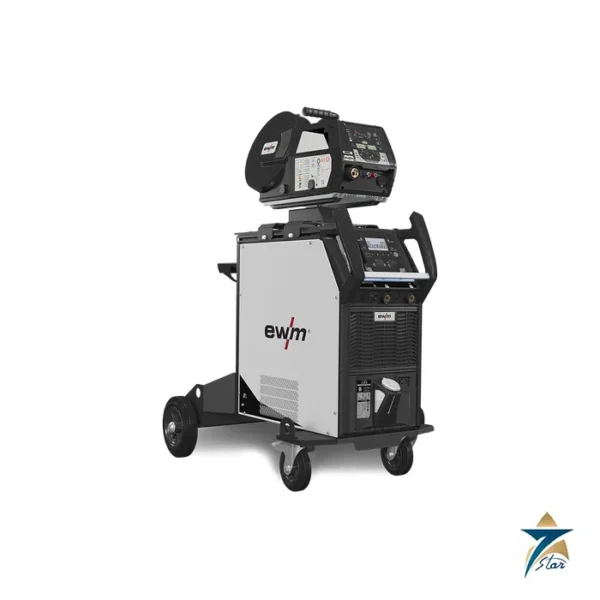
The EWM Tetrix XQ 300 puls AC/DC is a three-phase inverter TIG welding machine from the latest Tetrix XQ series. The AC/DC version welds aluminium and its alloys with alternating current as well as steel, stainless steel and other metals with direct current, and it can also be used as an MMA power source. EWM offers the 300 A machine as a portable unit or as a modular set with a cooling unit and trolley.
Arc functions include activArc for a stable, focused TIG arc, Spotmatic for repeatable tack points, and several pulse modes: average value, thermal, automatic and AC special pulsing. On AC, the welder can adjust the waveform (sine, trapezoidal, square or customised), frequency and balance, and use AC balling to form the tungsten tip.
Technical specifications
| Parameter |
Specification |
| Manufacturer |
EWM |
| Model |
Tetrix XQ 300 puls AC/DC |
| Processes |
TIG AC/DC with pulsing, MMA |
| TIG current setting range |
3 A to 300 A |
| MMA current setting range |
5 A to 300 A |
| TIG duty cycle at 40 °C |
300 A at 40%; 270 A at 60%; 220 A at 100% |
| MMA duty cycle at 40 °C |
300 A at 30%; 260 A at 60%; 210 A at 100% |
| Open circuit voltage |
87 V (VRD version available as a separate machine) |
| Mains voltage |
3 x 380 V to 400 V (-25% to +20%) |
| Mains fuse |
16 A |
| Recommended generator rating |
15.9 kVA |
| cos φ / efficiency |
0.99 / 83% |
| Insulation class / protection |
H / IP23 |
| Ambient temperature |
-25 °C to +40 °C |
| Torch connection |
5- or 8-pole |
| Mains lead |
5.5 m |
| Controls |
Expert 3.0 (7-inch display) or Comfort 3.0 (7-segment LED); 5 favourites buttons |
| Standards |
IEC 60974-1, -3, -10, EMC class A |
| Dimensions L x W x H |
550 x 257 x 415 mm |
| Weight |
22.0 kg |
The DC-only Tetrix XQ 300 puls DC shares the same output ratings and housing, weighs 20.5 kg and has a recommended generator rating of 15.3 kVA.
Controls, connectivity and cooling options
Two control panels are offered. Expert 3.0 has a 7-inch display (not a touchscreen) for graphical parameter setting, while Comfort 3.0 uses a 7-segment LED readout. Both have five programmable favourites buttons so that a welder can recall a stored welding task directly. A large LED info bar shows the operating status in four signal colours, and a protective cap covers the controls against water, dirt and impact while still allowing operation.
A remote control interface is fitted as standard, together with a 7-pole digital interface for the ewm Xnet welding management software. The standard 5-pole torch socket is compatible with EWM X-technology torches. For water-cooled torches, EWM lists the Cool XQ 41-1 cooling unit (400 V, up to 1,100 W cooling capacity, 3.5 bar pump pressure) as the matching module for the 300 A machine.
Choosing the right Tetrix XQ configuration
TIG machines for aluminium need AC output, so the AC/DC version is the right choice when aluminium tanks, frames or pipework are part of the work. For workshops that only weld steel and stainless steel, the DC version is lighter and draws slightly less from a generator. The 230 A models in the same series run on single-phase supply instead of three-phase.
As with any inverter TIG set, check the torch current rating against the planned duty cycle: an air-cooled torch is usually adequate for short welds on thin material, while long welds near the upper current range call for a water-cooled torch and cooling unit. Confirm the site voltage, fuse and generator size before installation.
Documents and quotation
The attached EWM brochure covers the Tetrix XQ 230 and 300 machines, their functions and technical data, and the Cool XQ cooling units. For a quotation, state the version (DC or AC/DC), control panel, whether a cooling unit and trolley are needed, the torch type and length, and the site supply voltage. See other TIG welding machines in the catalogue.

Reviews
There are no reviews yet.