Fibre-reinforced sheet with graphite for steam and demanding service
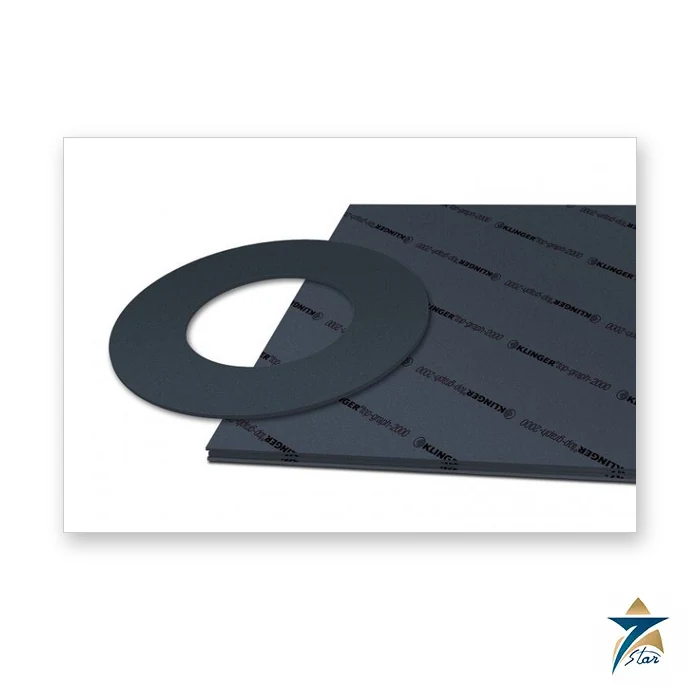
KLINGER top-graph 2000 joins the benefits of a reinforced fibre sheet with those of flexible graphite. It is made from graphite and synthetic fibres bonded with NBR, and Klinger calls it the really flexible graphite sealing material that handles reliably, carries high loads and resists embrittlement.
Klinger names steam and other demanding applications as the best fit. The features listed are graphite used as filler and a high level of load-bearing capacity; the benefits are improved flexibility and the ability to resist high surface pressure at elevated temperatures. The black sheet is supplied in 0.5 to 3.0 mm thickness.
Technical specifications
| Parameter |
Specification |
| Manufacturer / model |
Klinger (Rich. Klinger Dichtungstechnik), KLINGER top-graph 2000 |
| Basis composition |
Graphite and synthetic fibres bonded with NBR |
| Colour |
Black |
| Sheet size |
1000 x 1500 mm, 2000 x 1500 mm |
| Thickness |
0.5, 1.0, 1.5, 2.0, 3.0 mm |
| Tolerances |
Thickness per DIN 28091-1; length and width plus or minus 50 mm |
| Certificates and approvals as printed |
Oxygen-tested, DIN-DVGW, TA-Luft (Clean air) |
| Industries listed |
General industry, chemical, oil and gas, energy, infrastructure, pulp and paper, marine, automotive, food and beverage |
| Compressibility, ASTM F 36 J (2.0 mm) |
10 % |
| Recovery, ASTM F 36 J |
60 % |
| Stress relaxation, DIN 52913, 50 MPa, 16 h |
30 MPa at 300 °C (50 MPa, 16 h) |
| Stress relaxation, BS 7531, 40 MPa, 16 h at 300 °C |
27 MPa |
| Klinger cold/hot compression, 50 MPa, thickness decrease |
10 % at 23 °C; 10 % at 300 °C |
| Tightness, DIN 28090-2 |
0.05 mg/(s x m) |
| Specific leak rate, VDI 2440 |
1.84E-05 mbar x l/(s x m) |
| Thickness increase after immersion, ASTM F 146 |
5 % (oil IRM 903, 5 h at 150 °C); 7 % (fuel B, 5 h at 23 °C) |
| Density |
1.8 g/cm3 |
| Thermal conductivity |
0.69 W/mK (average specific volume resistance 6.7x10E3 ohm cm) |
| Classification, BS 7531:2006 |
Grade AX |
| ASME code sealing factors, 2.0 mm, tightness class 0.1 mg/(s x m) |
y 20 MPa, m 4.2 |
| Chemical resistance chart in datasheet |
A (small or no attack) for paraffinic hydrocarbon, motor oil, alcohol, water, diluted acid and diluted base; B (weak to moderate attack) for motor fuel and mineral lubricants; C (strong attack) for aromates, chlorinated hydrocarbon fluids, ketone and ester |
All values are typical values for a 2.0 mm sheet as printed in the Klinger datasheet; other thicknesses can differ.
Handling and selection notes for top-graph 2000
The datasheet shows what the graphite filler does. Thickness loss under 50 MPa is 10 % both at 23 °C and at 300 °C, the most constant behaviour of the fibre sheets in this group, and recovery is 60 %. Thermal conductivity of 0.69 W/mK is the highest printed, and the average specific volume resistance of 6.7x10E3 ohm cm confirms that the sheet conducts electricity.
The m factor of 4.2 is the highest of the group, so the residual gasket stress needed in a code calculation is also higher; the y factor is 20 MPa. Approvals printed are oxygen-tested, DIN-DVGW and TA-Luft. There are no WRAS, fire-safe or FDA entries on this datasheet.
Related KLINGER gasket sheets
Other Klinger sheets that compete with top-graph 2000 for steam duty are listed here.
| Model |
Basis |
Colour |
Positioning printed by Klinger |
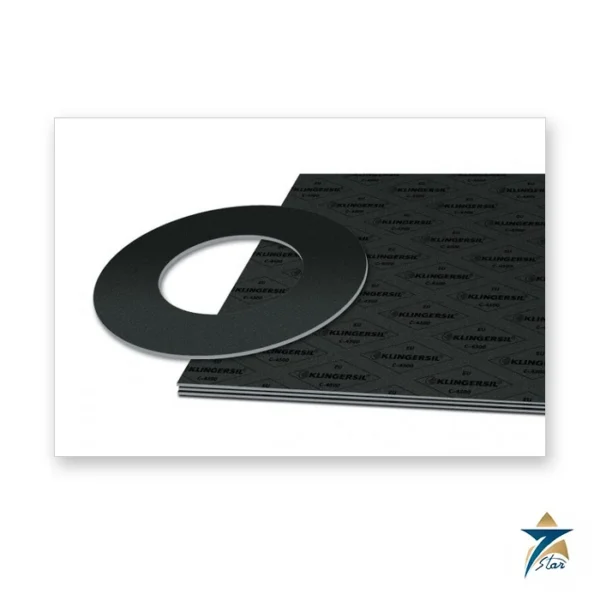
| KLINGERSIL C-4500 |
Carbon fibres, heat-resistant additives, NBR |
Black |
Alkaline media and superheated steam; chemical industry |
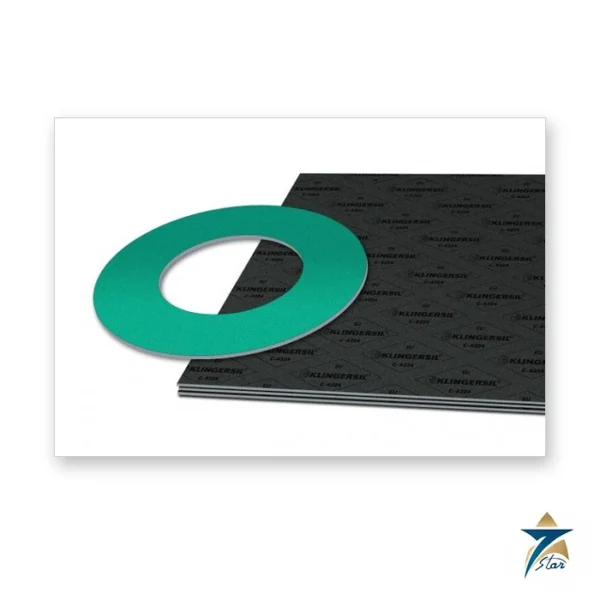
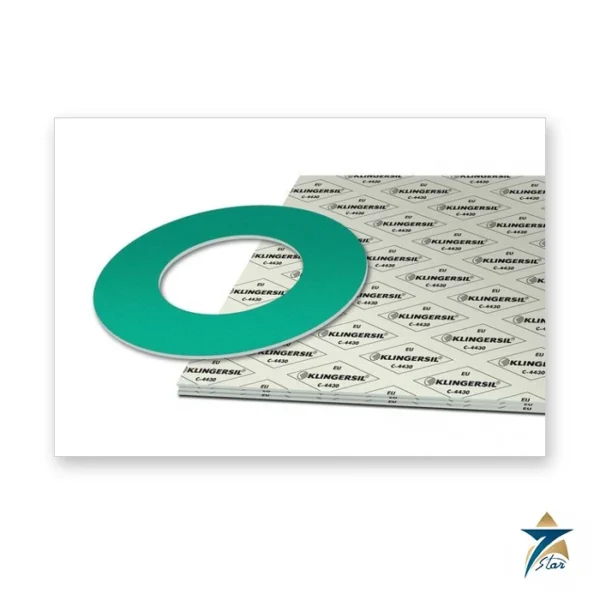
| KLINGERSIL C-4430 |
Synthetic fibres, NBR |
White or green |
Outstanding stress relaxation; hot water and higher-temperature steam |
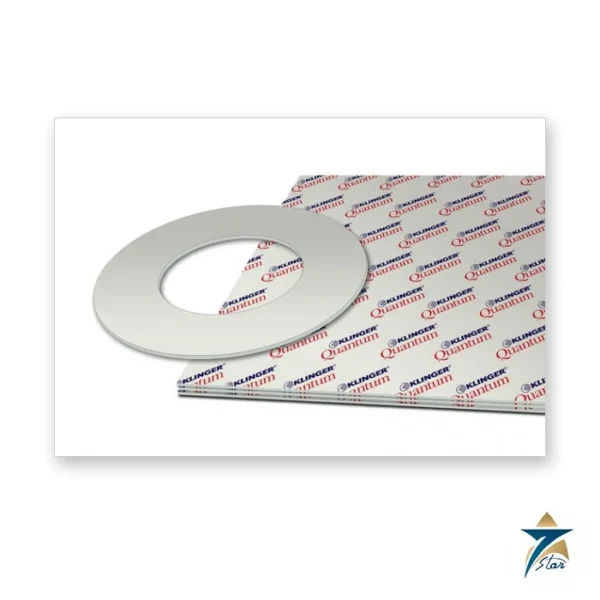
| KLINGER Quantum |
Fibre and filler compound, HNBR |
White |
Flexibility at high temperature; FDA conformity |
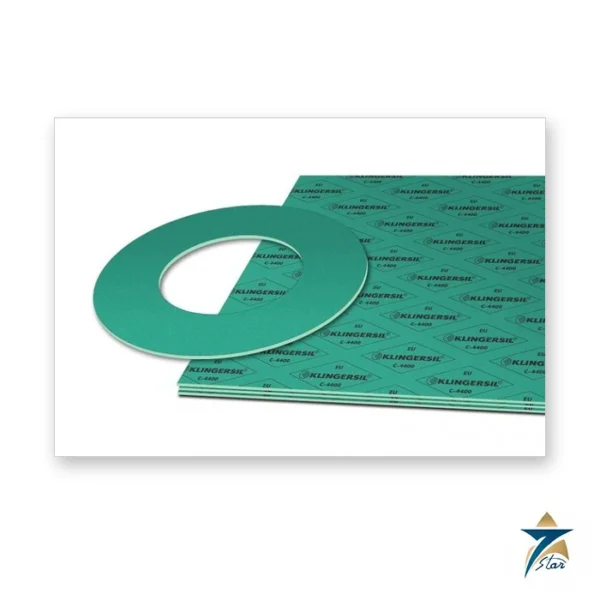
| KLINGERSIL C-4400 |
Aramid fibres, NBR |
Green |
Universal grade; very good resistance to refrigerants |
Documents, ordering details and quotation
Tell us the pressure class and temperature, and whether the flange has a smooth or serrated face. To quote correctly we need the medium and concentration, working and test pressure, temperature, flange standard and facing, bolting, thickness and whether you want a whole sheet or gaskets cut to size. Klinger states that its values are typical and that site conditions vary, so confirm the grade with your own engineering or with Klinger before ordering for a critical duty. See also our wider range of gaskets, seals and pipe fittings.











Reviews
There are no reviews yet.