Small-orifice air release valve for fire water mains
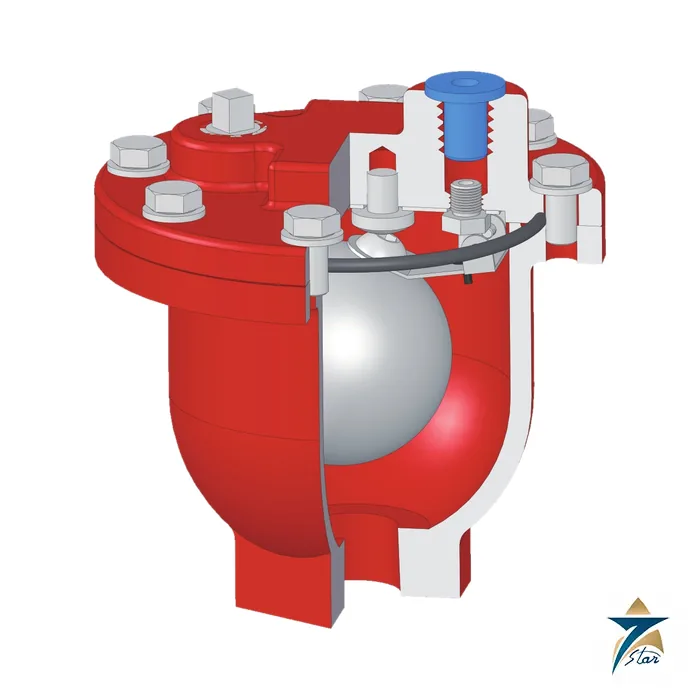
The Weflo Fig. 9701 is an FM approved air release valve for pressurised pipelines. A float inside the ductile iron body is connected to the vent through a linkage, and the small orifice lets trapped air escape while the line is under normal operating pressure. Removing air pockets protects sprinkler and fire hydrant pipework from water hammer, noise and reduced flow, and the valve is typically fitted at high points of fire water mains and risers.
The float and mechanism are stainless steel with EPDM seats, and the body and cover are protected by a fusion bonded coating inside and out that meets AWWA C550.
Technical specifications
Values are from the Weflo Fig. 9701 data sheet.
| Parameter |
Specification |
| Type |
Air release valve, small orifice, float operated |
| Working pressure |
300 psi rated |
| Approval |
FM 1344 approved |
| Sizes (inlet by outlet) |
1/2 in. by 1/2 in.; 3/4 in. by 1/2 in.; 1 in. by 1/2 in. |
| Overall dimensions |
Cover diameter 125 mm (4.92 in.); height 137 mm (5.39 in.) |
| Body and cover |
Ductile iron EN 1563 EN-GJS-450-10 (ASTM A536 Grade 65-45-12) |
| Lever frame, exhaust nozzle, float ball, ball locator, float arm, pivot pin |
Stainless steel EN 10088 X5CrNi18-10 (ASTM A276 Type 304) |
| Exhaust nozzle seat |
Rubber EN 681 EPDM |
| Body and cover gasket |
Rubber EN 681 EPDM |
| Coating |
Fusion bonded, interior and exterior, meets or exceeds AWWA C550 |
Selection and installation notes
This valve releases small amounts of air while the line is pressurised. It does not replace a large-orifice air vent that admits and expels large air volumes when a main is filled or drained, so the designer should decide whether a combination vent is also needed. Install it at the highest points with an isolating valve below it and pipe the outlet to a safe drain where discharge could cause damage. Confirm that 300 psi covers the maximum system pressure including pump shut-off head.
Why fire water mains need an air release valve such as the Fig. 9701
Air gets into pipelines during filling, through pump seals, and as dissolved gas comes out of solution. It collects at high points, where it reduces the flow area, creates noise and can cause pressure surges when it is compressed or moved along the pipe. In a fire protection system, trapped air also delays water delivery to sprinklers and can add corrosion at the air–water interface. The Weflo Fig. 9701 is a small-orifice float valve that lets this air out while the line is under normal pressure, so the pipework stays full of water.
The principle is simple. Air that collects in the body lowers the water level, the float drops, and the linkage opens the small orifice so the air can escape. As water returns, the float rises and closes the orifice again. Because the orifice is small, the valve is well suited to continuous venting of pockets, and the closing action is gentle.
Typical places to install the Fig. 9701
- High points of underground and above-ground fire water mains.
- Tops of risers in buildings with wet sprinkler or standpipe systems.
- Fire pump discharge pipework where air can accumulate after maintenance.
- Long pipelines in plants, airports, ports and industrial estates in Oman and the Gulf.
Choosing the Weflo Fig. 9701 for your system
Three inlet sizes are listed on this page, and the right one depends on the pipe the valve connects to and how much air the system is expected to release. Before you ask for a quotation, confirm these points with the designer or the contractor:
- the highest working pressure of the system, including pump shut-off head;
- the inlet size and thread or connection type needed on the tapping;
- whether the project requires the approval listed for this valve;
- whether a large-orifice or combination air valve is also required to handle filling and draining;
- the discharge arrangement, meaning where the vented air and any water will go.
Installation notes and routine checks
Mount the valve upright at the highest point of the section it serves, with an isolating valve below it so it can be serviced without draining the system. Pipe the outlet to a safe place where a leak would not damage ceilings, equipment or stored goods. After filling the line, open the isolating valve slowly and watch that air is released and the valve then seals tight. A valve that weeps continuously after filling usually has dirt on the seat or a damaged seat and should be inspected.
Include the air release valve in the periodic inspection of the fire system. Look for leaks, check that the isolating valve is in its correct open position, and record any servicing. Because debris and scale in old mains can reach the small orifice, clean the valve whenever the pipework has been flushed or modified.
Air release valve and combination air valve: what each one does
A small-orifice air release valve such as the Fig. 9701 removes the small amounts of air that gather while the main is pressurised. It is not designed to move the large volumes of air that leave a pipe during filling or enter it during draining. Those jobs are handled by a large-orifice or combination air valve, which is why long mains and large risers often carry both types at the same high point. Listing both in the design avoids vacuum on draining and slow, noisy filling, and keeps the small valve free to do its continuous venting work.
Requesting a quotation for the Weflo Fig. 9701
Seven Star LLC prepares quotations for the Weflo Fig. 9701 on request. Send the inlet size, the system pressure, the approvals needed and the quantity through the RFQ form on this page. If you need large-orifice air valves, isolating valves or other fire protection items, list them in the same enquiry.
Documents and quotation
The attached data sheet gives the materials, sizes and the section drawing. Send the inlet size, pressure, approvals needed and quantity for a quotation. More fire protection products are listed under Fire Fighting.


Reviews
There are no reviews yet.