A general-purpose AC contactor family from 6 A to 630 A
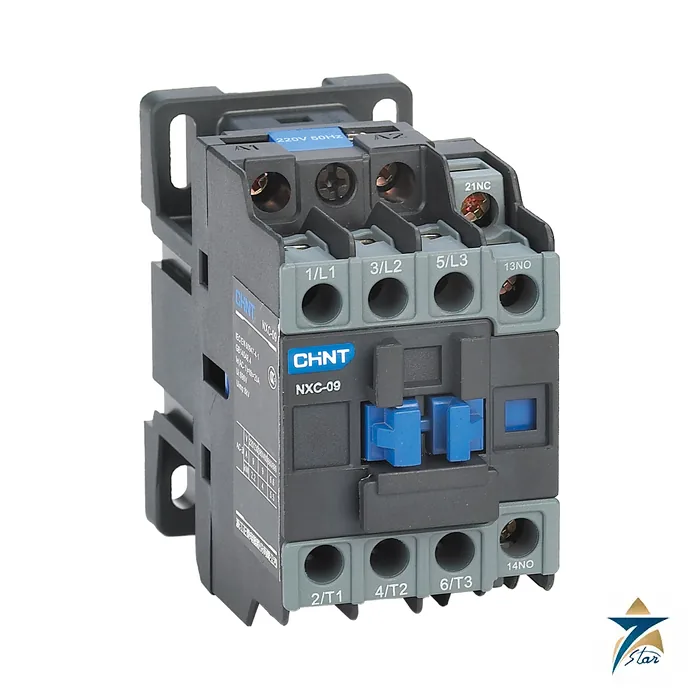
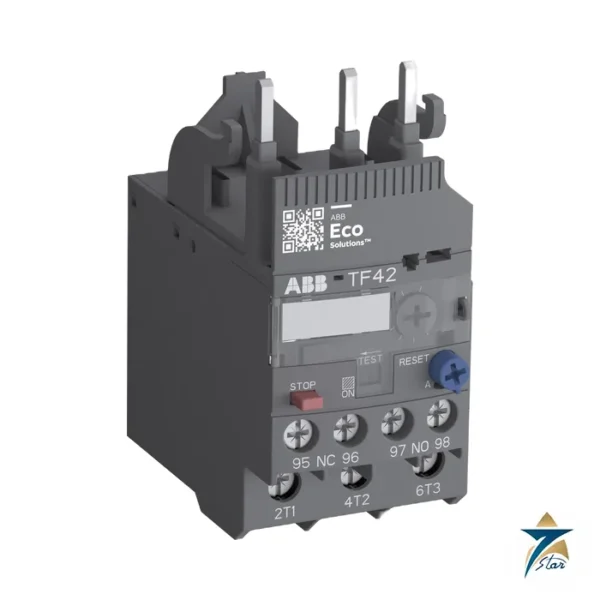
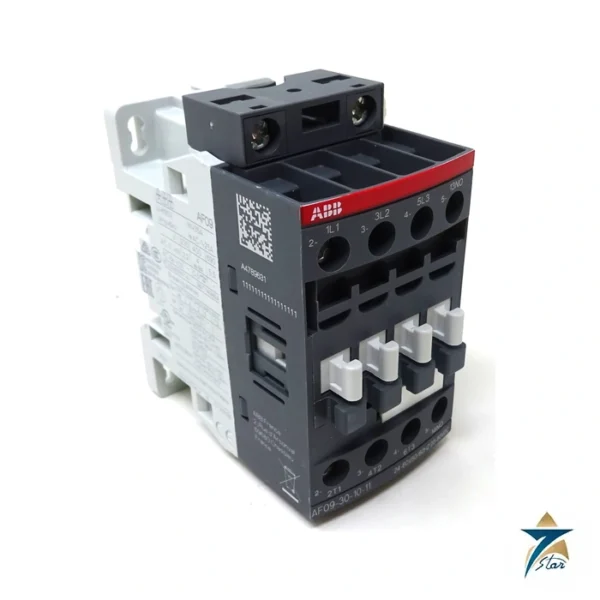
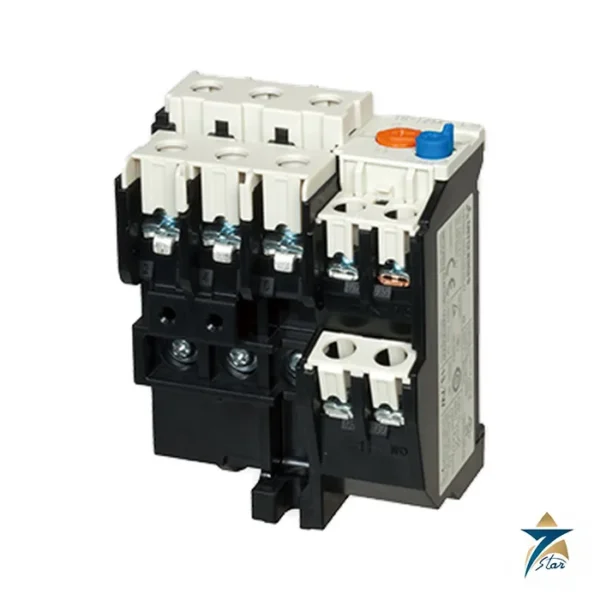
The NXC is CHINT’s general-purpose AC contactor series for frequent starting of AC motors and remote making and breaking of circuits. One family spans 6 A to 630 A at up to 690 V, so panels can standardise on a single range from small pumps to large drives, and it combines with a thermal overload relay to form an electromagnetic starter.
Technical specifications
| Parameter |
Specification |
| Standard |
IEC/EN 60947-1, 60947-4-1 and 60947-5-1; CE |
| Rated operational current Ie |
6 A to 630 A |
| Rated operational voltage Ue |
220 V to 690 V |
| Rated insulation voltage |
690 V (NXC-06M to 100); 1000 V (NXC-120 to 630) |
| Poles |
3P; 4P on selected types (NXC-06M to 16M and NXC-09 to 95 as listed in the catalog) |
| Coil |
AC on NXC-06 to 225; DC on NXC-06M to 16M; AC/DC on NXC-265 to 630 |
| Auxiliary contacts |
One NO and one NC on 6 to 100 A; two NO and two NC on 120 to 630 A |
| Coil voltages (examples) |
24, 48, 110, 220, 230, 240, 380, 400, 415, 440 V and others by size; 50, 60 or 50/60 Hz |
| Mounting |
Rail or screw on NXC-06M to 100; screw on NXC-120 to 630 |
| Protection degree |
IP20 front on NXC-06M to 38; IP10 on NXC-40 to 100; IP00 on NXC-120 to 630 |
| Operating temperature |
-5 to +40 degC normal; limit -35 to +70 degC; altitude to 2000 m |
| Installation class / pollution degree |
III / 3 |
| Selection examples (AC-3 at 380/400 V) |
NXC-06: 6 A; NXC-12: 12 A; NXC-25: 25 A; NXC-65: 65 A; NXC-120: 120 A; NXC-630: 630 A |
Choosing the size and coil
Pick the contactor from the motor current at the line voltage using the selection table in the catalog, then check the utilization category and the starting duty. A reversible type is ordered with the /N suffix. The coil code carries the voltage and frequency, for example NXC-12 230V 50Hz, and the larger sizes use an AC/DC coil, which helps where the control supply varies. For outdoor or dusty panels remember the protection degree is IP20 or lower on the contactor itself, so it belongs in an enclosure.
What to confirm before ordering
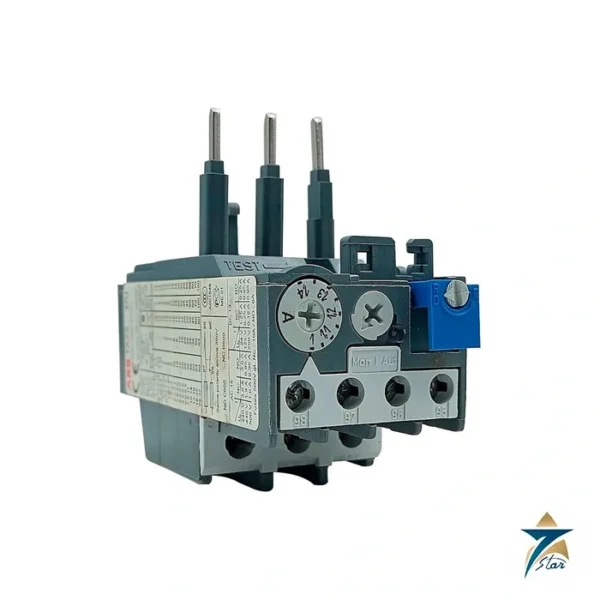
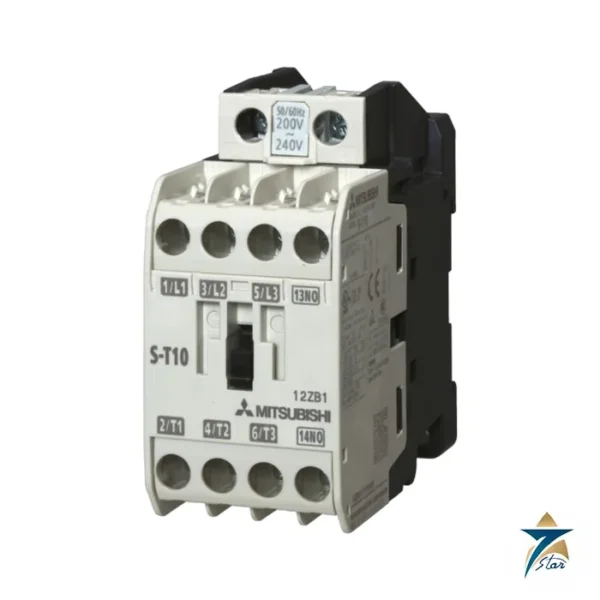
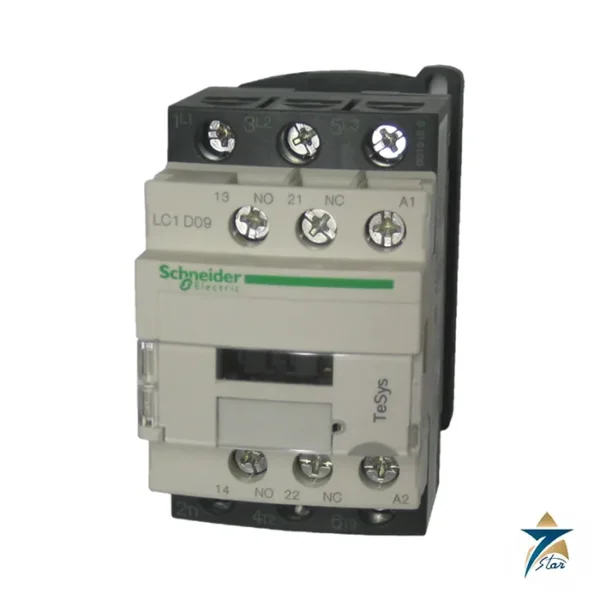
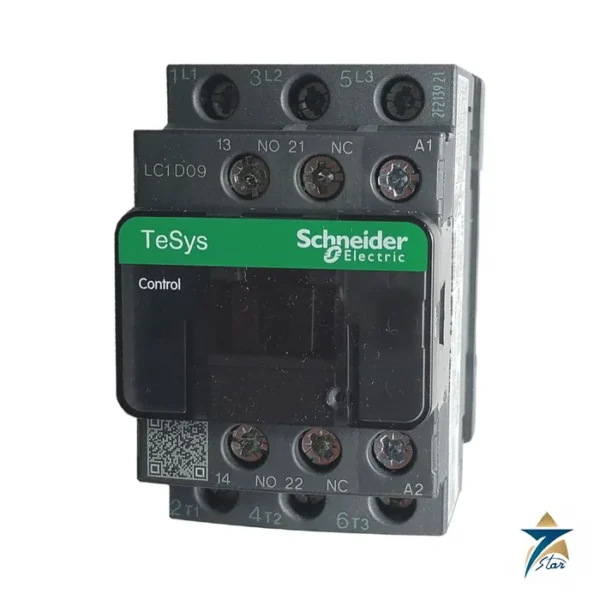
Send the motor power and voltage, the number of poles, the coil voltage and frequency, and whether auxiliary blocks or an overload relay are needed. Alternatives in the same duty include the Schneider TeSys D LC1D and the Mitsubishi S-T10. The full range is in contactors and overload relays.
How the CHINT NXC contactor works
A contactor is an electromagnetic switch. When voltage is applied to the coil, the magnetic field pulls the armature and moves the main contacts to the closed position, so current flows to the load. When the coil is de-energised, a spring opens the contacts. A small control signal can therefore switch a large motor current, and the contactor can be operated from a push button, a PLC output or a relay. The NXC series is designed for frequent starting of AC motors, and it forms an electromagnetic starter when paired with a thermal overload relay.
Auxiliary contacts, one normally open and one normally closed on 6 to 100 A sizes, and two of each on 120 to 630 A, are used for self-holding circuits, interlocks and status signals.
Applications for the NXC contactor
- Direct-on-line starters for pumps, fans, compressors and conveyors.
- Star-delta and reversing starters built from several contactors.
- Remote switching of lighting, heating and other resistive loads.
- Motor control centres and machine panels that standardise on one family from 6 A to 630 A.
Selection checklist for an NXC contactor
- Motor power and voltage, and the AC-3 current from the selection table, for example 12 A for the NXC-12 or 65 A for the NXC-65 at 380/400 V.
- Number of poles: 3P as standard, with 4P on the selected types listed in the catalog.
- Coil type and voltage: AC coils on NXC-06 to 225, DC coils on NXC-06M to 16M, and AC/DC coils on NXC-265 to 630.
- Coil voltage and frequency, written in the order code such as NXC-12 230V 50Hz.
- Reversing type: ordered with the /N suffix.
- Auxiliary contacts and accessories, including overload relays, for the control scheme.
- Mounting method: rail or screw on NXC-06M to 100, and screw on NXC-120 to 630.
- Conditions: operating temperature from -5 to +40 degrees C in normal use, altitude up to 2000 m, installation class III and pollution degree 3.
Installation and maintenance notes
The contactor should be mounted in a panel with the terminals accessible and enough clearance for heat dissipation. The protection degree is IP20 at the front on the smaller sizes, IP10 on NXC-40 to 100 and IP00 on NXC-120 to 630, so the device must be installed inside an enclosure and shielded from dust and water. Torque the power terminals to the catalog values, and check coil voltage before energising. Periodic inspection should cover contact wear, contact discoloration and coil noise or heating, because a buzzing coil often points to dirt on the pole faces or low control voltage.
Requesting a quotation for the CHINT NXC
Send the designation, coil voltage and frequency, the number of poles, any auxiliary blocks or overload relays and the quantity. Seven Star LLC serves industrial customers in Oman and the GCC and replies with a quotation based on the information provided.
Matching the NXC contactor to the control circuit
Confirm that the control supply matches the coil voltage and frequency printed on the contactor, because a wrong coil will overheat or fail to pull in. Where the contactor is switched by a PLC output or a small relay, check that the output can carry the coil inrush current. Add surge suppression across the coil if nearby electronics are sensitive to switching noise.
Documents and quotation
The CHINT NXC catalog and the NXC-06M to 100 manual are attached. Send the designation, coil and quantity through the quotation form for availability from Seven Star LLC.






Reviews
There are no reviews yet.