Overview
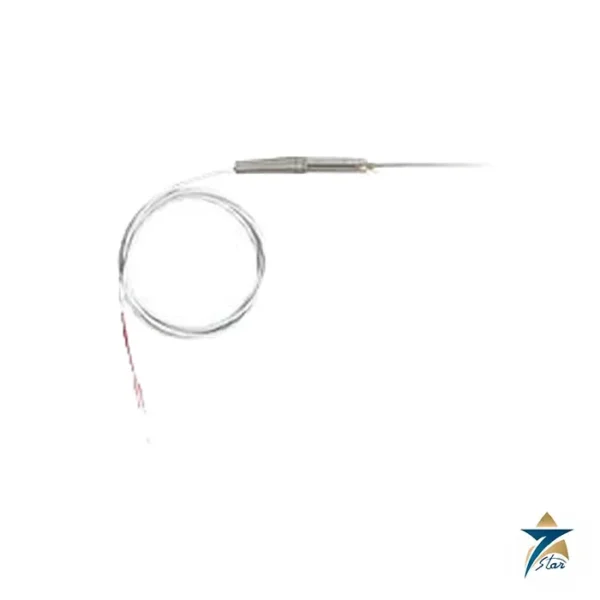
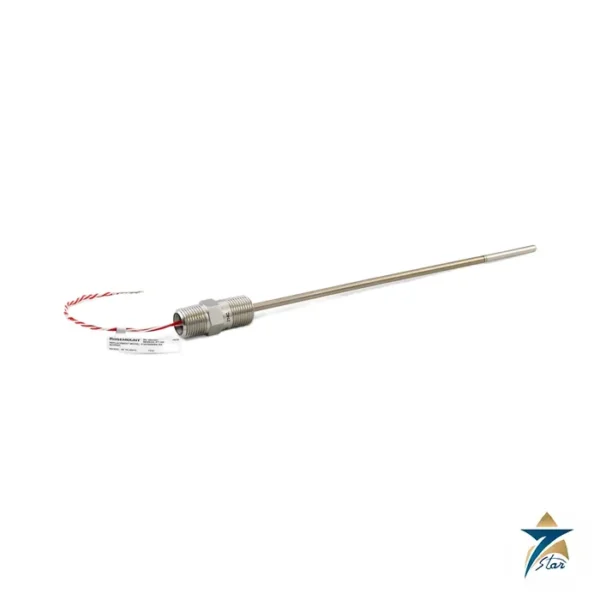
Isotech Semi-Standard PRTs are metal-sheathed platinum resistance thermometers built as robust reference-grade probes for industrial calibration work, bridging the gap between fragile laboratory-standard glass-sheathed PRTs and general-purpose industrial RTDs. Their metal sheath construction makes them significantly less fragile and more affordable than laboratory-standard alternatives while still delivering reference-grade accuracy suitable for calibrating working thermometers.
As part of Isotech’s temperature calibration and metrology instrument range, Semi-Standard PRTs cover a family of models optimized for different temperature spans, from general-purpose mid-range use to high-temperature industrial calibration. Seven Star LLC supplies Isotech Semi-Standard PRTs as a trusted Isotech instrumentation supplier to calibration laboratories and industrial metrology facilities across Oman and the GCC.
Operating Principle
Like all platinum resistance thermometers, Semi-Standard PRTs measure temperature through the precise, repeatable relationship between platinum’s electrical resistance and temperature. Each probe is individually calibrated against a resistance reference of 100Ω ±0.05Ω at 0°C, with typical calibration uncertainty ranging from about 10mK at 0°C to 50mK at 660°C depending on the specific model, giving calibration technicians a known, traceable reference against which to check working-standard and process thermometers.
Engineering Design of Isotech Semi-Standard PRTs
The Semi-Standard PRT family spans models covering −196°C to 670°C in total, with individual models optimized for narrower spans within that range — for example, a general-purpose model covering −100°C to 450°C, and a high-temperature industrial-standard model reaching −80°C to 670°C. Long-term stability is specified at approximately 0.010Ω/year drift, translating to roughly 0.01°C/year when the probe is used and stored correctly, making periodic recalibration intervals predictable for a calibration lab’s quality system.
Key Features
- Metal-sheathed construction, robust versus glass laboratory standards
- Temperature coverage −196°C to 670°C across the model range
- Calibration uncertainty from ~10mK (0°C) to ~50mK (660°C)
- 100Ω ±0.05Ω resistance at 0°C
- Long-term stability ~0.010Ω/year (~0.01°C/year)
- Multiple model variants for different temperature spans
- More affordable and durable than laboratory-grade glass PRTs
Industrial Applications
Isotech Semi-Standard PRTs are used as working reference standards in dry-block calibrators and liquid calibration baths across calibration laboratories in Muscat, Sohar, and Salalah, where they serve as the traceable reference against which process thermocouples, RTDs, and other temperature instruments are checked and adjusted.
Across the GCC’s industrial calibration and metrology sectors, Semi-Standard PRTs support both field calibration work — where a robust metal sheath resists the knocks of transport and on-site use — and laboratory reference duty, giving calibration technicians a durable, traceable temperature standard without the fragility and cost premium of a full laboratory-standard glass PRT.
Technical Specifications
| Parameter |
Specification |
| Temperature Range (family) |
−196°C to 670°C |
| Resistance at 0°C |
100Ω ±0.05Ω |
| Calibration Uncertainty |
~10mK (0°C) to ~50mK (660°C) |
| Long-Term Stability |
~0.010Ω/year |
| Sheath Material |
Metal |
| Typical Use |
Dry-block/liquid bath reference standard |
Request a Quote for Isotech Semi-Standard PRTs – High-Stability Reference Platinum Thermometers
Contact Seven Star LLC for pricing and availability on Isotech Semi-Standard PRTs across Oman and the GCC. Our team can help select the correct temperature-range model for your calibration laboratory’s requirements.
Choosing a Semi-Standard PRT for Your Lab
The right model depends less on the widest range available and more on where the lab actually calibrates. Consider:
- Working temperature span: pick the model whose range comfortably covers your calibration points. A probe that spends its life near its upper limit will drift faster than one working mid-range.
- Immersion depth: the sheath length must suit the depth of your dry-block wells or liquid baths, with enough immersion to remove stem conduction error at the highest temperature.
- Readout compatibility: confirm the connector and that the readout or bridge supports the probe’s calibration coefficients, typically entered as ITS-90 or Callendar–Van Dusen values.
- Calibration certificate: decide which calibration points and which accreditation level your quality system requires, so the certificate supplied with the probe can be used directly as traceability evidence.
Handling and Use
Although metal-sheathed probes tolerate site conditions far better than glass standards, the platinum element inside is still strain-sensitive. Mechanical shock, dropping the probe or bending the sheath will shift its resistance and invalidate the calibration. Good practice includes:
- Transport the probe in its case, and never use it to tap or lever inserts out of a dry block.
- Raise and lower temperature gradually rather than plunging a cold probe into a hot bath or furnace.
- Allow adequate stabilisation time at each point before taking readings, and use a four-wire measurement to eliminate lead resistance.
- Do not exceed the rated maximum temperature for the specific model, even briefly.
Checking Stability Between Calibrations
The simplest control check is a regular measurement at the triple point of water or an ice point. Record the resistance at 0°C each time; a change beyond the lab’s acceptance limit is an early warning that the probe has been stressed and needs recalibration. Tracking these readings over time also provides objective data to justify the recalibration interval during ISO/IEC 17025 audits.
Applications in Oman and the GCC
Semi-Standard PRTs are used as working references in in-house calibration labs at refineries, gas plants, power and desalination stations, and in third-party calibration service companies. They are also carried to site with portable dry-block calibrators to check temperature transmitters on custody transfer metering skids, where traceable temperature measurement feeds directly into volume correction.
Ordering Through Seven Star LLC
Tell us your required temperature range, sheath length, connector and readout, and the calibration points you need. We will match the correct Isotech model and supply genuine probes with their calibration documentation.
Browse the full Isotech range or see more Temperature Instrumentation products supplied by Seven Star LLC in Oman and the GCC.










Reviews
There are no reviews yet.