Guided wave radar built for silos, powders and granules
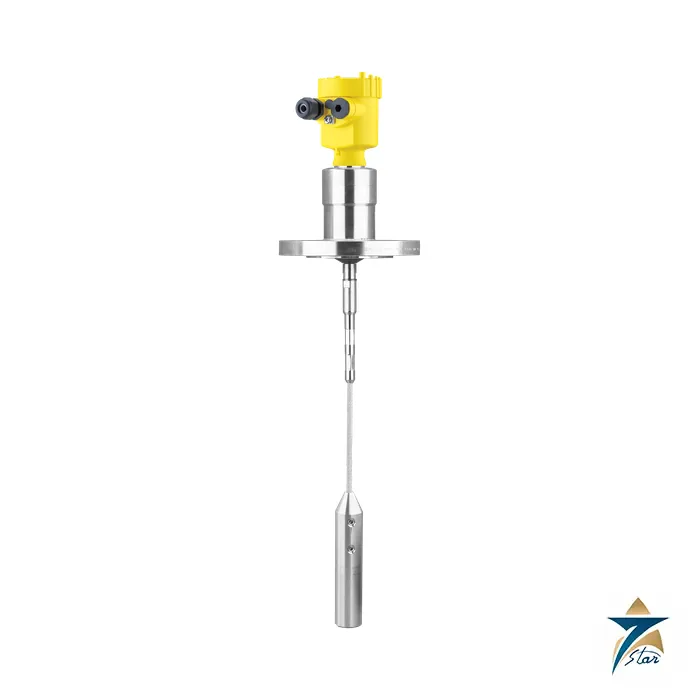
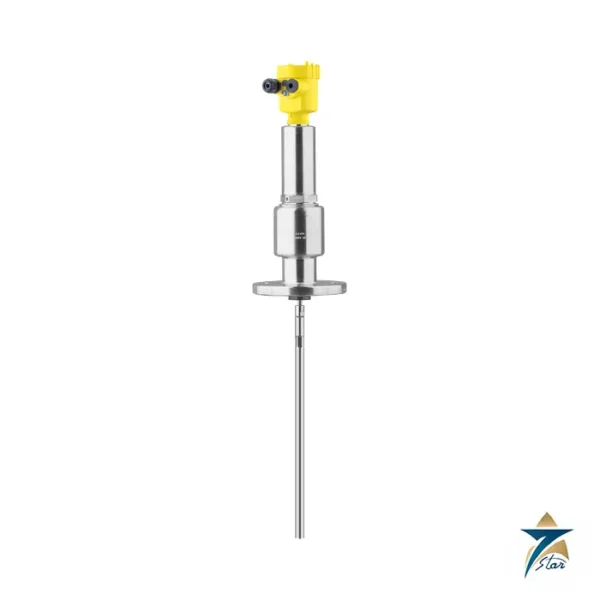
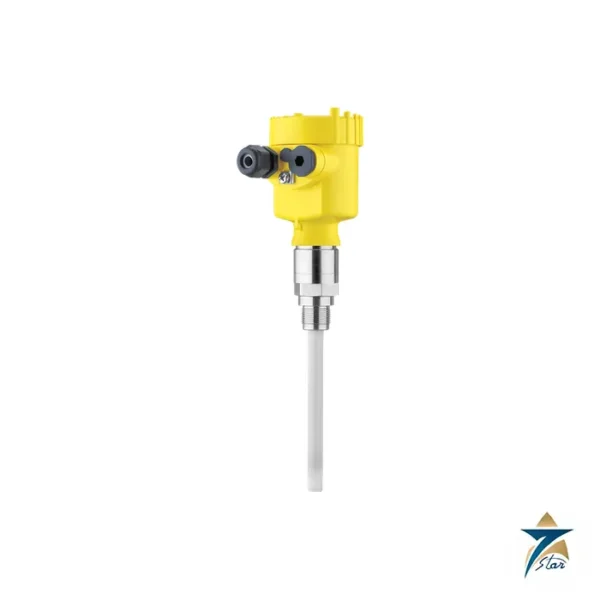
The VEGAFLEX 82 is VEGA’s TDR (guided wave radar) sensor for continuous level measurement of light and heavy bulk solids. High-frequency microwave pulses travel down a cable or rod probe, reflect from the product surface and return, and the transit time gives the level. VEGA says the measurement is independent of dust, condensation, buildup, moisture, noise and the shape of the material cone, and that the probe end tracking function allows measurement of virtually any bulk material. Typical uses in the product information include grain silos, plastic granules, sugar, flour, coffee, cacao, powders and animal feed, and the sensor is stated to meet the requirements of dust-Ex Zone 20 (1/2D).
Technical specifications
| Parameter |
Specification |
| Type |
VEGAFLEX 82, TDR sensor for bulk solids (cable and rod probes) |
| Measuring range, cable probe |
Up to 75 m (246 ft); cable diameters 4, 6 and 11 mm |
| Measuring range, rod probe |
Up to 6 m (19.69 ft); rod diameter 16 mm |
| Measuring accuracy |
± 2 mm |
| Process fitting |
Thread G1½ or 1½ NPT; flanges DN 50 or 2″ and larger |
| Process pressure |
-1…+40 bar (-100…+4000 kPa) |
| Process temperature |
-40…+200 °C (-40…+392 °F) |
| Ambient, storage, transport temperature |
-40…+80 °C (-40…+176 °F) |
| Signal outputs |
4…20 mA/HART two-wire or four-wire, Profibus PA, Foundation Fieldbus, Modbus/Levelmaster |
| Supply, four-wire versions |
9.6…48 V DC / 20…42 V AC (low voltage); 90…253 V AC, 50/60 Hz (mains) |
| Materials |
Wetted parts stainless steel; seal FKM, FFKM or EPDM |
| Housing |
Double-chamber plastic, stainless steel or aluminium, IP66/IP67 and higher |
| Adjustment |
Optional PLICSCOM display module, PACTware/DTM, HART communicator, AMS or PDM |
| Approvals |
ATEX and IEC hazardous-area approvals; ship approvals such as GL, LRS, ABS (as printed) |
Probe selection and silo mounting
Choose a cable probe when the silo is tall or product moves, and a rod probe up to 6 m for compact bins. VEGA’s guidance is to mount the sensor away from the filling stream and agitators so the probe sees no strong lateral forces, and to avoid the probe touching the wall. If a socket is higher than 200 mm or wider than 200 mm, or the distance to the vessel wall or installations is under 300 mm, VEGA recommends a false-echo suppression carried out in PACTware. Where pulling loads in a large silo are a concern, the product information refers to PA-coated cable probes for different loads and lengths up to 75 m.
Electronics, power and signal choices
The sheet used for this page covers the four-wire 4…20 mA/HART variant in low-voltage or mains-voltage supply, but the same family also exists as a two-wire loop, Profibus PA or Foundation Fieldbus sensor. For safety, VEGA says that the product information and operating instructions carry the Ex data, so always read them for a hazardous-area bin, and the sensor needs its own energy-limited supply in intrinsically safe circuits. Factory setting and guided adjustment are described as reducing commissioning time, and shortenable probes simplify standardised stock.
Why guided wave radar suits bulk solids
Bulk solids are harder to measure than liquids. The surface is rarely flat, it forms a cone during filling and a crater during discharge, and the vessel atmosphere can be thick with dust. A guided pulse that follows a probe concentrates the signal along a defined path, so the return from the product surface stays clear even when the free space above the material is full of particles. Because the sensor reads the transit time directly, no calibration with product is needed when the vessel is first filled; the user enters the vessel geometry and probe length.
- One sensor for powders, granules and coarse material, including low-reflectivity products where probe end tracking helps.
- No moving parts in the vessel, unlike electromechanical plumb-bob systems.
- Cable probes up to 75 m for tall silos, rod probes up to 6 m for hoppers and small bins.
- Wide choice of outputs, from 4…20 mA/HART to fieldbus and Modbus, for integration into existing control systems.
Load on the probe and the silo roof
In a bulk solids silo the moving product drags on a cable probe, and the resulting tensile force is transferred to the process fitting and the silo roof. The force rises with silo height, cable length, the friction of the material and the speed of discharge. The structural engineer responsible for the silo should confirm that the roof and nozzle can take the load, and the cable diameter and probe version should be chosen to match. Fixing or tensioning the cable end at the bottom of the silo increases the force considerably, so follow the manufacturer’s instructions before anchoring a probe.
Electrostatic charge
Dry plastic granules and some powders can build up a strong electrostatic charge during pneumatic filling. Grounding of the vessel and the sensor housing is part of a normal installation, and the operating instructions give the requirements for the specific electronics version.
Commissioning and maintenance
- Enter the probe length, the minimum and maximum adjustment points and the medium type during setup with the display module or PACTware.
- Carry out a false-echo suppression with the silo empty or at low level where nozzles, struts or internal fittings are close to the probe.
- Inspect the cable for wear and kinks during scheduled silo shutdowns, especially in abrasive service.
- Keep the housing lid seal clean and the cable glands tight to retain the housing rating.
- Store the configuration file so that a replacement electronics module can be set up quickly.
Applications in Oman and the GCC
Typical regional uses include cement plants measuring clinker, raw meal and finished cement; flour mills and grain storage at port silos; animal feed plants; plastic compounding and packaging plants handling resin pellets; and fertiliser and mineral processing. In sites exposed to strong sun, a sun shade over the housing helps keep the electronics within the stated ambient range of -40…+80 °C, and stainless steel or aluminium housings are often chosen for coastal plants where salt air attacks lighter materials.
What to send with an RFQ
- Product name, bulk density and particle size, and whether the material is abrasive or sticky.
- Silo height, nozzle size and height, and the distance from the nozzle to the wall and to internals.
- Probe type and length, cable diameter, and process connection (thread or flange size).
- Process temperature and pressure, and the seal material required.
- Output signal and supply (two-wire loop or four-wire), housing material and any display module.
- Hazardous-area requirements, for example dust-Ex Zone 20, and any ship approval needed.
Documents and quotation
The official VEGA VEGAFLEX 82 (4…20 mA/HART four-wire, rod and cable probe) specification sheet (42300-EN, version 151204) is attached to this page for download and covers the technical data, dimensions and wiring summarised above. VEGA publishes separate sheets for the two-wire, Profibus PA, Foundation Fieldbus and Modbus variants.
To order, send the required version, process data and quantity and we will quote it. We supply from Muscat as an independent company; further level instrumentation is available on this site. Check approvals, materials and the full order code with the maker before committing to a purchase.












Reviews
There are no reviews yet.