The compact radar with the narrowest beam and 30 m range
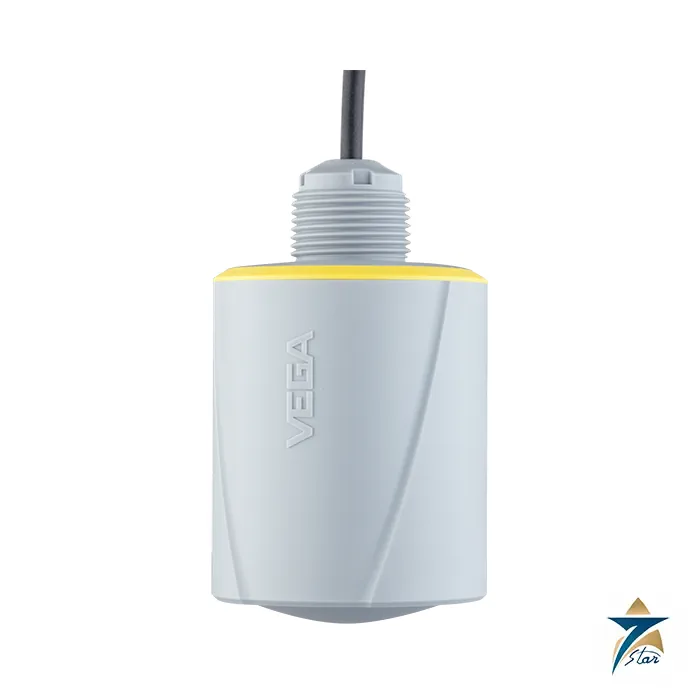
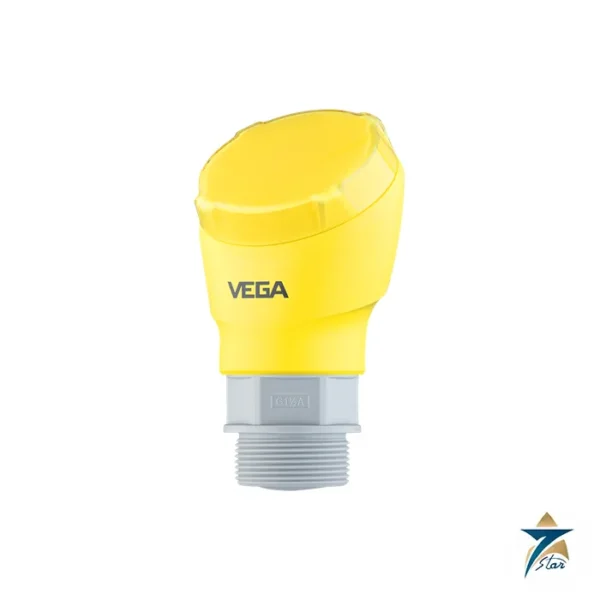
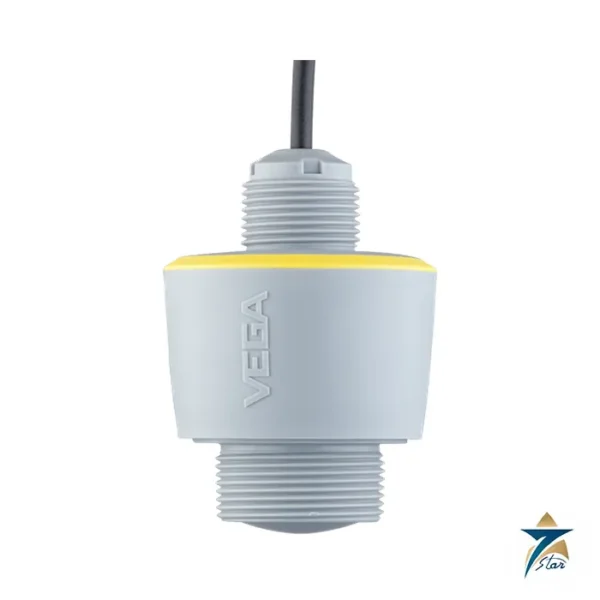
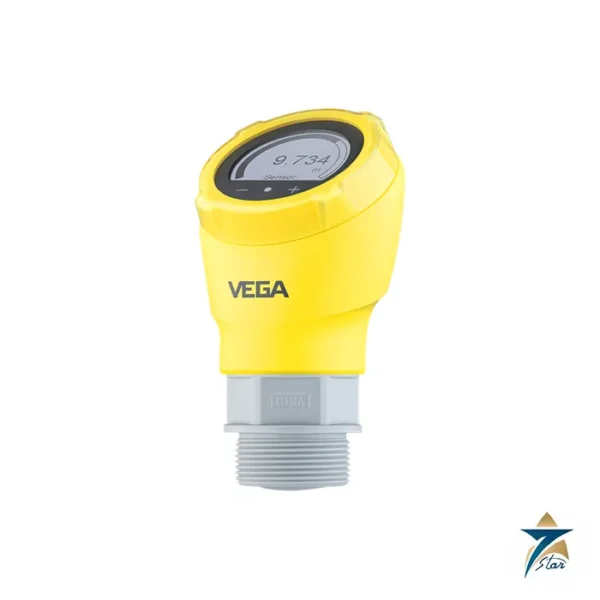
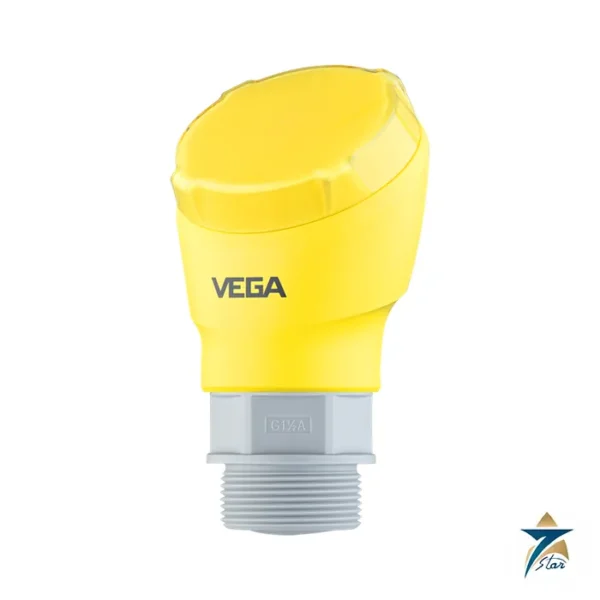
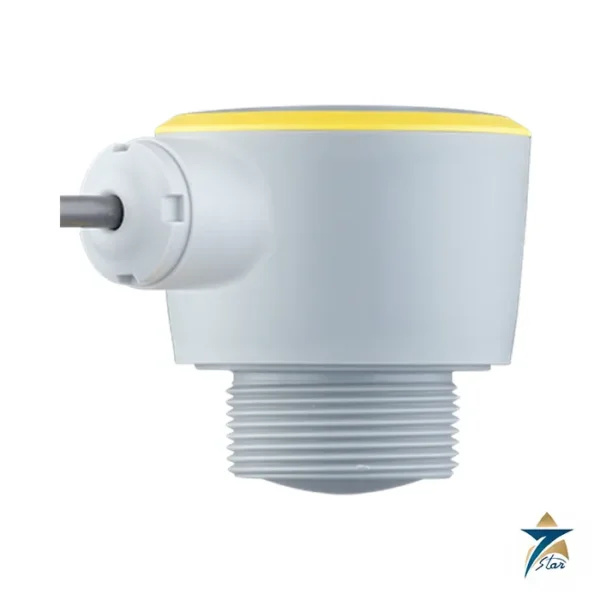
The VEGAPULS C 23 is the long-range, narrow-beam variant of VEGA’s compact C series. Its 4° beam angle and 30 m measuring range let the sensor look past installations, pipes and shaft walls that would disturb a conventional 8° radar, which VEGA highlights as “unaffected by vessel installations due to very good signal focusing”. It is aimed at water treatment, pumping stations, rain overflow basins, flow measurement in narrow channels, level monitoring in rivers and lakes and general industrial duty, and works on both liquids and bulk solids. Wetted parts and housing are PVDF with a PUR-insulated cable and IP66/IP68 (3 bar, 24 h) protection.
Technical specifications
| Parameter |
Specification |
| Type |
VEGAPULS C 23, two-wire 4…20 mA/HART radar sensor |
| Measuring range |
Up to 30 m (98.43 ft) |
| Deviation |
≤ 2 mm |
| Beam angle |
4° |
| Measuring frequency |
W-band (80 GHz technology) |
| Output signal |
4…20 mA/HART; SDI-12 and Modbus/Levelmaster versions |
| Mounting connection |
Thread G1, 1 NPT or R1 |
| Process pressure |
-1…+3 bar (-100…+300 kPa) |
| Process / ambient temperature |
-40…+80 °C (-40…+176 °F) |
| Wetted parts, cable |
PVDF; PUR-insulated cable |
| Protection rating |
IP66/IP68 (3 bar, 24 h) acc. to IEC 60529, Type 4X/6P acc. to UL 50 |
| Operating voltage |
12…35 V DC |
| Bluetooth |
Bluetooth 5.0, typically 25 m (82 ft) |
Why a 4° beam matters
A radar beam illuminates a cone whose diameter grows with distance. Using general geometry, a 4° beam is about 2.1 m wide at 30 m, whereas an 8° beam would be roughly 4.2 m at that distance, so the C 23 touches far fewer shaft walls, ladders and cable trays. VEGA’s data places the C 23 in the same 80 GHz W-band as the other compact sensors, with the same 2 mm deviation, so the benefit is purely focusing and range. It is therefore the model to choose for deep wet wells, tall silos with narrow openings and narrow open channels, where the 20 m C 22 or the 8° C 21 would be compromised.
Mounting and connection
The product information shows mounting threads G1, 1 NPT and R1 for the sensor, and the type overview lists no separate process fitting for the C 23, unlike the C 21 and C 22 which have a G1½ family fitting. Install it at least 200 mm from the wall and aim the beam vertically at the surface; in a conical-bottom vessel a central position lets it measure down to the cone. The sensor is wired as a two-wire loop with a brown (+) and blue (−) cable on 12…35 V DC, shielding earthed on the processing side.
Approvals are listed in VEGA’s product information as available or applied for (ATEX/IEC, c-UL-us, EAC, NEPSI and others); confirm the marking you need before ordering.
Key features at a glance
- Non-contact radar in the 80 GHz W-band with a 4° beam, the most focused sensor in the compact C range.
- Measuring range up to 30 m with a stated deviation of ≤ 2 mm.
- Two-wire 4…20 mA/HART loop powered at 12…35 V DC, with SDI-12 and Modbus/Levelmaster versions for remote telemetry.
- PVDF housing and wetted parts with a PUR-insulated cable, rated IP66/IP68 (3 bar, 24 h) and Type 4X/6P.
- Bluetooth 5.0 for commissioning from a smartphone or tablet at a typical distance of about 25 m.
- Process connection by G1, 1 NPT or R1 thread, or by hanging the sensor on its cable with a mounting bracket.
Selecting the C 23 against other compact radars
The C series shares the same electronics philosophy, so the choice between models is mainly about range and beam. The C 23 earns its place where the target is far away or the opening is narrow: deep wet wells, tall silos with internal ladders, bridge-mounted river gauges and long, narrow flumes where the side walls are close to the measuring cone. Where the distance is short and the vessel is clear, a wider-beam model is usually easier to align and less sensitive to a slightly tilted mounting. Because the C 23 beam is tight, it should be aimed squarely at the surface; on solids with a pronounced cone or a sloping pile, the reflection point should be considered when deciding the mounting position and angle.
The output version should be fixed at order stage. A 4…20 mA/HART unit is the natural fit for a PLC or RTU analog input, while SDI-12 and Modbus suit battery-powered loggers and telemetry outstations common on remote water assets.
Commissioning and maintenance
- Mount the sensor clear of the inlet stream so that falling liquid does not cross the beam.
- Enter the vessel height or the distance to the reference point, then set the 0 % and 100 % levels in the app.
- Use a false-signal suppression scan with the vessel as empty as practical, so fixed structures are learned and ignored.
- Check the cable entry and gland sealing, and route the cable so condensation cannot run into the housing.
- Inspect the antenna face periodically; heavy buildup or bird nesting on outdoor installations can affect the echo.
Use in Oman and GCC water and wastewater networks
Utilities across the region operate many unmanned lift stations, storage tanks, treated effluent reservoirs and stormwater channels that need a level reading with no moving parts. Radar does not depend on air temperature for its measurement the way ultrasonic sensors do, which helps where a sun-heated chamber has a strong temperature gradient between the surface and the sensor. The process and ambient rating of -40…+80 °C covers typical summer conditions, although a sun shade is still good practice to reduce housing temperature. The PVDF materials resist the hydrogen sulphide atmosphere found in sewage wet wells, and the IP68 rating allows the sensor to survive occasional flooding of a chamber during heavy rain events.
What to include in your RFQ
- Measuring range needed and whether the medium is liquid or bulk solid.
- Output version: 4…20 mA/HART, SDI-12 or Modbus/Levelmaster.
- Process connection thread (G1, 1 NPT or R1) or cable-suspended mounting.
- Required cable length and any mounting bracket or flange adapter.
- Site details such as wet well, open channel or silo, and any hazardous-area requirement.
Documents and quotation
The official VEGA VEGAPULS C 23 specification sheet (58359-EN, version 241118) is attached to this page for download and covers the technical data, dimensions and wiring summarised above.
RFQs are welcome with the tag number, medium, process conditions and electrical requirements. Seven Star LLC is an independent supplier based in Muscat and will answer with a quotation; compare alternatives in our level instrumentation section. Ordering details such as configuration, approvals and connection should be confirmed with the manufacturer before purchase.











Reviews
There are no reviews yet.