Overview
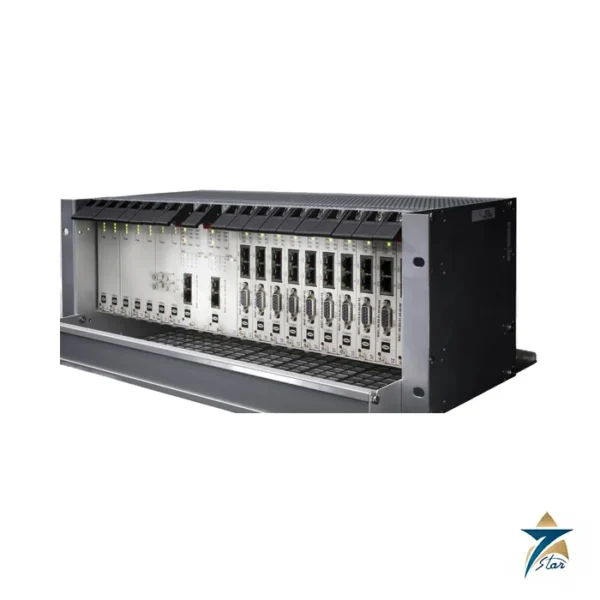
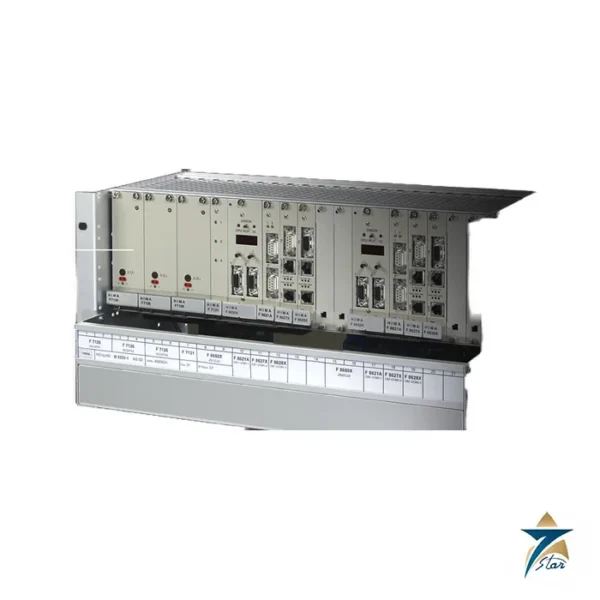
The HIMA H41Q B4237-2 assembly kit is the H41q-HRS fail-safe control system, the version of the H41q family with redundant bus and redundant central modules. The system is housed in a K 1409 system subrack of 5 HU, 19 inches, and is designed for safety-related automation such as emergency shutdown (ESD). Per the official HIMA system datasheet, the H41q-HRS is TÜV certified and applicable up to SIL 3 according to IEC 61508.
The H41q-HRS / B 4237-2 assembly kit comprises two F 8652X central modules, two F 7130A power supply modules converting 24 V to 5 V, four fan modules, and the associated decoupling, fusing and monitoring modules. Optional coprocessor modules F 8621A and communication modules (F 8627X Ethernet or F 8628X Profibus-DP) can be added, as documented in the official system datasheet.
Engineering & Design
The H41q-HRS achieves its safety integrity through redundancy: two clock-synchronised microprocessors in each central module execute the program with complementary data, and a testable hardware comparer checks the external outputs. The redundant bus architecture of the B 4237-2 version means each of the two central modules serves its own group of I/O slots, with 7 I/O modules assigned to central module 1 (slots 1 to 7) and 6 I/O modules assigned to central module 2 (slots 8 to 13).
Redundant power is provided by two F 7130A 24 V DC / 5 V DC power supply modules, so the system continues to operate if one supply fails. HIMA notes that in a redundant structure a safety-related module that develops a fault is automatically switched off while its redundant partner continues operation, which is what raises availability without relaxing the safety requirement. Fan modules in the subrack maintain forced cooling, and the rear buffer batteries support the battery-buffered RAMs of modules such as the coprocessor.
Central Module Architecture and System Data
HIMA classifies the F 8652X fitted to the HIMA H41q-HRS as a 1oo2D central module: the safety-related processing is carried out by a pair of processors whose results are compared, and a fault detected in either the central device, the I/O bus or a safety-related I/O module switches off the watchdog signal of the associated central module and therefore its outputs. Each central module is built on an INTEL 386 EX processor clocked at 25 MHz, with Flash-EPROM holding the operating system and function blocks, a second Flash-EPROM for the user program, and CMOS-RAM for variables backed by a lithium battery with its own measuring circuit for battery monitoring. User memory for logic, parameters and variables is 320 kbyte, and a four-digit alphanumeric display with two LEDs on the module front provides the first level of diagnostics.
The figure that matters most for emergency shutdown response budgeting is the basic cycle time: HIMA specifies 5 ms for single channel systems and 27 ms for redundant systems, so the HIMA H41q-HRS redundant architecture should be budgeted at the 27 ms figure when the total ESD loop time is calculated from sensor to final element. Each central module carries two RS 485 interfaces operating from 300 bps to 57,600 bps. Where communication modules are fitted, Fast Ethernet is provided to IEEE 802.3 100BaseT on RJ 45 at up to 100 Mbit/s, and Profibus-DP is provided as a slave coupling over RS 485 at up to 12 Mbit/s; with redundant central modules the H41q supports up to four such interfaces.
Key Features
- HIMA H41Q B4237-2: H41q-HRS fail-safe system with redundant bus and redundant central modules
- TÜV certified, applicable up to SIL 3 per IEC 61508
- K 1409 system subrack, 5 HU, 19 inches
- 2 × F 8652X central modules (CU1, CU2)
- 2 × F 7130A power supply modules, 24 V / 5 V DC
- 4 fan modules with fan run and fuse monitoring
- 13 I/O slots: 7 to CU1 and 6 to CU2 in the HIMA H41Q B4237-2
- Optional F 8621A coprocessor and F 8627X / F 8628X communication modules
- F 8652X central modules use a 1oo2D architecture on an INTEL 386 EX processor at 25 MHz
- Basic cycle time 27 ms for redundant systems (5 ms single channel)
- 320 kbyte user memory, battery-backed CMOS-RAM with battery monitoring
- Ambient 0 to +60 °C per IEC 61131-2; 24 V DC supply at −15 % to +20 %
Environmental and Electrical Data
The system operates from 24 V DC at −15 % to +20 % with residual ripple of 15 % or less, distributing 24 V DC to the peripherals and 5 V DC to the microprocessor system. Ambient operating conditions are 0 to +60 °C in accordance with IEC 61131-2 at pollution degree II to DIN VDE 0160, with storage from −40 to +85 °C without batteries or −40 to +75 °C for central modules and the central subrack with battery fitted. Signal definitions follow IEC/EN 61131-2: an input reads a 0-signal from −3 to +5 V or open and a 1-signal from +13 to +33 V with a typical switching point near 9 V, while outputs deliver 0 to +2 V and +16 to +30 V respectively.
Mechanically the subrack is 482.6 mm 19-inch technology at 5 HU, where one height unit is 44.45 mm and one spacing unit is 5.08 mm, and it accepts a maximum of 13 I/O modules of 4 SU width at 3 HU height. External signal cabling terminates at the front plate of each I/O module through cable plugs with LED indication, using fire-retardant wire. Buffer batteries give 1,000 days of retention at 25 °C ambient and 200 days at 60 °C with the CPU out of service, and HIMA recommends replacing them after six years at the latest, or within three months of a BATI indication; the coprocessor module in an H41q is buffered from the batteries on the backplane. All modules are CE marked and meet the electromagnetic compatibility requirements of the applicable European EMC directive.
Applications
- Emergency shutdown (ESD) systems in oil, gas and petrochemical plants
- Fire and gas protection logic
- Burner management and process safety applications
- HIMA H41Q B4237-2 fail-safe automation up to SIL 3 per IEC 61508
Specifications
| System |
H41q-HRS (redundant bus, redundant central modules) |
| Assembly kit |
B 4237-2 |
| Subrack |
K 1409, 5 HU, 19 inches |
| Central modules |
2 × F 8652X (CU1, CU2) |
| Power supply |
2 × F 7130A, 24 V / 5 V DC |
| Fan modules |
4 (with fan run and fuse monitoring) |
| I/O slots |
7 to CU1 (slots 1-7), 6 to CU2 (slots 8-13) |
| Safety level |
TÜV certified up to SIL 3 (IEC 61508) |
| Central module architecture |
1oo2D; INTEL 386 EX at 25 MHz |
| User memory |
320 kbyte (logic, parameters, variables) |
| Basic cycle time |
27 ms (redundant); 5 ms (single channel) |
| Supply voltage |
24 V DC, −15 % to +20 %, ripple ≤ 15 % |
| Internal voltages |
24 V DC peripherals; 5 V DC microprocessor system |
| Ambient temperature |
0 to +60 °C per IEC 61131-2, pollution degree II (DIN VDE 0160) |
| Storage temperature |
−40 to +85 °C without batteries; −40 to +75 °C with battery |
| Serial interfaces |
2 x RS 485 per central module, 300 to 57,600 bps |
| Ethernet / Profibus-DP |
100BaseT RJ 45 up to 100 Mbit/s / DP slave up to 12 Mbit/s |
| Max. I/O modules |
13 modules of 4 SU width, 3 HU |
| Signal levels |
Per IEC/EN 61131-2 (input 1-signal +13 to +33 V) |
| Optional modules |
F 8621A coprocessor, F 8627X Ethernet, F 8628X Profibus-DP |
Compatibility & Integration
The HIMA H41Q B4237-2 assembly kit is the complete H41q-HRS system in a 19 inch subrack, designed to be mounted in a standard control cabinet. The redundant central modules and power supplies allow the system to be maintained without shutting down the safety function, which is the operating principle of HIMA fail-safe systems in ESD duty.
Configuration and programming are carried out with HIMA engineering tools, and the system communicates with the process control system via redundant connections, typically using communication modules such as the F 8627X or F 8628X.
Ordering Information
To order the HIMA H41Q B4237-2 fail-safe control system from Seven Star LLC, quote the assembly kit number B 4237-2 together with the optional modules you require. We confirm availability, configuration and delivery to your site in Oman or anywhere in the GCC.
Why Seven Star LLC
Seven Star LLC supplies fail-safe control system components and ESD spares to industrial customers across Oman and the wider GCC region. Every HIMA H41Q B4237-2 control system we supply is verified against your project configuration before dispatch, and our team confirms the assembly kit matches your ESD requirements before you order.
FAQ
What is the HIMA B 4237-2?
The HIMA H41Q B4237-2 assembly kit is the H41q-HRS fail-safe control system: a 5 HU 19 inch subrack system with redundant bus, redundant central modules and redundant power supplies.
What safety level is the H41q-HRS certified to?
The H41q-HRS is TÜV certified and applicable up to SIL 3 according to IEC 61508, per the official HIMA system datasheet.
What does the B 4237-2 assembly kit include?
It includes the K 1409 subrack, two F 8652X central modules, two F 7130A power supplies, four fan modules and the associated monitoring and decoupling modules.
What is the difference between B 4237-1 and B 4237-2?
B 4237-1 is the H41q-HS single channel bus version, while B 4237-2 is the H41q-HRS redundant bus version with redundant central modules.
What is the H41q-HRS used for?
It is used for safety-related automation such as emergency shutdown (ESD), fire and gas protection and process safety applications up to SIL 3.
Related Products













Reviews
There are no reviews yet.