Welded vessels for the biggest oil flows in a plant
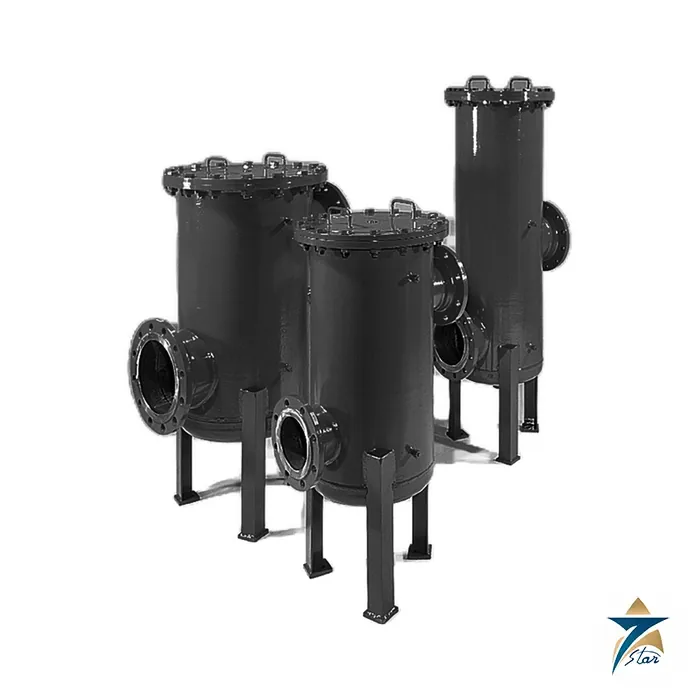
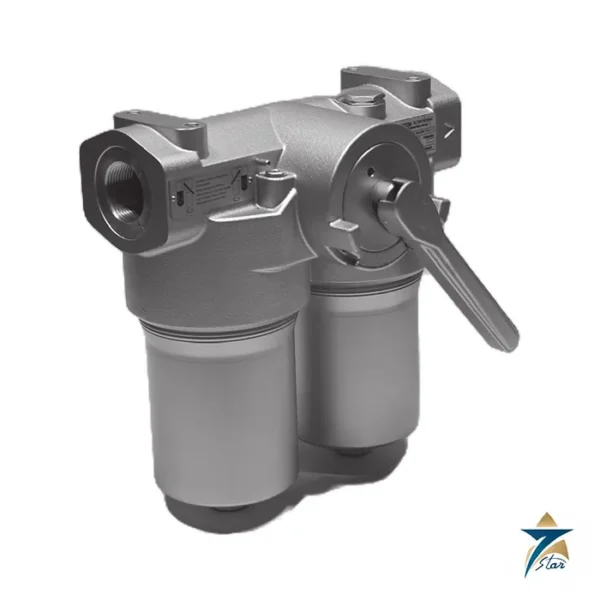
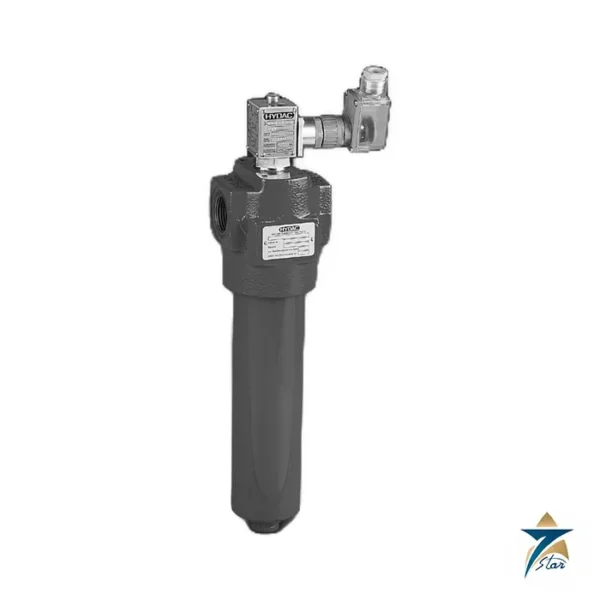
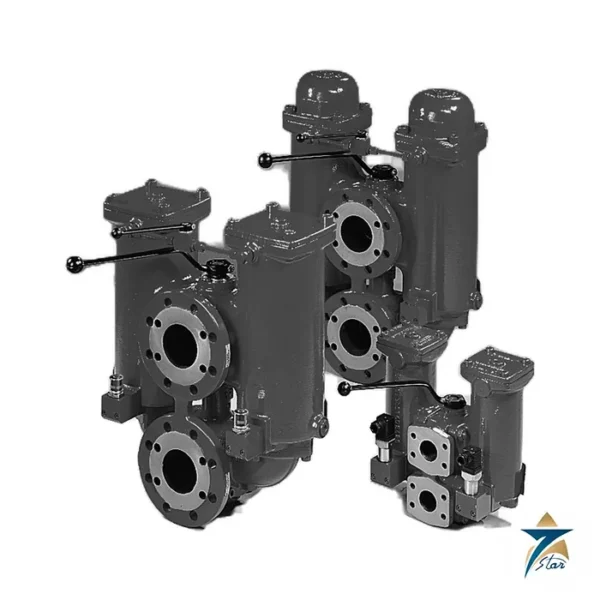
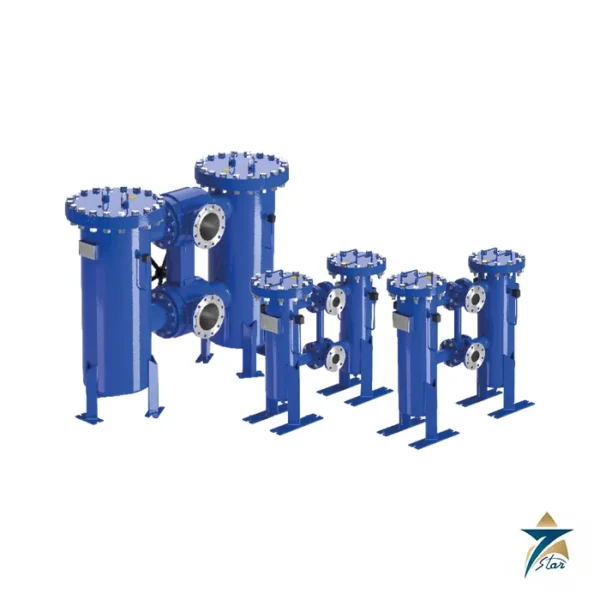
The Hydac RFL is a welded steel inline filter vessel for flows from 1300 up to 15,000 l/min at a nominal pressure of 16 bar. It is the filter you find on large lube oil circuits, turbine oil systems and big circulation loops, where one cast housing would be far too small.
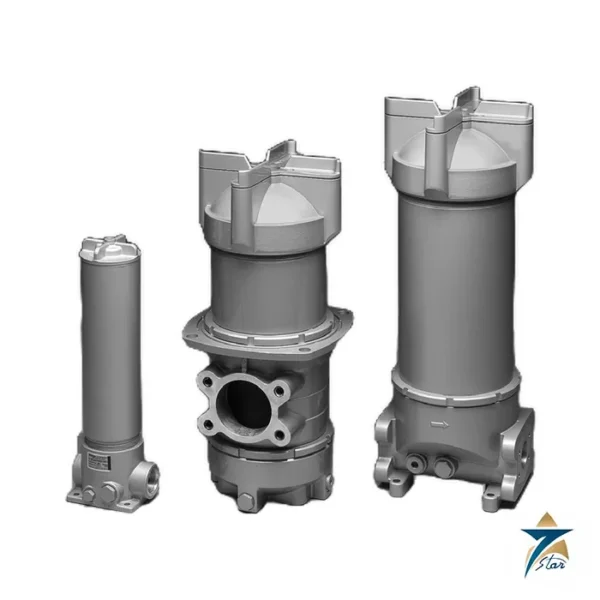
The two-piece housing has a bolt-on cover plate and stands on its own legs. Inlet and outlet sit at different heights on opposite sides, and the housing carries connections for venting and draining and a port for a clogging indicator. Versions with the final size digit 3 are made of stainless steel 1.4571.
Technical specifications
| Parameter |
Specification |
| Series |
RFL, sizes 1300 to 15000 (welded version) |
| Maximum flow |
Up to 15,000 l/min |
| Nominal pressure |
16 bar |
| Temperature range |
-10 °C to +100 °C |
| Housing and cover plate |
Welded steel (sizes 1300 to 15020); stainless steel 1.4571 (sizes 1303 to 15023) |
| Clogging indicator |
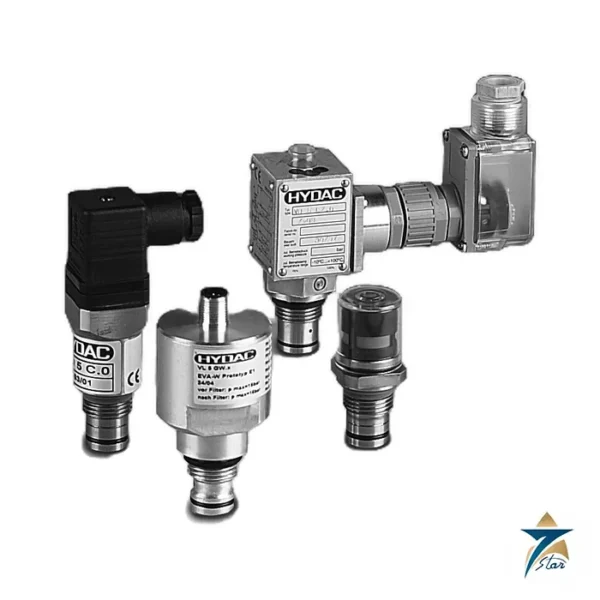
VM, differential pressure up to 210 bar; setting 2 bar |
| Bypass cracking pressure |
3 bar (others on request); version without bypass available |
| Elements per size |
RFL 130x: 1 x 1300 R; 132x: 1 x 2600 R; 250x: 3 x 0850 R; 252x: 3 x 1700 R; 400x: 5 x 0850 R; 402x: 5 x 1700 R; 520x: 4 x 1300 R; 522x: 4 x 2600 R; 650x: 5 x 1300 R; 652x: 5 x 2600 R; 780x: 6 x 1300 R; 782x: 6 x 2600 R; 1500x: 10 x 1300 R; 1502x: 10 x 2600 R |
| Element media |
Optimicron, Optimicron Power, paper, wire mesh, stainless steel fibre, Betamicron/Aquamicron, Aquamicron |
| Flanges |
DIN DN 40, 50, 65, 80, 100, 125, 150, 200, 250, 300 by size |
| Seals |
NBR (FPM optional) |
| Standard equipment |
Stand, bypass valve, vent and drain connections, indicator connection, inlet and outlet at different heights on opposite sides |
| Certificates |
Manufacturer’s test certificates O and M (DIN 55350 part 18); test certificates 3.1 (DIN EN 10204) |
Order code and equipment options
The example in the datasheet is RFL ON 1300 C K 10 D 1 .X /-L24. The sequence is the type, the element material, the size (the last digit gives the material), the pressure letter C (16 bar), the flange letter (K = DN 40 up to Y = DN 300), the micron rating, the indicator letter and the type code. Supplementary details include a special bypass setting (B1 for 1 bar), a cover plate lifting device (DH), no bypass (KB), an O-ring groove on the DIN flange to the Rexroth standard AB 22-04 (OR), sealing strip E on the flange (RE), FPM seals and indicator lamps.
Special equipment listed in the datasheet includes drain and vent ports with ball valves or other shut-off valves, inlet and outlet one above the other, counter flanges for all sizes, venting lines with sight gauges and the cover plate lifting device.
Materials, stainless steel and mounting
Sizes ending in 3 use stainless steel for separation technology with low-viscosity, high-viscosity and aggressive fluids and for gaseous media; the datasheet notes that these filters are available from the manufacturer’s Process Technology division. Standard steel versions cover hydraulic oils H to HLPD, lubrication oils, compressor oils, biodegradable HETG, HEES and HEPG, and fire-resistant HFA to HFD.
The filters must be mounted flexibly and not fixed rigidly to the floor or used as a pipe support. The housing must be earthed and the power to any electrical indicator switched off before its connector is removed. Send the flow, fluid, flange rating and the micron class when you request a quotation.
Key features of the RFL welded design
- Very high flow in one housing – from 1300 up to 15,000 l/min, covering the full-flow filtration of large lube and circulation systems.
- Multi-element construction – larger sizes hold 3, 4, 5, 6 or 10 elements in parallel, so the dirt-holding capacity grows with the flow.
- Bolt-on cover plate – gives full access to the elements; the optional DH lifting device helps with the heavy cover on large sizes.
- Integrated bypass valve – protects the elements from collapse at high differential pressure, with a no-bypass version for systems where unfiltered oil must never pass.
- Visual or electrical clogging indicator – signals when the elements need changing, before the bypass opens.
- Wide choice of media – from glass-fibre Optimicron for fine cleanliness to wire mesh and stainless steel fibre for coarse or special duties.
Selecting the size and filtration rating
Size selection for a return or circulation filter is based on the flow, the oil viscosity at operating temperature and the clean-element pressure drop, which should be kept well below the bypass and indicator settings. Hydac publishes calculation data and pressure drop curves in the datasheet; for a reliable design, give the flow, oil type and viscosity grade, and the lowest operating temperature at start-up, because cold oil gives the highest pressure drop.
The micron rating should follow the target cleanliness class of the most sensitive component in the system, for example bearings, servo valves or turbine control oil. Finer media give cleaner oil but a higher pressure drop, so the housing size may need to increase when a finer element is chosen.
Typical applications
- Steam and gas turbine lube oil systems in power and desalination plants.
- Lubrication systems for large compressors, gearboxes and rolling mills.
- Central hydraulic and circulation systems in steel, aluminium and paper plants.
- Process separation duties with stainless steel versions, supplied through the manufacturer’s Process Technology division.
Installation and maintenance in GCC plants
Power, water, aluminium and petrochemical plants across Oman and the GCC run large oil systems in high ambient temperatures. Hot oil lowers viscosity and pressure drop, but it also accelerates oil ageing, so filtration and regular oil analysis go together. Practical recommendations:
- Allow headroom above the housing to lift the cover plate and withdraw the elements.
- Install the filter on its stand with flexible pipe connections, as the datasheet requires, and earth the housing.
- Fit ball valves on the vent and drain ports so that the housing can be emptied cleanly before element change.
- Change elements when the clogging indicator responds at operating temperature, not during a cold start.
- Keep spare elements of the correct media and micron rating in stock, sealed in their packaging and protected from dust and humidity.
- For single-housing installations, plan element changes during a shutdown, or consider a duplex arrangement where continuous operation is required.
What to include in your RFQ
- Full order code if known, or flow, fluid, viscosity and operating temperature.
- Required micron rating and element media.
- Flange size, bypass setting and indicator type.
- Housing material: steel or stainless steel 1.4571.
- Required certificates, for example 3.1 to EN 10204.
- Number of spare element sets.
Documents and quotation
The datasheet (E 7.104.15/11.16) is attached. Related: filter housings and the Hydac RFM return line filter.

Reviews
There are no reviews yet.