Overview
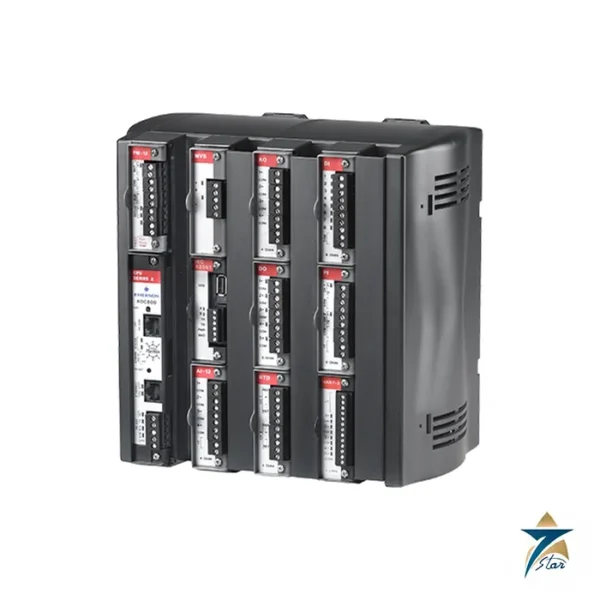
The OMNI 4000/7000 Process I/O modules are the plug-in combination (combo) cards that bring field measurement signals into OMNI 4000 and OMNI 7000 flow computers. Every flow measurement input, whether a transmitter current loop, an RTD or a meter pulse train, is first received at a back panel terminal block and then passes into one of these modules, which conditions and digitizes it for the CPU. OMNI offers four combo module types, A, B, E and E/D, plus HART modules designated HT and HM, so that one standard chassis can be fitted out for very different metering duties.
Seven Star LLC supplies OMNI 4000/7000 Process I/O modules for new flow computers, for station expansions and as replacement spares for operators in the Sultanate of Oman and across the GCC, with engineering support in Muscat. Because the manufacturer temperature trims and quality tests every I/O module before shipment, keeping the correct spare module types on site is a simple way to shorten downtime on a custody transfer skid.
Working Principle
Each OMNI 4000/7000 Process I/O combo module combines several input channels and analog outputs on one card. Inputs one and two of the A, B, E and E/D types accept 4–20 mA, 1–5 V or four-wire 100 Ω RTD signals, typically used for line pressure and temperature. The remaining channels differ by type: the A module takes flow pulses and provides two 4–20 mA outputs, the B module takes a flow pulse plus a densitometer frequency input with one output, the E/D module adds a frequency density input with two outputs, and the E module takes dual flow pulses with two outputs. Analog inputs are read with 14-bit resolution and an accuracy of ±0.025% of reading ±2 counts between −10 and +55 °C, and every analog input and output is isolated from the computer logic supply.
Within the OMNI 4000/7000 Process I/O range, the E module is the one used where API pulse security and small volume provers are involved. It supports Level A pulse fidelity, in which the A and B channels from a dual-pickup meter are continuously compared for frequency and sequence, so that complete failure of either channel does not affect totalizing and simultaneous noise pulses are rejected with better than 90% certainty. It also supports double chronometry proving, which allows accurate proving against compact provers whose displaced volume is too small for a whole number of meter pulses. As general engineering guidance, the OMNI 4000/7000 Process I/O mix for a station is chosen from the meter type, the need for densitometers and the proving method.
Engineering Design of the OMNI 4000/7000 Process I/O Modules
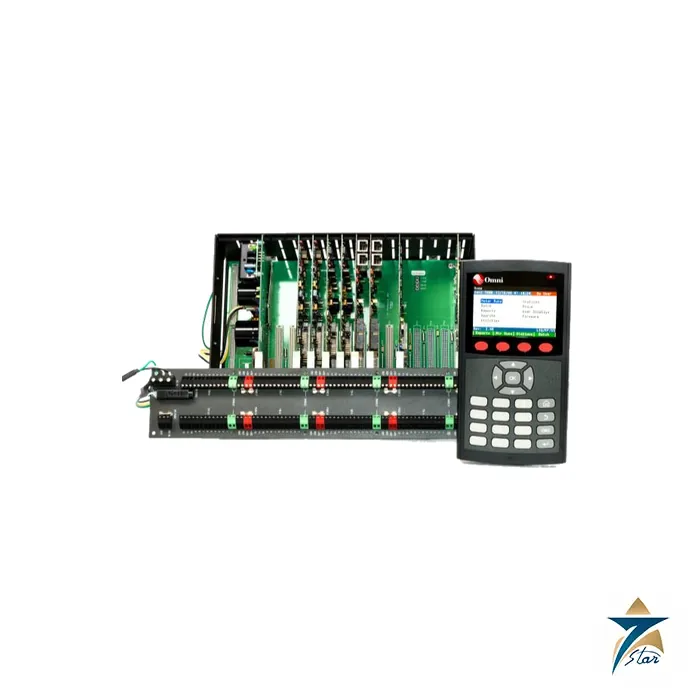
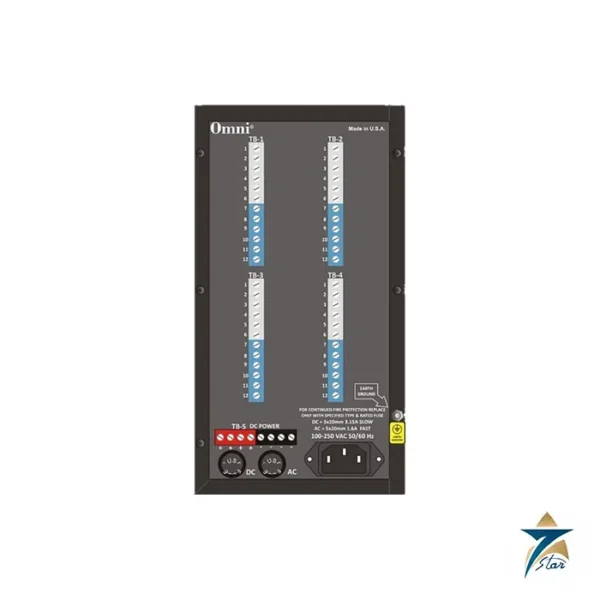
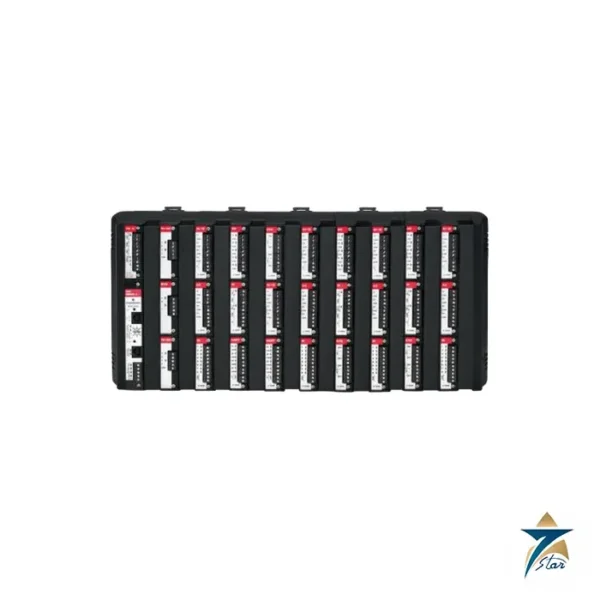
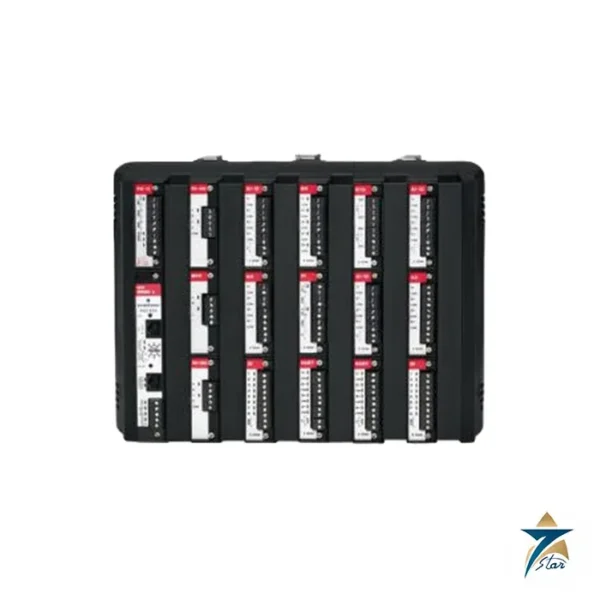
OMNI 4000/7000 Process I/O modules plug into DIN connectors on the flow computer motherboard, and each slot corresponds to one back panel terminal block. In the standard factory order of the OMNI 4000, TB-3 and TB-4 are used for process I/O modules, while in the OMNI 7000 the process I/O modules normally start from TB-3 to TB-5 depending on how many communication modules are fitted, and their number varies with the project. Changing the order of modules in the chassis means the wiring and the standard drawings must be revised, so modules should be replaced like for like. The manufacturer also warns that I/O modules must not be hot swapped; power must be disconnected first.
Flowmeter pulse inputs on the OMNI 4000/7000 Process I/O cards accept DC to 15 kHz square waves or DC to 12 kHz sine waves, with trigger thresholds of +4.2 V and +3.2 V and an input impedance of 1 MΩ. Densitometer inputs handle 100 Hz to 6.7 kHz with AC or DC coupling. Analog outputs are 12-bit current sources updated every 500 ms with ±0.05% of reading accuracy. HART modules communicate by FSK at 1200 bps over four networks per module, with one device per network on the HT module and up to four on the HM module, and a maximum of six HART modules per flow computer.
Key Features
The key features of the OMNI 4000/7000 Process I/O range documented by the manufacturer are:
- Four combo module types, A, B, E and E/D, each combining two analog or RTD inputs with pulse or density inputs and 4–20 mA outputs.
- Level A pulse fidelity and double chronometry proving on the E module for API-compliant pulse security and compact prover applications.
- Analog inputs selectable for 1–5 V or 4–20 mA, using a 250 Ω shunt resistor for current input.
- RTD inputs for 100 Ω four-wire bridges with 0.008 Ω resolution and a range of −145 to +145 °C.
- Common mode rating of ±250 VDC to chassis ground on inputs and outputs.
- HART HT and HM modules with 24 VDC loop power and a selectable internal load resistance of 250 Ω, 500 Ω or out.
- Factory temperature trimming and quality testing of every module before shipment.
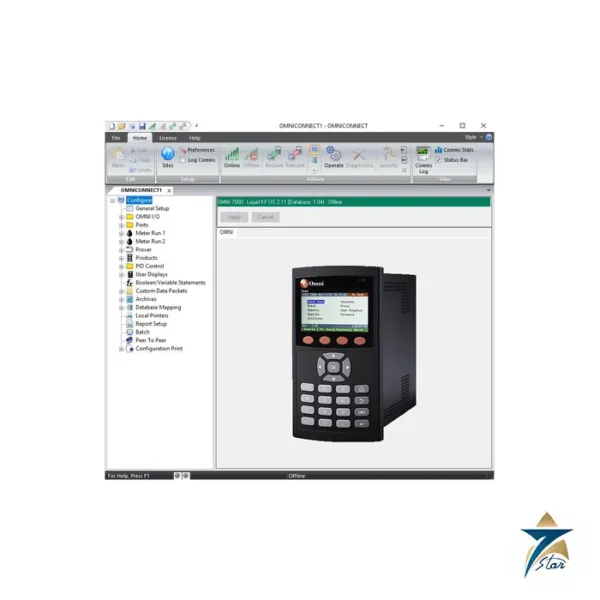
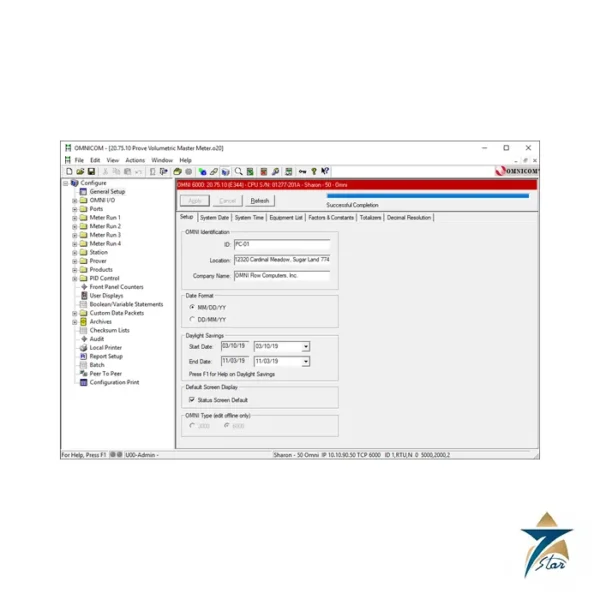
- Calibration and verification through the OMNICONNECT software or the flow computer front panel.
Industrial Applications
In the Oman oil and gas sector the OMNI 4000/7000 Process I/O type A module is a common choice for turbine and positive displacement liquid meters with pressure and temperature compensation; the B and E/D modules are used where a vibrating element densitometer feeds density into the calculation, as on crude and refined product lines; the E module is used on fiscal metering skids with dual-pulse meters and compact provers; and the HART modules suit gas metering where multivariable or smart transmitters are polled digitally. OMNI 4000/7000 Process I/O modules therefore appear at export terminals, LACT units, pipeline custody transfer stations and gas sales points.
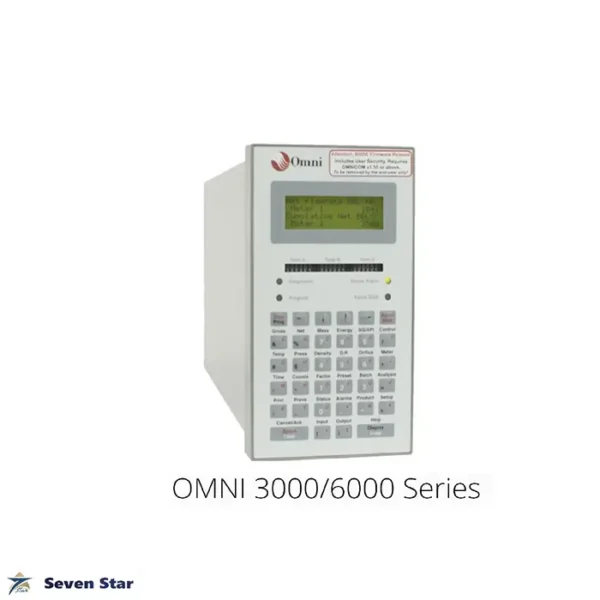
Seven Star LLC supplies OMNI 4000/7000 Process I/O modules to metering contractors and plant maintenance teams in Muscat, Sohar, Duqm and Salalah and on GCC sites. They are fitted in the OMNI 7000 Flow Computer with Display and in the compact OMNI 4000, and the OMNI 4000/7000 Series page describes the platform. Operators still running the OMNI 6000 Flow Computer with Operator Display should note that the newer modules belong to the 4000/7000 generation.
Technical Specifications
The following OMNI 4000/7000 Process I/O data is taken from Section 8 of the manufacturer’s installation guide attached on this page.
| Parameter |
Specification |
| Model |
OMNI 4000/7000 process I/O combo modules A, B, E, E/D; HART modules HT/HM |
| Type A |
Inputs 1–2: 4–20 mA, 1–5 V, RTD; inputs 3–4: 4–20 mA, 1–5 V, flow pulses; two 4–20 mA outputs |
| Type B |
Inputs 1–2: 4–20 mA, 1–5 V, RTD; input 3: 4–20 mA, 1–5 V, flow pulse; input 4: frequency density; one 4–20 mA output |
| Type E/D |
Inputs 1–2: 4–20 mA, 1–5 V, RTD; frequency density; two 4–20 mA outputs |
| Type E |
Inputs 1–2: 4–20 mA, 1–5 V, RTD; flow pulses; two 4–20 mA outputs; Level A fidelity and double chronometry proving |
| Analog input |
1–5 V (1 MΩ) or 4–20 mA (250 Ω); 14-bit; ±0.025% of reading ±2 counts |
| RTD input |
100 Ω at 0 °C, four-wire, 3.45 mA excitation, −145 to +145 °C |
| Flowmeter pulse input |
DC to 15 kHz square wave, DC to 12 kHz sine wave |
| Densitometer input |
100 Hz to 6.7 kHz, 2 to 5 V peak to peak |
| Analog output |
4–20 mA, 12-bit, ±0.05% of reading ±2 counts, 500 ms update |
| HART HT/HM |
FSK 1200 bps, 4 networks per module, 1 (HT) or 4 (HM) devices per network, max. 6 modules |
| Common mode voltage |
±250 VDC to chassis ground |
How to Order
To order OMNI 4000/7000 Process I/O modules or spares, send Seven Star LLC the flow computer model, serial number and the module types or slot layout you need. Our Muscat team will confirm compatibility, share the attached installation guide and support delivery to sites in Oman and across the GCC.














Reviews
There are no reviews yet.