
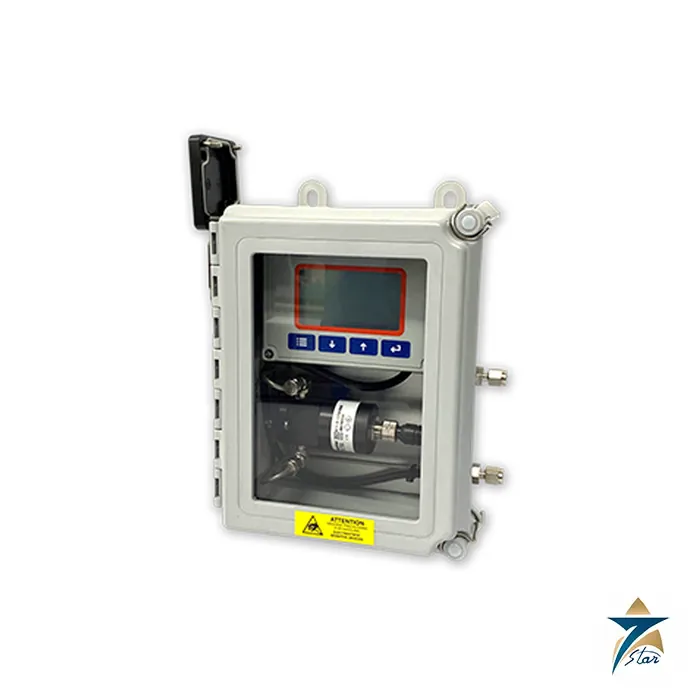
The AII GPR-2500 is a wall-mounted percent oxygen analyzer from Analytical Industries Inc. (AII), built for low-maintenance, high-accuracy O2 monitoring in both safe and hazardous areas. Where its sibling, the GPR-1500, is aimed at parts-per-million purity work, the AII GPR-2500 reads oxygen on full-scale ranges of 0–1, 0–5, 0–10 and 0–25 %, which is the band that matters for inerting margins, nitrogen generator output, controlled-atmosphere processes and ambient oxygen checks. It resolves 0.001 % O2, has a lower detection limit of 0.01 %, and responds to 90 % of a step change in under 30 seconds.
Seven Star LLC supplies the AII GPR-2500 to operators and contractors in Oman and across the GCC, with engineering support in Muscat. Many buyers here use it to confirm that purge and blanketing gas keeps vessels safely below their limiting oxygen concentration, so we help each customer pick the right range, sensor and certification for a refinery tank farm in Sohar, a food plant in Salalah or a utilities skid in Duqm.
For general context, percent-level galvanic oxygen cells work on the same electrochemical reaction as trace cells but are built for much higher oxygen flux. Oxygen diffusing through the sensing membrane is reduced at the cathode while the anode is consumed, and the current produced tracks the oxygen partial pressure. A key practical consequence is that sensor life depends on how much oxygen the cell sees over time, which is why manufacturers quote life expectancy in air for percent sensors.
For the AII GPR-2500, AII lists two sensor families. The GPR-11-60 (and its -LD version) has a stated life of 60 months in air and suits the standard +5 to +45 °C operating window, while the XLT-11-24 (and -LD) extends operation down to −10 °C with a 24-month life in air. Sensor options also allow oxygen measurement in helium, hydrogen or carbon dioxide backgrounds, and gas temperature compensation keeps the reading stable as sample temperature moves. Recommended calibration interval is 30 days, application dependent, and an air calibration is straightforward because the top range covers 0–25 %.
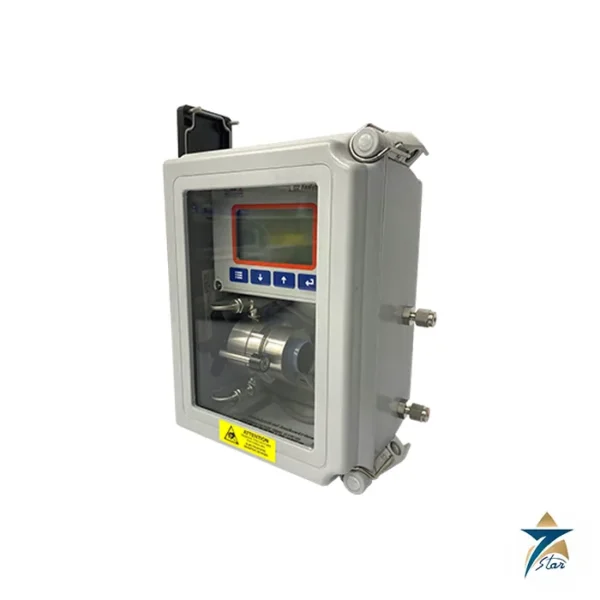
The analyzer shares the GPR-x500 platform: a NEMA 3R enclosure in fibreglass and painted aluminium designed for wall or vertical surface mounting, an LCD display behind a clear window and a four-key interface identical to other AII online and portable instruments. The sensor is visible and accessible in its flow block, and sample gas should be supplied at 5–30 psi with 1–2 SCFH flow, per the datasheet, so a simple pressure regulator and flowmeter are usually all the sample system needs for clean gas.
The AII GPR-2500 is loop powered from 18–24 V DC and transmits a 4–20 mA signal, drawing no more than 1.8 W. The hazardous-area version is certified for Zone 0 under ATEX and IECEx with Ex ia IIC T4 Ga protection and for Class I, Division 1, Groups A–D under cMETus, across an ambient range of −20 to +50 °C. The datasheet also lists compliance with the EMC Directive 2014/30/EU and UL/IEC/EN 61010-1, which simplifies acceptance by plant safety and electrical reviewers.
The AII GPR-2500 brings these practical advantages to percent oxygen measurement points.
Across Oman and the GCC the AII GPR-2500 is typically installed on nitrogen generators and membrane packages, on purge headers for tank and vessel blanketing, and on reactors or centrifuges that must be kept inert before solvents or powders are handled. AII lists inertization and blanketing gases, natural gas quality, pharmaceutical reactors and centrifuges, steel production and heat-treatment furnaces, solder re-flow and food and beverage feed gases as core applications. Percent oxygen readings are also used to confirm controlled atmospheres in metal heat treatment and in modified-atmosphere packaging, both active sectors in the Sohar and Salalah industrial zones.
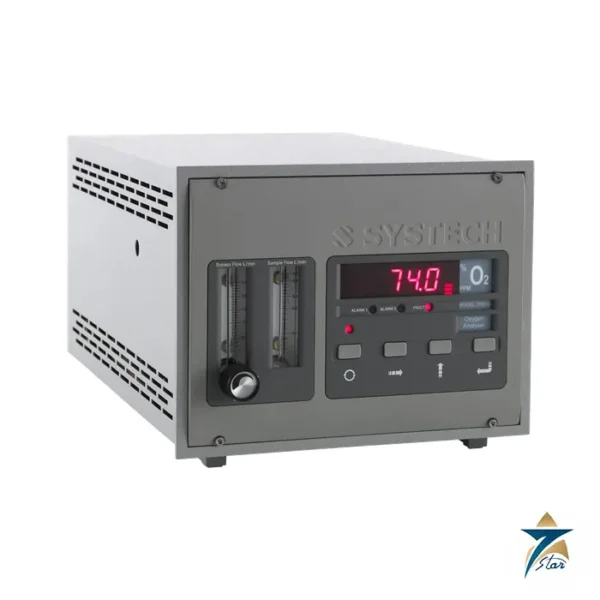
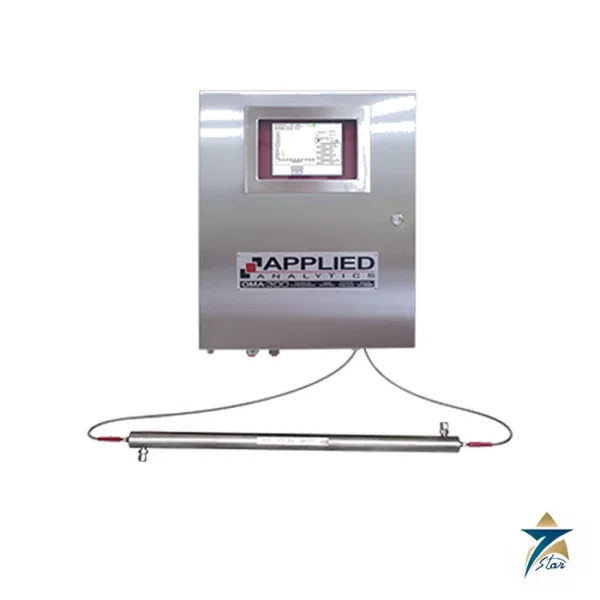
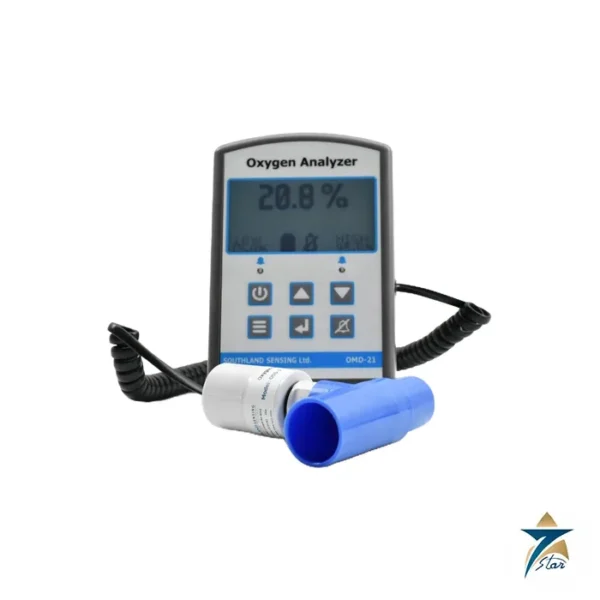
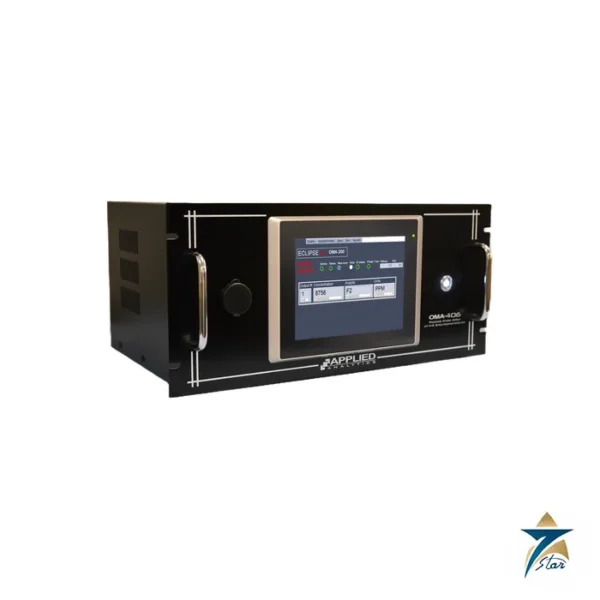
Because it is approved for hazardous areas, the AII GPR-2500 can sit close to the process on offshore and onshore oil and gas sites instead of in a remote analyzer house, which shortens sample lines and response time. Seven Star LLC supplies it with spare GPR and XLT sensors, sample accessories and application support from Muscat. If you are comparing options, our catalogue also lists the Southland Sensing OMD-21 portable percent oxygen analyzer, the Servomex OxyExact 2200 paramagnetic oxygen analyzer and the Southland Sensing OMD-625 oxygen analyzer.
Specifications for the AII GPR-2500 below are taken from the AII GPR-x500 datasheet (PST-DS-3002-00, 07/2024); actual performance is application dependent.
| Parameter | Specification |
|---|---|
| Model | AII GPR-2500 percent (%) oxygen analyzer, GPR-x500 series |
| Sensor type | Electrochemical; GPR-11-60, GPR-11-60-LD, XLT-11-24, XLT-11-24-LD |
| Measuring ranges | 0–1, 0–5, 0–10, 0–25 % O2 |
| Output resolution | 0.001 % |
| Lower detection limit | 0.01 % |
| Response time (T90) | Less than 30 seconds |
| Sample flow rate | 1–2 SCFH (0.5–1 L/min), application dependent |
| Pressure range | 5–30 psi (0.4–2.1 bar) |
| Operating temperature | +5 to +45 °C (GPR-11-60); −10 to +45 °C (XLT-11-24) |
| Humidity | 0–80 %rh, non-condensing |
| Sensor life expectancy | 60 months in air (GPR-11-60); 24 months in air (XLT-11-24) |
| Calibration interval | 30 days (application dependent) |
| Display / output | LCD / 4–20 mA |
| Power supply | 18–24 V DC, maximum 1.8 W |
| Enclosure | NEMA 3R, fibreglass and painted aluminium, wall / vertical surface mounting |
| Hazardous area | ATEX II 1 G Ex ia IIC T4 Ga; IECEx Ex ia IIC T4 Ga; cMETus Class I Div 1 Groups A–D T4; Tamb −20 to +50 °C |
Send Seven Star LLC an RFQ for the AII GPR-2500 with your gas composition, oxygen range, area classification and sample pressure, and our instrumentation division will confirm the right sensor and configuration. The manufacturer datasheet can be downloaded from this page, and our Muscat team offers engineering support throughout Oman and the GCC.
Choose the option that best fits your needs to get the fastest response from our team.
Automatically fill the RFQ form with this product's details for a faster process.
Manually enter multiple part numbers, specific brands, or custom requirements.












Reviews
There are no reviews yet.