Brand:

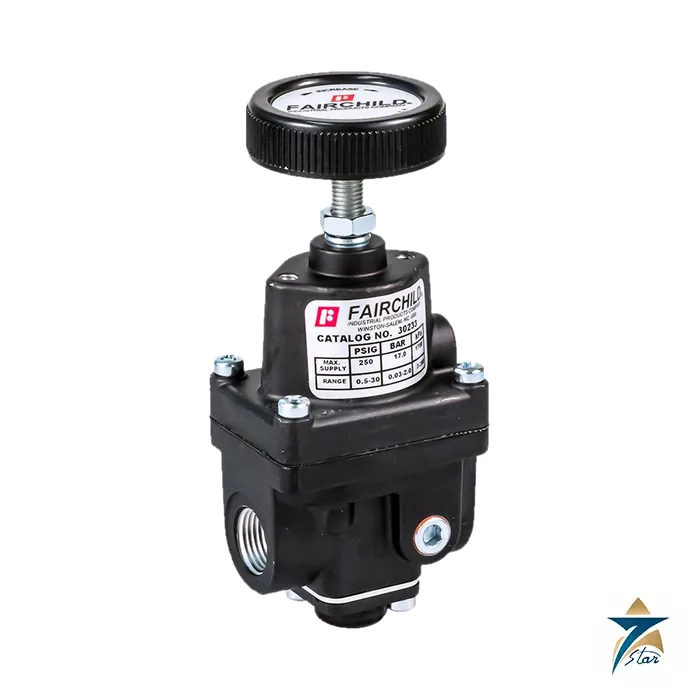
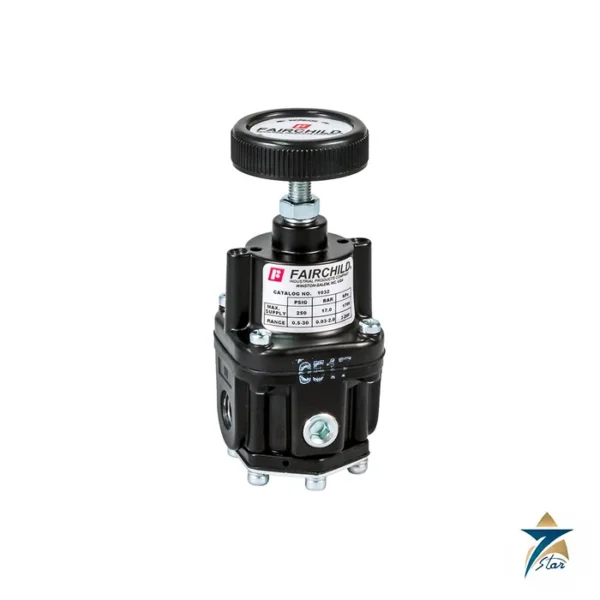
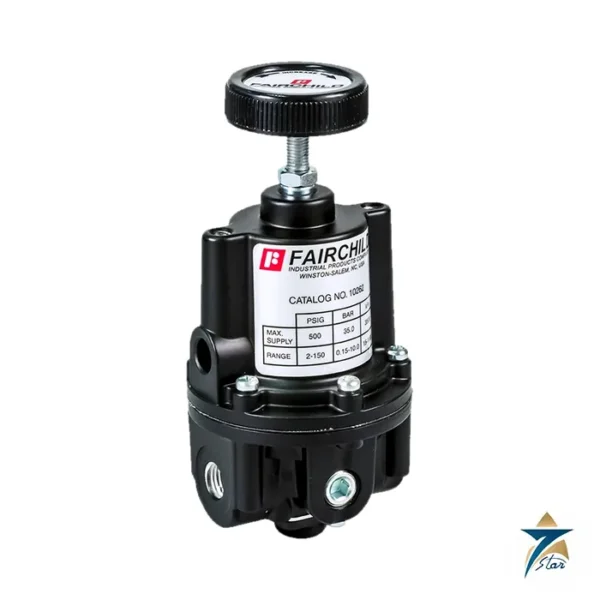
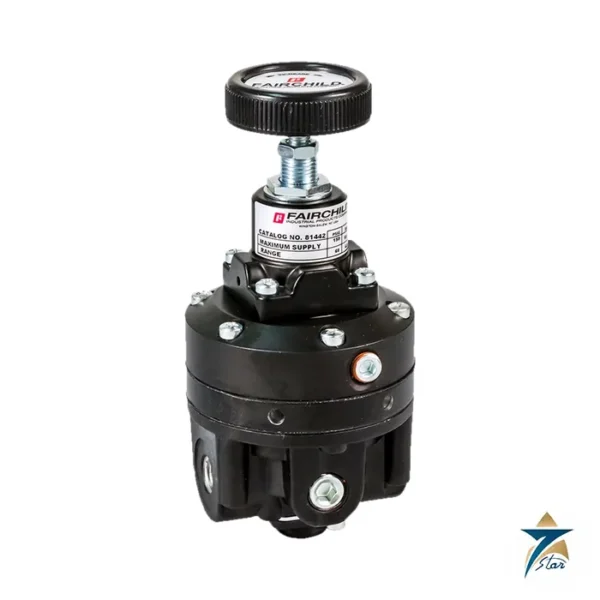
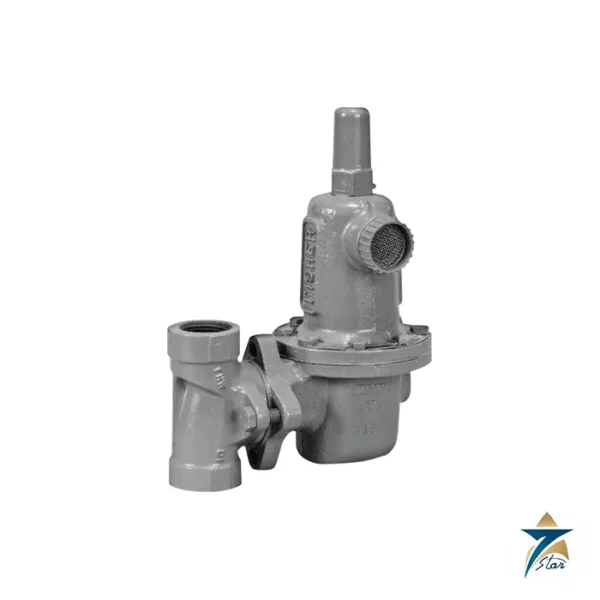
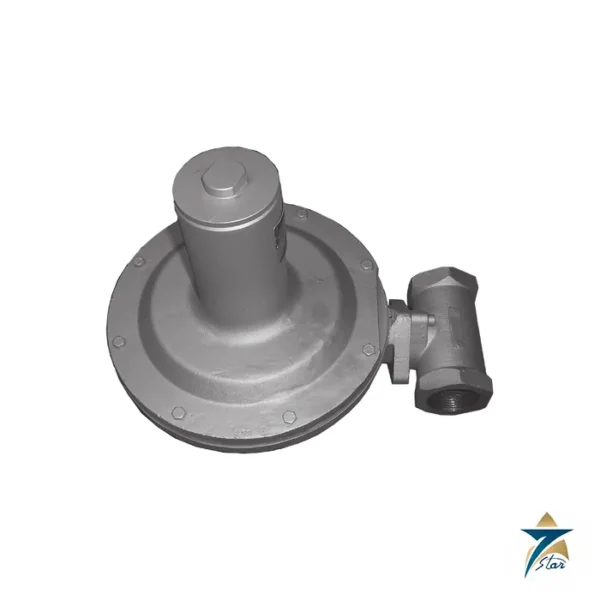
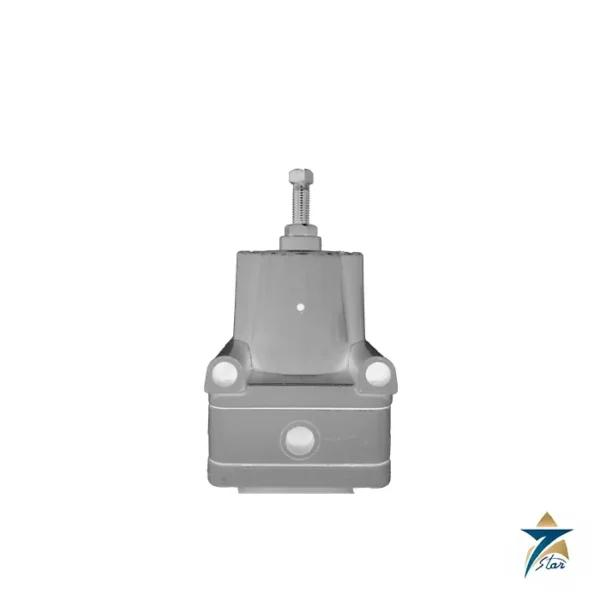
Rotork Fairchild Model 30 Midget Precision Regulator

Description

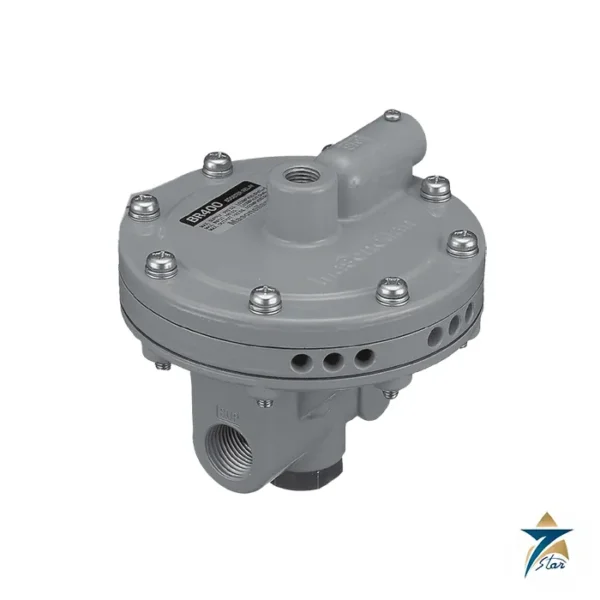
The Rotork Fairchild Model 30 is a midget precision regulator: a small aluminum body that still passes up to 40 SCFM at 100 psig supply. It is aimed at applications that need both high capacity and accurate control, and Rotork gives it a control sensitivity of 1/4 inch water column. Because it is compact and can be serviced without being removed from the line, it is a common choice for panels and skids where space is limited.

Balanced valve and aspirator tube

A supply valve balanced by a rolling diaphragm keeps the output constant even through wide supply pressure variations, and an aspirator tube adjusts the valve with flow velocity so the regulated pressure holds as demand rises. A separate control chamber isolates the diaphragm from the main flow to eliminate hunting and buzzing. In operation the range spring forces the diaphragm assembly down and opens the supply valve; the valve closes again as downstream pressure balances the spring force.

Technical specifications

Parameter Specification
Model Fairchild Model 30 midget precision regulator
Maximum supply pressure 250 psig (17.0 bar); 75 psig with silicone elastomer option
Flow capacity 40 SCFM (68 m3/hr) at 100 psig supply and 20 psig setpoint
Exhaust capacity 2.0 SCFM (3.4 m3/hr) at 5 psig above a 20 psig setpoint
Supply pressure effect Less than 0.2 psig for a 100 psig supply change
Sensitivity 1/4 inch (0.63 cm) water column
Output ranges (psig) 0-2, 0-10, 0.5-30, 1-60 and 2-100
Port sizes 1/4 or 3/8 inch NPT; BSPP and BSPT options
Ambient temperature -40 to +200 degF (-40 to +93.3 degC)
Hazardous locations Acceptable for Zones 1 and 2 gas (Groups IIA, IIB) and Zones 21 and 22 dust
Materials Aluminum body and housing; nitrile on Dacron diaphragms; brass trim
Approval Canadian Registration Number (CRN) for all territories and provinces

Options and mounting

The datasheet lists these catalog options for the Model 30:

  • A silicone or J fluorocarbon (Viton) elastomers
  • B low bleed or L low flow, and N non-relieving
  • H BSPP or U BSPT threads
  • R plunger operated, S screwdriver adjust, T tamper proof
  • M mounting bracket, part number 21667-1

An option compatibility chart shows which letters can be combined; low bleed and low flow, for example, cannot be combined. Plunger-operated units have a published push rod travel and thrust for each range, for example 0.244 inch and 3.2 pounds on the 0-2 psig range. Installation and maintenance steps are in Fairchild instruction IS-10000030.

Choosing between the Model 30 and its neighbours

The Model 30 suits instrument and control air where a Model 10 would be oversized for the space. If the downstream pressure stays below 12 psig and sensitivity matters more than flow, a low pressure regulator such as the Fairchild Model M11 is the better fit; for no-bleed operation see the Rotork Fairchild Model 1000. Confirm the output range, port thread, elastomer, the maximum supply pressure for the options you pick, and the setpoint at which you need the quoted flow.

Mount the regulator with the exhaust vent free of obstruction, supply clean dry instrument air, and fit an upstream filter so particles do not reach the supply valve seat. A gauge in the outlet line lets you set the range screw accurately, and a locked or tamper proof adjustment is worth specifying for regulators that feed safety-related or calibrated loops. Because the construction is unit-type, the internals can be inspected on site, which shortens shutdown work.

Documents and quotation

The Rotork datasheet is attached. Send Seven Star LLC the catalog number or the required range, port and options, and we will quote from our regulators range.

Datasheets & Documents
  • PDF Datasheet Rotork Fairchild Model 30 Midget Precision Regulator Datasheet Download
Reviews (0)

Reviews

There are no reviews yet.

How would you rate this product?

It takes about 10 seconds — just tap a star. Your email is never published.

About brand

Electric valve actuators are what most engineers picture when they hear the name Rotork, a company founded in 1957 and based in Bath, United Kingdom. Its catalog also reaches into pneumatic and hydraulic actuators, control valve actuators and instrument-air accessories.

Seven Star LLC lists Rotork actuators, positioners and precision regulators and supplies them to operators and valve shops in Oman, with the actuator build checked against the manufacturer's documentation.

Rotork product families on this page

The IQ3 is the intelligent multi-turn electric actuator for gate, globe and sluice valves, and the IQT3 is its part-turn counterpart for ball, butterfly and plug valves. For control valves there are the CVA and CMA electric actuators, built for continuous modulating duty. The Skilmatic SI3 is a self-contained electro-hydraulic actuator used where a fail-safe stroke is required. On the fluid power side the page lists GP/GH scotch yoke pneumatic and hydraulic actuators and the CP compact pneumatic quarter-turn unit. Two instrument brands sold under the Rotork name complete the list: Fairchild, with the Model 1000 no-bleed precision regulator, and YTC, with the YT-1000 electro-pneumatic and YT-3300 smart positioners.

Where Rotork actuators are used

Typical duties are isolation and block valves on pipelines and tank farms, motor-operated valves in refineries and power plants, sluice gates and large butterfly valves in water and wastewater works, and emergency shutdown valves on oil and gas facilities across the GCC.

Ordering Rotork actuators and parts: what we need

For an existing unit, send the serial number and the wiring diagram number from the nameplate; these two identify the exact build. For a new selection we need the valve type and size, torque or thrust, stem or shaft details, operating time, supply voltage, phase and frequency, the hazardous area certification, and any bus or remote control option. For pneumatic units add the air supply pressure and the fail position.

Frequently Asked Questions

How much flow can the Model 30 pass?
Rotork lists 40 SCFM (68 m3/hr) at 100 psig supply and a 20 psig setpoint.
What is the maximum supply pressure?
250 psig (17 bar) for the standard unit, and 75 psig when the silicone elastomer option is chosen.
What output ranges are offered?
0-2, 0-10, 0.5-30, 1-60 and 2-100 psig.
Does it need to be removed from the line for service?
No. The datasheet states the unit construction lets you service the regulator without removing it from the line.
What are the diaphragm and body materials?
Aluminum body and housing, nitrile on Dacron diaphragms and brass trim.